Toy Retailer Paper Shopping Bags Cost
The lowest price on a paper bag is rarely the best buy. Buyers comparing toy retailer Paper Shopping Bags cost usually discover the real expense later, after the bags arrive too small, tear at the handles, or look out of step with the store they were meant to represent. A carrier that feels cheap can make the merchandise feel cheaper too.
Toy retail puts unusual pressure on packaging. The same counter may hand out a plush toy, a boxed board game, a puzzle set, and a birthday add-on within a few minutes. That mix is hard on a bag. It also means the bag has to do more than move product from one hand to another. It has to protect shape, communicate value, and keep checkout moving when the line is already growing.
For a packaging buyer, the question is not simply how much a bag costs. It is how much it costs to support the sale cleanly, without damage, awkward handling, or unnecessary freight. That is why toy retailer Paper Shopping Bags cost should be evaluated beside paper grade, handle style, print complexity, carton efficiency, and expected load, not as a standalone number.
Why Toy Bags Change Perceived Value at Checkout
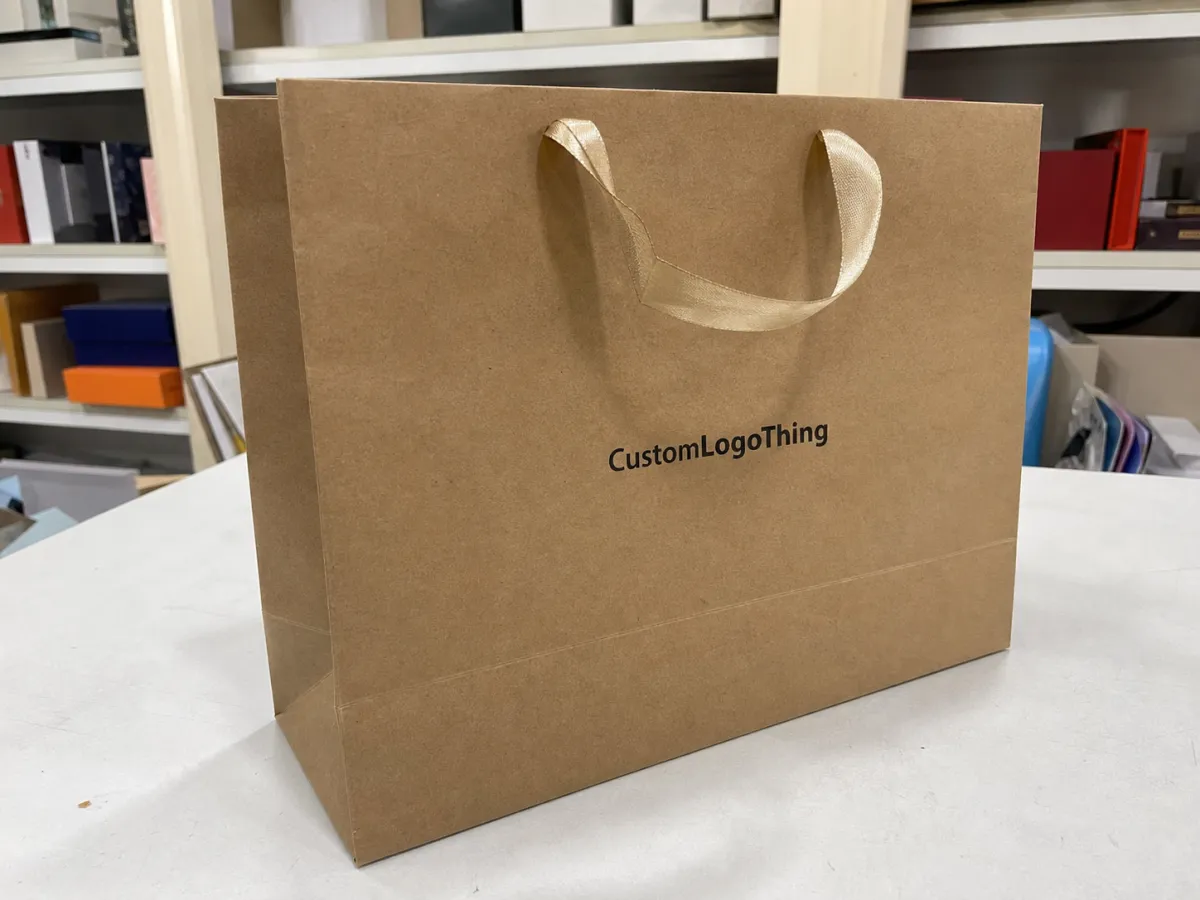
Toy purchases are emotional. Parents are buying a reward, grandparents are buying a surprise, and gift buyers want the item to feel ready the moment it leaves the register. A bag is part of that handoff. Customers often judge the experience before they judge the receipt.
That is why a plain kraft carrier can be a good fit for value-led stores, but only if it is proportioned correctly and the build is honest. A bag that sags around a boxed toy or stretches at the top seam sends a message no logo can fix. The merchandise may be mid-range or premium, yet the packaging says "budget" in a way buyers rarely intend.
A better bag does not have to be fancy. It needs to hold its shape, survive handling, and look deliberate. A 120 gsm kraft bag with a reinforced base can carry a medium plush item or a boxed card game with far less drama than a thinner stock. In many stores, that difference matters more than a second color on the print.
Paper bags also affect secondary sales. When the package looks presentable, customers are more willing to add gift wrap, a card, batteries, or a second toy. That is a small behavior shift, but in toy retail those small shifts add up. The bag becomes part of the merchandising system rather than a disposable afterthought.
"A bag that looks weak makes the purchase feel temporary. A bag that carries well makes the sale feel complete."
The handoff matters most when the basket is mixed. One order might include a hard box, a soft toy, and a small accessory. That is where the bag dimensions, gusset depth, and handle reinforcement stop being abstract specifications and start shaping the customer experience in real time.
Bag Styles That Match Plush Toys, Games, and Boxed Sets
Three paper bag families cover most toy retail needs: kraft, white, and coated paper. Kraft gives a grounded, practical look and usually prints well with simple artwork, dark logos, or seasonal graphics. White paper carries brighter branding and fits stores that want a cleaner, more giftable presentation. Coated paper adds polish, but the premium look raises expectations and usually lifts the unit price with it.
Handle choice changes the feel more than many buyers expect. Twisted paper handles are the most common default because they are tidy, printable, and comfortable for normal carry-out use. Flat handles are often acceptable for lighter programs where price matters more than appearance. Reinforced handles or heavier tops are better for boxed toys, larger plush items, and toy sets that concentrate weight near the opening.
Size and proportion matter just as much as material. A tall, narrow bag suits soft goods and slimmer boxes. A wider gusset is better for board games, craft kits, and awkwardly shaped products that refuse to sit flat. If the staff has to force the item in, the bag is undersized. That usually means a slower checkout, more damage risk, and a worse customer impression.
From a cost point of view, the structure often drives the quote more than the logo. A simple one-color kraft bag in a standard size is usually easier to price than a large white bag with multiple colors, a glossy finish, and reinforced handles. That is why experienced sourcing teams define the product mix first and let the bag spec follow.
- Kraft bags fit value-led stores, seasonal promotions, and simple artwork.
- White bags suit brighter branding, licensed toy programs, and gift-oriented presentation.
- Coated bags can look more premium, but they usually carry higher finish and setup costs.
Paper, Ink, and Finish Choices That Hold Up in Stores
Paper weight is one of the first places buyers under-specify. A lighter bag can work for plush toys, small accessories, and low-load purchases. Once boxed sets or denser items enter the mix, though, the material needs more body. For many toy programs, a practical range sits around 120-170 gsm for standard paper bags, with heavier builds reserved for larger formats or especially demanding loads.
Ink coverage affects both appearance and production cost. One-color printing on kraft is usually cheaper than a multicolor design, and not just because of ink usage. More colors often mean more press setup, more registration checks, and sometimes more tooling costs if plates or screens are involved. A buyer asking for richer branding should expect the quote to move accordingly.
Finish changes the way the bag behaves in the store. Matte or uncoated surfaces feel natural and are easier to write on if the store adds a note, price sticker, or gift message. Gloss can sharpen artwork and make bright logos look more vivid, but it also shows fingerprints and scuffs faster. Soft-touch finishes look refined, though they rarely make sense unless the bag is part of a higher-margin gifting or premium toy program.
Moisture resistance is easy to overlook until a shipment has been stacked in a damp stockroom or handed out in bad weather. Clean glue lines, a reinforced bottom, and crease integrity matter more than most marketing copy suggests. If the bags will move through a rougher supply chain, it is reasonable to ask how the cartons perform in transit and whether the packing format protects the handles from crushing.
For buyers comparing paper sourcing, certifications can help narrow the field, but they should not replace practical testing. FSC-certified stock can be useful for chain customers that ask for documented sourcing, while transport testing aligned with ISTA methods can reduce the chance of damage claims. Those standards do not guarantee a perfect bag, but they do make the conversation more concrete than vague claims about "quality."
A useful sample should answer three questions quickly: does the bag stand up, does the handle stay secure, and does the print hold its registration near folds and glue seams? If the sample fails one of those checks, the production run rarely improves on its own.
Toy Retailer Paper Shopping Bags Cost, MOQ, and Quote Drivers
This is the part buyers usually want first. toy retailer Paper Shopping Bags cost is shaped by a handful of variables that compound quickly: finished size, paper grade, handle type, print complexity, and quantity. Two bags can look nearly identical in a photo and still land in very different price bands once one is built for a boxed game and the other for a light plush item.
MOQ matters because fixed production costs need somewhere to go. When the quantity is low, setup charges, color preparation, and waste are spread across fewer units. As the run gets larger, the unit cost usually falls, but only if the spec stays stable. Change the size, adjust the artwork, or switch handles, and the quote can move again.
| Bag Program | Typical MOQ | Approx. Cost per Piece | What Drives the Price |
|---|---|---|---|
| Small kraft bag, 1-color logo, twisted handle | 1,000-2,500 | $0.24-$0.46 | Simple print, standard stock, moderate setup |
| Medium white bag, 2-color print, flat handle | 2,500-5,000 | $0.30-$0.58 | More decoration, cleaner presentation, higher registration control |
| Large premium bag, reinforced handle, coated finish | 5,000-10,000+ | $0.42-$0.92 | Heavier board, finish costs, stronger handles, more packing care |
| High-volume repeat program | 10,000+ | $0.18-$0.34 | Better material efficiency, lower setup per unit, steadier pricing |
These are planning ranges, not promises. A simple bag with limited ink may land lower. A bag for oversized boxed toys, seasonal artwork, or specialty finishing can climb faster than expected. The most useful quote is the one that shows where the money sits: material, print, handle, setup, packing, and freight.
Buyers usually get better answers when they send the practical details together instead of in fragments. A clean request should include the finished bag size, artwork file or mockup, quantity tiers, destination, and whether a sample is required before production. When those details are missing, the quote can look attractive at first and then change after the spec gets clarified.
- Finished bag size in inches or millimeters
- Paper weight or target stock if already known
- Artwork file, even if it is only a rough layout
- Quantity target and any tiered volume break
- Delivery location and timing requirement
- Sample approval need, if applicable
For a buyer comparing toy retailer Paper Shopping Bags cost across vendors, the cleanest quote is not always the cheapest-looking one. The stronger quote is the one that exposes the assumptions clearly enough to compare landed cost, not just factory price.
Turnaround, Production Steps, and Shipping Windows
Paper bag production usually follows the same path: artwork review, proof approval, manufacturing, inspection, packing, and shipment. The sequence is simple. The delays are usually not. A proof that takes two rounds to approve changes the schedule more than a buyer expects, and a small artwork revision after materials are staged can add days before anyone notices the clock slipping.
For straightforward orders, many paper bag runs move in roughly 12-15 business days after proof approval. More complex work, especially multiple colors, heavier stocks, or specialty finishes, can stretch toward 18-25 business days. Freight adds another layer. A local truck shipment and a cross-country delivery do not behave the same way, and import lanes introduce their own variability.
Seasonality has a strong effect on timing. Holiday toy traffic, back-to-school promotions, and birthday-focused campaigns all pull orders into the same narrow delivery windows. If the store opening date is fixed, the buffer belongs before production starts, not after. A week of margin can be the difference between a controlled rollout and a rush freight charge that eats the savings from a lower unit price.
A well-run program locks the artwork first and confirms the final quantity before manufacturing begins. That sounds basic, but it avoids one of the most common delays: a revised count after the paper has already been allocated. It also prevents the awkward situation where the bags are on time but the freight cost has ballooned because the order had to move by air instead of by truck.
Packaging is rarely judged only by production time. Carton size, pack count, and pallet layout matter too. A quote that ignores carton efficiency is incomplete. If the bags ship in oversized cartons, the buyer pays to move air. If the pack count is awkward, the warehouse spends more time handling the product than it should. Those hidden costs do not show up in the headline unit price, but they show up somewhere.
How We Fit Seasonal Promotions and Store Reorders
Toy retail changes fast. A bag that fits spring assortments may need to support holiday traffic, licensed character promotions, or birthday display programs later in the year. Once the structure is right, the artwork can shift without forcing the entire project back to zero. That is one reason repeatable specs matter so much in this category.
Stored specifications make reorders faster and less error-prone. If the paper weight, finished dimensions, handle style, and carton configuration are already recorded, the next run is mostly a graphics update and a quantity check. Chain buyers usually appreciate that because it reduces admin work and keeps pricing comparisons cleaner from one season to the next.
There is also room for practical flexibility. Some buyers need the same bag structure with fresh artwork for a toy launch. Others want split deliveries, so stores in different regions receive product closer to their local promotion date. Both approaches can work if the initial spec is disciplined and the schedule is set early enough for production and freight to remain ordinary.
Repeat orders usually make toy retailer paper shopping bags cost easier to manage because the setup work has already been absorbed. That does not eliminate price movement, but it does remove much of the uncertainty that first-time buyers face. The second quote is often cleaner, and usually easier to defend internally, because the team is no longer guessing about fit or finish.
The most reliable reorders are the ones with version control. If the artwork changes, the buyer should know whether the change affects plates, color matching, or pack timing. If the bag size changes, even slightly, the carton count and freight math need to be checked again. Small spec shifts can create larger cost changes than expected.
Common Buying Mistakes That Raise Unit Cost
The most expensive mistake is undersizing the bag. If the largest boxed toy does not fit comfortably, the store will either force the item into a bag that is too small or hand it out unbagged. Both outcomes are costly. Tears, awkward loading, and customer complaints quickly erase the savings from a smaller format.
Another common error is over-specifying finish and print on a modest run. A buyer may request multiple colors, coated paper, and premium handles for a relatively small order, then be surprised when the unit price rises. The extra decoration may look impressive on a screen, but the customer experience does not always improve enough to justify the spend.
Freight and storage get ignored more often than they should. A quote can look competitive at the factory and still land badly once pallet counts, carton sizes, and inbound shipping are included. If the cartons are bulky and the backroom is tight, a slightly higher quote with better pack efficiency can actually be the lower total cost.
Quality control is another area where buyers get surprised. A bag should be checked for handle pull strength, bottom glue integrity, print registration near folds, and edge crush resistance. Those checks do not require laboratory language. They only require that someone look at the bag the way a cashier, stockroom worker, and customer will use it.
- Choose the size from the largest SKU, not the average one.
- Keep print simple unless the brand benefit clearly justifies more decoration.
- Check carton counts, freight dimensions, and storage space before approval.
- Compare landed cost, not just the quoted piece price.
When buyers manage the full spec instead of only the artwork, the order usually behaves better in production and at checkout. That is the difference between a quote that looks cheap and one that actually stays cheap after everything is counted.
How to Price and Approve Without Surprises
If you are pricing bags for a toy program, start with the products that actually leave the store. Measure the largest boxed toys, the most common plush items, and any mixed baskets that tend to appear during promotions. Then decide whether the bag needs to feel value-led, gift-ready, or closer to premium retail. Those three choices shape the quote more than a generic request for custom packaging.
Next, ask for the line items that matter. Finished size, paper weight, handle type, print count, packing format, and delivery destination should all be visible in the same quote. If one supplier gives only a single number and another breaks out the assumptions, the second quote is usually easier to trust even if the headline price is slightly higher.
The final decision is rarely price versus price. It is unit price versus MOQ versus landed cost versus risk. A lower factory quote can lose its advantage if freight is inefficient, the bag is undersized, or the finish creates avoidable spoilage in the stockroom. The right package is the one that can be ordered again, stored efficiently, and handed across the counter without friction.
For toy retailer paper shopping bags cost, the most useful mindset is simple: buy for the merchandise, not for the sample image. A bag that fits the product, survives the route, and supports the store image is usually the best value, even when it is not the absolute lowest quote on the page.
What drives toy retailer paper shopping bags cost the most?
Bag size, paper thickness, handle style, and print complexity usually have the biggest effect on price. Lower quantities raise the unit cost because setup, waste, and color preparation are spread across fewer bags. Special finishes, reinforced bottoms, and multi-color branding can increase the quote quickly.
What MOQ should I expect for custom toy retail paper bags?
MOQ depends on the build, but larger bags and more complex printing usually require higher minimums. Simple kraft programs can sometimes start lower than premium printed options. A good quote should show how MOQ changes the cost per piece at each volume tier, not just the first tier.
How long does production usually take for branded toy bags?
Simple orders often move faster than multi-color or heavily finished bags. Lead time should include proof approval, manufacturing, inspection, packing, and freight. Seasonal demand can extend timing, so buyers should plan earlier for holidays and promotions than they would for an ordinary reorder.
Which bag size works best for boxed toys and plush items?
Measure the largest SKU first, then add room for handles, gusset depth, and easy loading at checkout. A good toy bag should fit the product without crushing packaging or forcing staff to overfill it. If the product mix changes often, choose a size that handles both boxy items and softer plush products.
Can I reorder the same design without starting from scratch?
Yes, repeat orders are easier when the bag size, artwork, and structure stay the same. Stored specs usually reduce admin time and make pricing more predictable on future runs. If only quantity or delivery timing changes, the reorder process is usually much faster.

