Buyer Fit Snapshot
| Best fit | Wholesale Custom Printed Belly Bands for Packaging projects where brand print, material claims, artwork control, MOQ, and repeat-order consistency need to be specified before quoting. |
|---|---|
| Quote inputs | Share finished size, material target, print colors, finish, packing count, annual reorder estimate, ship-to region, and any compliance wording. |
| Proofing check | Approve dieline scale, logo placement, barcode or warning zones, color tolerance, closure strength, and carton packing before bulk production. |
| Main risk | Vague material claims, crowded artwork, missing packing details, or unclear freight terms can make a low unit price expensive after revisions. |
Fast answer: Wholesale Custom Printed Belly Bands for Packaging should be specified like a repeatable production item. The safest quote records material, print method, finish, artwork proof, packing count, and reorder notes in one written spec.
Production checks before approval
Compare the actual filled-product size with the drawing, then confirm tolerance on folds, seals, hang holes, label areas, and retail display edges. Reserve space for logos, QR codes, warning copy, and material claims before decorative graphics fill the panel.
Quote comparison points
Review material grade, print process, finish, sampling route, tooling charges, carton quantity, and freight assumptions side by side. A quote is only useful when the supplier can repeat the same color, closure quality, and packing count on the next order.
Wholesale Custom Printed Belly Bands for Packaging
Wholesale custom printed belly bands give a product a finished, intentional look without forcing every package into a fully Custom Printed Box. When the base container already protects the item, the band can carry the branding, the seasonal message, and the shelf-ready presentation at a fraction of the material and build cost. It is a practical move, not a flashy one, and that is usually why it works so well.
That is why wholesale custom printed belly bands keep showing up on bakery trays, candle sets, apparel stacks, cosmetics kits, gift bundles, and subscription inserts. They store flat. They move through production quickly. They change fast when a promotion shifts or a flavor line gets updated. In packaging, that kind of speed usually beats a complicated structure that slows the whole run down. I've seen plenty of jobs where a simple band saved the schedule, and honestly, that is the part people remember after the boxes are long gone.
Wholesale Custom Printed Belly Bands: Why They Work
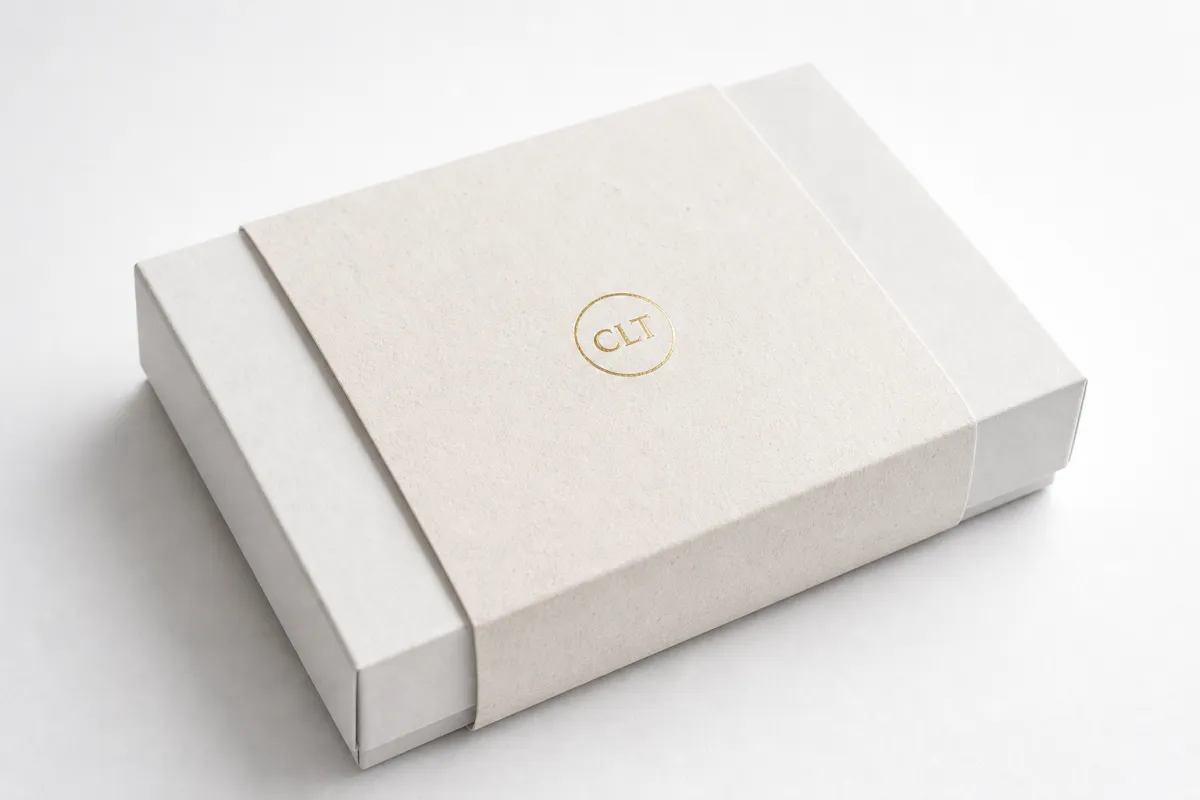
A good belly band earns its place by doing one job clearly. Wholesale custom printed belly bands add brand presence, separate a product from the clutter around it, and give the package a cleaner retail finish without covering the entire container. That matters when the box, pouch, or tray already handles the protection and the only thing missing is a presentation that feels complete.
From a packaging buyer's point of view, wholesale custom printed belly bands make sense because they cut material use, reduce freight weight, and keep seasonal changes manageable. There is no need to rebuild the whole package for a short-run flavor, a gift edition, or a brief promotional line. A printed strip changes the look while the core package stays the same, which is a much more practical way to handle package branding.
They also help products feel organized. A stack of apparel with a belly band looks deliberate instead of loosely packed. A candle set with a belly band reads as a set, not as a few separate units. A bakery box with a branded strip looks ready for the shelf, even before a customer reads the label. That small visual cue does a lot of quiet selling.
- Less material: A band uses far less paper or board than a full wrap or rigid box.
- Faster updates: Promo text, holiday artwork, or SKU changes are easier to revise.
- Lower storage load: Flat bands take far less room than assembled custom printed boxes.
- Cleaner merchandising: The product looks grouped, branded, and ready for display.
Wholesale custom printed belly bands become even more useful when the product packaging already has structure. If the inner tray, carton, or pouch is doing the protection work, the band only needs to complete the presentation. Paying for full enclosure in that case is usually money spent where it does not need to go. A simple band can do the job just fine, and that's not a compromise if the packaging system is already working.
If the base pack already protects the product, the band should improve shelf presence and keep the package honest about what it is. Packaging does not need theatrics. It needs to fit, hold up, and sell.
If you are already working within a broader sourcing plan, our Wholesale Programs page is a good place to begin. If you are comparing formats, the Custom Packaging Products page shows other options that can sit alongside wholesale custom printed belly bands.
Wholesale Custom Printed Belly Bands: Product Details
In practical terms, a belly band is a printed strip that wraps around a box, tray, sleeve, pouch, bundle, or stacked product and presents the brand before anyone opens the package. Wholesale custom printed belly bands do not replace the container. They tie the presentation together and give the whole pack a deliberate finish.
The simplest version is a wrap band: one printed strip folded around the product with a tucked end or a light adhesive closure. A scored band includes fold lines so it sits more cleanly around corners or sharper edges. Open-ended bands work well when the package needs a quick slip-on look. Glued bands fit jobs where the wrap has to stay in place during shipping or repeated handling.
That flexibility is a big reason wholesale custom printed belly bands work across so many product categories. They fit Rigid Gift Boxes, kraft mailers, folding cartons, corrugated trays, pouches, and multi-item bundles. The real question is not whether the band can wrap the package. It is how much surface area you need for the logo, product name, QR code, ingredient callout, or compliance copy.
Buyers sometimes overbuild the band and then wonder why the finished piece feels heavy or wasteful. A belly band should be large enough to show the brand clearly and small enough to avoid looking like a sleeve that wandered in from another project. Wholesale custom printed belly bands work best when the fit feels precise. If a band starts creeping too wide, it can crowd the container instead of framing it.
Common constructions
- Simple wrap bands: Best for fast assembly and lower-cost runs.
- Scored bands: Better when the package has corners, folds, or a stiff profile.
- Open-ended bands: Good for slip-on presentation around flat bundles.
- Glued bands: Helpful when the band has to stay in place through handling or transit.
For retail packaging, the band can do more than carry a logo. It can separate a set from the shelf clutter around it, call out a gift edition, or turn a plain base pack into branded packaging that looks ready for a display table. That is the value of wholesale custom printed belly bands: not decoration for its own sake, but a visible signal that the product is organized and intentional. When the artwork is well spaced and the dimensions are right, the whole package feels calmer and easier to trust.
Wholesale Custom Printed Belly Bands: Materials, Sizes, and Print Specifications
Material choice changes the entire feel of the piece. For wholesale custom printed belly bands, lightweight text paper around 80-120 gsm works well for short-run promotions, bakery items, and low-load wraps. A more rigid retail feel usually calls for 14 pt to 18 pt cardstock or C1S/C2S board. Kraft stock stays popular when the brand wants a natural, restrained look that does not feel overly polished.
Not every project needs heavy board. Sometimes a lighter paper stock is the better answer because it folds tighter, costs less, and avoids the look of excess. If the band is wrapping a premium candle set or a cosmetics kit, though, a flimsy wrap will undercut the product before the customer even gets it open. Packaging design has to match the item, or the whole presentation feels off. I have seen otherwise strong branding lose credibility just because the band buckled at the corners.
| Material / Finish | Best Use | Typical Spec | Rough Unit Cost at 5,000 | Tradeoff |
|---|---|---|---|---|
| Light text paper | Promo packs, bakery wraps, inserts | 80-120 gsm | $0.06-$0.12 | Lowest cost, but less rigid |
| Kraft cover stock | Natural, eco-leaning branding | 100-120 gsm | $0.09-$0.20 | Warm look, fewer premium effects |
| C1S / C2S board | Retail-ready product sets | 14 pt-18 pt | $0.12-$0.28 | More durable, slightly higher print cost |
| Premium coated stock with special finish | Gift sets, upscale retail packaging | 14 pt-16 pt with finish | $0.22-$0.55 | Best presentation, highest setup cost |
Size planning is where a lot of wholesale custom printed belly bands go wrong. Measure the flat width, then measure the wrap circumference at the exact point where the band will sit. Add overlap for the closure: 0.125 to 0.25 inch is common for tucked bands, and a larger allowance may help when the band needs a glue tab or an easier hand-assembly process. If the band crosses a box corner, score placement matters just as much as the print. A great design can still feel awkward if the fold lands in the wrong place.
Print specs should be set before the quote, not after the proof is already moving. Most wholesale custom printed belly bands are produced in CMYK, though spot color matching is worth discussing if the brand color cannot drift. Ask for bleed around the full perimeter, usually 0.125 inch, and keep critical text inside a safe zone. One-sided print handles many wraps just fine, while two-sided print can help when the band rotates on shelf or when the inside panel shows during handling.
Finishing is where the look changes from acceptable to polished. Matte coating feels quiet and premium. Gloss gives sharper color and more shine. Soft-touch adds a muted, tactile surface that works well on gift packaging. Foil accents, embossing, and die-cut windows can raise the presentation, but they also increase cost and setup. Wholesale custom printed belly bands do not need every finish available; they need the finish that supports the package and then stops there. Too much finish can drown out the graphic, which is a trap I see now and then.
If sustainability claims matter to your buyer, ask for FSC-certified paper options and keep the paper spec documented. You can review certification expectations directly at FSC. If the band is part of a larger mailing program, keep the outer pack in mind too; a good band does not rescue a badly built shipper. For shipment durability standards, ISTA is a useful reference for distribution testing, especially when the package has to survive a rough logistics chain.
Wholesale Custom Printed Belly Bands: Cost, MOQ, and Quote Basics
Pricing for wholesale custom printed belly bands comes down to a handful of variables, and none of them are mysterious. Material, print coverage, number of colors, quantity, finishing, cutting complexity, and whether the band needs scoring or glue all move the number. If two quotes sit far apart, there is usually a reason. One supplier may be pricing a simple wrap band, while another is including proofing, setup, folding, and freight. The lowest number is not always the lowest real cost.
Buyers usually want the honest range, so here it is: simple economy bands can land around $0.06-$0.12 per unit at 5,000 pieces, standard retail bands often fall around $0.12-$0.28 per unit, and premium bands with special finishes can move into the $0.22-$0.55 per unit range. Smaller runs cost more per unit because setup and press time are spread across fewer pieces. That is normal. Printing has never been a charity, and the setup work still has to happen whether you order 300 or 3,000.
| Run Type | Typical MOQ | Unit Cost Trend | Best Fit | Notes |
|---|---|---|---|---|
| Digital short run | 250-500 | Higher | Samples, launches, tests | Good when speed matters more than lowest cost |
| Standard wholesale run | 1,000-2,500 | Moderate | Regular retail and DTC use | Often the sweet spot for wholesale custom printed belly bands |
| Volume production | 5,000+ | Lower | Seasonal programs, repeat SKUs | Best unit cost if artwork stays stable |
| Special finish run | Usually 2,500+ | Higher | Premium gift packaging | Foil, embossing, and custom folds raise setup time |
MOQ is not a penalty. It is the point where the press, finishing line, and packing crew start to make economic sense together. For simple wholesale custom printed belly bands, many buyers can start in the low hundreds, but the unit price usually improves in a meaningful way once the order reaches 1,000 to 2,500 pieces. If the band is likely to be reordered, a practical first run and a locked spec often make more sense than overcommitting on the first pass.
To get a better quote, send everything in one message: flat width, wrap circumference, quantity, stock preference, print sides, finish, and delivery destination. If measurements are missing, someone has to guess. Guessing costs money. Exact specs make wholesale custom printed belly bands easier to price, easier to schedule, and easier to approve. That one bit of homework can save a surprising amount of back-and-forth.
Freight is the piece buyers miss most often. A run that looks cheap on paper can stop looking cheap once the delivery address is remote or the deadline is tight. Ask whether shipping, proofing, and file correction are included. That is often where quotes separate into "real" and "looks good until the final invoice."
Wholesale Custom Printed Belly Bands: Process and Timeline
The order flow should stay simple. If it starts feeling complicated, the process is getting in the way of the packaging. For wholesale custom printed belly bands, the usual path is straightforward: send dimensions and artwork, review the quote, approve the proof, confirm the material, then move into production. Clean files keep the job moving. Messy files slow it down. That is not a mystery, just how print shops work.
- Send the measurements: Flat width, wrap circumference, overlap allowance, and product photos if the fit is new.
- Share artwork: Logo files, copy, color references, and any brand rules that affect placement.
- Approve the dieline: The dieline tells everyone where the folds, scores, and cut lines sit.
- Check the proof: Verify spelling, bleed, orientation, and the exact print side before approval.
- Run production: Printing, drying, cutting, folding, and final inspection happen here.
- Pack and ship: The finished bands are boxed, labeled, and sent to the destination.
Proofing is where money gets saved or burned. A clean dieline and a print-ready file can get a job moving quickly, while missing measurements or vague layout notes force the team to stop and ask questions. For wholesale custom printed belly bands, every extra back-and-forth round creates time pressure somewhere, even if the invoice does not list it separately. That delay usually shows up later, right when someone is trying to stage a launch or lock a ship date.
Lead times depend on the construction, but a straightforward band job often takes 7-12 business days after proof approval. If the order includes coating, foil, embossing, or glued assembly, 12-18 business days is a more realistic range. Rush jobs can happen in some cases, but rushes are not magic. They usually mean the schedule is tighter, the options are fewer, and the shipping cost climbs.
Late artwork changes cause the most delays. Color revisions come next. Unclear overlap dimensions, missing bleed, and last-minute delivery changes create problems too. If the band has to work with a shipper, tray, or mailer, the outer package should be treated as one system. For distribution-heavy programs, it helps to look at ISTA test guidance so the band is not the only part looking good while the package around it fails the trip.
Wholesale custom printed belly bands are easier to manage when the launch calendar is realistic. If they are needed for a seasonal rollout, place the order early enough to absorb one proof correction. If the job is tied to a product launch, make sure the art approval and print approval are not racing each other. A little planning saves a lot of rushed emails, and rushed emails are how simple packaging turns into a headache.
Wholesale Custom Printed Belly Bands: Why Brands Choose Them
Brands do not keep buying wholesale custom printed belly bands because they are trendy. They keep buying them because they are dependable. The band fits the product, the print reads clearly, the cost stays under control, and the package still looks good when it reaches a shelf or a customer's doorstep. That is the point of solid packaging: no drama, no guesswork, and no embarrassing surprises.
Manufacturing control matters more than people usually admit. Accurate cutting, consistent color, and clean registration are the difference between a sharp retail presentation and a band that looks off-center by a quarter inch. In packaging design, a quarter inch is not a small thing. It is the difference between polished and careless. Wholesale custom printed belly bands need that level of control because they sit right on the front line of package branding.
Support matters too. A supplier that checks dielines, confirms fit, and flags artwork problems before production saves buyers from expensive mistakes. That becomes even more valuable when the band is going on multiple SKUs or a launch that cannot slip. With wholesale custom printed belly bands, the value is not only the strip itself. It is the process that keeps the strip from turning into a last-minute fix. In my experience, that process is what separates a tidy reorder from a bunch of avoidable rework.
Repeat orders are another reason they are popular. Once the size is locked and the artwork is approved, reordering becomes easy. Seasonal versions can change without rebuilding the whole package. New flavor runs can keep the same size while swapping a product name or color band. That is a clean way to manage retail packaging without reinventing the entire system.
For buyers building a wider sourcing program, a package that uses bands can also be easier to coordinate with other formats. If the outer carton stays standard and only the band changes, the operation can keep the core structure while updating the message. That works whether the system includes branded boxes, inserts, trays, or other product packaging components. It keeps the structure flexible without making it flimsy.
The best bands are often the ones people barely notice in a production meeting because they simply do the job. They match the container, they show the brand cleanly, and they do not force the team to explain why a simple wrap turned expensive. Wholesale custom printed belly bands are a practical answer, not a theatrical one.
If you want a simpler repeat path, the repeat-run process usually sits well alongside our Wholesale Programs, while the broader Custom Packaging Products range helps when the band needs to sit inside a larger packaging system.
Wholesale Custom Printed Belly Bands: Next Steps to Order
Start with the basics. Send the flat dimensions, product photos, target quantity, stock preference, and the package type the band will wrap. Wholesale custom printed belly bands are easier to quote when the supplier can see whether the band goes around a box, tray, pouch, or bundle. The product shape matters a lot.
Then prepare the artwork in the right format. Logo placement, bleed, safe zones, and copy hierarchy should already be settled before you ask for a quote. If the file is still being debated internally, the job is not ready for production. It is still in planning, which is fine, but it should not be treated as print-ready.
- Send exact measurements: Do not estimate the wrap size.
- Confirm material: Paper, board, kraft, or coated stock should be chosen early.
- Choose the finish: Matte, gloss, soft-touch, foil, or plain.
- Set the quantity: Price changes a lot between 500, 1,500, and 5,000 pieces.
- Request proofing: Especially if the color or layout is brand-critical.
Ask for a sample or proof if the size is new, the product launch leaves no room for mistakes, or the color has to match existing branded packaging. A proof is cheap compared with a full production error. That is not optimism. It is basic print math. Wholesale custom printed belly bands should never move to press on assumptions.
If you expect the job to repeat, lock the spec before you approve the first run. A fixed dieline, a fixed stock, and a fixed finish make future orders much easier to reorder. That is how wholesale custom printed belly bands shift from a one-off purchase into a stable packaging system.
Send the size, artwork, and order count first. That is the shortest path to a useful quote, and it is the best way to keep the project moving without unnecessary delay. If you have those three pieces in hand, you are already halfway to a clean approval.
Wholesale Custom Printed Belly Bands: FAQ
What is the typical MOQ for wholesale custom printed belly bands?
MOQ depends on stock, size, and print complexity, but many wholesale custom printed belly bands jobs start in the low hundreds or around a mid-size production run. Cleaner artwork and standard sizes usually keep the minimum lower, while special finishes or multiple versions push it higher. If repeat orders are likely, a practical first run and a reorder from the same specs often make the most sense once the band is approved.
How do I get an accurate quote for wholesale custom printed belly bands?
Send the flat width, wrap circumference, quantity, stock preference, print sides, and finishing needs in one message. Include the delivery destination and whether you need proofing or sample support, because freight and setup can change the final number. The more exact the measurements are, the less guessing you pay for. That is true for wholesale custom printed belly bands and for most other print jobs people rush through.
Are wholesale custom printed belly bands better than full custom packaging?
They are better when the existing package already works and the job is branding rather than structural protection. They use less material, often cost less than a full wrap, and are easier to update for promos or new SKUs. Full custom packaging still wins when the product needs more protection, internal support, or a fully branded unboxing experience. Different tools, different jobs.
How long does production usually take after proof approval?
Proofing can move quickly when the artwork is clean and the dimensions are confirmed. Production lead time depends on material, quantity, and finishing, but the printing and cutting stages need enough time to stay accurate. If the order is urgent, ask about rush options before you approve the proof so the schedule stays realistic. That matters even more for wholesale custom printed belly bands with coated stock or special finishes.
Can I order wholesale custom printed belly bands for multiple product sizes?
Yes, but each size usually needs its own spec, and sometimes its own setup, even if the artwork stays the same. You can often save money by grouping sizes that share the same stock, print method, or finishing path. If the products are close in size, ask for a fit check before you split the order into separate versions. A small measurement mistake becomes a bigger problem once the run is underway.
What should I check before approving a wholesale custom printed belly bands proof?
Check spelling, color references, barcode or QR readability, fold and cut lines, bleed, and the exact side of the band that will face outward once it is wrapped. Also confirm the overlap allowance and make sure the logo does not land on a fold unless that was planned on purpose. A proof is the last clean chance to catch a small problem before it becomes a pile of finished product.
Wholesale custom printed belly bands work best when the size is correct, the material matches the product, and the artwork is approved before production starts. Get those three things right, and the rest is mostly logistics. If you are building the order this week, start by locking the measurements, then choose the stock and finish, and only after that move the artwork into proofing. That order keeps the project steady and keeps the packaging from getting kinda overcomplicated for no good reason.

