Buyer Fit Snapshot
| Best fit | Wholesale Export Cartons with Logo projects where brand print, material claims, artwork control, MOQ, and repeat-order consistency need to be specified before quoting. |
|---|---|
| Quote inputs | Share finished size, material target, print colors, finish, packing count, annual reorder estimate, ship-to region, and any compliance wording. |
| Proofing check | Approve dieline scale, logo placement, barcode or warning zones, color tolerance, closure strength, and carton packing before bulk production. |
| Main risk | Vague material claims, crowded artwork, missing packing details, or unclear freight terms can make a low unit price expensive after revisions. |
Fast answer: Wholesale Export Cartons with Logo: Specs, Pricing, MOQ should be specified like a repeatable production item. The safest quote records material, print method, finish, artwork proof, packing count, and reorder notes in one written spec.
Production checks before approval
Compare the actual filled-product size with the drawing, then confirm tolerance on folds, seals, hang holes, label areas, and retail display edges. Reserve space for logos, QR codes, warning copy, and material claims before decorative graphics fill the panel.
Quote comparison points
Review material grade, print process, finish, sampling route, tooling charges, carton quantity, and freight assumptions side by side. A quote is only useful when the supplier can repeat the same color, closure quality, and packing count on the next order.
Wholesale export cartons with logo stop being simple the moment they leave the factory and enter a real shipping lane. The logo may be the visible part, but the carton is doing the serious work. It has to hold weight, survive stacking, resist moisture swings, and keep its shape when a pallet is nudged, dropped, or left waiting in a dock area longer than planned. A box that prints beautifully but collapses in transit is not a branded carton. It is a liability with artwork on it.
For Custom Logo Things buyers, that tradeoff matters. The outer shipper has to protect the product and carry the brand without turning into an expensive vanity exercise. A plain box can look cheaper on a spreadsheet, then freight damage, repacking labor, and replacement stock quietly erase the difference. In one typical export program, the box cost may be only a small fraction of landed cost, while damage, delays, and labor create the real expense. The cleaner place to begin is our Wholesale Programs page, then shape the structure and print spec around the load.
This guide breaks down wholesale export cartons with logo from the buyer side: which details affect the quote, where the minimum order usually lands, how print quality holds up on corrugated board, and which decisions keep the order moving instead of stalling in revisions.
Why wholesale export cartons with logo save money in shipping
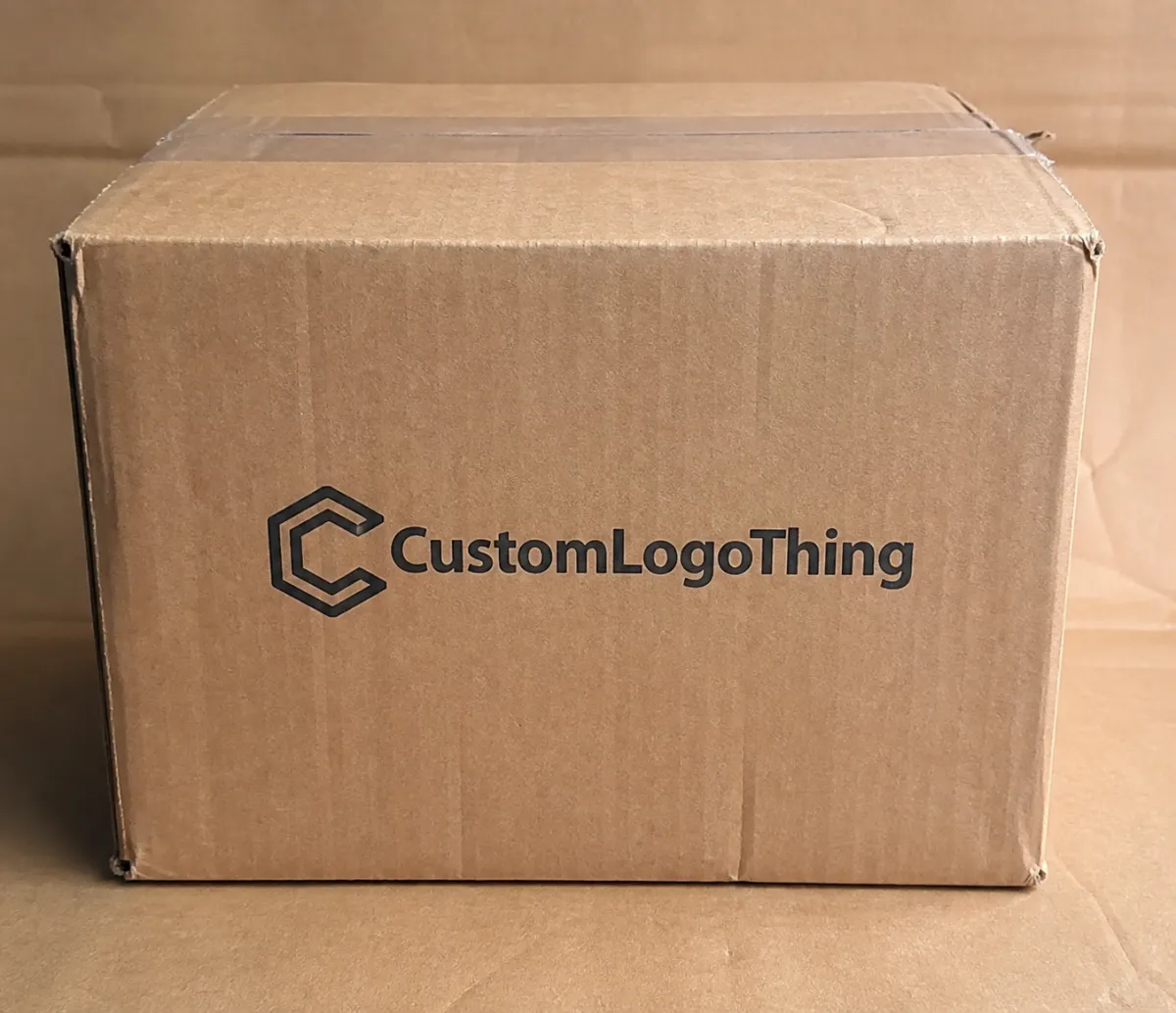
The logo is rarely the expensive part. Shipping conditions are. Export cartons get stacked in warehouse lanes, compressed on pallets, exposed to humid ports, and handled by people who are usually working fast rather than carefully. A decent-looking carton can still buckle if the board grade is wrong or the flute profile is too light for the route.
That is why wholesale export cartons with logo are really a landed-cost decision. A carton that costs a little less but crushes under load is not a discount. It is deferred cost. Damage claims, extra labor, product loss, and rework can eat through the savings before the shipment even clears the destination warehouse. A 2% damage rate on a large run can wipe out a price advantage that looked impressive at quote stage. If the goods are high value, the breakeven point arrives even faster.
The better comparison is not unit cost versus unit cost. It is unit cost versus freight efficiency, pallet stability, and failure risk. A carton that holds its compression strength can reduce cube waste, keep layers straighter, and protect the product during longer transit. On palletized loads, edge crush performance often matters more than the artwork. On loose warehouse handling, margin matters even more because the box has less support from the surrounding load.
Branding still has a job to do. Importers, distributors, and warehouse teams all see the outer carton first. A clean logo, straight text, and readable handling marks communicate order. That is not decoration. It is a signal that the supply chain was planned with care. I have seen buyers choose a stronger carton simply because the receiving team could identify it faster and stack it more cleanly. That is a small operational win, but small wins add up across repeated orders.
The lowest quote often excludes something important: board strength, print complexity, or freight damage. If every line looks cheap, somebody is probably missing a cost.
A good export carton saves money by not creating problems. It does not sag on the pallet. It does not split at the seam. It does not force a second outer layer because the first one is too weak. It arrives looking like it belonged in the shipment from the start. That is the real value of wholesale export Cartons with Logo: fewer failures, fewer surprises, less waste.
Product details for export cartons that print cleanly
Not every export carton behaves the same way. Two boxes can share the same dimensions and still perform very differently once they are printed, packed, and loaded. Product weight, route length, humidity exposure, stacking height, and branding needs all shape the final spec. A carton for a 3 kg consumer product does not need the same build as a 22 kg industrial shipment, and a carton that crosses a dry inland lane does not need the same moisture margin as one that sits near a port for days.
Common carton structures
Regular slotted cartons are the standard workhorse. They are economical, fast to produce, and easy to use at volume. That makes them a strong fit for standard export loads where the print is simple and the dimensions are stable from order to order. If the outer shipper only needs a logo, a count, and handling marks, this structure usually makes the most sense.
Die-cut export cartons come into play when fit matters more or when the carton has to look tidier at opening. They need more tooling and setup, which raises the cost, but the tradeoff is tighter control over the final shape. Products with unusual profiles, inner inserts, or presentation requirements often benefit from this route. A buyer once used a die-cut outer because the product label had to stay visible through a cutout; it solved the presentation issue, but only because the carton spec had been planned around the actual product, not around a generic box size.
Heavy-duty corrugated shippers are built for shipments that punish packaging. Long sea routes, dense stacks, humid storage, and heavier contents all push a carton into stronger territory. Double-wall construction, reinforced corners, and better linerboard are often the right answer when the load is unforgiving. Saving a few cents on a weak box rarely looks clever after a pallet collapse.
Reinforced-edge cartons help when the carton will carry load for a long period before opening. Corners, seams, and top panels usually fail first, especially when the pallet stack is high or the shipment sits in storage. Extra crush resistance is not a luxury in those cases. It is insurance against compression failure.
How logo printing usually works
One-color flexo printing remains the practical choice for most wholesale export cartons with logo. It is fast, consistent, and suited to corrugated surfaces. Export cartons do not need to behave like premium retail packs. They need to stay legible, stay attached to the shipment, and survive rough handling without print rub-off or alignment issues.
Multi-color branding can work when the carton needs a stronger visual presence, but it also adds plate costs, setup time, and a little more risk of detail loss on rough board. Corrugated surfaces are not coated folding cartons. Tiny text, thin lines, and intricate graphics can break down quickly if the art is too ambitious for the material. If a logo must reproduce cleanly, the safest version is usually the one with slightly thicker strokes and more breathing room around the edges.
The branding elements most buyers request are usually straightforward:
- Logo and company name
- Product name or SKU
- Handling symbols
- Carton count or batch code
- Country of origin mark
- Destination marks or shipping instructions
- QR code or lot traceability code, if needed
There is a practical tradeoff here. More print complexity means more setup work and a higher chance of small quality issues. If the carton is only a shipping outer, the graphics should stay clean and restrained. If it also has to support warehouse identification or retail-adjacent handling, then the logo may deserve a larger panel and tighter print control. A large front panel can also help receiving teams identify the goods faster, which is useful when mixed pallets are being checked under time pressure.
A useful rule keeps the order in line: print enough to identify the carton quickly, then stop before the artwork begins driving cost for no operational gain. Large logo panels help when brand visibility matters. Smaller, cleaner marks help when the carton is mostly a logistics tool. That balance keeps wholesale export cartons with logo useful instead of theatrical.
Specifications that matter for export strength and print quality
Specs decide whether the quote means anything. A rough size estimate, a vague board request, and a half-finished logo file create expensive confusion. Buyers get the best result when they give the supplier measurable details from the start. Packaging is not a place where guesswork performs well.
Internal dimensions come first. Not external size. Internal. A few millimeters matter because they affect product fit, pallet layout, and packing speed. Too much slack wastes freight space and invites movement inside the carton. Too little space slows the line or crushes the product. That tradeoff is obvious on paper and very expensive in a warehouse.
Next comes the board grade and flute profile. Single-wall board may be fine for lighter loads and short routes. Heavier or higher-risk shipments often need double-wall construction. Common choices include C flute for general shipping, B flute for a tighter wall and better print surface, and BC flute for stronger export performance. E flute can work for smaller cartons with cleaner appearance, but it is not usually the first choice for rough export lanes.
Strength figures matter in a way many buyers underestimate. Burst strength and ECT (Edge Crush Test) both tell part of the story, but ECT is often the more useful number for stacked export loads because it reflects compression performance. A carton can feel solid in hand and still fail once the pallet stack builds. ASTM D642 compression testing is a useful reference when the shipment has a long route or a long dwell time before use. For buyers comparing quotes, this is one of the easiest places to miss a hidden downgrade: two cartons can look similar in a catalog and behave very differently under load.
Moisture resistance deserves attention too. Cartons moving through humid ports or ocean transit can lose strength as the board absorbs moisture. When that risk is present, ask about liners, coatings, or a stronger board spec. The goal is not overbuilding. It is preserving enough strength that the stack survives the route intact. In practice, that often means choosing a carton that feels slightly heavier than expected, because the extra fiber is buying margin against environmental stress.
Artwork is another common failure point. Vector files print more cleanly than flattened images. Pantone references help when brand color needs consistency. Fine text should be larger than the designer wants to admit, because corrugated surfaces are unforgiving. QR codes need to be tested on the actual board, not just admired in a mockup. A code that scans in a PDF may fail once it hits fiber, ink spread, and board texture.
Compliance marks matter as well. Country of origin, carton count, gross weight if required, and market-specific language should all be confirmed before print approval. Some buyers also need warehouse labels, traceability codes, or customs markings. If the carton is entering a regulated market or a high-value lane, the marking rules should be locked before production starts. Changing those details after proof approval burns time and money.
If sustainability claims are part of the brief, ask for FSC-certified board options and confirm the paperwork. The sourcing framework is available through FSC. For transport testing and handling expectations, ISTA provides useful protocol language. Standards do not solve every packaging problem, but they keep the conversation grounded in something measurable.
Dimensions, board grade, flute type, strength target, print limits, and compliance marks form the core spec. Leave one item vague and the quote becomes a guess. Leave two vague and the order starts drifting before production even begins.
Wholesale export cartons with logo: pricing, MOQ, and quote basics
Price pulls attention away from the important parts. Buyers often chase the lowest number without checking whether the spec behind it is actually comparable. That usually creates false savings. A carton quote only helps when the inputs are complete and the assumptions are visible.
Several factors move the unit cost: size, board grade, wall thickness, print colors, finishing, tooling, order volume, and shipping method. A simple one-color flexo job on standard board can be relatively economical. A custom die-cut export carton with heavier board, two-color branding, and dedicated tooling belongs in a different cost bracket altogether. The same carton can also shift price noticeably if the artwork has large solid areas, because ink coverage and drying behavior affect production speed.
MOQ follows the same pattern. Simple shipping cartons usually start lower because setup is straightforward. More complex constructions, multi-color branding, and heavyweight board push MOQ upward because the production run has to cover setup and waste. That is not pressure tactics. It is basic manufacturing math.
| Carton Type | Typical MOQ | Usual Print Method | Rough Unit Price | Best Fit |
|---|---|---|---|---|
| Regular slotted carton, single-wall | 500-3,000 pcs | 1-color flexo | $0.28-$0.85 | General export loads, standard sizes, simple branding |
| Heavy-duty export shipper, double-wall | 1,000-3,000 pcs | 1-2 color flexo | $0.78-$1.95 | Heavier products, long routes, stronger stack resistance |
| Die-cut branded export carton | 2,000-5,000 pcs | Flexo or higher-detail print | $0.95-$2.80 | Cleaner presentation, tighter fit, more brand-forward outer packaging |
| Special-size reinforced carton | 1,000-4,000 pcs | 1-3 color flexo | $1.10-$3.25 | Non-standard product dimensions, awkward loads, export stress points |
Those numbers are directional, not promises. Thicker board, higher ink coverage, or unusual die work push the price upward. Small orders feel this the hardest because setup is divided across fewer pieces. That is where cheap quotes often hide the real cost.
Tooling should be visible from the start. Print plates can run roughly $75-$180 per color depending on the setup. A die tool may cost about $120 to $450 or more depending on size and complexity. Digital samples may be free, but physical samples often carry a charge, especially when a printed proof or custom-cut sample is needed. That is normal manufacturing overhead. The problem is not the cost itself. The problem is discovering it after you have already compared the wrong quotes.
Compare every offer on the same Incoterm. An EXW quote and an FOB or DDP quote do not mean the same thing, so the price gap is often just accounting theater. Freight, export handling, and destination charges can move the final number more than a small unit-price difference. A clean quote should separate:
- Unit price
- Tooling or plate cost
- Sample cost
- Freight or shipping cost
- Any rush fee
- Optional inspection or testing charge
If you want to lower the price, standardize carton sizes across SKUs, simplify the print, and order in quantities that unlock better bands. Moving from 1,000 pieces to 3,000 pieces can change the economics more than buyers expect. Moving from three colors to one can do the same. The most expensive carton is the one designed to solve a problem the business does not actually have.
For volume programs, the real target is not the lowest line item. It is the carton that ships cleanly, prints clearly, and keeps total landed cost under control. That is the number that matters.
Process, timeline, and lead time from quote to dispatch
A carton order moves smoothly when the brief is complete. Problems usually start when a buyer skips a dimension, changes artwork late, or asks for a quote before the carton is actually defined. The sequence itself is straightforward. The quality of the input is what determines whether the order stays on schedule.
- Inquiry: Send dimensions, product weight, carton style, board preference, print colors, destination, and order quantity.
- Specification review: The carton structure is checked against the load and shipping method.
- Artwork check: Logo files, text, marks, and barcode or QR details are reviewed.
- Quote: Unit price, tooling, sample cost, and freight assumptions are separated.
- Proof or sample approval: Digital proof first, physical sample if fit or print placement matters.
- Production: Board is converted, printed, cut, folded, and checked.
- Quality inspection: Carton size, print alignment, and pack count are confirmed.
- Packing and shipment: Cartons are bundled, strapped, and shipped on the agreed method.
Timing depends on the readiness of the order. A standard carton with simple print often receives a quote within 24 to 48 hours if the brief is complete. Digital proofs usually come back in 1 to 2 business days. Physical samples take longer, commonly 5 to 7 business days, depending on whether tooling is needed and whether the sample must be printed.
Production lead time for wholesale export cartons with logo often lands in the 10 to 18 business day range after proof approval. Larger quantities, heavier board, custom die-cut shapes, and multi-color printing can stretch that window. Peak season adds pressure. Extra inspection or special packaging protection adds more. Planning with no buffer is how buyers end up paying for air freight they never wanted.
Shipping time sits outside production time. Sea freight can add 2 to 6 weeks, depending on route and port congestion. Air freight moves faster and costs far more, which is why it only makes sense for urgent or small-volume orders. Launch dates should be counted backward from the delivery date, not from the production start date. Plenty of people learn that once and never again.
The approval stage is where delays are either prevented or made worse. Before production begins, confirm the following:
- Internal dimensions and tolerances
- Artwork placement and logo size
- Color reference if color is important
- Carton count per bundle or master pack
- Compression or strength target
- Shipping marks and compliance text
Ask for a physical sample when the carton is new, the product shape is unusual, or the print placement has to be exact. Digital proofs are fast, but they are flat. They do not reveal board texture, fold behavior, or how a logo sits near a seam. A sample takes time. It also catches problems that would otherwise show up after production starts.
The buyers who move quickly are the ones who send a clean brief. The buyers who stall are usually still waiting on artwork, changing dimensions, or asking for a quote on a carton that has not been defined. That is a planning issue, not a supplier mystery.
Why choose us for wholesale export cartons with logo
Buyers need a supplier who can look at the product, the route, and the brand requirement, then say what will actually work. That matters more than polished sales language. Export packaging rewards clarity. Vague answers create waste.
At Custom Logo Things, the value is practical spec support. We focus on carton structures that behave well in real logistics, not just on a sample that photographs nicely. That means checking dimensions, stacking load, print method, and shipping route before the quote is finalized. It also means pointing out when a carton is too weak, too decorative, or too expensive for the shipment it is supposed to carry.
Buyers return when the process stays clean. A clear quote saves time. A useful dieline cuts revisions. A sensible sample prevents a production headache. A carton that survives the route protects margin long after the job has shipped.
Here is what practical support looks like:
- Fast dieline guidance when the size or structure is not finalized
- Clear MOQ guidance so you know where the pricing bands start
- Sample coordination when fit or print placement matters
- Print review to keep logos, marks, and barcodes legible on corrugated board
- Strength-aware recommendations for export routes, stacked pallets, and rough handling
That last point is where a lot of supply chains get expensive. Cartons are not judged in a mockup folder. They are judged after forklift movement, after stack pressure, after transit vibration, after humidity. If a supplier ignores that reality, they are only solving half the problem.
Commercial clarity matters too. Quotes should separate tooling from unit cost. Sample costs should not be buried. Freight assumptions should be visible. A quote that hides those pieces is not cleaner. It is just less honest.
If you plan repeat orders, our Wholesale Programs page is the right place to start. It keeps the structure, artwork, and quantity bands aligned so reorders do not become a fresh negotiation every time.
The reason to choose a supplier is not hype. It is fewer corrections, fewer delays, and cartons that arrive ready to use. That is what protects margin.
Next steps to order the right cartons without delays
If speed matters, gather the basics before asking for quotes. A complete brief usually saves more time than any follow-up thread. The fewer gaps in the input, the fewer places the order can wander.
Start with these items:
- Internal carton dimensions
- Product weight and any stacking load concerns
- Carton style you prefer, or the shape of the product
- Board grade and flute preference, if you already know it
- Number of print colors
- Destination market and shipping method
- Estimated annual volume or repeat order potential
Then ask for a quote that shows the cost in pieces, not in fog. Unit price matters, but it is only one part of the picture. Ask for tooling, sample cost, freight assumptions, and any rush fee to be listed separately. Compare the same carton spec across suppliers, not a mix of board grades, print methods, and shipping terms. Otherwise the spreadsheet is doing fiction.
Request a dieline or structure sketch before artwork is finalized. That step prevents logo placement problems, size mismatch, and barcode issues. It also speeds approval because everyone is working from the same layout. If the carton needs a hand-hole, window, or special flap shape, get that into the spec early. Late structural changes are where timelines start slipping.
If the carton is for a new export lane, test a sample against your pallet pattern, warehouse handling, and shipping route. One sample will not tell you everything. It will tell you enough to catch the obvious mistakes. Check the fit. Check the seam. Check whether the print sits cleanly on the board. Check whether the stack remains stable when layered. That sounds basic because it is basic. Basic prevents expensive nonsense.
Once the spec works, keep it stable. Reorder from the proven dimensions, board, and print setup unless the product changes. That is how wholesale export cartons with logo stay consistent, affordable, and export-ready over time.
If you need a volume quote path built for repeat ordering, use our Wholesale Programs page and start from the same carton spec each time. That is the cleanest way to buy.
FAQ
What information do I need to quote wholesale export cartons with logo?
Send internal dimensions, carton style, board grade, print colors, quantity, destination, and whether you need samples or artwork support. Product weight and shipping method help too. Those details let the supplier match the carton strength to the export load instead of guessing from a mockup. If the carton will be palletized, include the pallet pattern and stack height as well.
What is the usual MOQ for wholesale export cartons with logo?
MOQ depends on carton size, print method, and tooling. Simple printed cartons usually start lower than fully custom die-cut designs. Quantity breaks matter because they change the per-carton cost. Moving into a higher band often drops the unit price enough to matter in a real purchasing budget. Buyers placing repeat orders often get the best economics when the spec stays unchanged across several replenishment cycles.
How long does production take for custom export cartons with logo?
Lead time depends on proof approval, tooling, quantity, and print complexity. Orders with final dimensions and artwork ready at quote stage move faster because no one is waiting on revisions. In a normal run, production often lands in the 10 to 18 business day range after approval, then shipping time is added on top. Rush orders are possible in some cases, but they usually require tradeoffs in freight cost or production scheduling.
Which printing method is best for export cartons with logo?
For high-volume shipping cartons, flexo printing is usually the practical choice because it is efficient and durable. If you need sharper graphics or more detailed branding, ask whether another print method makes sense for your carton spec and budget. Board surface, transit conditions, and print coverage all influence the result. For most export cartons, the best print is the one that stays readable after handling, not the one that looks best in a proof file.
Can wholesale export cartons with logo be made stronger for long-distance shipping?
Yes. You can upgrade the board grade, change flute profiles, use double-wall construction, or adjust the carton design for better compression resistance. The right choice depends on product weight, stacking height, route conditions, and whether the cartons ride on pallets or move loose through the supply chain. Build the spec around the actual route and the cartons stay consistent from one order to the next. For especially humid or unstable lanes, ask for a stronger linerboard and confirm the performance target before production begins.
For any new order, the safest next step is simple: lock the internal dimensions, board grade, print method, and Incoterm before comparing suppliers. That gives you a quote you can actually trust, and it keeps wholesale export cartons with logo tied to the real shipping job instead of to a paper spec.


