Buyer Fit Snapshot
| Best fit | Wholesale Kraft Mailers with Printing for Branded Shipping projects where brand print, material claims, artwork control, MOQ, and repeat-order consistency need to be specified before quoting. |
|---|---|
| Quote inputs | Share finished size, material target, print colors, finish, packing count, annual reorder estimate, ship-to region, and any compliance wording. |
| Proofing check | Approve dieline scale, logo placement, barcode or warning zones, color tolerance, closure strength, and carton packing before bulk production. |
| Main risk | Vague material claims, crowded artwork, missing packing details, or unclear freight terms can make a low unit price expensive after revisions. |
Fast answer: Wholesale Kraft Mailers with Printing for Branded Shipping should be specified like a repeatable production item. The safest quote records material, print method, finish, artwork proof, packing count, and reorder notes in one written spec.
Production checks before approval
Compare the actual filled-product size with the drawing, then confirm tolerance on folds, seals, hang holes, label areas, and retail display edges. Reserve space for logos, QR codes, warning copy, and material claims before decorative graphics fill the panel.
Quote comparison points
Review material grade, print process, finish, sampling route, tooling charges, carton quantity, and freight assumptions side by side. A quote is only useful when the supplier can repeat the same color, closure quality, and packing count on the next order.
Wholesale kraft mailers with printing change the economics of a shipment in a very direct way. The mailer becomes the brand face, the shipping surface, and often the first thing a customer touches. That means fewer loose labels, fewer extra handling steps, and a cleaner arrival. For apparel, accessories, stationery, supplements, and subscription kits, those details matter because every extra motion adds labor and every improvised package weakens the experience.
Buyers keep returning to Printed Kraft Mailers for a simple reason: they sit in a useful middle ground. They are light enough to protect margin, rigid enough for flat goods, and flexible enough to carry a logo, return instructions, QR codes, or a campaign message without turning fulfillment into a manual art project. That balance is hard to match when the order profile is low to medium value and speed still matters.
A mailer that ships well and photographs well is doing two jobs. If it also trims label clutter, the package starts returning value in time, consistency, and perceived quality.
Procurement teams tend to notice the business case before anyone else. A printed mailer delivers the repeatability buyers expect from cartons and poly mailers, while keeping the front panel cleaner and easier to read. It can reduce the number of labels applied, simplify sorting, and make pack-out training easier. That is why wholesale kraft mailers with printing often enter the conversation beside fulfillment speed, cost per shipment, and unboxing quality rather than sitting in a "nice-to-have" category.
The sections that follow stay focused on the details buyers actually compare: material structure, print methods, minimum order quantities, lead times, and the questions that should be answered before asking for a quote. Packaging at scale rewards specificity. Broad promises do not help nearly as much as clear specs.
Why Wholesale Kraft Mailers with Printing Change the Cost of Every Shipment
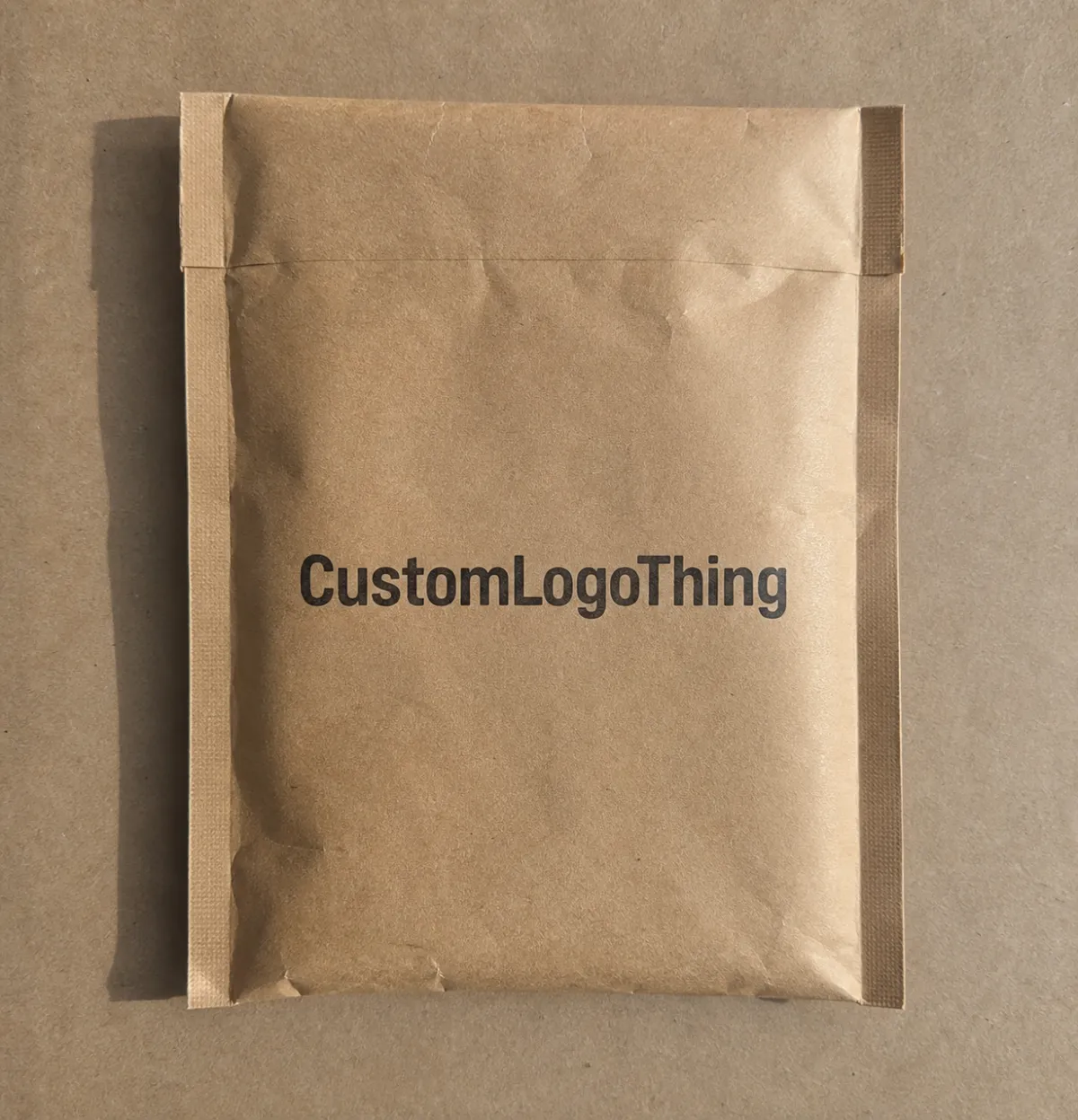
Unprinted packaging looks inexpensive until the workflow is counted. A separate label has to be stocked, printed, applied, and checked. On a small packing table that may feel harmless. At 500 orders a week, it is a different story. If a label adds even 10 seconds to each order, that is 5,000 seconds, or a little under 84 minutes, spent every week on a task that a printed exterior can eliminate or reduce. That is not branding fluff. That is labor.
Consistency is the first operational gain. A branded surface standardizes the shipment even when the order contents change. The exterior no longer depends on who packed the box, which printer handled the label, or whether a substitution showed up late in the day. That kind of control matters for brands that want every touchpoint to feel deliberate instead of patched together under deadline pressure.
Presentation carries its own weight. A kraft mailer with a clean logo and a sensible layout looks intentional. It tells the customer the brand thinks about packaging as part of the product rather than as leftover logistics. For DTC apparel, stationery, beauty samples, and promo kits, that distinction can decide whether the parcel disappears into the mail stream or feels like a branded object before it is even opened.
Lower- and mid-value products make the strongest case. The shipping format needs protection, but not box-level expense for something flat or flexible. Brands want a finished look, but they do not want to add a sleeve, sticker, and hangtag just to make the package feel complete. Wholesale kraft mailers with printing solve that tension because the print is built into the package instead of layered on after the fact.
Production flow is the other half of the story. Fulfillment teams move faster when the pack-out path is short and predictable. A printed mailer can be stacked, filled, sealed, and shipped with fewer decisions. That matters during seasonal peaks, launch windows, and replenishment cycles when throughput is already under pressure. It also lowers the risk of mismatched labels, wrong sticker placement, or a rushed order leaving the warehouse with no branding at all.
Compared with more rigid formats, kraft mailers can be a better fit for products that do not need heavy shock resistance. They are not meant for every item. They are the right answer when the product is relatively flat, the shipping environment is controlled, and the brand wants a practical mix of cost, speed, and appearance.
Product Details: What Printed Kraft Mailers Are Made to Do
Printed Kraft Mailers are paper-based shipping mailers designed to protect lightweight or flat products while giving buyers a printable exterior for branding, instructions, and campaign messaging. The structure is usually straightforward: kraft paper on the outside, an inner layer that provides stiffness or cushioning depending on the build, and a closure that keeps the package secure during transit.
They are built for a specific job. They are not trying to act like a corrugated shipping box, and they are not a stand-in for every bubble mailer on the market. Their strength is efficiency. They print well, handle easily, and work at volume. That makes them useful for a long list of products that ship flat or semi-flat:
- Apparel such as tees, socks, scarves, and lightweight garments
- Accessories like wallets, belts, hats, and small leather goods
- Stationery, books, prints, postcards, and paper goods
- Supplements, small wellness items, and non-fragile retail kits
- Promotional packs, sample kits, and subscription contents
The printable surface is the commercial reason many buyers choose them. A logo can sit on the face panel, a campaign graphic can run in one color or across the full exterior, and customer instructions can be printed directly into the design. That might include a return address panel, an "open here" cue, a QR code for product registration, or care directions that reduce customer service questions later.
For some brands, the exterior functions as a communication surface as much as a shipping surface. A seasonal campaign can be carried through the packaging without changing the product. A subscription brand can use the mailer to signal month-to-month variation. A B2B promotional kit can use the outside to set expectations before the recipient opens the package. These are small shifts, but packaging often lives or dies on small shifts.
What the product is not meant to do
Printed kraft mailers are usually not the right fit for heavy, sharp, or highly fragile items. They prioritize efficient shipping and brand presentation over deep cushioning. If a product needs serious impact resistance, corner protection, or multi-layer shock absorption, another structure is a better match. The honest rule is simple: use the mailer for what it handles well, not for what it was never designed to do.
That tradeoff is why the buying lens matters. The right mailer is not the prettiest sample on the table; it is the mailer that fits the product, supports fulfillment, and still looks clean after transit. A size that is too large can waste material and wrinkle in the pack. A size that is too tight can slow packing and deform the contents. Either mistake turns a smart format into a nuisance.
For brands building a broader packaging mix, it helps to compare the mailer against other formats in the line. The range of Custom Packaging Products can show the difference between a good option and the right one. Some shipments need a mailer. Others need a custom carton or a more protective structure. The product should decide the format, not habit.
Specifications That Matter: Sizes, Strength, and Print Setup
The spec sheet is where a packaging decision gets confirmed or undermined. Size, strength, closure, and print setup all shape whether the mailer runs smoothly through the warehouse and still looks good at delivery. Buyers who skip the technical side usually pay for it later in excess material, awkward fit, or a design that does not translate cleanly onto the finished piece.
Start with dimensions. Internal size matters more than outside footprint because the product has to slide in without forcing the seal or deforming the mailer. A thin apparel bundle may need only a modest allowance. A kit with inserts, tissue, or product trays needs more room. The practical goal is a snug fit without compression that bends the contents or makes insertion slow.
Thickness matters just as much. A low-cost mailer can look fine in a sample and fail once it is asked to carry a denser product or a second item. Buyers should ask about paper weight, tear resistance, and sealing method. If the package uses an adhesive strip, confirm that the adhesive matches the storage and transit conditions. If the mailer has a peel-and-seal closure, make sure the seal holds after handling and vibration.
For print setup, the real decisions usually fall into four categories:
- Color count: one-color, two-color, or full CMYK
- Coverage: front panel only, partial wrap, or full exterior print
- Method: digital printing, flexographic printing, or offset printing where appropriate
- Artwork structure: logos, icons, text panels, QR codes, and registration marks
Single-color print with a strong spot color can be very efficient when the brand system is simple. A black logo on kraft stock can look sharp and cost less than a full four-color build. If exact brand tones matter, spot color control may be worth the extra setup. If the design uses gradients, photography, or more complex artwork, CMYK digital printing may be the better path, especially on smaller runs.
Offset printing delivers excellent image fidelity, but on straightforward kraft mailers it is often reserved for projects that need tighter color consistency or more complex artwork and can absorb the setup cost. Flexographic printing is usually stronger on larger recurring runs, especially when the design is simple and repeatable. Digital printing often wins on shorter runs, faster approvals, or projects that need design changes without a long retooling cycle.
Artwork readiness has a direct effect on lead time. Vector files such as AI or print-ready PDF files are usually easiest to work with. Raster files can work in some cases, but only if resolution is high enough to avoid blurred edges or broken type. Buyers should always confirm bleed, safe zones, and the exact dieline before signoff. A logo that looks centered in the file can land uncomfortably close to a fold or closure point on the actual mailer.
Finishing deserves a place in the conversation too. On kraft stock, finish is often subtle rather than glossy. A matte varnish, aqueous coating, or clean uncoated look may be better when recyclability and tactile feel matter. Heavy lamination can improve surface appearance in some applications, but it can also complicate recycling. That choice should be made intentionally, not by default.
Do not let print decisions crowd out functional space. If the mailer needs a shipping label, sort code, or barcode, reserve a clean panel for it. A useful rule is to leave a panel large enough for a standard label without overlapping the brand mark. That keeps the package readable for carriers and easier to process in the warehouse.
Cost, Pricing, MOQ, and Quote Factors
Pricing for wholesale kraft mailers with printing follows the same pattern buyers see across custom packaging: size, substrate, print coverage, color count, finishing, and order quantity all move the number. The low end of the range can look attractive until the quote is unpacked line by line. The real comparison is not just unit price. It is landed cost plus the work required to get the mailers into production.
For many wholesale orders, common pricing behavior looks something like this:
| Print Scenario | Typical Volume | Indicative Unit Cost | Best Fit | Notes |
|---|---|---|---|---|
| Digital printing, simple logo | 500 to 2,000 units | $0.55 to $1.10 | Launches, tests, short runs | Fast setup, flexible artwork changes, usually higher unit cost |
| Flexographic printing, one to three colors | 3,000 to 25,000 units | $0.18 to $0.45 | Recurring SKUs and steady replenishment | Strong economics at volume, especially with simple layouts |
| Offset-style print, higher fidelity graphics | 2,000 to 10,000 units | $0.30 to $0.70 | Premium presentation and detailed artwork | Excellent image quality, but setup and coordination are heavier |
These ranges are directional, not fixed. The actual number shifts with mailer size, paper weight, print coverage, and freight. A small mailer with a single logo almost always prices better than a large format with full exterior coverage. More colors, more coverage, and tighter registration requirements increase the production burden. That burden shows up in the quote.
MOQ usually follows setup economics. If a supplier has to prepare plates, calibrate color, or lock in a dedicated press configuration, smaller quantities become expensive on a per-unit basis. That is why some projects start around 1,000 to 2,000 units while others make more sense at 3,000, 5,000, or beyond. MOQ is often a reflection of the production method, not just supplier policy.
There are also costs that do not always appear in the first line of a quote. Ask about sample fees, plate or setup charges, freight, and any rush fee tied to timeline compression. A quote that looks lower on paper can lose its edge if freight is expensive or if the supplier charges heavily for artwork revisions after proofing starts.
Every quote should be normalized against the same spec: the same size, the same number of colors, the same coverage, the same destination, and the same delivery window. Without that comparison, one offer may be for a low-coverage mailer with a short run while another is for a completely different build. Those are not competing bids. They are different products.
Higher volume can cut the unit cost quickly, but only if the business can support inventory storage and turnover. Overordering to chase a lower unit price ties up cash and creates storage pressure. For brands with stable SKUs and predictable monthly demand, bulk purchasing makes sense. For brands with frequent design changes or seasonal packaging, a smaller run may be the smarter financial move even if the per-unit price is higher.
One useful comparison is printed mailers versus plain mailers plus labels. The printed version may cost more up front, but it can save time at pack-out, reduce label inventory, and strengthen customer-facing presentation. If a separate label adds even 8 to 12 seconds per order and the warehouse processes hundreds of orders a week, the labor difference becomes hard to ignore. That is often where printed packaging starts to win the argument.
If procurement is being handled at scale, the supplier's Wholesale Programs should be reviewed alongside the quote. A well-structured wholesale process can reduce surprises around reorders, change requests, and minimums. It also makes it easier to tell whether the quoted price is tied to a one-time promotion or a stable long-term supply plan.
Process, Timeline, and Lead Time From Artwork to Delivery
The workflow is simple on paper. A buyer submits an inquiry, shares dimensions and artwork, receives a proof or layout, approves the final spec, and then the order moves into production, quality inspection, packing, and shipment. The bottleneck is usually proofing, not manufacturing.
Artwork approval is where schedules often slip. Missing dielines, color mismatch, low-resolution logos, or late changes to copy can add days. If the file has to be rebuilt or the print panel has to be re-centered, the production line may wait while the design is corrected. Clean files and a clear spec are what keep the job moving.
Typical lead time depends on the print method and the order size, but many projects land in the 12 to 20 business day range from proof approval to shipment. Simpler digital runs may move faster. Larger flexographic or more complex print jobs may need more time, especially if custom colors or special finishing are involved. Freight transit then adds its own schedule, which can be a few days or longer depending on destination.
What slows an order down
Four problems show up again and again:
- Artwork arrives without a clean dieline or template match
- Color expectations are stated verbally instead of with a reference file or Pantone value
- The buyer changes size, coverage, or closure after the proof is issued
- Shipping deadlines are set before production capacity is confirmed
These are not small issues. Any one of them can move a project from a manageable schedule into a scramble. A packaging team planning for a launch should build in time for proof review, internal approval, and receiving at the warehouse. If the mailers need to be stored on site, receiving and inspection need to happen before the launch clock starts.
The best way to control lead time is to define the pack spec early. Measure the product, identify the closure method, confirm the print coverage, and lock the artwork before the quote becomes a purchase order. That is especially useful for seasonal promotions or product launches, where packaging delays can spill into marketing delays.
For brands that want a more controlled manufacturing view, the Manufacturing Capabilities page is a useful place to evaluate whether a supplier can handle the printing method, finishing, and volume profile you need. It is not enough to ask whether a supplier "does custom packaging." The real question is whether they can make the exact mailer you need at the cadence your business requires.
If transport durability is a concern, it makes sense to think about distribution testing before scaling an order. ISTA provides widely recognized test standards for shipment environments, and that framework helps buyers think more clearly about compression, vibration, and rough handling. Not every mailer needs formal testing, but the logic behind those standards is useful even on simple runs.
Internal planning matters too. If a campaign needs launch-ready mailers on a fixed date, request a realistic turnaround estimate early and then add buffer time for freight and receiving. A schedule with no room for proof changes is not a schedule. It is a guess.
Why Choose Us for Printed Kraft Mailers
For buyers sourcing custom packaging, the supplier should reduce risk, not add it. That is the standard Custom Logo Things should be judged against. Clear communication, stable specs, accurate proofs, and repeatable quality matter more than polished sales language. If the mailer arrives on time, matches the proof, and performs in the warehouse, the supplier has done the job.
Three service qualities usually separate a dependable partner from a merely available one. Consistency comes first: the same size and print behavior across reorders matters because packaging is often reordered under time pressure. Transparency comes next: if a spec needs a higher MOQ or a longer lead time, that should be said early. Support matters too: artwork prep, color clarification, and quote comparison should not be left entirely to the buyer when the project is custom.
That support becomes even more useful for teams managing multiple packaging formats. A company may use mailers for one product family, cartons for another, and a separate branded shipper for wholesale accounts. A supplier that can explain the differences without steering every order toward the highest-priced option is usually the one worth keeping. That is where Custom Packaging Products and the broader order history start to matter, because repeat business depends on fewer surprises.
Operationally, buyers want fewer defects, fewer rejected proofs, and fewer reorder issues. A strong partner catches mistakes before production starts. A weak partner leaves those problems until the shipment lands. That difference has real cost. Rework wastes material. Delays eat campaign timing. Color mismatch weakens the brand signal on the very packaging that is supposed to reinforce it.
Sourcing questions beyond print matter as well. If sustainability claims matter, ask about paper origin, coatings, and certification. If fiber sourcing is part of the brand story, look for traceability through FSC. Certification does not solve every packaging issue, but it gives procurement teams a clearer basis for claims and internal compliance checks.
At a practical level, good printed kraft mailers should make the order process easier, not harder. The product should fit. The print should read cleanly. The closure should hold. The pallet should arrive in a condition that supports immediate fulfillment. When those parts are handled well, the mailer becomes more than a shipping sleeve. It becomes a sales tool that moves quietly through the operation and still does its job at the customer’s door.
Next Steps: Build the Right Spec Before You Order
The fastest way to get a useful quote is to submit a useful spec. Start with the product dimensions, including any inserts, sleeves, or protective wrap. Then define the final mailer size, the desired print area, the number of colors, and the expected monthly volume. That information gives the supplier enough context to price the job without guessing in ways that distort the quote.
Before requesting pricing, gather the artwork files and the brand color references. Vector files are best when possible. If exact color matching matters, provide Pantone values or another precise reference. If the design includes fine text or QR codes, note that early so the print team can confirm readability and panel placement before production starts.
For first-time buyers, a sample or proof run is usually a smart move. It gives the team a chance to inspect fit, print clarity, and closure performance before committing to a full run. That small investment can prevent a much larger mistake if the product is slightly thicker than expected or if the visual balance of the print needs adjustment.
Compare every option on the same basis. Unit cost matters, but so do MOQ, Lead Time, print quality, and freight. A cheap quote that misses the launch window is not really cheap. A slightly higher quote that arrives on time, prints accurately, and reorders cleanly may be the better business decision. Packaging should support sell-through, not create friction.
If the order is likely to repeat, think one step ahead. Ask how reorders are handled. Ask whether the supplier can hold artwork on file. Ask what size change would trigger a new setup. Those questions help separate a one-off promotional purchase from a long-term packaging program.
When the spec is ready, the next step is simple: request a review and pricing for wholesale kraft mailers with printing so the final order matches the product, the production schedule, and the brand presentation. A clean spec usually produces a cleaner result, and in packaging, that means less waste, fewer delays, and a better shipment.
FAQ
What size should I choose for wholesale kraft mailers with printing?
Measure the product at its widest point and add enough allowance for easy insertion without excess movement. The best fit depends on whether the item is flat, lightly padded, or bundled with inserts. A mailer that is too tight can slow pack-out and stress the closure; a mailer that is too loose can waste material and look unfinished. Ask for a template before ordering so artwork and sizing are confirmed together, not after production starts.
How does printing affect the MOQ for printed kraft mailers?
More complex printing usually raises setup requirements, which can increase the minimum order quantity. Single-color logos and simpler coverage often support lower MOQs than full-coverage designs. Digital printing can be more forgiving for shorter runs, while flexographic printing usually makes more sense at higher volumes. Request quotes for multiple volume levels so you can see the MOQ tradeoff against unit cost.
What artwork file is best for wholesale kraft mailers with printing?
Vector files such as AI or PDF are usually preferred because they scale cleanly and keep logo edges sharp. Include Pantone or exact brand color references when color consistency matters across reorders. Outline fonts, confirm bleed, and verify safe zones and dielines before submitting final approval files. If the artwork includes fine text or a QR code, ask for a proof that shows the exact print size.
How long is the lead time for wholesale printed kraft mailers?
Lead time depends on proof approval speed, print complexity, and total order volume. A realistic timeline includes artwork review, production, quality inspection, and freight transit. Many projects land in the 12 to 20 business day range after proof approval, but that can move depending on the print method and whether any finishing is involved. If you need a tighter schedule, ask upfront whether rush production or stocked materials are available.
Are wholesale kraft mailers with printing recyclable?
Many kraft mailers are recyclable, but the final answer depends on inks, coatings, and any mixed materials. Keep the build simple if recyclability is a priority, and avoid unnecessary lamination or plastic add-ons. If the mailer uses a coating or adhesive strip, confirm how that affects local recycling rules. The best practice is to verify the material structure with the supplier so the packaging claim matches the actual build.
Can printed kraft mailers replace labels entirely?
They can replace some label functions, but not always all of them. Many brands print the logo, return instructions, and campaign messaging directly on the mailer while still reserving a clear area for shipping labels, barcodes, or carrier marks. That hybrid setup often gives the best balance of branding and logistics. The goal is to remove unnecessary label clutter, not to create a problem for fulfillment or carrier scanning.
Wholesale kraft mailers with printing work because they solve a practical problem: how to ship efficiently without giving up brand presence. The strongest orders are the ones where the spec is clear, the print method fits the volume, and the mailer supports the warehouse as well as the customer experience. Start with the product dimensions, the print panel, and the monthly volume, then match the mailer to those realities instead of the other way around. That is the quickest path to packaging that holds up on the dock, in transit, and at the customer's door.


