Buyer Fit Snapshot
| Best fit | Window Cartons Bulk projects where brand print, material claims, artwork control, MOQ, and repeat-order consistency need to be specified before quoting. |
|---|---|
| Quote inputs | Share finished size, material target, print colors, finish, packing count, annual reorder estimate, ship-to region, and any compliance wording. |
| Proofing check | Approve dieline scale, logo placement, barcode or warning zones, color tolerance, closure strength, and carton packing before bulk production. |
| Main risk | Vague material claims, crowded artwork, missing packing details, or unclear freight terms can make a low unit price expensive after revisions. |
Fast answer: Window Cartons Bulk: Board, Finish, Dieline, and Unit Cost should be specified like a repeatable production item. The safest quote records material, print method, finish, artwork proof, packing count, and reorder notes in one written spec.
Production checks before approval
Compare the actual filled-product size with the drawing, then confirm tolerance on folds, seals, hang holes, label areas, and retail display edges. Reserve space for logos, QR codes, warning copy, and material claims before decorative graphics fill the panel.
Quote comparison points
Review material grade, print process, finish, sampling route, tooling charges, carton quantity, and freight assumptions side by side. A quote is only useful when the supplier can repeat the same color, closure quality, and packing count on the next order.
Choosing window cartons bulk is rarely just a packaging purchase. It affects shelf appeal, warehouse handling, and margin at the same time. A well-placed window lets shoppers see color, texture, shape, and finish before the carton is opened. That visual proof can reduce hesitation quickly. The cost side is less visible: die-cut tooling, film, adhesive, converting time, and assembly all shape the final unit price.
That is why buyers in bakeries, cosmetics, candles, gift goods, apparel accessories, and premium retail usually treat a window carton as a selling tool first and a container second. The opening does more than reveal the product. It can change how the product is perceived. A clean window often signals care and quality in a way that a printed promise alone cannot.
Practical rule: if shoppers decide faster after seeing the product, the window is earning its place. If the item already has strong recognition and only needs protection, a plain carton may be the better financial choice.
Window Cartons Bulk: Why the Window Changes the Buying Math
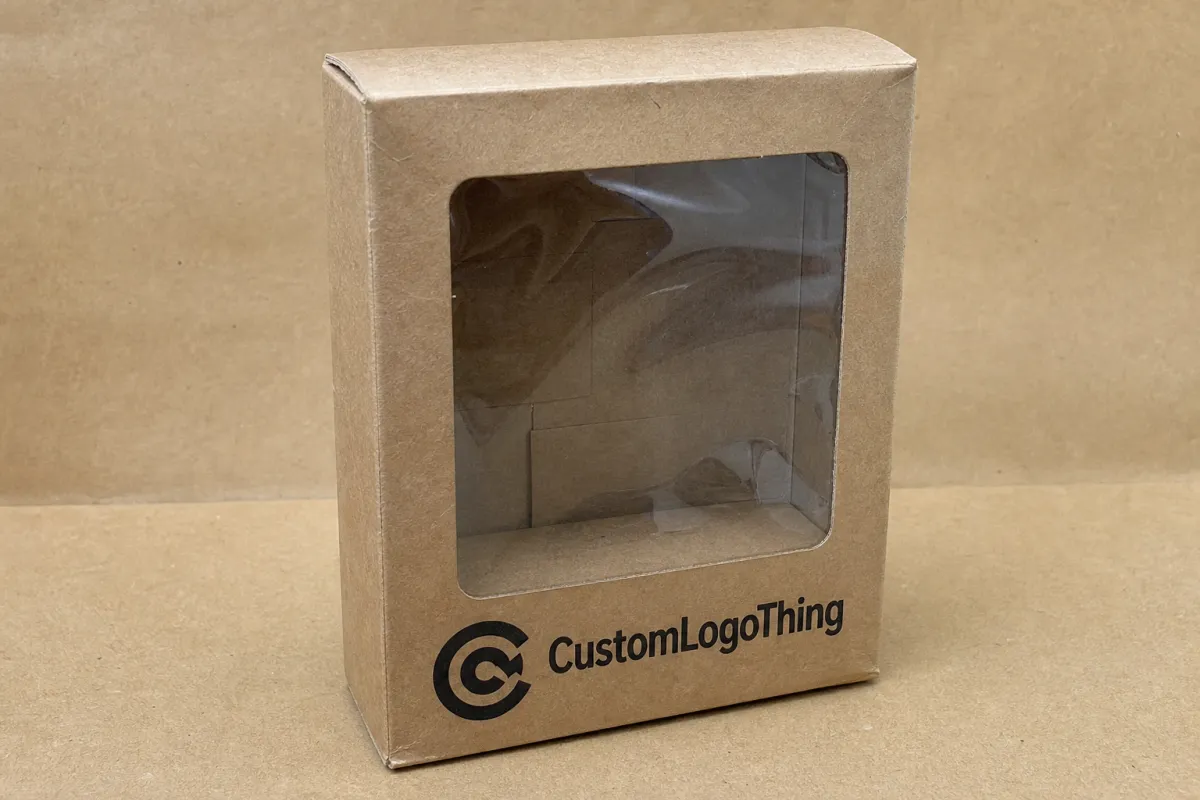
A standard folding carton and a window carton can look similar from across a store aisle. In procurement, they are not the same product. The cutout changes board usage, print layout, production steps, and assembly time. It also changes how the customer experiences the item on shelf. A box that exposes the product can remove uncertainty in seconds, and those seconds matter when the shopper is comparing options.
That effect is strongest in categories where the customer wants to inspect before buying. A bakery shopper checks icing detail and surface finish. A candle buyer may want to see jar color or label alignment. A cosmetics shopper often looks at shade and presentation first, then price. Gift buyers respond to visual proof because the packaging starts telling the story before the box is opened.
The tradeoff is straightforward. A window carton usually costs more than a plain carton because the converter has to add the opening, apply film, manage adhesive, and often pack the finished cartons with more care to avoid scuffs or distortion. That added cost can still pay back if the carton moves faster or supports a higher retail price. Bulk buying improves the economics once the structure is fixed. Setup costs spread across more units, and repeat orders can reuse the same approved dieline. Replenishment becomes more predictable and less exposed to surprises.
That is why window cartons bulk orders tend to work best when the product and the carton already fit each other. If the insert is fixed, the window size is fixed, and the shelf presentation is known, the job becomes production rather than experimentation. If the dimensions keep changing from one order to the next, the savings from bulk volume disappear quickly.
There is also a perception effect that buyers sometimes underestimate. A carton with a crisp cutout and a clean film panel often reads as more premium than a fully closed box, even when the board stock is similar. That can help Private Label Brands and smaller sellers signal quality without moving into rigid boxes or display packaging.
For a packaging buyer, the real question is not whether the window adds cost. It does. The real question is whether the added shelf value is strong enough to justify that cost at the quantity you plan to buy. That answer depends on exact measurements, not rough guesses.
Product Details: Styles, Window Shapes, and Brand Use Cases
Window cartons come in several core structures, and the right format should match the product, the channel, and the packing workflow. Common options include tuck end cartons, Reverse Tuck Cartons, auto-lock bottom cartons, sleeve formats, and folding cartons with inserts. Each one balances speed, protection, and presentation differently. A brand that understands those tradeoffs usually ends up with a better box and fewer production headaches.
Tuck End Cartons are often the most economical choice for lighter products. They convert cleanly, ship flat, and work well for many consumer goods. Reverse Tuck Cartons are similar, although the opening orientation changes how the box behaves during packing and opening. Auto-lock bottoms are better when the product is heavier or when the bottom needs extra support on the line. Sleeve formats create a stronger reveal and are often chosen when the carton itself is part of the brand story.
Window shape matters more than many buyers expect. A full-panel window shows the most product, but it also removes more board area and can weaken the carton if the layout is not engineered correctly. Partial windows reveal the most important part of the product while preserving more structure. Common shapes include oval, square, rectangle, arch, and custom cutouts that echo a brand mark or a product silhouette.
The film choice matters as well. Clear film is the usual default because it gives unobstructed visibility, but frosted film can soften the reveal and hide small imperfections. Printed or tinted film can support a brand aesthetic, though visibility will usually drop. Food packaging adds another layer of caution because grease, moisture, and temperature changes affect performance. Cosmetics and gifts care more about appearance, but the film still has to survive handling and shipping without clouding or separating.
Here is the practical brand logic: a window turns the carton into a preview. That preview helps when the product is color-driven, texture-driven, or shape-driven. Macarons, bath bombs, lip products, candles, soaps, stationery sets, and ornament-style gift items all benefit from that kind of instant verification. The customer wants proof before purchase, and the window lowers friction.
Not every product should be shown openly. Light-sensitive surfaces, dust-prone finishes, and delicate textures can lose value if the window is too large or too exposed. A smaller opening, a frosted panel, or a printed reveal can outperform a wide clear window in those cases. The right answer depends on the product, the storage environment, and how long the box sits in circulation before sale.
Custom finishes can elevate the same carton format without changing the core structure. Spot UV can draw attention to a logo or product name. Matte or gloss coating changes how the board feels in hand and how it reflects light. Embossing adds touch. Foil can create a premium signal with very little coverage. Inside printing deserves attention too, because the opening moment is part of the experience. A plain exterior with a deliberate interior often feels more considered than a box that tries to do everything at once.
For brands comparing options, the carton should be judged by appearance, packing behavior, and retail use together. A box that looks elegant but slows the packing line can become expensive in ways that never show up on the first quote.
| Style | Best For | Typical Strength | Visibility | Indicative Bulk Cost Impact |
|---|---|---|---|---|
| Tuck end with window | Light retail items, soaps, accessories | Moderate | Good | Lowest to moderate |
| Reverse tuck with window | General consumer products, cosmetics | Moderate | Good | Low to moderate |
| Auto-lock bottom | Heavier products, improved pack speed | High | Good | Moderate |
| Sleeve format | Premium reveals, gift sets | Varies by insert | Selective | Moderate to higher |
| Window carton with insert | Fragile or premium items | High | Good | Higher, depending on insert |
Specifications to Lock In Before You Order
The fastest way to protect your budget is to lock the specifications before asking for pricing. Packaging suppliers can quote from a rough concept, but accurate numbers come from exact measurements. If dimensions stay vague, the supplier has to estimate board usage, blank size, and print area, which usually widens the range and creates unnecessary back-and-forth.
Start with product measurements: length, width, height, and weight. Then add clearance. A product that fits tightly on paper can become difficult on a production line if the opening is too narrow. You need enough room for insertion, but not so much that the item shifts inside the carton. For window cartons, that balance matters even more because the product is visible. Misalignment stands out immediately.
Material choice comes next. SBS gives a clean print surface and works well for retail packaging that needs sharp graphics. CCNB is common where cost matters and the inner liner can tolerate a slightly less refined look. Kraft signals a natural finish and works well for artisan, eco-positioned, or minimal brands. Premium stocks create a more luxurious feel but can push the unit price higher. Corrugated-lite or lighter board constructions may fit products that need more body than a standard folding carton, though they are not always the best choice for very fine graphics.
The window itself has several specification points. Buyers should confirm the film material, window size, seal method, and expected exposure. If the product will face humidity, grease, or temperature fluctuation, the film and adhesive have to be chosen accordingly. A beautiful carton that loses adhesion in storage is not a bargain. It is a future defect.
Print specifications should be set just as carefully. How many colors are being printed? Is the design outside only, or does the interior matter too? Is the surface coated or uncoated? Does the brand require PMS matching across product lines? Does the artwork need to avoid the window opening, or can it interact with the cutout to create a reveal? These sound like small questions until they shape the final presentation.
Operational details matter too. Ask whether the cartons ship flat, how many units fit in the master carton, and what the outer carton dimensions are. Those numbers affect storage density, warehouse handling, and freight cost. If your team stacks packaging in a back room or on pallets, the outer pack count can make a measurable difference in available space.
For food-related programs, confirm direct or indirect food-contact requirements early. Standards and compliance language vary by region and use case, and the packaging should meet the actual application rather than a generic assumption. If you want a benchmark for packaging guidance and transit context, industry references such as the Packaging School and related industry resources and the International Safe Transit Association are useful for material selection, shipping performance, and test methods.
That is also where procurement has to think beyond the carton alone. Board stock, film, ink, adhesive, and shipping method all interact. A spec sheet that ignores one of those pieces is incomplete, even if the dimensions look right on paper.
Cost, Pricing, and MOQ for Window Cartons Bulk
Pricing for bulk carton orders is driven by a handful of variables, and nearly all of them are visible once you know what to inspect in the quote. The biggest cost drivers are size, board grade, window shape, print coverage, finishing, insert type, and whether the job needs new tooling or a custom dieline. The more unique the structure, the more setup cost enters the picture.
MOQ, or minimum order quantity, is one of the most important numbers in the buying process. Smaller runs carry a higher unit price because setup costs are spread across fewer cartons. That is not a penalty. It is the reality of converting, printing, and finishing a custom format. Bulk pricing improves when the run is large enough to absorb those fixed costs efficiently.
Buyers often ask for one price and one answer. That is the wrong way to quote packaging. A better method is to request tiered pricing at several quantities. Compare 1,000 units, 3,000 units, and 5,000 units. Sometimes the jump to the next tier is large enough to justify more inventory. Sometimes it is not. The answer depends on storage space, reorder frequency, and sales velocity.
Here is a practical pricing frame for window cartons bulk orders using standard folding carton construction with common print and finishing assumptions. These are indicative ranges, not promises, because board selection, film, and window complexity can move the number quickly.
| Quantity | Typical Use Case | Indicative Unit Price | What Usually Happens |
|---|---|---|---|
| 1,000 units | Test launch, seasonal item, short run | $0.55-$1.25 | Higher setup share, useful for proof of concept |
| 3,000 units | Regular retail program, moderate velocity | $0.28-$0.72 | Better balance of cost and inventory risk |
| 5,000 units | Established SKU, repeat replenishment | $0.18-$0.45 | Usually the strongest per-unit economics |
| 10,000+ units | High-volume programs, multi-location supply | Often lower, spec dependent | Best pricing, but storage and cash flow matter |
Those numbers can move up if the carton has special coatings, a large window, inside printing, or an insert. They can also move down if the structure is simple, the print coverage is light, and the dieline already exists. In other words, the quote is not just about quantity. It is about production complexity.
When you review a quote, break it into components. Ask what is included in prepress, whether die costs are separate, how film application is charged, and whether freight sits inside the number. Some suppliers quote product cost only. Others include packaging and shipping. Comparing those offers without normalizing the line items leads to false savings.
Storage costs can erase a low unit price. If a supplier offers a great rate at 10,000 units but your facility can safely hold only 3,000, the cheapest carton is not truly the cheapest choice. Packaging procurement should be judged on total landed cost, inventory risk, and reorder timing, not carton price alone.
If you are building a long-term supplier relationship, ask whether the supplier supports a Wholesale Programs structure for repeat orders. Reorder continuity matters in packaging. Once a box performs well, consistency becomes valuable in its own right.
Typical quote line items may include:
- Prepress and dieline setup
- Plate or die creation
- Board and film material
- Printing and finishing
- Window application and assembly
- Packaging, palletizing, and freight
- Sample or prototype charges, if requested
Process and Timeline: From Quote to Delivery
A clean production timeline starts with accurate information. The sequence is usually inquiry, specification review, quote, dieline creation, artwork setup, proof approval, sampling, production, quality check, and shipping. The order matters. If one step gets rushed, the schedule absorbs the mistake.
Most delays come from a few predictable places. Dimensions are incomplete. Artwork files are missing bleed or font outlines. A buyer approves a proof before checking product fit. Or the window shape changes after the first quote. Every change forces rework, and rework costs time. The simplest prevention is to confirm the carton around the product, not the other way around.
Lead time depends on complexity. A repeat carton with the same dieline and print setup can move faster than a fully custom box with a new window, a special finish, and a made-to-order insert. If the launch is tied to a retailer calendar, build cushion into the schedule. Freight matters too. A production run that finishes on time can still miss a deadline if the shipping method was not planned early enough.
Proofing is where many buyers either save money or lose it. A digital proof works well for confirming layout, copy placement, and some structural assumptions. A physical sample is better when fit, visibility, and assembly are critical. For a window carton, that difference can decide whether the order works in the real world. A box can look right on screen and still fail in hand because the product sits too low, too high, or too far off center in the window.
That is especially true for products that vary slightly from unit to unit. Hand-poured candles, bakery items with natural variation, and handmade gifts can all have small differences that affect the final shelf look. A sample shows whether those differences stay within acceptable limits or whether the carton needs a larger reveal area.
Process checkpoints worth confirming before release:
- Final product measurements and tolerance range
- Approved dieline and window placement
- Print-ready files with bleed and safe zones
- Material selection and coating choice
- Sample approval or signed proof
- Packing configuration and freight plan
That sequence is not glamorous, but it avoids the expensive version of customization: ordering the wrong box twice.
Why Choose Us for Window Cartons Bulk Orders
Bulk packaging works best when one team keeps specs, print, and production aligned from quote through repeat order. That consistency is not abstract. It shows up in fewer fit issues, fewer artwork corrections, and fewer surprises when a reorder comes due. For growing brands, that stability is worth real money.
Practical support matters more than polished marketing language. Buyers need help deciding whether a product needs SBS, CCNB, kraft, or a heavier stock. They need guidance on when an auto-lock bottom earns its extra cost. They need a supplier that can explain the tradeoff between a larger window and a stronger panel. Those are purchasing decisions, not decorative details.
Quality control becomes more valuable at bulk volumes. When a run reaches several thousand units, even a small defect rate can create waste and delays. Proof review, sample sign-off, and inspection checkpoints matter because they protect inventory, not because they look good on a checklist.
Repeatability is another practical advantage. If your product line uses multiple SKUs, the packaging should behave like a system. The carton dimensions, insert style, and window treatment should stay stable enough that your team can reorder without rebuilding the program each time. That matters for subscription products, seasonal collections, and brands that run several packaging versions under one visual identity.
We also recommend treating the packaging program as a whole rather than one SKU at a time. If a product family is likely to expand, align the structure early. That can reduce future setup and make forecasting easier. Buyers looking for repeat packaging support can also use our Wholesale Programs page as a starting point for volume planning and ongoing supply.
If sustainability is part of the brief, ask for paperboard options that align with your brand goals and check for certification where needed. Organizations such as FSC provide useful guidance for responsibly sourced materials. Sustainability claims should rest on actual material content and supply chain documentation, not generic labels.
For transit performance questions, materials and construction should be tested against real shipping conditions. ISTA methodology matters when cartons travel through parcel, pallet, or mixed-channel distribution. A package that looks strong on a desk may behave differently in a warehouse, on a truck, or at a store dock.
Next Steps for Window Cartons Bulk Orders
If you are preparing a quote request for window cartons bulk packaging, the best next step is to gather the facts that control pricing. Start with product dimensions, target quantity, preferred board, print colors, window style, and ship-to location. If you already have a reference package or a competitor box that performs well, include that too. Visual references often reveal more than a short description.
Send artwork files when possible. Even a rough layout helps the supplier estimate the fit between the product, the window, and the brand graphics. If the product is new, fragile, premium, or highly visible on shelf, ask for a sample or mockup before full production. That one step can prevent expensive rework later.
Storage and replenishment planning should happen at the same time. A lower unit cost can look attractive, but the better order size is the one that matches sales velocity and available space. Ask how often the carton will be reordered, how quickly the SKU turns, and whether the warehouse can store the bulk quantity without damage.
Before you approve the final number, compare total landed cost. That includes carton price, setup cost, freight, and expected waste. A quote that looks higher on the first line can still be the better buy if it reduces defects, shortens packing time, or arrives more predictably.
For brands that want the product to sell before the box is opened, the window is doing real work. For brands that need the right structure at scale, bulk buying is what keeps the packaging program controlled. Put those together and window cartons bulk becomes a practical, revenue-minded packaging choice rather than a design indulgence.
FAQs
What is the MOQ for window cartons bulk orders?
MOQ depends on carton size, print complexity, and whether the job uses an existing dieline or a brand-new structure. Stock-style or repeat formats usually have lower minimums than fully custom cartons. Ask for tiered pricing so you can compare a test run against a true bulk order before you commit.
Are window cartons bulk options suitable for food packaging?
Yes, if the board, coating, and film suit the food application. For direct or indirect food contact, confirm compliance requirements, grease resistance, and moisture performance. Bakery and confectionery packaging are common uses because product visibility can help sell the item faster.
How do I get an accurate quote for window cartons bulk?
Provide exact dimensions, product weight, window size, quantity, print colors, and shipping destination. Include artwork files or a rough layout so the supplier can estimate setup and finishing accurately. If possible, ask for a dieline review before finalizing the order.
What affects lead time for window cartons bulk production?
Artwork approval, proof revisions, die or plate creation, and sample sign-off all affect the schedule. Special coatings, inserts, and unusual window shapes may take longer to produce. Freight method also matters, so production speed alone does not guarantee early delivery.
Can I order custom inserts with window cartons bulk?
Yes, inserts are common when products need extra protection or precise positioning inside the carton. Paperboard inserts, chipboard trays, and molded options can all work depending on the item. Share the product dimensions and fragility level so the insert is built around the product rather than guessed.