Wine Club Embroidered Beanies Digital Proof Checklist is less about pretty mockups than about catching the production mistakes that only appear once thread meets knit. A logo can look centered on a screen and still land too low on a ribbed cuff. Fine lines can read clearly in a PDF and then vanish when reduced to a 2.5-inch embroidery field. For wine club merchandise, those details matter because the beanie has to feel intentional, premium, and wearable without looking overbuilt.
The proof is a control document, not a courtesy preview. It confirms the decoration method, finished size, thread colors, placement, packaging notes, and any limits created by the beanie style itself. If the artwork, blank, and production plan do not match, the proof is the place to catch it.
What the proof actually protects
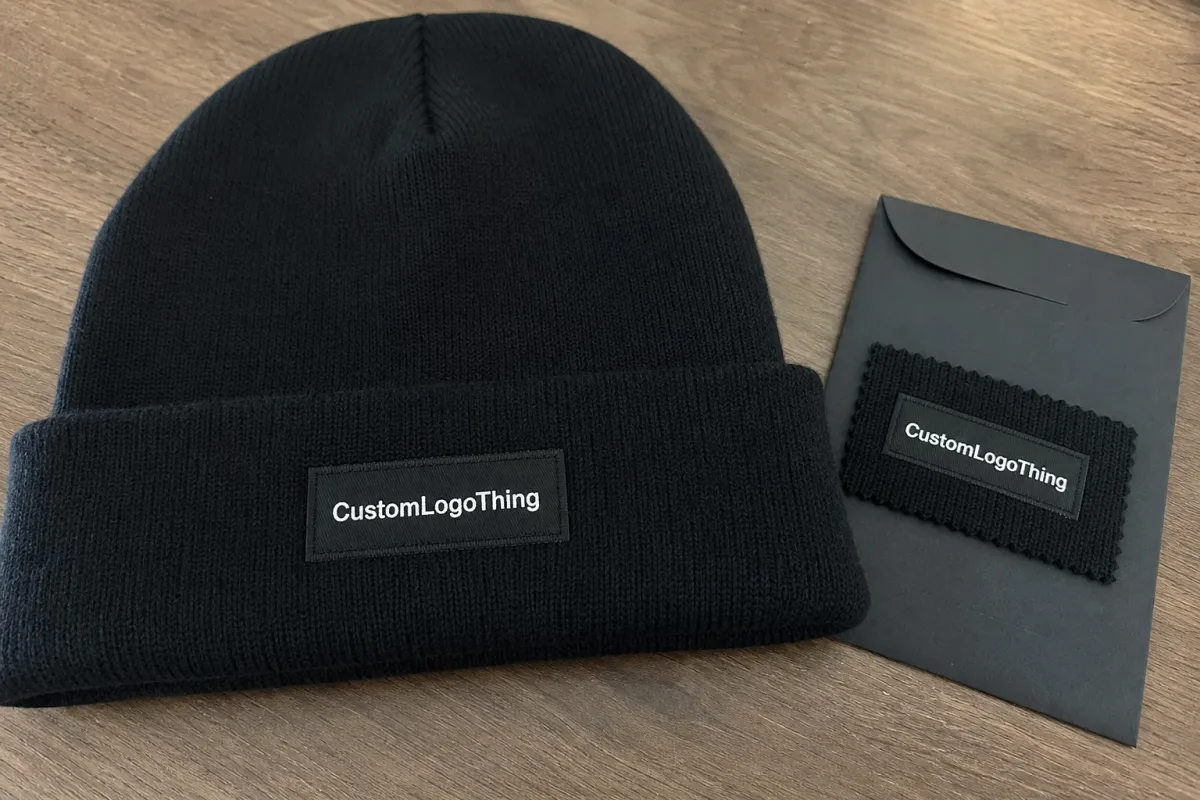
On paper, a logo is flat and obedient. On a beanie, it has to survive stretch, seam lines, crown shaping, cuff folds, and thread direction. That is why the proof is not simply a visual aid. It is the first check against problems that are expensive only after production starts.
The most useful proof shows the actual beanie style, the actual decoration method, and the actual placement. A mockup on a generic hat shape tells you very little. A proof with the correct blank color, fold position, and stitch style tells you whether the order is realistic.
That matters even more for wine club gifts and seasonal member drops. These orders usually sit at the intersection of brand standards and practical wearability. If the beanie looks too busy, too small, or too stiff, it stops feeling like a member perk and starts feeling like leftover promo inventory.
- Decoration method: direct embroidery, patch application, or another approved route.
- Placement: cuff, above-cuff, centered front, or a second hit if the design calls for it.
- Color match: thread colors compared against the actual blank, not a white-screen approximation.
- Order spec: quantity, size, pack-out, and any label or insert requirements.
A proof can look clean and still fail the production test if the logo sits a quarter inch off center or the thread choice disappears into the yarn.
The financial value is straightforward. A corrected proof is cheap; a corrected run is not. One wrong placement on a 48-piece order can wipe out the savings from rushing the first approval. If the beanies are tied to a club launch or holiday shipment, that delay can also spill into freight and fulfillment costs.
How beanie construction changes artwork
Embroidery on knit headwear has a narrower technical range than many buyers expect. The reason is simple: knit fabric moves, and thread does not. A design that feels balanced in a vector file may need simplification before it can be stitched cleanly onto ribbed acrylic, fleece-lined rib knit, or a wool blend. The more texture in the blank, the more the art needs discipline.
For most front placements, simple logos tend to perform best between roughly 2.0 and 3.0 inches wide. That is not a hard rule, but it is a practical range for keeping stitch count manageable while preserving legibility. Tiny type, delicate outlines, and gradient effects are the usual trouble spots. Once a logo has to be digitized into thread, every extra detail comes with a price in time, density, and clarity.
The beanie silhouette matters too. A cuffed style gives you a defined decoration zone, but the fold line can hide part of the mark if the placement is too low. A slouch style creates a softer look, though the front panel may drape differently on each wearer. Pom beanies add visual volume at the crown and can make centered art feel smaller than expected. The proof should reflect the real style, not a generic knit cap.
- Cuff placement: best for compact logos and quick visual recognition, but the fold must be measured carefully.
- Above-cuff placement: keeps artwork visible, though the usable field is usually tighter.
- Centered front placement: suits cleaner marks and more polished presentation.
- Secondary placement: useful when the brand wants extra visibility in photos, but it increases cost and complexity.
Stitch density deserves as much attention as size. Too dense, and soft knit can pucker or stiffen. Too light, and the fabric underneath starts showing through the fill. Good digitizing is a balancing act: enough stitches to hold the shape, not so many that the beanie stops flexing naturally. The proof should show the intended fill style, not just an outline of the art.
Thread selection is another place where mockups mislead. Screen color can suggest a deep burgundy or warm cream that does not exist in thread stock, or it can make a medium gray look more saturated than it really is. If the club brand depends on a precise palette, the proof has to identify acceptable substitutions before production starts. That is especially true on dark blanks, where subtle contrast disappears faster than buyers expect.
Pricing, MOQ, and where the real costs lie
Beanie pricing is usually driven by four things: stitch count, color changes, decoration location, and the blank itself. A one-color logo on a stock cuff beanie is efficient. A dense, multicolor mark on a custom knit base is not. That difference shows up quickly once a quote includes digitizing, sampling, finishing, and shipping.
The first number to compare is unit price, but it is rarely the whole story. A quote that looks strong on a 96-piece run can hide setup charges that make a 24-piece test order much more expensive. For wine club programs, that distinction matters because launch quantities and reorder quantities are often very different. What seems expensive at the start may become reasonable once a second production cycle spreads the setup cost.
Typical pricing ranges vary by region, blank quality, and decoration density, but these bands are common enough to be useful during early planning:
| Option | Typical MOQ | Typical unit cost | Best fit |
|---|---|---|---|
| Simple 1-color cuff embroidery | 24-48 pcs | $5.50-$8.00 | Clean logos, small runs, lower stitch counts |
| Standard 2-3 color front logo | 48-96 pcs | $4.25-$6.25 | Wine club gifts, staff wear, seasonal campaigns |
| Dense multicolor embroidery | 96-250 pcs | $5.75-$8.75 | Detailed marks, heavier thread use, longer sew times |
| Embroidered patch sewn onto beanie | 50-100 pcs | $4.75-$7.50 | Fine type, small details, or art that does not suit direct stitch |
These numbers can move depending on whether digitizing is included, whether a sew-out sample is required, and how the order is packed. Private-label packaging, individual polybags, paper bands, hangtags, and kitting can each alter the final price in a way that is easy to miss if the quote is not broken out cleanly.
MOQ can also distort the math. A lower minimum does not always save money if the price per unit climbs sharply. For club managers comparing a first drop against a reorder, the smartest view is landed cost across the quantities most likely to happen, not the quantity that looks easiest to approve.
Shipping deserves its own line in the budget. A finished order can still arrive badly if the transit carton is too soft or the fold is too tight. Some buyers ask for packaging tested against ISTA-style handling expectations because presentation matters less than survival in transit when the beanies are moving through multiple hands. That caution is practical, not theoretical.
Timeline from proof to shipment
A believable timeline starts with intake, not production. The order has to move through artwork review, digitizing, proof creation, approval, production, finishing, and freight. Skip one step or leave one detail vague, and the schedule slips in a way that is usually visible only after the ship date is already in view.
For standard stock beanies with uncomplicated embroidery, the time from approval to shipment often lands around 7 to 15 business days. That window changes fast when the art is intricate, the quantity is high, the thread colors need to be sourced, or a sew-out is requested before full production. A complex logo can take longer simply because the digitizing has to be right before the machines start running.
- Artwork intake: send clean vector files, approved brand colors, and notes about placement or size.
- Digitizing: the artwork is translated into stitches, with adjustments for density, direction, and underlay.
- Proof review: verify the mockup against the actual beanie style and order details.
- Production: embroidery runs on the approved blank, thread set, and placement.
- Finishing and shipping: trimming, folding, packing, carton labeling, and freight are handled separately from stitching time.
Lead time and transit time should never be treated as the same thing. That distinction sounds obvious until a job finishes on schedule and still misses the event because freight was booked too late. For club drops, holiday mailers, and tasting-room promotions, the calendar is usually more rigid than the production floor.
If packaging includes printed inserts or recycled cartons, the material choice should be considered early. FSC-certified paper can make sense for branded components, but it does not fix a weak shipper box or poor folding method. The order still needs physical protection first.
How to review the proof line by line
The cleanest proof reviews are methodical, not dramatic. Start with the facts that are hardest to reverse, then move toward the preferences that can still be adjusted. That sequence saves time and usually avoids the back-and-forth that comes from approving a visual before reading the production notes attached to it.
- Check spelling and punctuation: confirm brand names, wine names, release titles, and any seasonal wording.
- Verify size and placement: compare the logo dimensions against the actual beanie style, not just the artwork file.
- Review thread colors: confirm whether substitutions are acceptable if a shade is unavailable.
- Inspect fold and seam behavior: make sure the cuff, crown seam, or side seam will not hide key elements.
- Confirm the order lines: quantity, blank color, decoration location, packaging, and ship-to details should all match the purchase order.
One approver is usually better than five. Multiple reviewers tend to reopen decisions that were already settled, and once that starts, the proof often drifts from a production document into a negotiation. In practical terms, that means more delay, more email traffic, and a greater chance that somebody approves a version they did not mean to approve.
It helps to compare the proof against approved brand assets rather than memory. Thread is not screen ink. A rich merlot on a monitor may translate into a thread color that reads either too brown or too purple in daylight. The buyer should be looking at what the shop can actually sew, not what the marketing deck happened to display.
For teams still sorting out blanks, decoration routes, or finishing options, the production spec should be resolved before the proof becomes a moving target. That is especially true for club merchandise, where repeat orders need to match the first run closely enough that members do not notice a shift in quality.
Mistakes that slow orders down
The same errors appear again and again, and most of them are preventable. The most common is sending low-resolution art and expecting the digitizer to rescue it. Closely behind that is approving tiny text because it looks fine on an enlarged monitor. The beanie does not care what the file looked like at 300 percent zoom.
- Assuming screen color equals thread color: the two rarely match, especially on textured yarn.
- Keeping too much detail: fine outlines, small serif type, and delicate linework often lose clarity in stitch.
- Ignoring knit stretch: ribbing and crown seams can shift the logo off visual center.
- Skipping a sew-out on difficult art: a small sample can reveal density or readability problems early.
- Leaving reorder plans vague: a missing backup colorway can become a bottleneck later.
Packaging creates its own set of problems. A beanie can be decorated perfectly and still arrive crushed if the carton is too small, the fold is too tight, or the insert stack bends the knit into an awkward shape. Some buyers want presentation quality, others only need transit protection, and those are not the same spec. The carton, fold, and pack count should reflect the intended use.
Approval delays are often the real bottleneck. A proof gets stuck while someone searches for the correct logo file, or a team tries to decide between two thread shades without a clear decision-maker. That kind of delay is more damaging than a technical limitation because it looks minor until the schedule is already gone. A disciplined wine club embroidered beanies Digital Proof Checklist prevents most of that before it spreads.
What to send with the quote request
A useful quote starts with complete inputs. The cleaner the packet, the fewer assumptions the shop has to make, and the closer the proof will be to production reality. That is especially important for wine club runs, where the order may need to fit a mailing schedule, a seasonal launch, or a membership tier split.
- Vector artwork: AI, EPS, or PDF with clean outlines and any brand notes.
- Beanie style: cuffed, slouch, pom, or a specific blank already chosen for the program.
- Quantity tiers: include the launch quantity and the re-order numbers you are likely to need.
- Deadline: provide the event date, ship date, or club drop date.
- Packaging needs: bulk, folded, banded, tagged, boxed, or kitted with inserts.
It also helps to separate what is fixed from what can flex. Thread shade may be locked to the brand standard, while the exact placement can move a small amount if the beanie shape requires it. That kind of controlled flexibility preserves the look without forcing an unnecessary remake. Buyers often fear compromise here, but the practical reality is narrower: a tiny placement adjustment can improve the final piece more than a rigid insistence on a theoretically perfect layout.
At this stage, the proof should be treated as the last production gate. If the artwork, quantity, packaging, and ship date all line up, approval becomes a simple act rather than a gamble. That is the best use of the process.
FAQ
What should a wine club embroidered beanies digital proof include?
It should show the actual beanie style and color, the decoration method, finished logo size, thread colors, quantity, and any packaging or labeling notes. If the proof only shows a generic hat shape, ask for a revised version before approving.
How many proof revisions are normal before approval?
One or two revisions are common when the artwork is clean and the instructions are complete. If the logo is detailed, the type is small, or the thread palette needs matching, a few more rounds may be normal. Large design changes usually reset the timeline.
What affects unit cost most on embroidered beanies?
Stitch count, color changes, artwork size, and decoration location usually drive the price first. Quantity matters too, because MOQ tiers often lower the per-piece cost as the run gets larger. Sampling, digitizing, and packaging can add separate charges.
How long does turnaround usually take after proof approval?
Simple stock beanie orders often move in about 7 to 15 business days after approval, but that depends on the shop, the order size, and whether a sew-out is required. Shipping should be added separately so the delivery date is realistic.
What mistakes should I avoid when reviewing the digital proof?
Do not assume screen color will match thread, do not skip placement measurements, and do not approve tiny text just because it looks readable on a large monitor. Also confirm the cuff fold and seam position, because knit fabric changes the way a logo reads in real wear.
The strongest orders are usually the least dramatic ones. The proof is complete, the quantity is clear, the packaging is defined, and the artwork is realistic for the fabric. Use the wine club Embroidered Beanies Digital Proof Checklist as the final filter, and the production run is far more likely to match the brand intent without surprises.