Wine Club Shipping Tubes Material Guide to Choose Smarter
Most bottle damage starts with crush, seam failure, or a loose insert fit, not with the bottle itself. That is why the wine club Shipping Tubes Material guide matters before anyone gets carried away with artwork, foil, or a polished finish that looks fine on a desk and folds under pressure in a truck. Subscription packaging is not a one-time purchase. It is a repeatable transit system that has to survive fulfillment, mixed bottle weights, and the occasional rough route without turning a club’s margin into broken glass and replacement shipments.
Tube material is not just “paper” or “board.” It is the outer substrate, the liner, the coating, the insert, and the closure working together as one package. Get one layer wrong and the whole thing starts behaving badly. That is the reason this wine club Shipping Tubes Material guide puts protection first, branding second, and price third. Cheap packaging has a way of becoming expensive once it starts failing in the field, and I have watched that happen more than once in packaging reviews where the sample looked great until the bottle went in and started moving around.
Wine clubs feel this harder than most ecommerce programs because the orders repeat, the bottles vary, and the packaging spends time in storage before it ever ships. One month may call for a lighter pinot, the next for a heavier cabernet. Seasonal humidity, stacking pressure, and brand presentation all live inside the same format. So yes, the Wine Club Shipping tubes material guide is really a buying framework for protection and consistency, not a decoration checklist.
If you want the short version, it is this: stronger materials usually cost more and weigh more, while lighter materials can look premium but fail if they are underspecified. The rest of this wine club shipping tubes material guide shows where that tradeoff actually shows up, which specs matter, and how to avoid paying for the wrong thing.
Wine Club Shipping Tubes Material Guide: What Buyers Miss
Most buyers start with the outside look. That is backwards. The first question in any wine club shipping tubes material guide should be what the bottle is doing inside the tube during transit. If the bottle can move, even a little, the material choice starts to matter in a very unglamorous way. Wine bottles do not usually fail because the label was unattractive. They fail because the package crushed, the seam opened, or the insert let the glass rattle until something gave up.
“Tube material” in this category usually means four things at once: the board or substrate, the liner or wrap, the insert that cradles the bottle, and the closure system that keeps the unit sealed. A printed shell made from weak board is still weak board. A rigid tube with a loose insert is still a bad pack. The wine club shipping tubes material guide only works if you judge the whole structure, not one layer in isolation.
Wine clubs are a special headache because the same package has to handle recurring orders, mixed bottle weights, and storage pressure between production and ship dates. That creates more wear on the packaging than a one-time retail order. If a club is sending 1,000 packs a month, a material that saves $0.12 per unit but increases breakage by even 1% is not a savings. It is a delayed invoice.
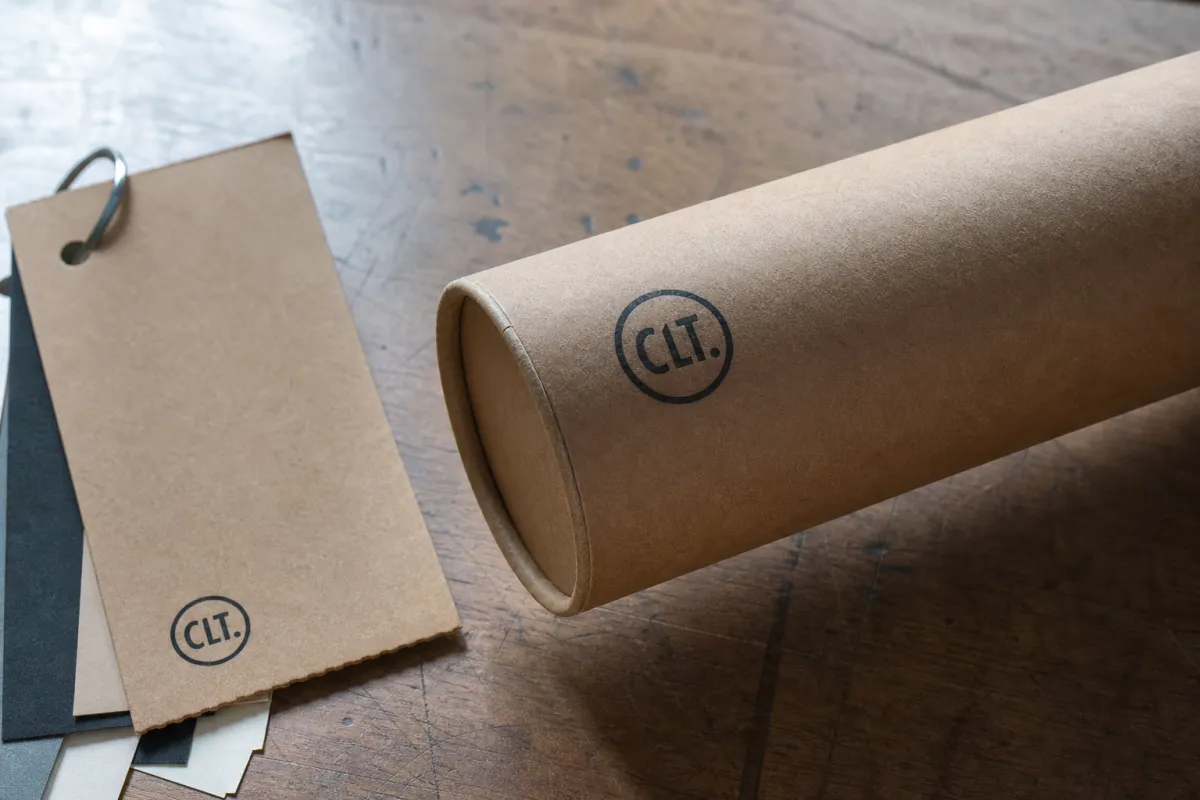
There is also the brand side. A wine club tube is often the first physical touchpoint after purchase, so the surface matters. Kraft paper can look earthy and honest. Coated paperboard can look polished and premium. Corrugated cardboard can look sturdy and practical. The wine club shipping tubes material guide keeps pulling the conversation back to the same point: nice printing cannot rescue a structurally weak pack.
The cheapest tube is expensive the moment it turns into a replacement shipment.
That is why smart buyers treat this as a balance sheet problem. The wine club shipping tubes material guide is about choosing a structure that holds up under parcel handling, warehouse stacking, and the random chaos of transit packaging. Once that is handled, the branding finishes become a useful layer instead of a cosmetic gamble.
One more thing buyers miss: wine club shipping tubes do not live alone. They sit inside a larger packaging system with shipper cartons, void fill, labels, and sometimes temperature control. If the outer shipper is weak, the tube takes more abuse. If you are building a full packaging line, it can help to compare the tube spec with broader Custom Packaging Products, then decide whether the outer shipper belongs in Custom Shipping Boxes or whether the program can stay lighter with a tube format.
Wine Club Shipping Tubes Material Guide: How the Materials Protect Bottles
The protective job is simple to describe and annoying to engineer. The material has to absorb impact, resist compression, handle puncture, and keep the bottle from moving. That means rigid paperboard, corrugated board, chipboard, molded inserts, and plastic components all fail in different ways. A brittle shell can crack at the fold. A thin liner can buckle under stacking. A poor insert can let the bottle slide until the closure takes all the force. The wine club shipping tubes material guide is basically a map of those failure points.
Rigid paperboard, often in the 18 pt to 24 pt range, gives you a cleaner presentation and decent stiffness. It works well for club programs that want a premium feel without jumping straight into heavy specialty packaging. Corrugated cardboard, especially lighter flute structures, brings better crush resistance and usually performs better when the parcel gets stacked. Chipboard sits in the middle for some programs, though I would not treat it as a universal answer. The material matters, but the thickness, flute profile, and construction style matter just as much.
Edge crush resistance and compression strength sound technical because they are technical. In plain English, they tell you how well the tube resists being stacked or squeezed. Puncture resistance is the other half of the problem: can the package survive a corner hit from neighboring cartons, metal rails, or rough handling in ecommerce shipping channels? A pretty surface with low structural performance is just expensive paper.
Moisture changes the story fast. Fiber-based shipping materials absorb humidity, and once that happens, stiffness drops. A tube that feels solid in a dry sample room can soften in a damp warehouse, a cold dock, or a summer truck. That is why the wine club shipping tubes material guide has to include climate, not just bottle size. If your order fulfillment area runs humid, the safest assumption is that the packaging will lose some strength before the parcel even leaves the building.
Coatings and laminations affect presentation and surface wear, but they do not magically fix weak board. A matte finish can hide fingerprints. A soft-touch coating can make a tube feel more premium. Neither one turns underspecified kraft paper into a structural hero. The material hierarchy stays pretty plain here, and plain is useful:
- Fit comes first.
- Structural strength comes second.
- Moisture resistance comes third.
- Decoration and special finishes come last.
If you want a testing benchmark, ask for samples that can be judged against common transport standards. The ISTA transport testing standards are a practical place to start because they focus on realistic package abuse rather than pretty theory. For paper sourcing, FSC-certified paper options can help if sustainability is part of the brand story. And if you want a plain-language refresher on recyclability basics, the EPA recycling guidance is worth a look.
The wine club shipping tubes material guide does not tell you that one substrate wins forever. It tells you which substrate wins for your bottle weight, route length, and brand promise. That is a far more useful answer, even if it is less dramatic than a glossy brochure.
Cost, Pricing, and MOQ: What Tube Material Really Changes
Price is where a lot of buyers stop thinking, which is exactly where mistakes get expensive. A wine club shipping tubes material guide should compare materials on landed cost, not just factory quote. One material may look cheaper at the unit level and then quietly pick up costs in freight, storage, assembly, or breakage. That is not savings. That is accounting cosplay.
For typical custom runs, simple kraft paperboard or standard printed board might land around $0.42-$0.78 per unit at 5,000 pieces, depending on size, print coverage, and insert design. A heavier rigid board with better finish can move into the $0.68-$1.15 range. Premium laminated tubes with soft-touch coating, foil, or specialty wraps can land around $1.05-$1.85 or higher. Corrugated structures with custom inserts often sit in the middle, usually because they combine protection with manageable print costs. Those are not fixed prices, obviously. They are the sort of ranges a sane buyer uses before asking for a formal quote.
MOQ changes with material and print method. If you want foil, laminated wraps, or complex die-cut inserts, the minimum usually climbs because setup costs need to be spread across more units. If you stay with a simple kraft look and minimal print coverage, the MOQ can be lower and the lead time easier to manage. This is why the wine club shipping tubes material guide keeps pushing the same idea: the spec drives the economics, not the other way around.
There are hidden costs too. Setup fees. Die charges. Insert tooling. Freight from added weight. Storage if the tubes ship assembled instead of flat. A heavier tube can also increase dimensional weight, which matters in ecommerce shipping because carriers bill by size as much as actual weight on many parcels. That one line item can wipe out the savings from a “cheaper” board choice.
| Material Family | Typical Protection | Unit Cost at 5,000 | Typical MOQ | Best Use Case |
|---|---|---|---|---|
| Kraft paperboard | Moderate | $0.42-$0.78 | 1,000-3,000+ | Value-focused clubs with standard bottles and clean print |
| Rigid printed board | Good | $0.68-$1.15 | 1,500-3,000+ | Mid-premium clubs that want a better shelf and mail experience |
| Corrugated cardboard | Strong | $0.55-$0.98 | 1,000-2,500+ | Rougher shipping lanes or heavier bottles |
| Premium laminated tube | Very strong, if built right | $1.05-$1.85+ | 2,500-5,000+ | High-end gifting and brand-heavy club releases |
The rule is straightforward. Spend more when the bottle is heavy, the route is rough, or the club wants a premium unboxing feel that justifies the cost. Save when volume is high, the ship lane is predictable, and the package is straightforward. The wine club shipping tubes material guide is not telling you to buy the most expensive build. It is telling you to buy the one that protects the margin.
If you are comparing packaging families across programs, the economics sometimes make more sense when you look at the broader system. A club that does not need tubes for every shipment may be better served by a mix of Custom Poly Mailers for lighter non-glass items and Custom Shipping Boxes for larger multi-item packs. Same brand. Different load case. Sensible, finally.
Process, Timeline, and Production Steps for Custom Tube Orders
The order process looks boring on paper, which is good. Boring usually means repeatable. A solid wine club shipping tubes material guide starts with bottle measurements, because the supplier cannot engineer fit from wishful thinking. You need diameter, height, shoulder shape, closure type, and whether the tube holds one bottle or a pair. Without that data, every quote is a guess with a price tag.
Here is the usual path. First comes the sample request or structural brief. Then the dieline gets drafted. Then artwork moves into proofing. Then the structural sample gets checked against the actual bottle. Then the client signs off and production starts. The wine club shipping tubes material guide looks simple until one missing measurement forces three rounds of revisions. That is where time disappears, and it is the kind of delay that usually shows up right when someone says, “We are fine, we still have plenty of time.”
- Measure the bottle and confirm the fill format.
- Choose the material family and closure style.
- Review the dieline and insert concept.
- Approve artwork after structure is locked.
- Test a real sample with the actual bottle.
- Release production only after the fit passes.
Typical lead times for standard custom builds often run about 12-15 business days after proof approval, while more complex programs can land in the 18-30 business day range depending on tooling, finish, and order size. If you need unusual inserts, specialty coatings, or a large MOQ, the schedule stretches. Rush jobs usually cost more and narrow your material choices. That is not a surprise. That is the market doing what the market does.
Production usually moves in a fixed sequence: material sourcing, printing, cutting, forming, insert installation, and packing. If a supplier has to special-order the board or a particular liner, the clock starts ticking there. That is why the wine club shipping tubes material guide keeps emphasizing final specs early. The earlier you lock the material, the easier it is to keep the run on time.
Late signoff is one of the ugliest delays. So is sending artwork before the dimensions are confirmed. So is approving a sample that looks nice but has never been tested with a full bottle. Packaging teams hate rework for a reason. It eats time, burns freight, and makes the project look more dramatic than it needs to be.
If your club runs a seasonal calendar, build the spec early and hold it. That avoids the annual scramble where order fulfillment is already crowded and a new packaging decision turns into a fire drill. The wine club shipping tubes material guide is useful precisely because it helps prevent that mess.
Wine Club Shipping Tubes Material Guide: Step-by-Step Selection Criteria
Start with the bottle, not the box. Measure the diameter, total height, shoulder shape, closure type, and whether the format is single-bottle or dual-bottle. If the fit is off by even a little, the tube has to work harder than it should. That is the easiest way to spend more on shipping materials and still get a poor result. The wine club shipping tubes material guide is not a vibes document. It is a fit document.
Next, match the material to the shipping lane. Short regional drops can tolerate simpler board if the insert and outer shipper are tuned correctly. Long-haul routes, mixed-carrier networks, and dense urban delivery zones usually need stronger protection. That is especially true if the club’s order fulfillment model combines direct-to-consumer parcels with gift sends. More touchpoints mean more abuse. Packaging rarely gets gentler the farther it goes.
After structure, choose the finish. I know the temptation. Everyone wants the premium surface first. Still, a soft-touch laminate on a weak tube is just soft-touch damage waiting to happen. The wine club shipping tubes material guide keeps pushing finish to the end because the finish cannot fix a poor board grade or a loose insert fit. It can only make a solid pack feel better.
Climate and storage matter more than most buyers expect. Humid docks, hot trailers, chilled bottles, and warehouse stacks all change how the material behaves before delivery. A kraft paper wrap that looks perfect in a showroom can wrinkle in storage. Corrugated cardboard can hold up better under compression, but if the liner or closure is weak, the bottle can still shift. In other words, the whole system needs to behave, not just one layer.
Brand goals are the final filter. Luxury clubs may justify heavier board, deeper print coverage, or special effects because the packaging is part of the story. Value-focused clubs usually need a cleaner protection-to-cost ratio. There is no prize for paying extra just because the catalog had a pretty mockup. The wine club shipping tubes material guide is trying to keep you honest, not impress a design award jury.
If you want a practical decision rule, use this:
- Choose stronger board for heavy bottles, long routes, or stacked storage.
- Choose better inserts before you buy more decoration.
- Choose moisture-resistant finishes if your warehouse is damp or your lanes are humid.
- Choose premium print only after the structure is proven.
One more useful checkpoint: ask for a sample set and compare them side by side. A real wine club shipping tubes material guide should let you feel stiffness, inspect closure strength, and test bottle movement in hand. You can also ask for sample builds aligned with ISTA testing methods so the pack is judged under abuse, not just on a conference table.
If sustainability is part of the brand promise, request fiber-based options with documented sourcing and ask whether the paper stock is FSC-certified. If you need recyclability language for customer messaging, the EPA reference can help your team avoid vague claims. The wine club shipping tubes material guide is more useful when the sourcing story is as clear as the structure.
Common Mistakes When Choosing Tube Materials
The first mistake is treating all paperboard as equal. It is not. A low-cost sheet can look acceptable and still fail under compression or moisture. The second mistake is buying on unit price alone. If a cheaper tube drives even a small damage rate, the replacement shipments and customer service drag can erase the savings fast. The wine club shipping tubes material guide keeps saying this because packaging math is rude but honest.
The third mistake is forgetting the insert. Buyers often specify the outer shell and then assume the inside will somehow behave itself. It will not. A loose insert is one of the fastest ways to create bottle movement, and bottle movement is where breakage starts. If the internal fit is wrong, the wine club shipping tubes material guide has already been ignored in the most expensive way possible.
The fourth mistake is overdesign. Yes, that happens. Some clubs pay for premium finishes that add very little protection and a lot of freight weight. A thick laminate, foil hit, and oversized closure can make the tube feel luxurious while doing almost nothing to improve performance. That is a lovely way to increase dimensional weight and give the carrier more reasons to charge more.
The fifth mistake is approving a sample without a real bottle test. An empty tube can look perfect. Once glass goes inside, the behavior changes. The weight changes. The balance changes. The closure load changes. The wine club shipping tubes material guide only has value if you test the pack with the actual bottle, the actual insert, and, ideally, the actual shipper carton too.
Another common miss is assuming a good-looking sample means the freight lane is solved. It does not. A tube that survives a hand drop in a warehouse may still fail after several days in stacked ecommerce shipping conditions. That is why the lane matters as much as the material.
If the packaging only works in ideal conditions, it is not a packaging solution. It is a prototype with a nice face.
And here is the quiet failure mode nobody enjoys admitting: some clubs keep changing the spec every season. Different finish, different insert, different closure, different board. That makes it impossible to learn from returns or damage data. A good wine club shipping tubes material guide should help you lock a stable baseline and only change the variables that actually matter.
Wine Club Shipping Tubes Material Guide: Expert Tips and Next Steps
Sample at least three material options. Not one. Three. That is enough to compare stiffness, print quality, closure feel, and the point where each option starts to fail. The best choice in a wine club shipping tubes material guide is usually the one that survives comparison, not the one that looked nicest in the first mockup.
Run simple stress checks with the actual bottle. Shake the tube. Drop test it from a realistic height. Stack it under load. Leave a sample in a humid space if your warehouse or dock runs damp. None of this replaces formal testing, but it tells you a lot fast. If the bottle rattles, the insert is wrong. If the seam opens, the board is wrong. If the finish wrinkles, the coating or liner is too delicate for the environment. That is the kind of practical signal this wine club shipping tubes material guide is meant to surface.
Build a one-page spec sheet and stop improvising. Include bottle dimensions, target shipper, finish, insert style, MOQ, acceptable lead time, and any carrier limits. The best packaging buyers do not rely on memory, because memory is a terrible production system. A clean spec also makes it easier to compare quotes across suppliers and avoid apples-to-oranges pricing.
Always compare total landed cost. That means factory price, freight, assembly, storage, damage risk, and the replacement cost of broken bottles. Once you look at it that way, the “cheap” option often stops being cheap. The wine club shipping tubes material guide has been trying to get you there from the start. Price matters, but protection and consistency matter more.
If your program needs a broader packaging refresh, use the tube decision as a reference point for the rest of the line. A club that wants a tighter fulfillment setup may need to review Custom Packaging Products, then decide whether the outer system should include Custom Shipping Boxes for mixed packs or Custom Poly Mailers for non-glass add-ons and inserts. Packaging should fit the shipment, not the other way around.
The last move is simple: choose the best-performing sample, document the winning spec, and reuse it. That makes reorders cleaner, keeps order fulfillment predictable, and gives your team a stable baseline to improve from. If you need a quick internal checklist later, this wine club shipping tubes material guide is the one worth bookmarking, because the same logic applies every time you order again.
What material works best for wine club shipping tubes?
The best material depends on bottle weight, route length, and brand level, not one universal answer. Rigid paperboard or reinforced corrugated usually gives the best balance of protection and cost for most clubs. If the program ships premium bottles or travels through rough lanes, upgrade the insert and compression strength first. That advice sits at the center of any sensible wine club shipping tubes material guide.
Are paperboard wine club shipping tubes strong enough for glass bottles?
Yes, if the board thickness, insert fit, and closure are designed for the bottle size and shipping conditions. Weak or loose paperboard fails when bottles move inside the tube or when humidity softens the structure. Always test with the actual bottle and carrier route before locking the spec, because the wine club shipping tubes material guide only works when the fit is real.
How does humidity affect wine club shipping tubes material?
Humidity can weaken fiber-based materials, reduce stiffness, and make outer wraps look wrinkled or warped. Coatings, liners, and better board grades help, but they do not replace a properly engineered structure. If your fulfillment area is damp, prioritize moisture resistance over decorative extras. That is a recurring lesson in the wine club shipping tubes material guide.
What MOQ should I expect for custom wine club shipping tubes?
MOQ varies by material, print process, and insert complexity, but custom runs usually start higher than stock packaging. Special finishes and die-cut inserts often raise the minimum because setup costs are spread over fewer units. Ask for quotes at multiple volume tiers so you can see where unit cost drops enough to justify a larger run, which is exactly the kind of comparison a wine club shipping tubes material guide should prompt.
How do I compare price versus protection for wine club shipping tubes?
Compare landed cost per shipped bottle, not just the factory quote. Factor in damage rates, freight, storage, and replacement cost when judging the cheapest option. The right choice is usually the one that keeps breakage low while staying inside your target margin, and that is the basic logic behind a good wine club shipping tubes material guide.
Choose the tube that protects the bottle, survives the route, and matches the brand without bloating freight or MOQ. That is the whole point of a wine club shipping tubes material guide. Get that part right, and the rest of the packaging program gets easier instead of louder. For most clubs, the practical takeaway is to lock the fit first, test the structure with a real bottle, then spend on finish only after the pack proves it can handle the trip.


