Wine Club Shipping Envelopes Material Guide: Buy Smarter starts with a pretty practical truth: the material you choose can make the difference between a bottle that arrives ready to pour and one that becomes a claims file. In a Wine Club Shipping Envelopes material guide, surface print and decoration matter, sure, but they sit well behind crush resistance, puncture control, moisture behavior, and the way the structure holds up through vibration, compression, and less-than-gentle parcel handling.
This wine club Shipping Envelopes Material guide looks at the outer mailer, the bottle-holding structure, the cushioning or suspension layer, and the closure system as one connected package. The job is not to pick the prettiest sample on the table. The job is to choose a material that matches bottle weight, route length, seasonal temperature swings, sustainability goals, dimensional weight pressure, and the club's tolerance for breakage. Whether a fulfillment team ships 500 bottles a week or 50,000, those choices show up in the numbers real fast.
From a packaging buyer's point of view, the best material is the one that survives the trip and still plays nicely with the operation. Decorative print can help the unboxing moment, but most failures come from weak board, poor seam design, or fiber that softens when humidity climbs. That is the practical lens behind a reliable wine club shipping envelopes material guide.
A beautiful mailer that fails in transit is still a failed mailer. In wine ecommerce, protection beats ornament every time.
Wine Club Shipping Envelopes Material Guide: What It Really Covers
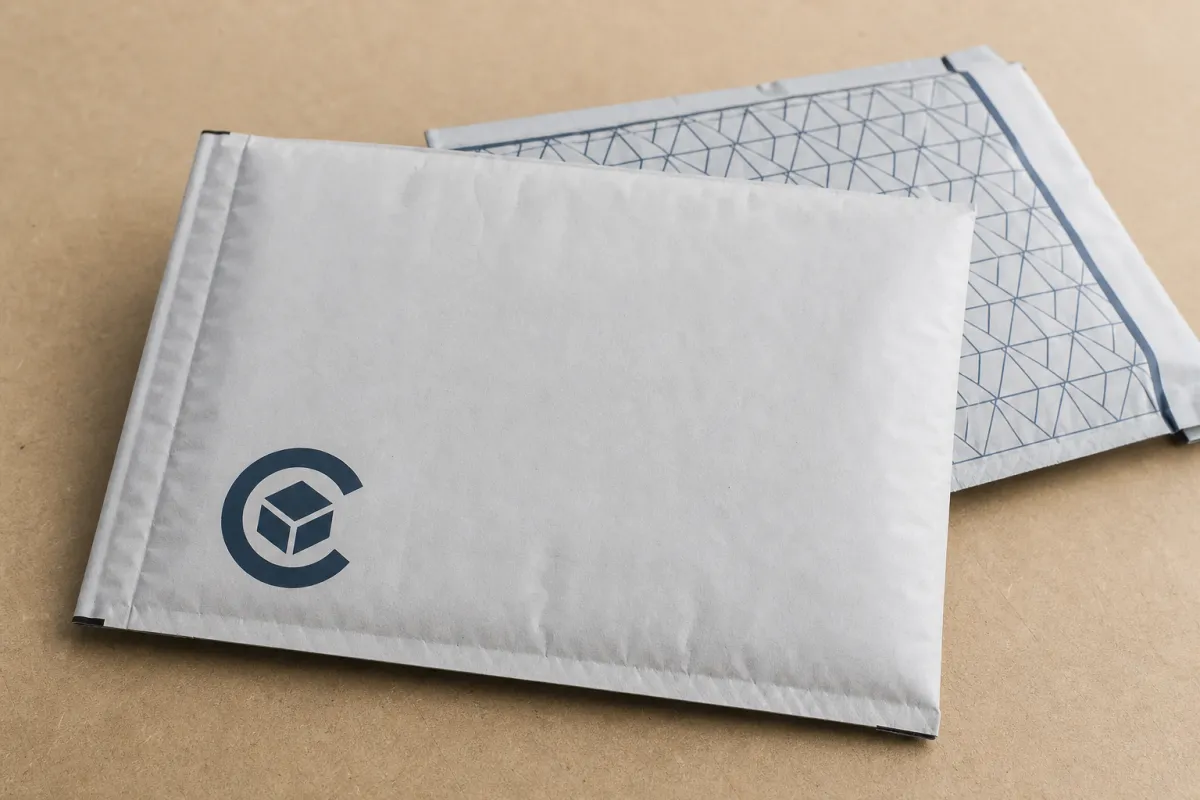
At the most basic level, a wine club shipping envelope is transit packaging built to move a bottle from warehouse to doorstep with as little drama as possible. In a wine club shipping envelopes material guide, that means more than the outer shell. It covers the rigid or semi-rigid body, the protective insert, the fold pattern, the adhesive or locking closure, and any moisture-resistant layer that keeps the material from weakening in humid sortation centers or hot delivery vans.
Many buyers miss a simple point: the strongest-looking sample is not always the best material for the job. Corrugated cardboard, paperboard, Kraft Paper Mailers, molded fiber, and hybrid constructions each solve different shipping problems. A light, single-bottle club shipment may do fine in a paper-based structure with reinforced seams. A heavier Bordeaux bottle often needs corrugated board and more controlled bottle suspension. The wine club shipping envelopes material guide mindset is about matching material to load, not just matching it to a mood board.
Material choice matters more than print for most programs because the failure modes are mechanical. A package usually does not fail because the logo was too large. It fails because the board buckled in compression, the corner got punctured, the flap peeled during vibration, or moisture weakened the fiber. That is why a strong wine club shipping envelopes material guide spends time on stiffness, caliper, seam strength, and the way force travels around the bottle neck and base.
Common building blocks include:
- Corrugated cardboard for crush resistance and stackability in parcel networks.
- Paperboard for lighter systems where form factor and print detail matter.
- Kraft paper or kraft-based wraps for fiber-forward branding and recyclable structures.
- Molded fiber for suspended protection and better impact distribution.
- Hybrid constructions that combine a paperboard face with corrugated support or molded inserts.
For buyers comparing Custom Packaging Products, the right question is not "What looks premium?" It is "What survives the actual route?" A wine club shipping envelopes material guide should keep the decision tied to bottle weight, transit length, and the club's acceptable damage rate. If a customer gets a breakage credit once, that is annoying. If breakage becomes routine, it turns into a margin problem pretty quickly.
Another practical point: shipping materials never act alone. They work with the shipping box, void fill, and label placement. A package that is too loose inside a carton can let the envelope flex and rub. A package that is too tight can transfer impact directly into the bottle neck. The best wine club shipping envelopes material guide reads the full system, not just the envelope spec.
How Wine Club Shipping Envelopes Material Guide Choices Work in Transit
To understand performance, it helps to follow the package through the network. The packing table is only the first stress point. Next comes conveyor impact, drop events, trailer compression, and environmental shifts that can make one material feel crisp in the morning and kinda soft by the end of the day. In daily use, a wine club shipping envelopes material guide has to account for compression, vibration, puncture, and humidity at the same time.
Structure and surface do different jobs. One layer may resist puncture while another controls flex. If the design does not distribute force around the bottle body and neck, the glass becomes the shock absorber. That is a bad trade. A solid wine club shipping envelopes material guide studies how flutes, folds, liners, and inserts redirect impact away from the bottle.
Adhesive seams deserve more attention than they usually get. Temperature swings can make a marginal bond creep or peel. Repeated handling can open a flap that looked perfectly fine in a static sample. The weakest interface often becomes the failure point. In a serious wine club shipping envelopes material guide, seam strength is one of the first things to test.
Single-bottle and multi-bottle systems can behave very differently even when they use the same substrate. Add a second bottle and the weight doubles, but the force does not always distribute evenly. Voids open, bottles rub, and the center of gravity shifts. The wine club shipping envelopes material guide that works for one bottle of Sauvignon Blanc may fail on a two-bottle red blend shipment unless the insert geometry changes too.
Testing beats assumptions. Good packaging teams use drop tests, vibration simulation, and humidity exposure to see where the design breaks. The standards world offers useful references here, including ISTA testing protocols, which many teams use to frame shipment validation. A wine club shipping envelopes material guide that skips testing is basically a guess with a price tag.
Three tests tend to reveal the most:
- Drop testing to expose corner weakness, bottle movement, and seam failure.
- Vibration testing to simulate parcel handling and conveyor travel.
- Humidity exposure to show whether paper-based materials lose stiffness or warp.
One packaging manager once put it plainly: "The sample looked fine on the table. The carrier made it honest." That is the logic behind a disciplined wine club shipping envelopes material guide, and it is why transit packaging decisions should always be made with the carrier network in mind, not just the sample room.
Key Factors That Shape Wine Club Shipping Envelope Materials
Material choice starts with bottle data. A light Riesling bottle and a heavy Bordeaux bottle create different load profiles, and glass thickness, finish, and closure style all matter. A corked bottle with a capsule behaves differently from a screw-cap bottle because the neck geometry changes how the insert grips it. A thoughtful wine club shipping envelopes material guide starts there, not with the print finish.
Route conditions matter just as much. A two-day regional shipment is not the same as a cross-country run through multiple zones. Carrier mix, average transit time, package handoffs, and seasonal weather all affect performance. Dimensional weight can also push clubs toward slimmer structures, which means the material must be stronger per inch if the package footprint gets smaller. A useful wine club shipping envelopes material guide turns those route variables into spec decisions.
Sustainability goals deserve a direct conversation. Recycled content, curbside recyclability, and fiber sourcing all matter, and many clubs want paper-based transit packaging to fit their brand story. Still, eco-friendly loses its value if the package arrives crushed. For a cleaner sourcing story, check whether the board is FSC-certified and whether the construction can be recycled in normal curbside systems. FSC is one of the better known references for responsible fiber sourcing, and it works well as a benchmark inside a wine club shipping envelopes material guide.
Branding matters too. Some clubs want the unboxing moment to feel premium, which pushes them toward better print, coated surfaces, or textured materials. High-gloss finishes can raise cost and reduce moisture resistance, so the smarter move is to decide how much visual impact the envelope actually needs. A wine club shipping envelopes material guide should support brand presentation without letting appearance override performance.
Operational fit is the final filter. A material that folds slowly, springs back, or confuses packers can create more errors than it solves. Warehouse teams care about stockability, line speed, and how easily the envelope nests with the shipping box. If the spec adds ten seconds per pack, that can become a real labor cost. For clubs that also ship apparel or accessories, it may make sense to align the envelope program with Custom Poly Mailers or Custom Shipping Boxes so order fulfillment stays consistent across product lines. A practical wine club shipping envelopes material guide has to work in the building, not just in the catalog.
| Material Option | Typical Use | Strength Profile | Moisture Behavior | Relative Unit Cost |
|---|---|---|---|---|
| Paperboard | Light single-bottle shipments | Good printability, moderate stiffness | Can soften if humidity is high | $0.18-$0.32 |
| Corrugated cardboard | Heavier bottles, longer routes | Strong crush resistance, better stack performance | More stable than plain board, still paper-sensitive | $0.26-$0.48 |
| Kraft-based hybrid mailer | Eco-focused clubs, moderate loads | Balanced flex and puncture resistance | Fair, depending on coating and seam design | $0.22-$0.41 |
| Molded fiber system | Premium protection, suspended inserts | Excellent impact distribution | Generally stable, but design dependent | $0.34-$0.62 |
That table is only a starting point, not a verdict. The same substrate can perform very differently depending on flute grade, insert geometry, and closure style. A serious wine club shipping envelopes material guide uses price as a filter, not as the finish line.
Process and Timeline for Wine Club Shipping Envelope Development
Development usually follows a familiar sequence. First comes the brief: bottle dimensions, target ship zones, monthly volume, damage tolerance, and brand goals. Then come material selection, sample review, prototype testing, die-line revision, and final approval. A wine club shipping envelopes material guide is most useful when it turns that sequence into a checklist everyone can follow.
Timing matters more than teams often expect. Sample sourcing can take several business days, especially if the material is not a standard stock item. Structural revisions can add another round or two, and if specialty board or custom inserts are involved, freight lead time can stretch the project. For many clubs, the fastest path is not the cheapest path. A rushed launch that fails in the field can chew through more time than a careful build would have used. That is a core lesson in any wine club shipping envelopes material guide.
Print-ready art should not wait until the end. If the envelope uses print, coating, or a branded closure, those details can influence fold lines and production tolerances. Projects slip when the structural sample gets approved before the artwork constraints are resolved. The cleanest workflow locks the mechanical spec first, then finalizes graphics once the envelope passes performance checks. A good wine club shipping envelopes material guide keeps those workstreams aligned.
Delays usually show up in the same places:
- Approval bottlenecks when too many people review the same sample out of sequence.
- Insert redesigns when the bottle sits too loose or too tight.
- Freight lead time for custom components or specialty board.
- Warehouse trials when the material folds fine on paper but slows packers on the line.
A practical timeline should be built backward from the ship date. Leave room for test drops, line trials, and one contingency run if the first prototype misses the mark. For clubs managing seasonal order fulfillment peaks, that buffer is not optional. The cost of a delayed launch can be higher than a slightly more expensive material choice, which is another reason the wine club shipping envelopes material guide deserves early attention instead of last-minute shopping.
Here is a simple planning lens that works well:
- Week 1-2: define bottle specs, route profile, and damage targets.
- Week 2-3: request samples and compare board, fiber, and insert options.
- Week 3-4: run internal tests and warehouse trials.
- Week 4-5: revise structure and confirm print requirements.
- Week 5-6: approve production and schedule delivery.
If the program needs a custom structure, that schedule can stretch. That is normal. The point of a wine club shipping envelopes material guide is to make the timeline honest from the start.
Cost and Pricing: What Drives Wine Club Shipping Envelope Quotes
Quotes usually break down into four main drivers: material grade, construction complexity, print coverage, and finishing. Two envelopes can look almost identical and still price very differently because one uses heavier board, a more complex insert, or a laminated surface. A clear wine club shipping envelopes material guide should make that visible instead of hiding it behind a single unit price.
MOQ pressure is real. Lower minimums usually raise unit cost because setup fees get spread across fewer pieces. Larger runs can lower unit cost, but they also create inventory risk and storage needs. If a club is uncertain about bottle mix or seasonal demand, it may be smarter to test a smaller run first. That is why the best wine club shipping envelopes material guide compares cost in context, not just by headline number.
Hidden costs can quietly distort the budget. Freight matters if the finished envelope is bulky. Sample revisions add small but repeated charges. Warehousing becomes an issue if the material is awkward to stack. Replacement shipments after damage are usually the most expensive line item of all because they include the new bottle, the new packaging, and customer service time. A smart wine club shipping envelopes material guide treats damage reduction as a financial variable, not just a quality concern.
Sustainability can affect pricing in both directions. Recycled content may increase substrate cost in some markets, but it can also reduce waste and strengthen customer perception. In a club model, that perception can matter. Buyers often compare protection-per-dollar, not just unit cost. Sometimes the better spend is the material that prevents one avoidable breakage claim per hundred shipments. That can more than pay for itself. A sensible wine club shipping envelopes material guide should make that tradeoff clear.
For a rough buying conversation, it helps to compare material tiers side by side:
| Tier | Best For | Typical Setup | Approx. Unit Range | Buyer Tradeoff |
|---|---|---|---|---|
| Entry | Short routes, lighter bottles | Paperboard with simple insert | $0.18-$0.28 | Lower cost, less margin for abuse |
| Mid | Standard club shipments | Corrugated or kraft hybrid construction | $0.26-$0.44 | Better protection, modest cost increase |
| Premium | Heavy bottles, longer routes, high claim sensitivity | Molded fiber or reinforced hybrid system | $0.34-$0.62 | Higher spend, lower damage risk |
The useful question is not "Which tier is cheapest?" It is "Which tier lowers total cost after damage, freight, labor, and customer retention are counted?" That framing keeps a wine club shipping envelopes material guide grounded in real business math. It also helps avoid a common mistake: assuming that a tiny per-unit savings matters more than a single round of avoided replacements.
Common Mistakes That Hurt Wine Club Shipping Envelope Performance
The first mistake is choosing by appearance. A premium-looking envelope can still fail crush or puncture testing if the internal structure is underbuilt. Nice print does not compensate for weak compression performance. In a strong wine club shipping envelopes material guide, appearance is the last layer of the decision, not the first.
The second mistake is overengineering. Adding unnecessary board thickness, extra folds, or oversized inserts can raise costs and slow packing without improving actual delivery outcomes. More material is not always better. Sometimes it just adds dimensional weight and labor friction. The better wine club shipping envelopes material guide keeps protection high while trimming waste.
Humidity and temperature get ignored too often. Paper-based materials can soften, warp, or lose stiffness in damp conditions. Hot trailers and cool warehouses create expansion and contraction cycles that stress seams. If the club ships through humid regions or stores packaging near loading docks, moisture resistance deserves a closer look. It is not theoretical. It is one of the most common reasons a wine club shipping envelopes material guide that looked fine in sample review falls apart in practice.
Testing only one bottle size is another trap. A club may offer a white, a red, and a reserve bottle, each with different weight and shape. The light bottle may pass everything. The heavier one may crush the insert, or a taller bottle may stress the closure. A reliable wine club shipping envelopes material guide should cover the full bottle mix, not the easiest SKU.
Warehouse input is often missing from the decision. Packers know which materials fold cleanly, which closures slow the line, and which structures are hard to stack. If the material is awkward to work with, error rates rise before customers ever complain. That is why order fulfillment teams should sit in the test cycle. A practical wine club shipping envelopes material guide is not just a design document; it is an operations document.
Other mistakes show up less dramatically, but they still cost money:
- Ignoring carrier mix and assuming one route profile fits all shipments.
- Skipping seam-strength checks because the board grade looks strong enough.
- Choosing a finish that looks premium but performs poorly under moisture.
- Failing to document pack instructions, which creates inconsistent builds.
- Relying on a supplier sample without simulating real parcel abuse.
For clubs that want to avoid those traps, the answer is usually discipline, not drama. Measure. Test. Compare. Then test again. That is the quiet logic behind a trustworthy wine club shipping envelopes material guide.
Expert Tips and Next Steps for Better Wine Club Shipping Envelopes
Start with a spec sheet that includes bottle dimensions, fill weight, closure type, expected monthly volume, ship zones, and an acceptable damage rate. That document becomes the brief for suppliers and the internal reference for everyone involved. A wine club shipping envelopes material guide works best when it is built on numbers, not guesses.
Ask for material samples and test data, not just renderings. You want to compare stiffness, fold quality, seam strength, and how the material behaves after handling. If a supplier can show test results or talk through the board construction in concrete terms, that is useful. If all you get are polished photos, keep pushing. A good wine club shipping envelopes material guide rewards evidence.
Run a small pilot with real warehouse staff and real parcels. This step often reveals issues that never show up in a sample review. Maybe the closure is slower than expected. Maybe the insert catches on gloves. Maybe the envelope fits perfectly in theory but fights with the carton size in practice. A pilot is cheap compared with a month of customer complaints. That is exactly why the wine club shipping envelopes material guide should end in live testing, not just approvals.
Use a decision matrix if the team is torn between options. Score protection, cost, sustainability, packing speed, and brand presentation. Then weight the categories according to the club's goals. A luxury program may prioritize presentation a little more. A high-volume club may care far more about throughput and claim reduction. The wine club shipping envelopes material guide should reflect that reality instead of pretending every business wants the same answer.
Here is a simple way to keep the final choice honest:
- Protect the bottle first. If the material fails testing, remove it from consideration.
- Check line speed. If packers hate it, the operational cost will show up later.
- Review recycling and sourcing claims. Make sure the story matches the structure.
- Compare total landed cost. Include freight, storage, and replacements.
- Revisit after launch. Use damage claims and customer feedback to refine the spec.
That last step is easy to skip, but it is where clubs learn the most. After the first shipment cycle, review breakage rates, return reasons, and packer feedback. Then revise the spec if needed. The best wine club shipping envelopes material guide is not a one-time document. It is a living reference that gets sharper with each shipment cycle.
For packaging teams comparing broader shipping formats, it also helps to align the envelope spec with other shipping materials already in use. The tighter the material family, the easier it is to maintain consistency across ecommerce shipping programs, reduce training time, and simplify sourcing. That kind of operational discipline is often worth more than a small unit-price discount.
If you need one clear takeaway from this wine club shipping envelopes material guide, make it this: choose the material that protects the bottle through your actual route, your actual warehouse process, and your actual claim tolerance. Start with testing, keep the spec honest, and do not let appearance outrun performance. That is how clubs keep more bottles intact and fewer surprises on the books.
FAQ
What is the best material in a wine club shipping envelopes material guide?
The best material depends on bottle weight, transit length, and moisture exposure, but corrugated and hybrid fiber constructions are common starting points. In a wine club shipping envelopes material guide, the real test is whether the option passes drop and crush testing for your exact bottle mix, not whether it looks strongest on a sample sheet.
Are recycled materials strong enough for wine club shipping envelopes?
Yes, recycled content can perform well if the board grade, flute structure, and seam design are built for the load. A good wine club shipping envelopes material guide should verify strength with actual shipment tests, because recycled does not automatically mean weaker, but it does need validation.
How do I choose the right thickness for wine club shipping envelopes?
Match thickness to bottle weight, parcel zone, and whether the envelope is carrying one bottle or multiple bottles. A practical wine club shipping envelopes material guide uses supplier samples and line trials to confirm that the chosen thickness still folds, seals, and packs efficiently.
What affects wine club shipping envelopes cost the most?
Material grade, MOQ, print complexity, and freight usually move the price the most. In a wine club shipping envelopes material guide, damage reduction can matter more than a small unit-price difference if the better material lowers replacement costs.
How long does a custom wine club shipping envelopes project take?
A custom project usually includes sample review, prototype testing, revisions, approval, and production scheduling, so the timeline depends on how many changes are needed. A realistic wine club shipping envelopes material guide builds in extra time for testing and freight lead time so the launch does not slip when the first prototype needs adjustment.


