Two trucker caps can look almost identical in a photo and still feel completely different in hand, which is why a wine club trucker Caps Material Sample guide matters before anyone signs off on production. One cap may have a crisp front panel and breathable mesh that wears well through a busy tasting weekend, while the other feels stiff, scratchy, or oddly shallow the first time someone puts it on.
For a wine club, the cap is doing more than carrying a logo. It sits on heads in tasting rooms, on patios, at pickup events, and in shipping boxes alongside bottles and membership materials, so the material choice has to support both comfort and brand image. A sample review is the safest way to check that balance before a larger order turns into inventory you have to live with for months.
Wine Club Trucker Caps Material Sample Guide: Why It Matters
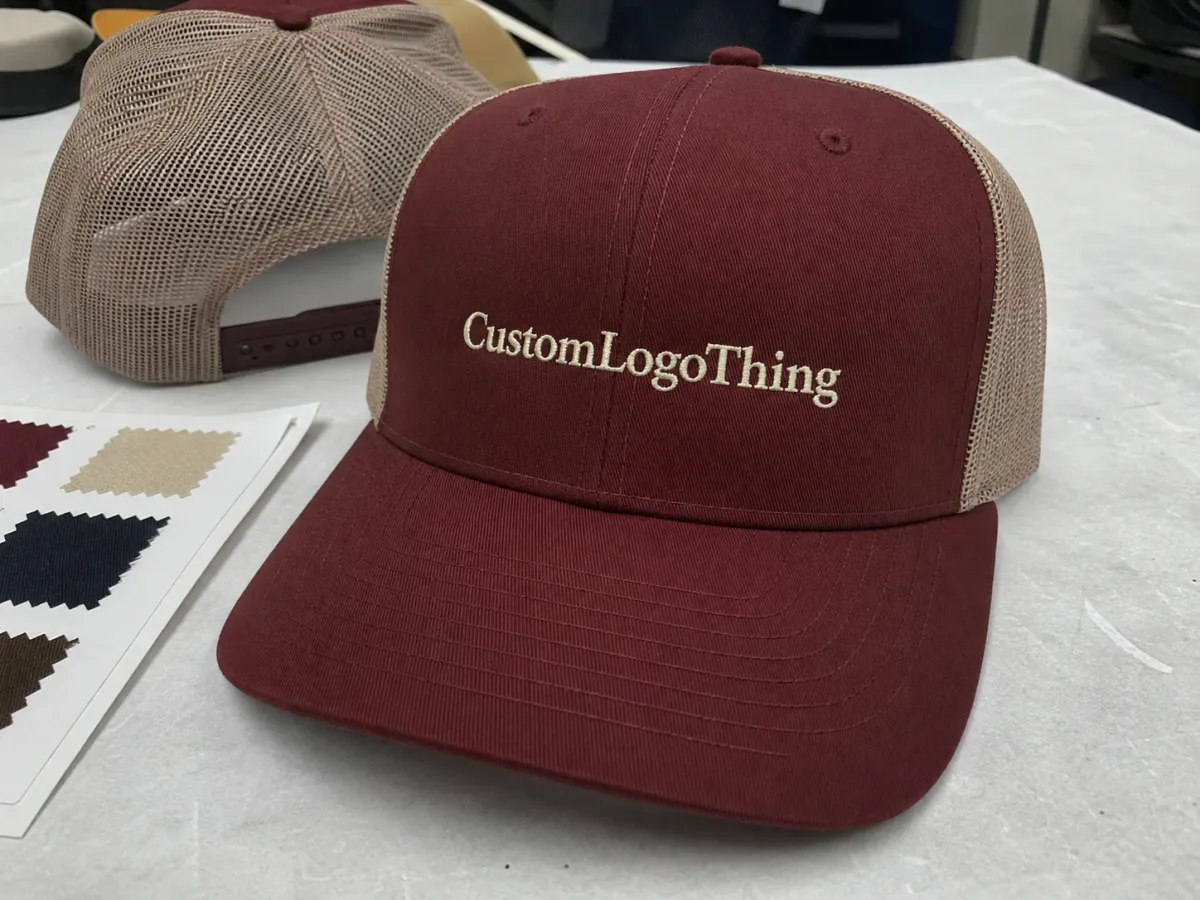
A material sample is not just a sales sample with a logo stitched on it. In practice, it is a decision tool that helps a buyer compare hand feel, structure, breathability, closure quality, and decoration against the club’s actual brand needs. That matters because trucker caps are simple at a glance, but they are built from several variables that change the final result in a noticeable way.
The front panel fabric can be foam, brushed twill, cotton canvas, or polyester blend. The mesh back may be open and airy or tighter and more substantial. The visor can hold a flatter shape or a more pronounced curve. Even the sweatband and closure style affect whether the cap feels like a polished retail piece or a cheap giveaway item.
Wine clubs also have a practical use case that many buyers underestimate. Members wear these caps while walking vineyards, standing in sun, loading cases, or moving between indoor and outdoor service areas. That means the cap has to survive repeated wear, not just look good for a launch photo. If the material scratches the forehead, traps heat, or loses shape after a few wearings, the brand message gets weaker every time it is used.
From a packaging buyer’s point of view, the sample stage is really about risk control. It protects budget, protects brand consistency, and helps avoid mismatched inventory. If you approve from a screen image alone, you are guessing on texture, stiffness, and fit. A physical sample removes most of that guesswork and gives the team something real to compare against.
Strong sample reviews usually save time later. A few extra days spent on the front end can prevent a much more expensive correction after hundreds or thousands of caps are already in motion.
There is also a presentation angle that matters more than many people think. A cap shipped in tidy, labeled packaging with a clean spec reference creates confidence before anyone even opens it. If your club ships merchandise in corrugated cardboard mailers, kraft paper inserts, or other packaging made from recycled materials, the sample should be reviewed in that same context so the full unboxing feels intentional. Some buyers also care about FSC certified packaging or post-consumer waste content, which is fair; the cap may be the hero item, but the shipping materials still shape the customer’s first impression.
For broader packaging and transport standards, it helps to cross-check sample handling and ship method assumptions against references like ISTA for transit testing ideas and FSC for responsible paper sourcing. Those aren’t cap standards, of course, but they are useful anchors when your order includes branded inserts, carton graphics, or biodegradable packaging claims.
How Sample Kits Translate Into the Final Cap
A useful sample kit should show the buyer the parts that matter most: crown fabric, mesh back, visor board, sweatband, stitch detail, closure hardware, and the decoration method. If the supplier only sends a finished sample without identifying what materials were used, you may like the look but still lose control over repeat production.
That is why the best wine club trucker Caps Material Sample guide conversations start with clear labeling. A sample can be fully representative in some areas and only directional in others. For example, the crown fabric should usually match the production fabric exactly, while a trim color or tag placement might shift slightly if the final line requires a substitute. Buyers should ask that question directly instead of assuming every detail is fixed.
Digital mockups still matter. They are useful for logo placement, patch size, and artwork scale. But they cannot tell you whether a 6-panel structured cap feels too tall, whether the mesh is too open for a premium retail look, or whether the sweatband will hold up during a warm weekend event. Tactile checks are what separate a decent concept from a cap people actually want to keep wearing.
Here is the practical way to think about sample translation:
- Must match: front panel fabric, mesh density, decoration method, basic cap construction, and closure type.
- Should be documented: thread color, visor curve, label style, sweatband material, and carton or polybag presentation.
- Can vary slightly: dye lot, trim availability, and some packaging inserts if they do not affect fit or brand appearance.
The most reliable approval process ends with a written spec sheet. That sheet should lock down the approved material codes, logo details, trim notes, and packaging instructions. Once that document exists, the production team, buyer, and any merch partner are all looking at the same reference instead of relying on memory or a blurry photo in an email thread.
Cost, MOQ, and Quote Drivers for Sample Runs
Sample pricing changes quickly because the job is small and highly customized. The main drivers are the number of material options being evaluated, whether embroidery or patch work is required, how many revision rounds you want, and whether the supplier is making one proof or several variations. A single simple sample might be modest, while a multi-option sample set with custom decoration and specialty trims can climb fast.
For buyers comparing quotes, it helps to separate sample cost from production cost. The sample is often the most expensive unit in the process because setup time is spread across just one or a few caps. Bulk production prices then settle down based on quantity, labor efficiency, and material consistency. A common range for a custom trucker cap might land around $0.18-$0.28 per unit for basic components in volume only if decoration is simple and the order is large enough; more typically, finished cap pricing depends on foam-front versus structured twill, 5-panel versus 6-panel construction, embroidery complexity, and closure type.
MOQ is another area where buyers can get tripped up. A sample may be available as a one-off proof, yet the final production run may require a much higher minimum. That gap is normal, but it should be stated plainly before approval. If you are ordering for a wine club membership drop, a hospitality team, and retail resale all at once, ask whether the factory can hold the same material specification across multiple replenishment runs. Consistency matters more than chasing the lowest number on the first quote.
Sample fees should also be discussed openly. Some vendors credit sample charges back against the final order, while others treat them as separate work. That one detail changes the real cost of approval. The same goes for freight, revisions, and any carton upgrades. A landed quote is better than a headline unit price because it includes the real-world cost of getting the sample to your desk and the final order to your warehouse or fulfillment partner.
| Sample Option | Typical Use | Cost Range | Lead Time | Best Fit |
|---|---|---|---|---|
| Off-the-shelf blank sample | Basic fit and material check | $15-$35 plus freight | 3-7 business days | Simple club promo orders |
| Custom decorated proof | Logo, patch, and color approval | $35-$90 plus freight | 7-15 business days | Standard club merchandise |
| Multi-variation sample set | Compare fabrics, mesh, or closures | $90-$180 plus freight | 10-20 business days | Retail, VIP, or event programs |
That table is only a starting point, not a promise. Material sourcing, decoration method, and packaging choices can move the numbers either way. If the supplier is shipping with corrugated cardboard cartons, kraft paper wraps, or recycled materials for inserts, the packaging line itself may stay cost-efficient while still supporting a cleaner brand story. If your club prefers FSC certified cartons or post-consumer waste content, make sure those requirements are quoted up front rather than treated as a surprise later.
Process and Lead Time: From Swatches to Approval
Good sample work starts with a clean brief. The buyer should define target price, brand colors, intended use, fit expectations, event date, and whether the cap is for members, staff, or retail resale. That brief does not need to be long, but it does need to be specific enough that the sample team can make practical decisions instead of guessing.
The usual process begins with swatch selection. After that comes the sample build, then review, then revisions if needed, and finally written signoff for production. It sounds simple, yet most delays happen in the seams between those steps. Late artwork changes, specialty mesh sourcing, extra fit rounds, and requests for nonstandard closures or labels can all add time. Even a small change from snapback to a different closure style can affect hardware availability and assembly timing.
Who approves matters just as much as what is approved. One person may be focused on branding and logo placement, while another cares about comfort, durability, and how the cap fits into the club’s merchandising program. If those views are not aligned early, the sample can bounce back and forth for days. A tight internal approval chain keeps the project moving.
Most schedule pain comes from indecision. Not from the cap itself, but from waiting too long to decide whether the front panel is too stiff, the mesh too open, or the logo too small for the intended use.
For simple off-the-shelf caps, approval can move quickly. Custom builds take longer because they need material sourcing, stitching, and review cycles. A realistic window for a custom proof is often 7-15 business days, and that can stretch if the order needs specialty trims or a second fit sample. If the event date is fixed, ask about rush turnaround early, because faster service usually means higher cost or fewer customization choices.
Step-by-Step Material Review for Better Fit and Finish
Start with a visual check under both natural and indoor light. Color can shift more than most buyers expect, especially on textured mesh or brushed front panels. A deep navy may read clean and premium in one light and look dull in another. If the cap has a printed patch or embroidered logo, compare the contrast against the actual bottle labels, tasting room palette, and any seasonal merchandising graphics.
Then move to touch. Feel the crown stiffness, visor curve, and sweatband softness. A wine club cap should hold its shape without feeling hard. In a tasting room, the member may wear it for an hour or two, then tuck it into a bag or car. That means the material needs enough body to look polished and enough comfort to stay wearable.
Mesh openness deserves special attention. Open mesh improves airflow, which is especially useful for spring and summer events, patio service, and vineyard tours. But if the mesh is too loose or the texture too coarse, the cap can start to feel like a promo item rather than a retail-quality piece. The sweet spot is usually a mesh that breathes well while still looking intentional and clean from a few feet away.
Try the closure on real heads, not just on a mannequin. Different head sizes reveal different issues. A closure that feels fine on one person may pinch, gap, or sit awkwardly on another. Ask at least two or three people to wear the sample if possible, and note the results. Fit is one of those things that becomes obvious only when someone actually wears the cap for a few minutes.
“If the sample feels right on the hand and on the head, you are far more likely to like the bulk run.” That simple rule saves a lot of regret later, especially when the order is tied to a membership launch or a seasonal wine club shipment.
Document everything. Measurements, material codes, photo notes, and closure details should be recorded immediately after comparison. A photographed reference next to the written spec makes reorders easier to control months later, when the original sample is no longer sitting on someone’s desk.
For buyers who also care about shipping presentation, this is a good point to confirm the packaging direction. Caps often arrive in a polybag or packed into corrugated cardboard cartons with kraft paper or divider sheets to reduce scuffing. If your brand leans toward recycled materials or biodegradable packaging, build that into the review now. It is easier to approve the full presentation before production than to retrofit it after the caps are already packed.
Common Sample Mistakes That Slow Production
The first mistake is approving color from a screen image. Monitors, phone displays, and compressed photos all lie a little. A physical swatch or sample is the only reliable way to judge the real tone. This is especially true with earthy wine-country colors, where small shifts in brown, olive, cream, or burgundy can make the cap feel either refined or off-brand.
The second mistake is judging embroidery on the wrong base. Thread can look crisp on smooth fabric and less defined on textured mesh or heavy twill. If the cap will carry a dense logo, patch, or small lettering, judge it on the exact construction you intend to buy, not on a similar cap from a different product line.
Seasonality gets ignored more often than it should. A cap that feels fine in a cool office can become uncomfortable during hot outdoor service. If your club’s biggest moments happen in late spring, summer, or harvest season, the breathability of the mesh and the sweatband finish matter more than they might in a winter planning meeting.
Paperwork is another weak point. No dated approval, no revision log, and no clear reference means the production team has to guess later if questions come up. That is avoidable. A clean approval trail protects everyone, especially when the order is large or tied to a launch date.
Packaging problems cause their own headaches. A cap can be approved perfectly and still arrive with crushed shape, scuffed logos, or loose carton counts if the shipment is handled poorly. If the order includes retail units, carton labeling, or mailing inserts, ask about packing method, inner protection, and carton counts alongside the cap itself. For many buyers, the outer shipper matters as much as the product, which is why materials like corrugated cardboard and kraft paper remain common in branded apparel and merch programs. They are straightforward, easy to inspect, and compatible with recycled materials and FSC certified supply chains when that documentation is needed.
Expert Tips and Next Steps Before You Order
The cleanest way to finish the approval is to narrow the decision to two close material options. Compare them side by side under the same lighting, with the same logo placement, and ideally with the same wear test. One cap may win on comfort, while the other wins on visual structure. That is a much better decision than trying to compare six choices at once and remembering none of them clearly.
Use a simple scorecard. Rate feel, color accuracy, durability, price, and brand fit on a five-point scale. The scorecard does not need to be fancy, but it keeps the decision grounded. I have seen more projects get delayed by memory drift than by material problems. Once a buyer forgets which cap felt softer or which one had the better curve, the conversation gets muddy.
Ask the supplier to label every sample with material codes, closure type, and decoration notes. That makes future reorders far easier to control. It also helps if the buyer needs to split the order between membership gifts, staff uniforms, and retail shelves, because the reference stays clear even when the use case changes.
Lock the approved sample into the purchase order and keep a photographed copy on file. That single step saves time when the bulk run arrives and someone asks whether the front panel should have been a touch softer or the mesh a little tighter. The answer is already documented.
If your packaging program includes shipped merch, think about the cap and the carton as one customer experience. The right trucker cap inside a well-packed box feels more premium than a slightly better cap tossed into sloppy packing. That is why practical details like carton strength, recycled materials, and even biodegradable packaging choices matter more than many teams expect.
For buyers using this wine club Trucker Caps Material Sample guide, the next move is simple: shortlist the best two samples, confirm the budget, request the revised quote, and use the guide as the approval checklist before production starts. That keeps the order controlled, the brand consistent, and the final cap much closer to what the club actually wants to wear.
Frequently Asked Questions
What should a wine club trucker caps material sample include?
A useful sample should show the crown fabric, mesh back, visor structure, sweatband feel, closure style, and logo application method. It should also come with a simple spec sheet or label so the buyer can track exactly what was approved.
How many samples should I review before approving trucker caps for a wine club?
Most buyers should compare at least two close options, such as different mesh densities or front-panel fabrics. If the cap will be used for retail resale or a major event, add one backup option so you are not forced into a weak fit or finish choice.
Does a sample match the final production cap exactly?
The sample should match the approved construction, decoration approach, and overall material direction, but minor lot-to-lot variation can still happen. Ask the supplier which details are fixed and which may shift slightly in bulk, especially for color, trim, and thread shade.
What affects the cost of a trucker cap material sample?
Cost usually rises with more material variations, custom embroidery, specialty trims, extra revision rounds, and expedited shipping. Buyers should also ask whether sample fees are refundable or credited to the final order, because that changes the real budget impact.
How long does the sample approval process usually take?
Simple off-the-shelf sample reviews can move quickly, while custom builds often need extra time for sourcing, stitching, and approval cycles. The biggest schedule risks are late artwork changes, specialty materials, and waiting too long to sign off on the final sample.


