Candle Embroidered Baseball Caps material sample guide decisions get expensive quickly when a render looks polished and the physical cap tells a different story. A candle motif can appear crisp on screen, then soften, sink, or warp once it meets the wrong crown fabric or stitch setup. The sample is the real checkpoint because it shows the cap body, seam behavior, embroidery clarity, and finishing together instead of as separate assumptions.
For merch teams, streetwear labels, promo buyers, and retail programs, the sample has one purpose: prove that the cap can hold the candle artwork cleanly, feel stable in hand, and repeat without surprises in production. That sounds simple. It rarely is.
Candle Embroidered Baseball Caps Material Sample Guide Basics
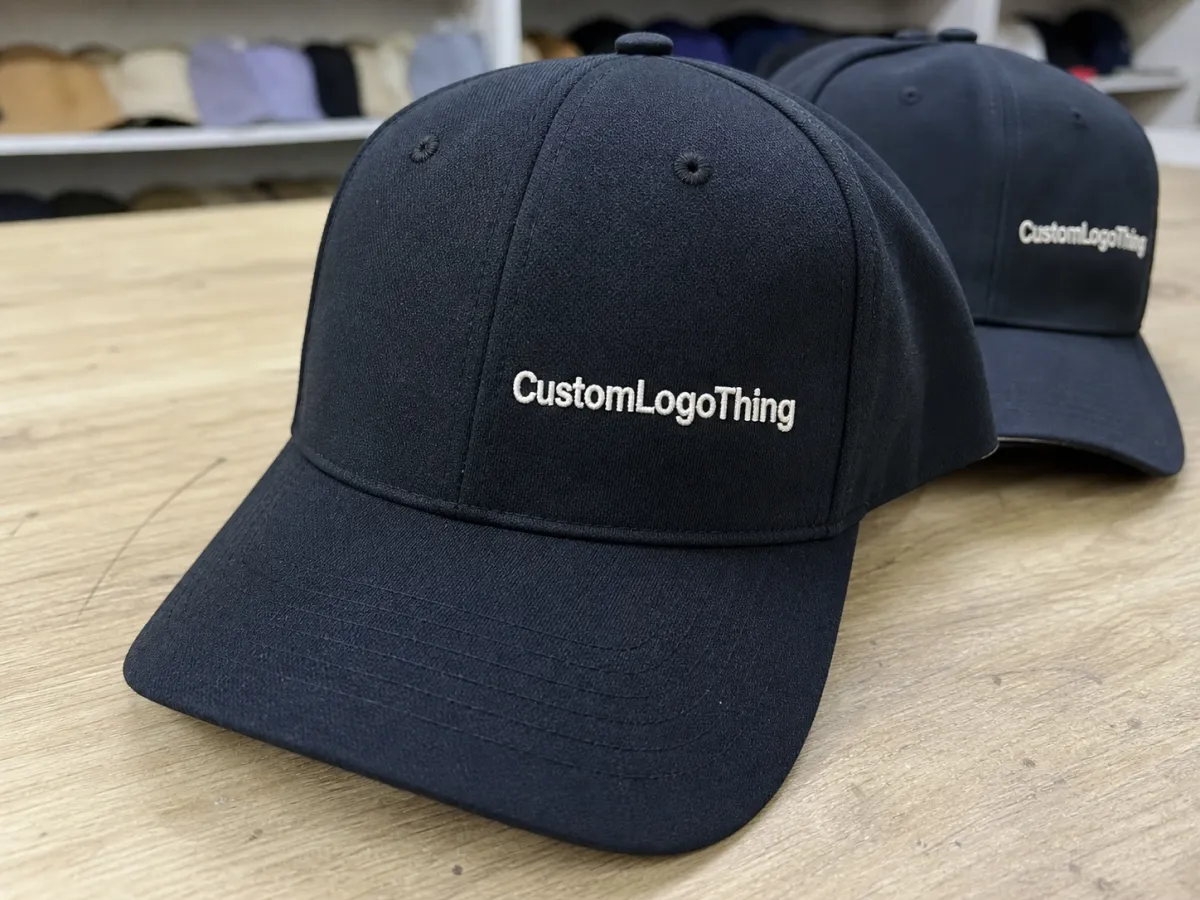
The fastest way to judge a cap is to handle the whole thing, not a fabric square. A flat swatch can tell you the weave and the color family, but it says very little about how a front panel behaves under embroidery tension. A full sample shows whether the crown collapses, whether seam lines interrupt the motif, and whether the candle still reads from a few feet away. That is the heart of the candle Embroidered Baseball Caps Material sample guide: use the sample as a construction proof, not a color guess.
There is a real difference between a cap that looks appealing and one that stitches well. Structured cotton twill usually gives the cleanest edge because the weave holds detail and resists distortion. Brushed cotton can make the same file feel softer and a little larger, which may suit a relaxed brand, but it changes the visual tone. Poly blends often stay consistent from run to run, though the sheen can shift more than buyers expect under different light. A candle design that feels sharp on twill may look quieter on brushed fabric. That is not a flaw; it is a production choice.
"A good sample answers the buyer's questions before the purchase order is signed."
The people who benefit most from sampling are usually the ones planning repeat orders. One-off event caps have more room for compromise. Retail or ongoing merch programs do not. They need proof that the cap looks the same across size runs, fabric lots, and reorders. If the first sample cannot show that consistency, the order is still risky, no matter how nice the mockup looked in a deck.
Packaging affects the judgment more than many teams admit. A cap shipped loose in a soft mailer can arrive creased, and then the fabric gets blamed for transit damage. A shallow corrugated cardboard mailer, a wrap of kraft paper, and a simple insert made from recycled materials help preserve the front panel without adding much cost. For programs with sustainability targets, FSC certified paperboard or biodegradable packaging may support retailer requirements, but crush protection still matters more than marketing language.
Teams that care about transit durability often borrow packaging logic from ISTA methods, especially when samples will travel far before anyone opens the box. If the kit includes inserts or hangtags, traceable fiber sourcing from FSC can satisfy documentation requests without changing the cap itself.
In short, the sample has to answer three questions: does it fit well, does it hold the candle artwork clearly, and does it feel stable enough to repeat?
How Fabric and Embroidery Choices Change the Final Look
Fabric is not background noise. It controls the cap's visual language. Cotton twill usually gives the cleanest stitch edge because the weave is tight enough to support dense embroidery. Chino sits in a similar zone, though it can feel a bit smoother and lighter. Canvas is firmer and can produce a rugged look, but thick canvas may resist needle penetration and create a chunkier border around small candle details. Brushed cotton feels softer to the hand, yet that softness can blur fine flame lines or thin lettering inside the artwork. Poly blends are often easier to source and budget-friendly, though finish and heat behavior can vary by mill and dye lot.
Construction matters just as much as cloth. Six-panel caps with buckram in the front crown usually hold a front-center logo better than low-profile unstructured shapes. A firm front panel keeps the embroidery surface flatter, which reduces stitch sink and helps the candle silhouette stay readable. Seam placement matters too. If the design crosses a seam, the embroidery can pull differently on each side, especially on narrow flame tips or skinny stems. Brim curve, closure style, and crown depth all affect how the cap sits during wear.
On the embroidery side, the major variables are thread weight, underlay, density, backing, and pull compensation. Most cap embroidery in production uses 40-weight polyester thread because it balances color brightness with abrasion resistance. Dense fills look premium, but too much density can stiffen the front panel and increase puckering. A practical rule: if the candle outline contains small gaps, drips, or interior details, those areas need enough underlay to hold shape, but not so much that the edge bulges. Pull compensation often needs to be tuned by roughly 0.2-0.4 mm on compact logos, especially on curves.
Placement changes perception more than most buyers expect. A front-center candle motif is easier to evaluate because symmetry is obvious. A side placement or low-profile badge is harder; the viewer sees it at an angle, and any distortion shows sooner. During sampling, judge the cap in daylight first, then under indoor lighting. Touch the stitched area. If the design still reads cleanly at arm's length, the sample is doing its job.
Key Factors to Check Before You Approve a Sample
Approval gets messy when everyone is looking at different things. One person focuses on color. Another cares only about fit. A third likes the shape and misses a weak stitch edge. A clean review needs a checklist, and it should be written before the sample arrives.
Start with comfort and structure. Check how the cap feels after a few minutes on head, not only when it is sitting on a table. Look at crown height, sweatband feel, ventilation, and how the body recovers after being flexed or packed. A good sample should spring back without obvious creasing. If the cap is meant to feel premium, the inner finish matters almost as much as the outside. Sweatband stitching, seam binding, and loose-thread control all influence perceived quality.
Then inspect the embroidery with a technical eye. Look for stitch registration, edge crispness, color match, shadowing, and whether thin candle elements still hold their shape. Small flame tips are often the first thing to fail. So are narrow serif details. A tiny misalignment may disappear in a mockup, but it becomes obvious in hand. If the design uses multiple colors, check whether the border thread overlaps cleanly or leaves gaps. For compact logos, many buyers want placement accuracy within a few millimeters, because tiny shifts are easy to notice on a curved crown.
Performance behavior should not be ignored. A sample can look great on day one and still fail after a little abrasion or folding. Bend the brim, compress the crown, and wear the cap briefly. That does not replace lab testing, but it reveals weak structure. For higher-volume programs, some buyers also request basic handling checks that mirror packaging and transit logic, especially if the cap will be shipped in bulk cartons and unpacked repeatedly.
The approval record should be precise. Document:
- fabric code and color name
- thread code and thread count
- cap style, closure, and panel count
- embroidery placement and size
- sample date and revision number
- the exact pass-fail criteria
This matters because “approved” can mean very different things in different factories. A buyer may mean “the art is right.” A supplier may hear “everything is flexible.” That gap causes expensive disputes later. In the candle Embroidered Baseball Caps Material Sample guide, the written spec is the safeguard.
Process, Timeline, and Turnaround for Sample Approval
The smoothest sample workflow is usually the dullest one. That is a compliment. It means the process was organized before the first cap was made. A useful sequence looks like this: request, artwork check, fabric shortlist, physical sample, revision if needed, and final signoff. Each step should have one owner and one deadline. Without that structure, a sample can sit untouched for a week because nobody knows who is supposed to respond.
Timing depends heavily on whether the factory is using stock materials or sourcing something special. A stock cap body with standard embroidery may move in 5-8 business days before shipping. If the program needs a custom fabric, special closure, or revised stitch file, the process can stretch to 12-20 business days or more. Overseas transit adds its own clock. For many buyers, the shipping leg is the hidden delay, not the sewing time.
The most common bottlenecks are predictable. Digitizing can slow things down if the art is not clean. Sourcing the right fabric can add days, especially if the buyer wants a particular hand feel or a color matched to a retail line. Feedback delays are another common culprit. If the first sample goes to three departments and nobody owns the approval, the schedule slips quietly. One revision can be enough, but only if the comments are specific.
Speed comes from clarity. Send vector art. Send exact placement dimensions. Send a reference cap if you have one. If the candle artwork needs a certain visual weight, say so directly. A few useful details can save a full cycle:
- front-panel width and embroidery height in millimeters
- target Pantone or fabric reference
- preferred crown shape and closure style
- whether the cap should feel firm or soft
- photo references showing what “good” looks like
Photo proof can help early, but it does not replace a physical sample for embroidery, hand feel, or structure. A mockup can hide density issues that show up the second the cap is in hand. If the factory offers a photo before shipping the sample, treat it as a screening tool, not the final answer.
Cost, Pricing, and MOQ Signals in Sample Quotes
Sample pricing looks simple until you compare quotes line by line. Then the small charges start to multiply. A prototype fee might seem low, but digitizing, rush handling, shipping, and revision costs can change the real total. That is why the quote should be broken into parts instead of being read as one lump number.
Here is a practical comparison buyers often see:
| Sample option | Typical scope | Typical price | Typical timeline | Best use |
|---|---|---|---|---|
| Photo proof only | Digital mockup or stitched photo | $0-$20 | 1-3 business days | Early art review, not final approval |
| Fabric swatch kit | Loose swatches, color chips, trims | $10-$30 | 2-5 business days | Fabric and color screening |
| Single prototype | One finished cap sample | $35-$90 | 5-10 business days | General shape and embroidery check |
| Pre-production sample | Near-final spec with production methods | $60-$150 | 7-15 business days | Final approval before bulk run |
Those numbers are not fixed. They move with stitch count, crown structure, shipping lane, and how many times the art is revised. A detailed candle logo with thin lines can raise digitizing time quickly. A special closure, custom label, or wash effect adds cost too. If the buyer changes the artwork after the sample is started, the factory may charge again, and usually with good reason.
MOQ affects economics in a quieter way. A low sample price can hide a higher production cost if the supplier is limiting fabric options or steering the buyer toward a specific cap body. That is why tiered pricing matters. Compare 100, 250, and 500-unit scenarios even if the final order may land elsewhere. The larger the run, the more the small differences matter. A $0.18 unit change is easy to ignore on a small test order, but it matters on a retail program.
Watch for hidden triggers: logo redraws, multiple revision rounds, custom dye lots, or a switch from standard polyester thread to a specialty finish. If a quote seems unusually cheap, ask what is excluded. Missing setup fees are not free; they usually surface later.
The best sample quote is the one that makes future production predictable. That is especially true for the candle Embroidered Baseball Caps material sample guide, where buyers care about both the look of the logo and the repeatability of the run.
Common Mistakes That Distort Sample Decisions
The biggest sampling mistakes are rarely dramatic. They are small, ordinary, and expensive. The first is approving from screen-only mockups. Digital files can hide stitch texture, color depth, and how a cap crown bends under tension. A flame that looks elegant in a render can become vague in thread if the fabric is too soft or the density is too low.
Another mistake is comparing samples under different light. A cap checked near a window, then under yellow office light, then through a phone camera filter is not being judged fairly. Fabric tone shifts. Thread sheen changes. Even a matte poly blend can look glossy in the wrong setting. Use the same light, the same angle, and the same distance for every sample in the set.
Do not mix unlike cap styles in a single decision unless the project truly allows it. A structured cap and an unstructured cap solve different problems. The first gives front-panel support. The second may feel softer and more casual. One is not better in the abstract. It is better for a different brief. Buyers get into trouble when they choose the prettiest sample instead of the one that can scale cleanly.
Another easy trap is ignoring packaging condition. If the sample arrives crushed in transit, you may blame the wrong layer of the supply chain. That is why some teams ask suppliers to ship in shallow corrugated cardboard cartons with a kraft paper wrap and a simple insert made from post-consumer waste or other recycled materials. A tidy shipper does not change the embroidery, but it protects the evaluation.
Finally, do not approve without documentation. Save the approved sample photos, the written dimensions, and the exact thread and fabric references. If the factory substitutes a similar-looking cloth or adjusts the embroidery density, the difference may be tiny on paper and obvious in the hand. A record gives you something real to compare against.
Expert Tips and Next Steps for a Cleaner Order
The simplest way to reduce friction is to build a one-page spec sheet before you ask for quotes. Include fabric, thread, placement, closure, color standard, sample acceptance criteria, and who signs off. It sounds basic. It saves real money. A supplier can work faster when the brief is specific, and a buyer can reject weak samples without sounding vague.
If the candle artwork depends on sharp edges, ask for at least two fabric options. One can be slightly firmer, one slightly softer. That comparison often reveals more than a single sample ever will. On some caps, the stiffer body wins because the embroidery reads cleaner. On others, the softer body feels better on head and still holds the design well enough. The choice should be driven by the artwork, not habit.
Photograph the approved sample next to a ruler and a color reference card. This is a simple habit, but it protects against memory drift. A week later, people remember the cap as “about that size” or “close enough to navy.” Those words are where mistakes start. A ruler and a standard card make the approval visible.
A useful internal workflow usually has three signoffs:
- art approval
- fit and fabric approval
- production approval
Each step should have a named owner and a date. If a revision happens, write down whether it resets the schedule or stays on the original path. That tiny sentence can spare a lot of confusion later.
If you are buying for retail, keep the packaging plan in the same file as the cap spec. Use FSC certified board when that matters, and choose biodegradable packaging only if it does not compromise transit protection. A neat sample kit suggests that the larger program will also be organized.
In practice, the candle Embroidered Baseball Caps material sample guide is not about caution for its own sake. It is about making sure the fabric, stitch, fit, and shipping presentation all agree before a bulk run starts. Compare the swatches, confirm pricing and timeline, and approve only after the physical sample matches the spec.
What should a candle embroidered baseball caps material sample include?
A proper sample should be a full cap body or a finished cap, not just a loose fabric swatch. It should show the actual embroidery, thread colors, closure type, sweatband, and any lining or reinforcement details. It should also include a note with the fabric code, sample date, and the exact approval criteria.
How do I compare candle embroidered baseball caps sample fabrics side by side?
Keep the artwork, stitch density, and lighting the same for every sample. Then score each cap for stitch clarity, comfort, crown shape, and how the candle design reads at a distance. A simple comparison sheet works better than memory, especially if multiple people are reviewing the samples.
What affects the cost of embroidered baseball cap material samples?
The main cost drivers are material sourcing, digitizing, embroidery complexity, and shipping. Special closures, custom colors, and extra revision rounds can raise the price quickly. MOQ and final order size can also shape the quote because some factories offset sample discounts with higher production pricing.
How long does the sample process usually take?
Stock-based samples can be ready in days, while custom materials or revisions often take longer. Shipping time may be the hidden delay, especially if the supplier is overseas. A faster process usually depends on clean artwork, clear placement specs, and prompt feedback after each revision.
What should I check before approving the final run?
Match the sample against your written spec sheet and confirm the fabric, thread, and placement are identical. Inspect the cap under daylight and indoor light, then check fit, stitch clarity, and comfort. Save photos and the physical reference sample so production can be audited if the next batch drifts. If you need a clean approval path, this candle embroidered baseball caps material sample guide is the place to start.

