Tea Trucker Caps Material Sample Guide for Bulk Buyers
A tea trucker cap can look clean in a product photo and still fail the moment someone wears it. The crown sits too shallow. The mesh feels scratchy. The front panel wrinkles after one afternoon in the sun. That is why a tea trucker Caps Material Sample guide matters before a bulk order: it shows the real cap, not the version a rendering wants you to believe in.
Most buyers begin with logo placement. Fair enough. A cap is still a branded surface. But the material determines whether people reach for it twice or toss it in a drawer. Front panel structure, mesh openness, sweatband comfort, visor shape, closure quality, and stitch density all shape the final experience. A trucker cap built for warm outdoor wear needs different priorities than one designed for a retail shelf or a fashion drop.
There is also a cost lesson here that gets missed constantly. A cheaper sample can still be expensive if it hides the wrong details. An extra $10 on the sample is easy to dismiss. The wrong mesh weight on 3,000 units is not. That difference is usually visible only when you handle the cap, flex the crown, and wear it for a few minutes.
What this tea trucker caps material sample guide actually shows
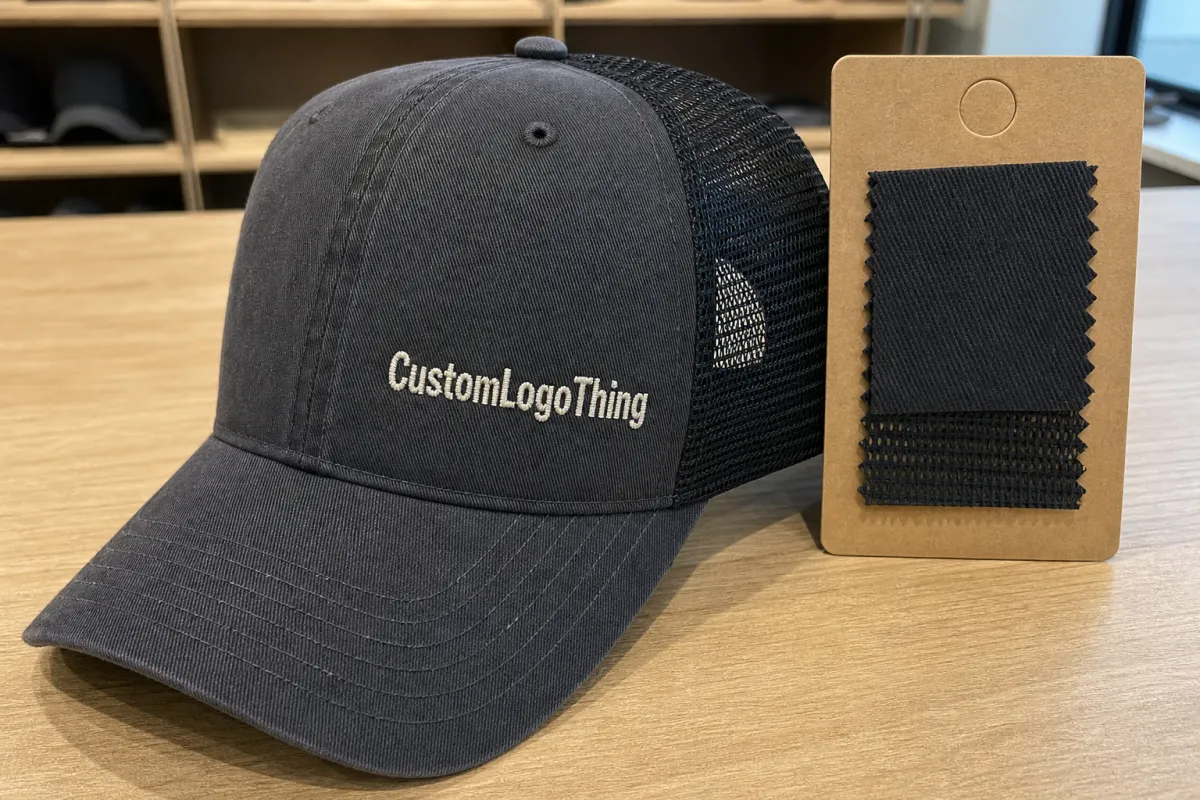
This tea trucker Caps Material Sample guide is less about color matching and more about reality checking. A sample tells you whether the front panel holds its shape, how much the mesh bends, whether the visor feels balanced, and if the cap still feels acceptable after a short wear test. Photos hide texture. They also hide stiffness, seam bulk, and the tiny fit problems that usually create returns.
Comfort tends to show up first. Then fit. Then perceived quality. That order matters because a cap that feels wrong will be judged harshly no matter how good the embroidery looks. The sweatband is a good example. Buyers often ignore it, but a rough or flimsy sweatband can make an otherwise solid cap feel cheap within minutes.
Mesh stiffness is another quiet decision point. A very rigid mesh gives the cap a crisp trucker profile, but it can feel less breathable and less forgiving on the head. Softer mesh improves comfort, though it may collapse more than the buyer expects. There is no universal best choice. There is only the choice that fits the audience, climate, and price tier.
A good sample does not try to impress you. It gives you enough evidence to approve, reject, or revise before the expensive run begins.
Packaging matters here too, especially when the sample is traveling long distances. A crushed crown can distort your view of the entire cap. Ask for protective packing that keeps the visor and front panel in shape. Corrugated cardboard inserts work well in transit, while kraft paper wrapping keeps the presentation tidy without adding unnecessary cost. If your brand wants a lower-waste approach, request recycled materials, FSC certified paper inserts, or biodegradable packaging for mailers and hangtag wraps.
Physical samples also expose tradeoffs between appearance and use. A foam-front trucker may deliver the classic vintage look that photographs well, but it can feel stiff or dated if the foam density is off. A polyester front panel can hold color more cleanly and often performs better in heat. Cotton twill softens the look, yet it does not always keep the clean, structured shape some buyers expect. These details rarely show up in a sales deck. They show up in hand.
One more practical point: if the supplier cannot name the exact mesh type, sweatband material, and closure style, you do not have a sample process. You have a guess with shipping charges attached.
Sample process: from brief to first physical cap
The sample process starts with a brief that is specific enough to be useful. Share the cap style, target wearer, intended use, color references, logo method, and price ceiling. Climate belongs in the brief too. A cap for humid event staff needs different mesh and sweatband choices than one built for a cooler retail market.
A solid brief should answer four questions:
- Who wears the cap.
- Where it will be worn.
- How hard it needs to work.
- What the price range can realistically support.
After that, the supplier should confirm the base model and materials, then prepare a physical sample or pre-production proof. First samples often test structure more than perfection. That is normal. You are checking whether the crown depth feels right, whether the visor curve sits naturally, and whether the decoration method behaves on the chosen material. A mockup can suggest those things. It cannot confirm them.
Good suppliers track revisions carefully. The approved sample becomes the production reference, so the version number, date, and notes need to be clear. If a buyer approves one mesh color in a chat thread and a slightly different one in email, confusion is almost guaranteed once bulk production starts. The sample should be identifiable in writing, not just in someone’s memory.
Separate must-fix issues from acceptable for bulk issues before asking for changes. That keeps the revision list sharp. It also prevents the common trap where every minor preference gets treated as a defect. A slightly different top button color is not the same as a crown that sits too shallow. Treating them the same slows everything down.
Packaging should be part of the sample review, not an afterthought. A cap destined for retail shelves may need printed inserts or hangtags. A promotional order may only need simple labeling and transit protection. If you need a presentation layer, define it now. Ask whether the supplier can use FSC certified paper, post-consumer waste stock, or recycled materials without making the package look improvised. For transit, corrugated cardboard is still the safest low-cost option.
For buyers who want a process benchmark, it helps to think in terms of packaging QA rather than fashion sampling. ISTA focuses on shipping damage and transit conditions, while FSC sets a standard for responsible paper sourcing. Different product category, same discipline: define the test before approving the result.
Material, mesh, and fit factors that change the final cap
Material choice is where many cap programs drift off course. Cotton twill, polyester, foam-front builds, and blended fabrics each behave differently. Cotton twill feels familiar and softer in hand, but it can lose sharpness if the structure is weak. Polyester tends to keep a cleaner profile and usually handles saturated colors better. Foam fronts give the familiar trucker look, though they can feel stiff or cheap when the foam density is wrong. Blends sit between those extremes, which is useful when you want balance more than a statement piece.
Mesh deserves more attention than it usually gets. Large-hole mesh breathes better and suits outdoor or high-heat wear. Finer mesh looks neater and often reads more retail-friendly. Soft mesh bends more naturally and can make a cap feel less promotional. Hard mesh gives definition, but it can also make the cap feel boxy. The right choice depends on how long the cap will be worn, by whom, and in what conditions.
Fit is just as important as fabric. Crown depth controls whether the cap sits properly or perches awkwardly on the head. Structured fronts hold embroidery cleanly and suit bolder logos. Unstructured fronts feel softer, but they do not always support detailed decoration well. Visor curve changes the silhouette more than many mockups suggest. A flatter visor can look modern but expose fit issues. A more curved visor hides some of them and may be more forgiving in bulk.
Decoration compatibility should be checked early. Embroidery on a dense front panel looks crisp. Embroidery on a weak panel can pucker, tunnel, or distort thin lettering. Patches, woven labels, and print methods each interact with the fabric differently. If the artwork includes small text or thin lines, the material has to support that detail. Physics does not negotiate.
| Sample option | Typical feel | Best use | Common sample cost range |
|---|---|---|---|
| Cotton twill front + standard mesh | Softer hand, classic look | Retail, lifestyle merch | $18-$35 per sample |
| Polyester front + open mesh | Sharper structure, better airflow | Promo, outdoor events | $16-$32 per sample |
| Foam front trucker | Stiff, vintage trucker feel | Bold branding, throwback styles | $20-$40 per sample |
| Blend fabric custom cap | Balanced feel, less rigid | Fashion-led or mixed-use orders | $22-$42 per sample |
The real question is not whether the cap looks good in a mockup. It is whether the cap feels right after ten minutes of wear and still looks presentable after handling, shipping, and a few adjustments. That is the standard a sample should meet.
Cost, MOQ, and unit pricing for tea trucker cap samples
Sample pricing usually comes from four places: base cap cost, decoration setup, sample labor, and shipping. Buyers often focus on the sample fee alone and then feel surprised when the invoice is higher than expected. The cap itself is only one line in the total. Setup work, small-batch handling, and freight usually account for the rest.
For straightforward versions, sample costs often land around $16-$25. More customized builds with special mesh, premium closures, patch decoration, or multiple revisions typically run $25-$45 or higher. If the supplier has to source a special fabric or match a custom color, the sample price can climb again. A very cheap sample is often cheap because some detail was skipped.
MOQ and unit price move together. Lower minimums usually mean a higher per-unit cost. Larger orders usually improve the unit price, but they also raise the cost of being wrong. If you are ordering 5,000 caps, a $30 sample is not a luxury. It is a low-cost checkpoint.
Ask whether the sample fee is credited back on bulk orders. Some suppliers deduct it later. Some do not. Some credit only part of it after a threshold order value is reached. Get the answer in writing. Verbal promises are convenient until you need them recorded.
A clear quote should list sample cost, bulk unit price, decoration method, packaging add-ons, and expected turnaround separately. If everything is bundled into one vague number, there is no way to compare suppliers properly. That makes procurement harder than it needs to be.
- Sample fee: the one-off cost for the prototype or single unit.
- Bulk unit price: the price per cap at the target quantity.
- Repeat order price: the expected reorder cost without new setup surprises.
- Packaging add-ons: inserts, hangtags, protective mailers, and shipper protection.
If presentation matters, ask whether the supplier can source kraft paper wraps or corrugated cardboard mailers instead of glossy plastic packaging. For lower-impact programs, specify FSC certified paper and post-consumer waste stock, or ask for biodegradable packaging where the market and budget allow. That is less about image than consistency between the product and the box it arrives in.
Lead time and turnaround: what slows the order down
A typical timeline runs through sample preparation, transit, review, revision, approval, bulk production, and final shipping. Each step can move quickly, or it can stall because a file was missing or a decision changed late. The problem is rarely mysterious. It is usually vague feedback, unclear artwork, or a buyer who shifts direction after the first sample is already made.
The biggest delays usually come from four places:
- Artwork changes after sampling has started.
- Missing Pantone references or unclear color targets.
- Too many decision-makers giving conflicting feedback.
- Fabric sourcing delays for custom mesh, closures, or labels.
Holiday demand and embroidery queues can stretch timelines more than buyers expect. The first date you hear is often based on best-case conditions. Real production moves with more friction. If the launch date matters, ask for checkpoints rather than a single promise. That makes it easier to manage risk when one step slips.
Rush production is possible for some tea trucker cap orders, but it usually raises cost and leaves less room for corrections. That is a poor trade if the sample still has questions around fit or material weight. Speed is helpful only when the spec is already stable.
Packaging can slow things down too, especially if the cap needs to travel in a shape-protecting format. A cap that arrives flattened tells you little about the final product. Ask for transit packaging that protects the visor and crown. If your supplier handles small sample shipments, industry packaging resources can help frame the right questions about protection and material selection.
Common mistakes that wreck sample approval
The biggest mistake is judging the cap only by color. Color matters, but it is not the whole story. A cap can match a palette and still feel shallow, hot, or awkward on the head. That is the kind of mismatch that looks minor in a spreadsheet and obvious in person.
Another common error is approving a sample after a ten-second look. Wear it. For a few minutes. Long enough to notice pressure points, scratchy mesh, a sweatband that irritates the skin, or a visor that feels too flat. Comfort issues usually appear after the first impression wears off.
If the sample is only photographed and not worn, you are guessing. Guessing is a poor production method.
Feedback also needs to be specific. “Make it better” is useless. “Less stiff,” “deeper crown,” “softer mesh,” or “lighter front panel” gives the supplier something measurable to adjust. Good production notes read like instructions, not moods.
Do not skip confirmation on the closure type, decoration placement, and packaging details. Those are the fields that create the loudest problems later. An approved cap and a packed cap should be identical in the ways that matter. If they are not, the sample stage was incomplete.
Revised samples deserve the same attention as the first one. Skipping the second review because the order is behind schedule is how small issues become expensive rework. Close enough is a dangerous phrase in production. It tends to become expensive very quickly.
What to do next after your sample arrives
Use a scorecard. Keep it simple: material feel, fit, breathability, logo clarity, and brand match. If multiple people are reviewing the same cap, they should score the same categories. Otherwise the feedback turns into opinions that are hard to action.
Wear-test the sample in the environment where it will actually be used. Warehouse heat reveals different weaknesses than outdoor events. Retail display exposes different issues than staff uniforms. A cap can pass in a controlled room and fail in real use. That is normal. It is also why the sample exists.
After the test, mark changes directly on photos or notes, then send one clean revision list. Not five separate messages. Not a scattered chat thread with half-formed comments. Suppliers work better when the instruction set is focused and final.
If the sample is close but still off, request a corrected pre-production version before bulk approval. That extra round is cheaper than fixing hundreds of caps later. The whole point of sampling is to make the main order predictable.
Confirm the approved material, mesh, closure, color, and decoration method in writing. If the project includes inserts or hangtags, specify whether they should use FSC certified paper, recycled materials, or post-consumer waste stock. If the market expects lower waste, ask whether the mailers can be biodegradable packaging or at least easy to recycle. The approved spec should cover the cap and the packaging around it.
Used properly, this tea Trucker Caps Material Sample guide becomes the production reference, not just a pre-order check. That is the difference between a clean bulk run and a stack of avoidable corrections.
What should a tea trucker cap material sample include?
It should show the final or near-final material, mesh type, front panel structure, closure style, and the intended decoration method. Ask for exact colors, not a vague close match, because mesh tone and fabric dye can change the look more than expected. A useful sample also includes basic spec notes so you can compare fit, feel, and cost without guessing.
How many sample rounds are normal for trucker cap materials?
One round can be enough when the brief is clear and the material choice is standard. Two rounds are common if you are refining fit, mesh weight, or logo placement. More than two usually means the target is moving or the original brief did not give the supplier enough to work with.
Do sample fees count toward bulk tea cap orders?
Sometimes, but not always. Some suppliers credit the fee back once the bulk order is confirmed, while others keep sample and production pricing separate. Ask whether the fee is fully refundable, partially refundable, or non-refundable, and get the answer in writing before paying.
Which material is best for breathable tea trucker caps?
Polyester front panels with open mesh usually breathe well and keep a crisp trucker shape. If the buyer wants a softer hand feel, a blend or lighter foam-front build may work better. The best choice depends on climate, wear time, and whether the cap is being used for promo wear or retail.
How do I compare mesh, foam, and cotton on a sample?
Check firmness first, then see how much air passes through when the cap is worn for several minutes. Compare how each material holds embroidery or printing without puckering, flattening, or warping. Use the same fit test for every sample so the comparison is fair instead of driven by first impression alone.


