Electronics Twisted Handle Paper Bags Material Sample Guide A bag can look polished on a desk and still fail in use, at the handle fold, the base crease, or after a few trips through packing and shipping. This guide is meant to help buyers judge whether the sample will hold up for real electronics packaging, not just whether it photographs well. For most programs, the first production-worthy samples are reviewed against a 250gsm-350gsm paper spec, a 1.0-1.5 kg load target, and a 18-22 business day sample-to-approval window.
Electronics retail puts unusual pressure on paper bags. A phone accessory kit may weigh less than a boxed speaker, but it can still include an adapter, cable, insert cards, warranty leaflets, and rigid packaging that shifts the load upward fast. The bag has to carry that weight, keep its shape, and still look presentable after opening, stacking, and repeated handling. In practice, buyers often ask for 200-300 bag pre-production runs at a 300-500 MOQ for the first proof, then scale to 3,000-10,000 pieces after the material and print are locked.
Most failures are not dramatic. They show up as a soft glue line, a handle that starts to pull away, paper that whitens along the fold, or a coating that rubs off after contact with other cartons. Those small issues become expensive when they create returns, chargebacks, or a shelf display that looks tired before launch week is over. A good sample review should include a simple rub test, a 24-hour loaded hold, and a check for scuffing after at least 10 open-close cycles.
Electronics Twisted Handle Paper Bags Material Sample Basics: What Fails First?
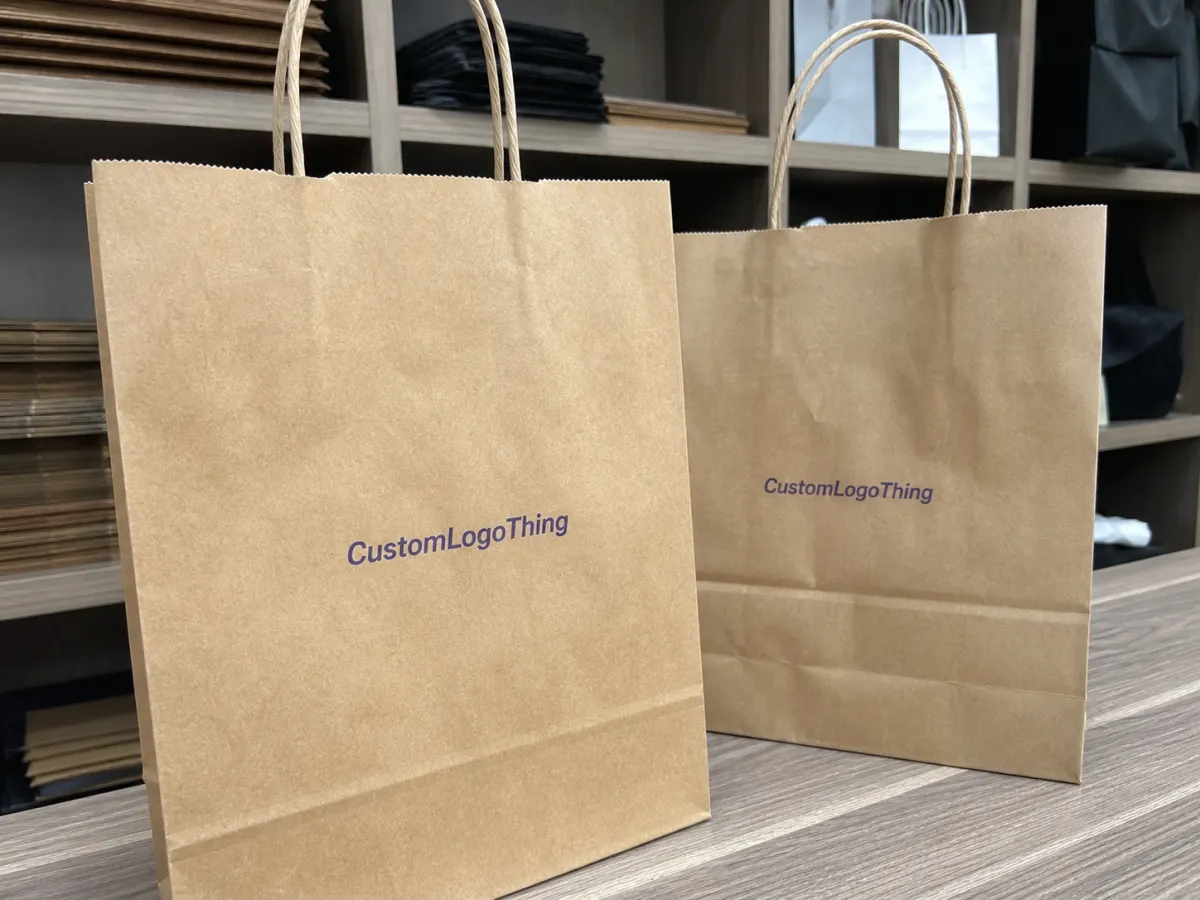
A useful sample should reveal the first weak point under normal use. That is the real purpose of an electronics Twisted Handle Paper Bags material sample guide: to show how the bag behaves, not just how it photographs. If the sample only looks good flat on a table, it has not answered enough questions. Buyers should expect a prototype with the final paper grade, handle diameter, reinforcement patch, and adhesive system, not a generic substitute.
In this category, the first failure is often hidden. Handle attachment looks fine until the bag is lifted repeatedly. A crease seems clean until the bag is loaded and stored for a while. Surface finish appears premium until it starts rubbing against a corrugated carton wall in transit. This is why many packaging teams ask the supplier to show the exact machine line used for the sample build, such as a semi-automatic paper bag machine with automated bottom-folding and a separate handle insertion station.
That is why the sample needs to be handled like a working pack, not a display prop. Lift it. Load it. Let it sit. Fold it open and closed a few times. If the bag is meant to carry an accessory bundle, test it with the actual bundle, not a lighter placeholder. A practical trial usually includes a 5-10 piece hand-built sample set, then one more iteration if the top gusset, handle spacing, or bottom patch needs adjustment.
"A sample is useful only if it predicts the failure that matters most in real handling."
For procurement and packaging teams, the goal is straightforward: determine whether the bag can carry the load, print cleanly, and still present well after the first stretch of use. Anything less is a guess dressed up as approval. For that reason, many teams require a pass/fail checklist for handle pull strength, base squareness, print registration, and odor, especially when the bag will ship with premium electronics.
How the Bag Build Affects Strength, Feel, and Shelf Readiness
A Twisted Handle Paper bag is a stack of decisions. Paper grade, handle construction, reinforcement patches, coating, and print finish all change how the bag performs in the hand and on the shelf. The build can feel simple from the outside while being surprisingly sensitive inside. A standard production line may use water-based adhesive for the handles, die-cutting for the mouth opening, and a bottom gluing station to keep the seam consistent.
Most buyers start with paper thickness. That is sensible, but thickness alone is not the answer. A 350gsm board can feel expensive, yet if the bag size is wrong or the handle patch is weak, the extra material adds cost without solving the stress point. Many electronics accessory bags perform well in the 250gsm to 300gsm range, especially when the packed weight stays under about 1.5 kg. For heavier kits, a 300gsm-350gsm kraft or art paper build with a reinforced bottom card is usually a better fit than simply increasing the handle gauge.
Handle design deserves the same attention. A twisted paper handle with a clean glue line and a well-sized reinforcement patch often outperforms a heavier sheet with poor attachment. The test is not whether the handle survives one lift. It is whether it survives repeated lifts without slipping, opening the top fold, or distorting the mouth of the bag. Buyers often specify a handle length of 300-450 mm and ask for a pull test that holds for 15-30 seconds without delamination.
Finish changes both appearance and use. Matte surfaces tend to hide fingerprints and support a more restrained premium look. Gloss can sharpen color and help graphics pop, but it also exposes scuffs faster. Uncoated stocks can give a more natural feel, though small logos and fine text may lose edge sharpness if ink spread is not controlled. If the artwork includes QR codes, serial numbers, or microcopy, ask for a 1.2 mm minimum line rule and a preflight proof at 100% scale.
There is also the shipping path to think about. If bags are packed inside corrugated cardboard shippers, the outer carton becomes part of the wear test. A print layer that looks clean in a showroom can still fail a fulfillment cycle if it rubs off against other surfaces during packing and transport. A good supplier will stack samples in the same orientation used for shipment, often 25-50 pieces per inner pack, with moisture protection if the route crosses humid climates.
Key Material Factors Buyers Should Compare
Some teams review samples by feel alone. That works until the order scales up and the shortcomings become visible. A better method is to compare measurable material properties alongside appearance. Basis weight matters, but it does not tell the whole story. Caliper, tear resistance, tensile strength, and fold endurance can matter just as much. For electronics packaging, a practical spec review often includes paper grammage, moisture content below 8%-10%, and visual consistency across three sample sheets.
For a practical electronics Twisted Handle Paper Bags Material sample guide, these are the checks worth prioritizing:
- Basis weight and caliper - indicate whether the bag can hold its shape without feeling overbuilt.
- Tear resistance - important around handles, corners, and top folds under repeated stress.
- Tensile strength - relevant to load-bearing and long carry distances.
- Print compatibility - essential for sharp logos, small legal text, and barcode zones.
- Surface scuff resistance - one of the clearest predictors of shelf appearance after handling.
If sustainability claims matter, ask for the paper origin early. FSC certified paper supports chain-of-custody claims, while recycled content reduces reliance on virgin fiber. A blend with post-consumer waste can be a good fit, but it may soften whiteness, change the surface feel, and reduce contrast in dark printing. If the buyer needs stronger environmental documentation, common third-party references include GOTS for organic textile elements, OEKO-TEX Standard 100 for restricted substances in adjacent components, GRS for recycled content verification, and factory social audits such as WRAP or BSCI where applicable.
Be careful with broad environmental wording. Paper bags often appear in biodegradable packaging discussions, yet coatings, inks, and laminations can alter the claim. Ask for the exact stack-up instead of assuming the material story from the outer surface alone. Water-based inks, aqueous coatings, and soy-based inks are common options, but each should be confirmed against the final print coverage and rub performance target.
For a more disciplined review, packaging teams often borrow from industry test methods. ISTA test methods help frame transport and handling, while ASTM tear and tensile methods provide a more objective way to compare paper behavior. A repeatable test process is enough to separate opinion from performance. A simple lab review can include edge tear, burst strength, and a 1 m drop test of a filled inner carton placed inside the bag.
Cost, MOQ, and Unit Price Drivers
Sample pricing and production pricing are not the same thing, and that difference creates confusion. A sample often includes manual assembly, extra inspection, and one-off freight. Production spreads those costs over volume. A sample that costs $25 can still be consistent with a production run that lands below $0.30 per bag. In many programs, a custom printed sample lands in the $35-$120 range depending on plate making, digital proofing, and courier method.
The biggest cost drivers are paper grade, handle construction, print coverage, and finish. Custom sizing adds setup complexity. Full-bleed artwork raises ink use and registration demands. Hot stamping, soft-touch lamination, and special coatings can move pricing faster than buyers expect, especially at smaller quantities. If the bag requires a die-cut window, embossed logo, or spot UV, expect a separate tooling charge and a longer approval cycle for the first proof.
| Material option | Best fit | Typical sample behavior | Indicative unit price at 5,000 pcs |
|---|---|---|---|
| 200-230gsm natural kraft paper | Light accessory kits, simple branding | Good structure, lower print sharpness on dark solids | $0.18-$0.28 |
| 250-280gsm FSC certified kraft paper | Midweight electronics packaging | Balanced feel, better fold stability, solid retail look | $0.24-$0.36 |
| 300gsm high-recycled-content paper | Heavier boxes, premium accessory sets | Stronger shelf presence, slightly softer whiteness | $0.30-$0.42 |
| 350gsm art paper with lamination | Premium launches, high-gloss graphics | Best color pop, higher scuff resistance when matte laminated | $0.38-$0.58 |
MOQ depends on the process. Digital short runs may start at 100-300 pieces, while offset-printed production commonly lands at 1,000-3,000 pieces per SKU and size. If the bag needs custom handle color, special die cutting, or multiple artwork versions, buyers should expect the MOQ to rise. A supplier with stable automation can usually quote a lower per-unit price once the order reaches 5,000-10,000 pieces.
Labor also matters. A hand-inserted twisted handle, manual folding, and extra carton packing can add $0.03-$0.08 per unit at low volume. By contrast, a well-set production line with automated gluing and fold registration can keep the error rate low and reduce rework. When comparing quotes, ask whether the price includes pre-production proofing, carton labeling, and an AQL inspection report before shipment.
Process and Timeline for Sample Approval
The cleanest approval process is staged. First comes the brief: size, target weight, artwork, finish, and any compliance claim. Next comes material selection and a prototype. After that, the buyer reviews fit, print, and construction before the factory issues a revised pre-production sample. A disciplined schedule usually runs 3-5 business days for sampling if the paper and tooling are already available, or 7-14 business days if new dies, plates, or specialty finishes are required.
A real sample approval cycle should include a clear handoff between design and production. Buyers send dielines in PDF or AI format, confirm Pantone references where needed, and approve a digital proof before the physical sample is made. The factory then checks paper stock availability, cut size tolerances, and handle placement before moving the sample into assembly.
Typical checkpoints include:
- Artwork positioning and color reference against Pantone or approved CMYK values.
- Paper thickness verification and moisture check before die cutting.
- Handle adhesion and reinforcement patch alignment.
- Bottom seam integrity and square-ness after folding.
- Final visual inspection under daylight-equivalent light before shipment.
For electronics packaging, most teams should request a production-standard sample, not a one-off showpiece. That means the same paper, the same handle stock, the same print method, and the same glue formula that will be used in the order. If the sample is manual-only and the order is machine-produced, the mismatch can hide a problem until the first shipment arrives.
When timing matters, ask the supplier to commit to a sample courier window and a production lead time separately. A typical production lead time for standard twisted handle paper bags is 18-25 business days after sample approval and deposit, plus 3-7 days for freight depending on the service level.
Step-by-Step Material Sample Evaluation Checklist
A good checklist keeps the review repeatable. Start with the outer look, then move to the build, then to stress testing. A sample that passes the first glance but fails the second lift is not ready for production. Use the same checklist on every revision so the team can compare apples to apples.
Step one is unpacking. Confirm the bag is flat, clean, and free from edge crush, warped handles, glue squeeze-out, or scuffed print. Step two is measurement. Verify width, gusset, and height against the approved dieline, with a tolerance target of about +/-2 mm for most retail programs. Step three is load testing. Insert the actual electronics bundle or a weighted dummy that matches the final pack.
Step four is handling. Carry the bag by each handle at least 10 times. Check whether the mouth spreads, whether the top fold collapses, and whether the handles twist unevenly. Step five is surface review. Rub the printed area lightly with a white cotton cloth and inspect for transfer, smudging, or gloss loss. Step six is storage. Leave the loaded bag standing for 24 hours and check whether the bottom bows or the side panels crease.
Useful checkpoints for buyers and QA teams:
- Verify paper grade, coating, and handle spec against the quote.
- Check glue line consistency at the handle anchor and bottom seam.
- Confirm print alignment on all sides, including the gusset.
- Test scuff resistance after repeated packing and unpacking.
- Record any smell, tackiness, or powder transfer before approval.
If the order will go through formal inspection, ask for an AQL standard in advance. Many packaging buyers use AQL 2.5 for major defects and 4.0 for minor defects, with extra attention on handle pull, print defects, and dimensional variance. For higher-value electronics launches, some teams add a pre-shipment photo report and carton count verification.
Common Mistakes and Expert Tips for Cleaner Approvals
One common mistake is approving the sample too quickly because the color looks right. Color is only one part of the job. A bag can match the artwork and still fail if the handle glue is weak or the paper dents easily. Another mistake is choosing the thickest paper available without checking the total pack weight, which can create stiffness without solving durability.
Another issue is ignoring print coverage. Heavy ink coverage can slow drying, increase blocking risk, and make scuffing more visible. If the artwork uses solid black or dark navy, ask for a rub test and a drying test before final approval. Light, airy graphics often perform better on uncoated or matte-finished stocks than dense full-bleed designs.
Suppliers can help by showing the exact process chain. A reliable workflow might include paper slitting, die cutting, printing, handle twining, handle insertion, bottom gluing, curing, and final carton packing. If any of those steps are skipped or hand-finished differently for the sample, the buyer should know before approving the run.
Two practical tips make approvals cleaner. First, freeze the target size before artwork finalization so the print layout does not shift after production starts. Second, request one spare sample that is deliberately tested to destruction. Seeing where the bag actually fails often saves time on the next iteration.
Next Steps Before You Request a Production Quote
Before you ask for final pricing, define the essentials in writing: bag size, paper grade, finish, handle color, load target, artwork files, and required certifications. If sustainability or export compliance matters, state whether you need FSC chain-of-custody, GRS recycled content documentation, or a restricted-substances declaration tied to the ink and coating system.
It also helps to request a side-by-side quote at three volume levels, such as 500, 3,000, and 10,000 pieces. That makes the cost curve visible and helps the buyer decide whether to optimize the print, simplify the finish, or change the paper grade. In many cases, dropping one specialty finish can reduce the unit price by $0.05-$0.12 at mid volume.
To make the quote usable, ask for these details:
- Unit price at each quantity tier.
- Sample cost and whether it is refundable against production.
- Lead time for sample and mass production separately.
- Packaging configuration, including inner packs and outer cartons.
- Inspection standard and any third-party test reports available.
When those details are in place, the quote becomes a decision tool instead of a rough guess. That is the difference between a bag that simply looks right and a bag that actually performs in electronics retail.
FAQ
What is the most common failure point in twisted handle paper bags for electronics?
The handle anchor and top fold are usually the first weak points, especially when the bag is loaded repeatedly or stored under pressure. Buyers should test both the glue line and the reinforcement patch, not just the printed surface.
What MOQ should buyers expect?
Digital or short-run sampling can start at 100-300 pieces, but printed production usually begins around 1,000-3,000 pieces per SKU. More complex finishes or multiple artwork versions can raise the MOQ.
What certifications are most relevant?
FSC is common for paper traceability. Depending on the supply chain, GRS can support recycled-content claims, and factories may also hold WRAP or BSCI audit documentation. For material safety expectations, OEKO-TEX Standard 100 is sometimes requested for adjacent components, though it is more common in textiles than paper.
How long does sampling take?
If the paper and tooling are ready, 3-5 business days is realistic. If new dies, plates, or finishes are needed, 7-14 business days is more common. Production after approval often takes 18-25 business days.
What should be included in the sample test?
Check size, print alignment, handle strength, seam integrity, rub resistance, and a 24-hour loaded hold. If the bag will travel in cartons, add a simple transit rub test and a carton fit check.

