A Woven Label Beanies factory quote should do more than give you a per-piece number. A beanie can look sharp in a mockup and still feel thin, loose, scratchy, or oddly branded once it is made, especially if the yarn, cuff structure, label size, stitch method, and packing requirements were left open during pricing. The most useful quote turns a design idea into a defined product, with enough detail for a buyer to compare options without guessing what has been included.
When to Request a Woven Label Beanies Factory Quote
Ask for factory pricing before you start comparing loose numbers from different suppliers. A proper quote confirms the materials, construction, decoration method, packaging, quantities, timeline, and freight assumptions behind the price. That matters whether the order is headed for retail shelves, a trade show, a staff uniform program, a school shop, or a cold-weather promotional kit.
For Woven Label Beanies, small details carry real cost. Yarn choice affects warmth and hand-feel. Cuff depth changes the branding area. Label placement affects sewing time and appearance. Freight can shift the landed cost more than expected, especially for rush orders or split shipments. A vague “starting at” price may be useful for early budgeting, but it is not enough for production planning.
Custom Logo Things can quote more accurately when the buyer shares logo artwork, estimated quantity, beanie style, label position, target delivery window, and any packaging requirements. A stock acrylic cuffed beanie with one sewn woven label has a very different cost structure from a fully custom knit beanie with a branded patch, hang tag, barcode sticker, and individual bag. If artwork is ready, start with the Contact Us page; if label formats are still being compared, the Custom Labels & Tags page can help narrow the options.
From a buyer’s point of view, the value is consistency. Woven labels give cold-weather headwear a clean, low-profile brand mark that holds up well through handling and wear. They suit employee apparel, outdoor merchandise, school spirit programs, boutique resale, and event goods where the beanie needs to look finished straight out of the carton. The goal is not decoration alone. It is a product with the right hand-feel, the right presentation, and no avoidable surprises after approval.
A good quote confirms assumptions instead of hiding them. If the pricing does not mention the yarn, label construction, packing method, and freight basis, the quote is not complete enough to compare.
Beanie Styles, Knit Construction, and Label Options
Most woven label beanie programs begin with a familiar body style. Cuffed rib knit beanies are the most common because the folded cuff creates a stable branding zone. Fisherman beanies sit shallower and give a more compact, fashion-oriented fit. Slouch beanies carry extra length and a softer drape. Pom beanies, skull caps, and heavier cold-weather knits can all work, but each style changes the decoration area, the silhouette, and sometimes the way the label needs to be stitched so it lies flat.
Knit gauge and yarn weight deserve more attention than they usually receive at the early quote stage. A dense rib knit with a firm cuff can hold a woven label cleanly. A looser knit may need a wider label, a different stitch path, or a backing choice that helps prevent puckering. The beanie body is flexible, while the label is more stable; if the two are not balanced, the cuff can ripple around the stitched edges.
Yarn composition also changes the quote. Acrylic is usually the most economical choice for bulk programs because it is consistent, widely available, and easy to run in standard colors. Cotton blends feel softer and more natural in hand, which can suit lifestyle merchandise or indoor-outdoor wear. Wool blends bring warmth and a more premium texture, though they usually raise cost and may need clearer care instructions. Recycled yarns can be a strong option for sustainability-driven programs, but color range, availability, and minimums depend on the source material and production route.
Woven labels come in several practical forms:
- Damask woven labels for fine detail, tight lettering, and crisp logo edges.
- Satin woven labels for a smoother face and softer surface feel.
- Merrowed-edge patches when the design calls for a more substantial cuff badge.
- Straight-cut fold labels for a compact brand mark with low bulk.
- Loop fold labels for a tidy wraparound look at the cuff edge.
- Heat-cut labels sewn on two or four sides for a flatter profile.
Placement changes the impression almost as much as the label type. Center front on the cuff is direct and familiar. Side cuff placement feels quieter and works well for minimalist branding. A vertical fold-over tab at the cuff edge gives a retail look without taking over the front of the hat. Some programs use a rear seam label, while flat knit panels can carry a woven patch when the logo needs more presence.
Compared with embroidery, leather patches, PVC patches, or printed labels, a woven label is often the better choice for small text, tight linework, and multi-color brand marks that need to repeat cleanly across a bulk order. That said, woven thread has limits. Thin lines, tiny lettering, gradients, and extreme color shifts can blur if the label is too small. The most accurate woven label Beanies Factory Quote starts with artwork that has been simplified for production, not a web logo copied directly into a mockup.
Specifications That Make Your Custom Beanie Quote Accurate
Accurate pricing starts with a complete spec set. The most useful request includes the beanie style, knit pattern, yarn type, body color, cuff height, finished size, label size, label edge finish, logo colors, stitch method, packing style, and delivery location. If several of those pieces are missing, the quote can only be approximate, and approximate pricing is often what causes the order to slow down later.
Yarn selection drives both cost and presentation. Stock acrylic colors usually move fastest and keep pricing controlled. Custom-dyed yarn or tight Pantone-style matching may add cost, minimums, and lead time. Cotton blends, wool blends, and recycled yarns can all be appropriate, but they need to be chosen for the order’s purpose, not just for how they sound in a product description. A giveaway beanie, a retail winter accessory, and an employee uniform piece do not need the same material standard.
The woven label has its own specifications. A two-color label with a clean background is easier to weave than a dense six-color patch with tiny type. A larger label may improve readability, but it increases weaving time, material use, and sewing labor. A merrowed edge creates a more patch-like appearance, while a straight-cut label is flatter and often better for a simple cuff mark. Backing can help stability, though too much stiffness may feel awkward on a soft knit.
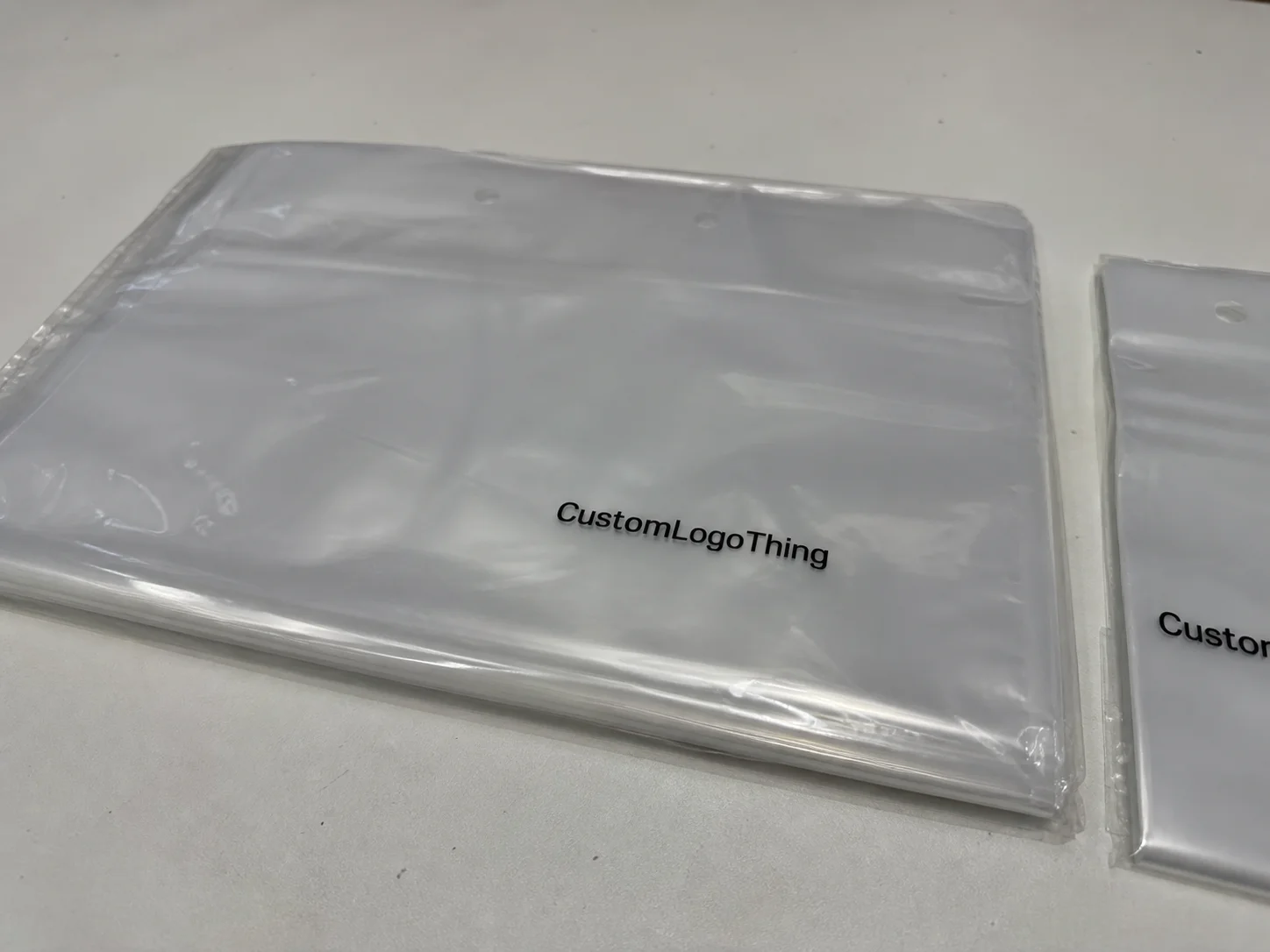
Packaging deserves a separate line in the quote. Individual poly bags, recycled bags, belly bands, hang tags, barcode stickers, master carton limits, inner carton packing, and kitting with other promotional items all affect labor and material cost. For programs that need more controlled freight handling, some buyers ask for packaging guidance that references ISTA methods. If the order uses paper inserts or hang tags, buyers may also request FSC-sourced materials. These details can decide whether the shipment arrives ready for distribution or needs repacking before it can move.
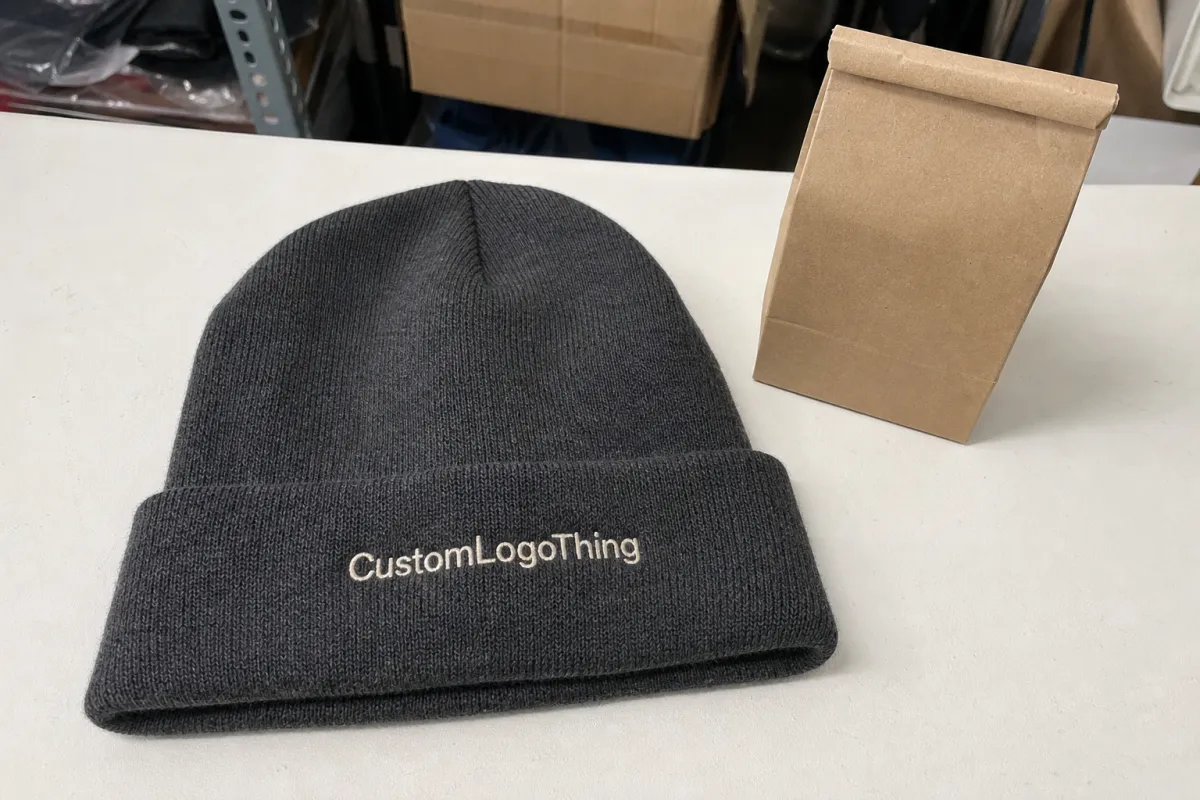
Reference photos are useful. One good image can show cuff depth, knit density, label scale, and folding style faster than several rounds of email. If you have an existing sample, include measurements rather than relying only on the photo. A beanie that appears tall on a flat table may fit shallow on the head, and a label that looks balanced in a rendering may be too wide once the cuff stretches.
Pricing, MOQ, and Unit Cost Factors for Labeled Beanies
Unit cost is built from several parts: blank or custom-knit construction, yarn selection, label weaving, sewing labor, setup, sampling, packaging, inspection, carton packing, and freight. Buyers sometimes focus on the label because it is the visible branding piece, but the body of the beanie often has the larger effect on price. A stock body with a sewn label is one type of program. A custom knit body with a custom color, woven patch, retail tag, and carton routing is another.
MOQ depends on how custom the order becomes. Stock beanie bodies with woven labels often start at lower quantities because the base product already exists and the decoration is the main custom element. Fully custom knitted beanies usually require higher minimums because the factory must allocate knitting time, yarn, and setup for a specific colorway, gauge, or pattern. Woven labels may also carry their own minimums, especially when the program uses several label sizes, colorways, or backing styles.
| Option | Typical MOQ | Typical Unit Cost | Best Use |
|---|---|---|---|
| Stock acrylic cuffed beanie + single woven label | 300-500 pcs | $2.10-$3.40 | Promotional giveaways, event merchandise, early-stage retail tests |
| Heavier rib knit beanie + damask label + simple bagging | 500-1,000 pcs | $3.20-$4.80 | Employee kits, schools, outdoor brands, boutique resale |
| Fully custom knit beanie + woven patch + retail packaging | 1,000 pcs and up | $4.80-$7.50+ | Merch drops, premium retail programs, branded winter collections |
These ranges are planning references, not fixed pricing. Quantity breaks matter because setup, artwork preparation, sampling, and label work are spread across more pieces as volume increases. Rush schedules, custom-dyed yarn, dense label weaving, larger patches, individual retail packaging, or multiple delivery points can raise the final number quickly. A low unit price without freight, packing, or proofing assumptions may not stay low once the order is fully defined.
For budget planning, a good-better-best quote is often the clearest route. A stock acrylic beanie with a woven label may be right for a giveaway. A heavier rib knit with a refined damask label may suit resale or employee apparel. A fully custom knit version may fit a brand launch or winter collection. Seeing those options side by side makes the trade-offs visible: softness versus price, label detail versus simplicity, retail presentation versus bulk packing.
Process and Timeline from Artwork to Packed Cartons
A well-managed order moves through a predictable sequence: quote intake, artwork review, label layout, beanie specification confirmation, sample or digital proof, approval, material preparation, knitting or sourcing, label weaving, sewing, inspection, packing, and shipment. The chain looks long on paper, but each step prevents a specific problem. Most costly errors start when a decoration looks acceptable on screen but has not been tested against the fabric, cuff shape, or finished scale.
A digital mockup helps confirm placement, proportion, and basic artwork flow. A physical sample or production proof tells you more. It shows how the knit feels in hand, how the label texture sits against the cuff, whether the stitch tension pulls the fabric, and how the colors read under normal light. If the beanie is for retail, photography, or a higher-price merch drop, the sample stage is usually worth the time.
Lead time depends on stock availability, custom yarn needs, label complexity, sampling, approval speed, production capacity, packaging, and shipping method. Stock body programs can move faster than fully custom knit runs. Holiday season capacity can stretch schedules even when production is organized. Specialty yarns, large label orders, and custom packaging can create separate time blocks before final assembly begins.
Approvals have a real effect on timing. Slow logo feedback, uncertain quantities, late changes to cuff height, or a new packaging request after proofing can move the schedule even if the factory has space to run the order. Once bulk production begins, changes are rarely clean. They usually create added cost, added time, or a compromise in consistency.
Freight planning belongs in the first quote discussion. Ocean freight usually fits larger non-urgent orders and keeps landed cost more manageable. Air freight can protect an event deadline, but the total price changes sharply. For fixed in-hands dates, Custom Logo Things builds backward from delivery so there is room for artwork, proofing, production, quality checks, and transit rather than treating the ship date as the only milestone.
Quality Checks Before Bulk Production and Shipment
Quality control starts before the first production piece is sewn. Artwork should be checked for line thickness, small type, thread contrast, label size, and stitch placement on the cuff. If the logo is too detailed for the chosen label size, weaving will not solve the problem. The better move is to simplify the artwork, increase the label size, or choose a different label style before bulk work begins.
Beanie body inspection matters just as much as decoration. The factory should check finished dimensions, stretch recovery, seam alignment, cuff height, knit density, yarn defects, shade variation, loose threads, and overall hand-feel. On headwear, small inconsistencies stand out because the product is worn at eye level. Retail programs are especially sensitive to this, since buyers expect the pieces in a carton to look matched, not merely similar.
Label inspection should cover logo clarity, edge finish, color accuracy, backing stability, orientation, stitch tension, placement consistency, and whether the label lies smoothly without puckering the knit. A label placed a few millimeters off may not matter on a giveaway order, but it can look sloppy in a retail display or product photo. Tolerance should match the use case.
Packaging checks should confirm counts per bag or carton, accurate SKU labeling, clean folding, hang tag placement, barcode application, and protection from moisture or crushing during transit. If the order goes to a fulfillment center or several distribution points, carton labels and packing lists become part of the quality standard, not administrative afterthoughts.
For larger programs, inspection expectations should be agreed in advance. Some buyers approve one standard sample and ask for the bulk order to match it closely. Others need tighter tolerances because the beanies are going to retail shelves or bundled kits. Both approaches can work, but the standard needs to be set before production begins.
Common Quote Mistakes That Slow Down Beanie Orders
The most common mistake is asking only for the cheapest beanie without defining knit weight, cuff style, label construction, packing method, or delivery deadline. That leaves too much open to interpretation. Two suppliers may quote very different products while both appear to answer the same request. The buyer thinks they are comparing prices; in reality, they are comparing assumptions.
Missing or poor artwork creates another delay. Vector artwork is ideal for woven label work because it gives the production team a clean file for line weight, thread color separation, and sizing. Low-resolution screenshots often need to be redrawn or simplified before a usable proof can be made. That work is manageable, but it should be accounted for early rather than discovered after the timeline has already been promised.
Label size is a frequent trap. A mark that looks balanced on a mockup may be too small for readable woven detail or too large for the cuff once it is sewn down. Buyers should also be careful with tonal labels. Subtle thread contrast can look premium, but if the shades sit too close together, the logo may disappear under normal indoor light.
Quantity uncertainty slows material planning. If the quote is built around one number and the order changes dramatically after sampling, MOQ, label production, yarn planning, unit cost, and freight all need to be checked again. Delivery location matters too. Domestic delivery, international freight, split shipments, retail distribution, and fulfillment-center routing all affect the final landed price.
Use a simple checklist when reviewing competing quotes:
- Same beanie style and knit weight
- Same yarn type and color basis
- Same label size, finish, and placement
- Same packaging method and count per carton
- Same sample or proof expectation
- Same freight terms and destination
- Same production timeline assumption
If any of those lines differ, the prices are not truly comparable. A quote that looks low on paper can become expensive once the missing details are added back in.
Next Steps to Get a Clean Factory-Ready Beanie Quote
The fastest way to get a useful quote is to send a focused spec pack. Include logo artwork, the beanie style, label type and placement, estimated quantity, target in-hands date, packaging needs, and the shipping region or delivery address. If you have a reference image, include it. A thick cuff, shallow fisherman fit, oversized patch, tonal woven label, or small side tab can all change the quote because each one changes how the product is built and presented.
It also helps to state the end use. Retail resale, employee apparel, promotional giveaway, subscription box, event merchandise, school spirit wear, and outdoor team gear all call for different construction and packing choices. A giveaway beanie may stay simple. A retail piece may need cleaner folding, better hang tags, SKU labeling, and more careful carton handling.
After submission, Custom Logo Things reviews the specs, checks artwork feasibility, confirms MOQ and production route, recommends practical cost adjustments where possible, and prepares pricing with clear assumptions. If the design needs simplification, that should be addressed early. If the label will sit better on the cuff edge than at center front, that should be called out before proofing. If the timeline is tight, freight and approval deadlines need to be visible from the start.
Done well, the quote makes the order easier to approve, easier to produce, and easier to deliver. That is the standard buyers should expect from a woven label beanies factory quote: a defined product, a realistic timeline, and enough production detail to avoid last-minute surprises.
What information do I need for a custom woven label beanie factory quote?
Provide logo artwork, preferred beanie style, label size and placement, order quantity, target delivery date, packaging requirements, and shipping destination. If yarn type, cuff height, or label construction is not decided yet, send reference photos so the factory can recommend a practical route.
What is the usual MOQ for beanies with woven labels?
MOQ depends on whether the beanie body is stock or fully custom knit. Stock bodies with sewn woven labels often start lower, while custom knit bodies usually require higher minimums because yarn, machine time, and setup must be planned for the order. Labels may also have separate production minimums.
How does a woven label affect the cost of custom beanies?
Cost is influenced by label size, thread color count, edge finish, backing, sewing method, and placement complexity. The beanie construction, yarn choice, packaging, quantity, and freight method often have an equal or larger impact on the final unit cost.
Can I see a sample before bulk woven label beanie production?
Yes. A physical sample or production proof is recommended when color, knit feel, label texture, or retail presentation matters. A digital mockup can confirm layout quickly, but it does not replace the value of checking real fabric, stitching, and label scale.
How long does a woven label beanie order take from quote to delivery?
Lead time depends on stock availability, custom yarn needs, label complexity, sampling, approval speed, production capacity, packaging, and shipping method. The safest approach is to work backward from the in-hands date and allow time for proofing, production, quality checks, and freight.