Private Label Beanies Packing Requirements for Boutiques
Private Label Beanies packing requirements for boutique retail fulfillment sound simple until the first carton gets opened in receiving and someone sees a wrinkled knit, a crooked hang tag, or a count that does not match the purchase order. That is usually the moment the conversation shifts from “the product looks good” to “the pack needs work,” and in my experience that is where a lot of boutique orders get rejected.
Pack requirements cover the practical details that turn a finished beanie into a retail-ready unit: the fold method, bagging style, barcode placement, size labeling, carton counts, and whether the item needs to be display-ready or only backroom-ready. For private label knitwear, the buyer is not just purchasing a warm accessory; they are buying a branded, shelf-presentable item that has to look consistent across every unit, not just on one approved sample.
That is why packaging cannot be treated as an afterthought. It affects appearance, compliance, labor time, freight efficiency, and how fast a boutique can place the product on a shelf or in a display basket. A clean spec saves time on both sides, while a vague one usually creates extra handling and avoidable chargebacks.
If the unit cannot go from carton to shelf without a repack, the pack spec is not finished yet.
Private label beanies packing requirements for boutique retail fulfillment: what buyers miss first
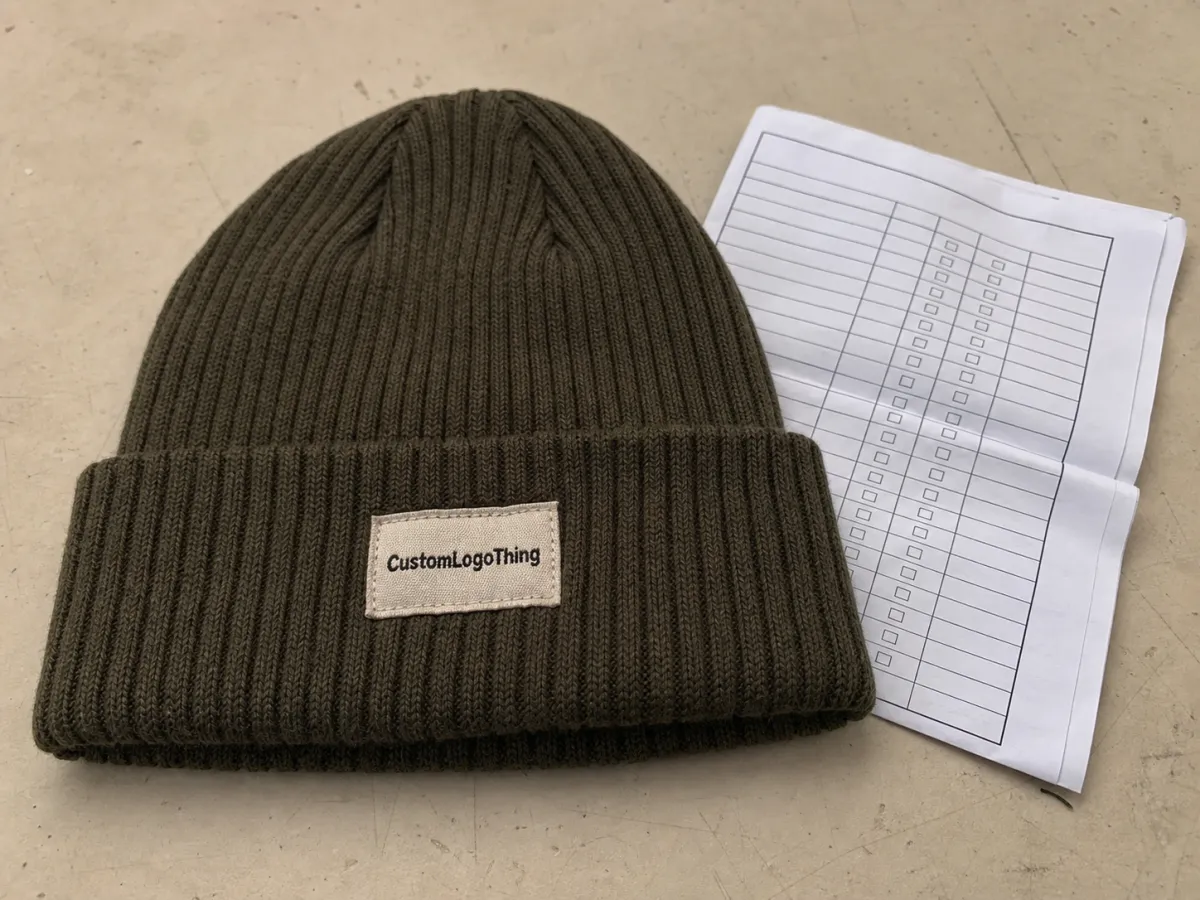
The first thing many buyers miss is that most rejections happen after the beanie is already made. The knit can be correct, the embroidery can be clean, and the color can match the approved lab dip, but if the cuff is smashed flat or the branding sits under a cloudy bag seam, the boutique may still reject the shipment. That is why Private Label Beanies packing requirements for boutique retail fulfillment need to be defined before production is complete, not after the cartons are waiting at the dock.
In plain language, the pack spec tells everyone how the beanie should be folded, wrapped, labeled, counted, and shipped. A boutique may want each unit sealed in a clear polybag with a barcode sticker on the lower right, while another wants a tissue wrap, a belly band, and a hang tag visible through the front panel. Some orders are display-ready, which means the item should go straight into the selling area, while others are backroom-ready and only need to be easy to receive and restock.
Private label beanies are different from generic winter accessories because the retailer is buying a finished branded piece, not a loose commodity. The logo location, the shape of the crown, the stretch of the rib knit, and the way the cuff sits after folding all matter. A slouch beanie, a cuffed knit, and a pom style do not pack the same way, and treating them as if they do is a quick route to messy cartons and frustrated store teams.
From a production point of view, this is a cross-functional decision. Design wants the branding visible, operations wants the carton count to move quickly, freight wants efficient cube, and the boutique wants every piece to arrive looking neat and easy to merchandise. The best pack specs respect all four.
For buyers who need the labels and barcode logic tightened up early, the most practical place to start is Custom Labels & Tags, because a clean label plan often prevents half the receiving problems later. If you are building out the program more broadly, the packaging team at Custom Logo Things can usually help align the product, the pack, and the retailer expectation before the shipment leaves.
How boutique fulfillment packs private-label beanies from intake to carton
The flow is usually straightforward, but each step needs discipline. Finished beanies arrive from production, the team verifies size and color counts, and the logo placement is checked against the approved sample. If the beanie is supposed to sit a certain way in the bag, that gets confirmed before the first unit is sealed, because once a style is packed at scale, changing the fold pattern means reopening cartons and adding labor.
From there, the packout sequence usually follows a repeatable pattern. The knit is folded so the crown and cuff keep their shape, tissue or a light support card is inserted if the style needs structure, and the unit is sealed in the approved bag or wrap. If the beanie has embroidery, the crew has to avoid heavy compression around the stitched area, since too much pressure can leave a permanent ridge or flatten the design.
Inner packs matter more than some buyers expect. A boutique receiving team often wants to count 6, 12, or 24 units quickly without opening every individual bag, so inner counts should be consistent and clearly marked. Master cartons should list style, color, size, quantity, and carton number, which makes receiving faster and helps the store team spot shortages before the shipment gets mixed into stock.
Retail programs also tend to add small but important details: UPC labels, size stickers, country-of-origin marks, and sometimes store-specific carton markings. Those requirements should be written into the pack spec, because a missing sticker or a barcode in the wrong corner can slow down receiving more than a minor cosmetic issue ever would.
For parcel-shipped boutique orders, I like to think about distribution testing early, not after complaints start. The packaging folks at ISTA outline the logic behind transit testing, and even when a beanie is lightweight, the carton still has to survive sorting, stacking, and repeated handling without crushing the knit structure.
Process and timeline: sample approval, packout, and ship dates
The cleanest timeline starts with a specification review, then a sample build, then packaging approval, production, final packout, quality check, and dispatch to the retailer or 3PL. That sequence sounds obvious, but the delays usually come from skipped approval points. If the artwork lands late, the barcode data is incomplete, or the carton instructions change after production starts, the schedule slips fast.
For private Label Beanies Packing Requirements for boutique retail fulfillment, the packaging approval step is often where the clock gets longer than expected. A buyer may ask for a different fold after seeing the sample, or a retailer may require a new label placement to match shelf scanning rules. If the carton is already in production, those changes become expensive because they affect labor, materials, and sometimes even the approved freight plan.
Special presentation details add time too. Custom inserts, branded header cards, multiple inner counts, and “retail-ready” folding instructions often need a short test run before full production. That test run catches issues like bag glare, tag alignment, or a fold that looks neat in isolation but opens up during transport. I would rather spend an extra day on a pilot packout than lose a week correcting 5,000 units.
Seasonal orders need extra breathing room. Store resets, holiday launches, and first-time boutique programs almost always run tighter than the calendar suggests. A missed approval on a Friday can turn into a missed ship window by the following week, which is why a realistic cushion belongs in the schedule from the start.
The other timing lesson is simple: the earlier the pack spec is locked, the smoother the rest of the job runs. A good partner will ask for fold method, label data, carton counts, and destination details before the line is scheduled, not after the product is already staged for packout.
Cost, pricing, MOQ, and quote drivers for retail-ready beanies
Packaging cost is usually driven by five things: individual bagging, custom labels, hang tags, tissue or inserts, labor for folding and inspection, and the extra handling needed for boutique-ready presentation. For simple polybagged units, the added packaging labor might land around $0.08-$0.20 per unit, while a more finished retail presentation with tags and inserts can climb higher depending on the artwork and the count structure.
MOQ changes the unit cost in a way buyers can feel immediately. Small runs carry more setup and labor overhead per piece, while larger runs spread those costs over more units and usually bring the unit price down. A 500-piece order and a 5,000-piece order are not priced the same, even if the beanie itself is identical, because the packing line still has to be staged, verified, and documented either way.
Here is the cleanest way to compare quotes: keep product cost separate from packaging, freight, and compliance work. That split makes it easier to see whether a higher quote is coming from a better bag, a more detailed label plan, or simply more labor. It also helps avoid surprise add-ons after approval, which is something boutique buyers dislike more than almost anything else.
| Pack Option | Typical Use | Approx. Add-On Cost per Unit | Notes |
|---|---|---|---|
| Clear polybag + barcode label | Standard boutique receiving | $0.08-$0.18 | Fast to pack, easy to scan, good for most private label basics |
| Polybag + hang tag + size sticker | Retail shelf or display table | $0.14-$0.28 | Better presentation, slightly more labor, cleaner merchandising |
| Tissue wrap + belly band | Premium boutique presentation | $0.20-$0.40 | Slower packout, stronger visual appeal, usually needs a sample sign-off |
| Polybag + insert card + master carton labeling | Multi-store retail fulfillment | $0.12-$0.30 | Useful when the buyer wants tighter SKU control and better traceability |
For paper inserts or branded cards, I also like to ask whether the stock is FSC-certified, because that gives the buyer a clean sourcing story without changing the look of the pack. The certification framework is explained clearly at FSC, and it is a sensible reference point if the boutique cares about paper provenance.
To quote a pack job accurately, a fulfillment partner should know the dimensions, knit style, fold preference, counts per bag and carton, label requirements, destination, and whether kitting or retail inserts are included. That is the difference between a quote that helps you plan and one that gets revised three times before the PO ships.
Materials and presentation specs that protect knit shape and branding
The most common packaging choices for beanies are clear polybags, tissue wraps, recycled film, belly bands, and display cards. Clear polybags are efficient and make barcode scanning easy, while tissue and bands give the unit a more finished, boutique-friendly feel. Recycled films can be a good fit if the buyer has sustainability targets, but only if clarity, seal strength, and cost still work for the line.
Beanies need gentle handling at the fold line. Over-compression can flatten the ribbing, distort embroidery, or leave a crease that never quite disappears, especially on tighter knit acrylics and wool blends. I have seen a perfectly made beanie look tired simply because it sat too long under heavy top-load in a carton that was packed too tight.
Barcode and label placement should be defined with the same care as logo placement. A unit that has to be turned over, unfolded, or reoriented before it can be sold slows the receiving team and makes the item look less polished. If the boutique wants the barcode on the lower back corner of the bag, say so in the spec and keep it consistent across the run.
Carton-level protection matters as much as the unit bag. Moisture control, snug void fill, and enough stack strength help the product arrive in sellable condition. For long freight moves or humid lanes, I would rather use a slightly stronger carton and a cleaner pack orientation than squeeze every possible unit into the box and risk flattening the knit.
For brands trying to balance shelf appeal and handling efficiency, the best materials are the ones that protect shape without making the pack too fussy to process. A boutique only sees the finished result, but the packing team has to live with the labor cost of every added layer.
Common mistakes that create rework, delays, and retail complaints
The first mistake is treating all beanies the same. A cuffed rib knit, a slouch beanie, and a pom style often need different folds, support, and carton space to stay neat. If one style is packed the same way as another just to save time, the result is usually a box of crooked units and a buyer asking for repack.
The second mistake is mixing SKUs or colorways inside the same inner pack without strong labels. That slows down receiving and can trigger chargebacks if the retailer expects one style per carton or one color per inner. It also creates avoidable confusion for store associates who are trying to count stock quickly.
Missing compliance details is another common problem. Wrong barcode placement, inconsistent ticketing, and carton counts that do not match the purchase order are all small errors that can turn into big delays. The product may be physically fine, but a store team that cannot reconcile the shipment will often treat it as an exception.
Another issue is skipping the pilot packout. A short test run tells you whether the fold holds, whether the bag size is right, whether the label sits cleanly, and whether the carton count feels practical for the receiving team. I have seen plenty of problems surface in the first 20 units that would have been expensive at 2,000 units.
Honestly, the best boutique programs are the boring ones: one spec, one sample, one pack method, one carton logic, and no last-minute improvisation on the floor.
Step-by-step packout checklist for shelf-ready boutique orders
Start with one clean spec sheet that confirms the fold method, bag type, label positions, carton counts, and any retailer-specific notes in writing. If the packout team has to guess, the job will drift, and private label beanies packing requirements for boutique retail fulfillment will start changing by word of mouth instead of by document.
Approve a physical or photographed sample so every stakeholder can confirm how the beanie looks after packing, not just before it enters the bag. That sample should show the front, back, label placement, and carton marking, because a pretty single unit means very little if the receiving team cannot identify it.
- Confirm style, color, size, and PO count.
- Check fold method and bag size against the approved sample.
- Verify label, barcode, and hang tag placement.
- Run a short pilot lot and inspect the first cartons.
- Release full production only after counts and appearance match the spec.
- Review outer carton marks, destination labels, and receiving instructions before ship.
That checklist is simple on purpose. Boutique orders rarely need fancy process language; they need a repeatable routine that keeps units neat, counts accurate, and cartons easy to receive.
It also helps to keep the checklist tied to the retailer, not just the product. A boutique with a backroom team may want larger inner counts, while a small storefront may prefer smaller, display-friendly packs. The shape of the order should follow the way the store actually works.
Expert tips and next steps for a cleaner reorder cycle
Standardize the pack spec early so future reorders do not require new approvals, remeasurement, or a fresh carton redesign. That one move saves time on every repeat order and makes private label beanies packing requirements for boutique retail fulfillment much easier to maintain across seasons.
Ask your packaging partner for three quote scenarios at once: basic retail bagging, display-ready bagging with labels, and a premium option with inserts or branded cards. Comparing those side by side makes the tradeoffs obvious, especially if the boutique is trying to hit a certain shelf look without blowing up the budget.
Keep a simple control sheet for each style that tracks fold method, approved artwork, carton count, and retailer notes. I like that approach because it prevents the common problem of someone relying on memory from the last run, which is a bad habit in any production environment.
Use the first shipment as the baseline, then tighten the process on the next run by comparing labor time, damage rate, and store feedback. If the unit arrived clean but the team spent too long opening cartons, that tells you the inner count or outer labeling needs work. If the beanie looked great but the embroidery creased, then the fold or carton pressure needs adjustment.
For brands that expect to reorder, the goal is not just to ship once. The goal is to build a packing method that stays stable, scales cleanly, and keeps the boutique happy enough to keep the program alive.
In practice, the best private label beanies packing requirements for boutique retail fulfillment are the ones that protect the knit, reduce handling, and let the retailer merchandize the product without extra work. Get the fold, label, carton count, and presentation right once, and the next reorder becomes a lot easier to quote, pack, and receive.
What are the basic private label beanies packing requirements for boutique retail fulfillment?
They usually include a defined fold, an approved bag or wrap, clear size or barcode labeling, and carton counts that match the retailer's receiving process. Boutique buyers also care about appearance, so the pack needs to keep the knit smooth, the branding visible, and the unit easy to merchandise.
Should private label beanies ship flat, folded, or with support inside the pack?
Most boutique orders ship folded to protect shape and reduce carton space, but the fold method should be tested so ribbing and embroidery do not crease. Support material, tissue, or insert cards may be used when the style needs extra structure or when the retailer expects a more premium presentation.
How do MOQ and packaging choices affect unit cost on boutique beanie orders?
Smaller orders usually have a higher unit cost because setup, labor, and label application are spread across fewer pieces. Custom bags, inserts, and special ticketing add cost, so it helps to price the base pack and each add-on separately.
What timeline should I plan for process and lead time on packed beanies?
Plan time for sample approval, packout testing, production, final inspection, and shipping rather than assuming the product can go straight from knitting to cartons. Lead time stretches when artwork, barcode data, or retailer instructions are not finalized early, so approvals should happen before full production starts.
What should I ask a packaging partner before sending beanies to a boutique retailer?
Ask how they will fold, bag, label, carton, and verify each unit so the finished pack matches the buyer's expectations. Also ask for a quote that separates product, labor, packaging materials, freight, and compliance work so you can compare options clearly.


