Mesh Trucker Hats packing requirements for ecommerce apparel fulfillment are easy to understate until a clean-looking cap comes out of transit flattened, scuffed, or bent just enough to disappoint the customer. The reason is structural: a trucker hat is not a uniform piece of soft goods. The front panel may hold shape, the brim has a memory, and the mesh back can collapse or snag if the carton setup is too loose or too tight.
From a packaging buyer's standpoint, the job is not simply getting hats into a box. It is preserving appearance, keeping the packout repeatable, and avoiding labor waste on the warehouse floor. The right spec has to control orientation, carton size, inner protection, and label placement without adding so much hand work that fulfillment slows to a crawl. That is the practical side of Mesh Trucker Hats packing requirements for ecommerce apparel fulfillment, and it is where small decisions have outsized consequences.
There is also a commercial angle. A hat that arrives slightly crushed may still be wearable, but ecommerce customers do not evaluate it like a factory inspector. They see the first impression. If the crown looks tired or the mesh has a set crease, the product feels discounted even when it is not. A few cents in packaging can protect a much larger margin.
Why mesh trucker hats packing requirements for ecommerce apparel fulfillment differ
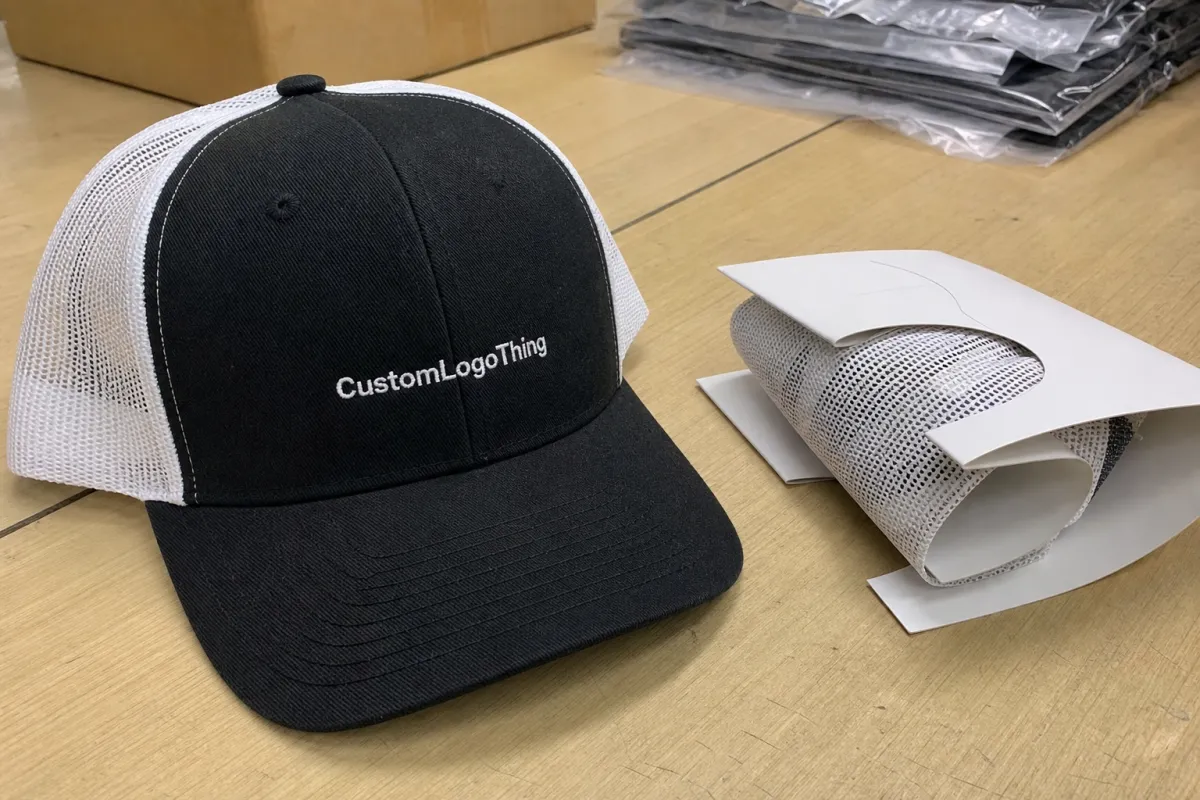
Mesh Trucker Hats behave differently from knit caps, beanies, or soft panel caps because they combine rigid and flexible components. The front can be lightly structured or firm, the brim usually contains stiffener material, and the rear mesh has very little resistance to pressure. That mix makes the hat vulnerable in two places at once: the front panel can flatten, while the mesh can fold or catch on nearby items.
The closure system matters just as much. Plastic snaps are relatively forgiving, but fabric straps, hook-and-loop closures, and metal slides introduce snag risk. In a crowded carton, the back closure can rub against another hat, a divider edge, or the carton wall and leave marks that are obvious once the customer opens the box. For that reason, mesh trucker hats packing requirements for ecommerce apparel fulfillment should never be copied from a generic apparel carton standard without a fit test.
Order profile changes the pack strategy too. Direct-to-consumer parcels usually need more protection than wholesale case packs because they experience more handling events. A case moving through a warehouse may get opened once and displayed. A parcel can be sorted, stacked, and moved across several touchpoints before it reaches the doorstep. That extra handling is why the same hat may need a different solution depending on where it is headed.
The simplest way to think about the spec is this: protect the front panel, prevent the brim from warping, and stop the mesh and closure from rubbing. If the style has a soft crown or heavy embroidery, the pack plan should assume some compression and build around it. If the cap is a low-risk wholesale style, the carton can be simpler, but only after compression and transit testing show that the hat springs back without visible fatigue.
How the hat build affects carton loading
The hat's construction decides how it should sit in the shipper. A stiff front panel can tolerate light nesting, while a softer crown needs more space so it does not flatten under top load. The brim angle also changes the fill pattern. If the brim is forced into an unnatural bend, it can hold that shape after unpacking, especially in warmer transit conditions.
Mesh density is another variable that buyers often overlook. Fine mesh is lighter and less expensive in some styles, but it can crease more easily and show pressure marks faster. Heavier mesh may hold up better, yet it still needs space. It should not be packed against rough corrugate, sharp closure hardware, or hard corners from adjacent units.
Carton loading usually falls into a few practical methods:
- Loose polybag only for low-risk direct-to-consumer orders with a strong front panel and a tight carton fit.
- Polybag plus tissue or divider for mixed-SKU cartons, embroidered fronts, or styles that need some surface protection from rub.
- Hat shaper or insert plus outer carton for premium retail programs, photo-sensitive styles, or caps that lose shape quickly under load.
Orientation is a bigger deal than many sourcing teams expect. Some styles pack best with the crown nested upright. Others do better lying flat with the brim aligned so the load stays uniform. The wrong orientation can create a false sense of efficiency because the carton fills cleanly, but the hat comes out distorted. Good carton design is less about maximizing count and more about controlling movement inside the box.
For higher-volume programs, buyers often standardize by hat family. That means one loading pattern for structured snapbacks, another for softer crowns, and a separate pattern for premium presentations. Trying to force every style into one pack pattern usually creates more damage than it saves in planning time.
Protection variables that change damage risk
Damage does not usually come from a single failure. It comes from a stack of small misses. Decoration method is one of them. Thick embroidery, puff print, and stitched patches all add dimension, which can look great but also create pressure points when the crown is compressed. A raised logo sitting high on the front panel is especially sensitive to scuffing.
Material selection also changes the outcome. A 1.5 to 2.0 mil polybag is often enough to keep dust and rub off basic hats, while heavier or custom-printed bags can make sense for premium programs. Tissue can help separate units, but it is not a substitute for shape control. If the hat can move inside the carton, it can still shift, rub, or flatten.
Corrugate strength matters more than some apparel buyers expect. Single-wall cartons with a 32 ECT rating are common for parcel shipping, but heavier mixed loads or palletized cartons may need double-wall board. Oversized cartons create movement and invite void fill. Overpacked cartons create pressure on the crown and brim. Either problem raises the chance of returns.
Humidity and temperature add another layer. Apparel cartons move through cold docks, warm trailers, and humid warehouses. Paperboard inserts can soften or warp a little before the product ever reaches the customer. That is one reason many fulfillment teams keep a polybag layer even on styles that seem simple. It is a low-cost barrier against dust, scuffing, and moisture-related handling wear.
A practical test set should include:
- Compression resistance after stack load.
- Scuff resistance on embroidery, labels, and front panels.
- Mesh snag control around closure hardware and carton edges.
- Spring-back time after unpacking, measured in minutes or hours rather than guesswork.
Transit testing does not need to be elaborate to be useful. Even a basic drop, vibration, and top-load review can expose weak packouts before production volume starts. Groups that skip this step often discover the damage in customer returns, which is the most expensive place to learn.
A hat that looks fine on a bench can fail once cartons are stacked in a trailer and the front crown takes repeated load. The repair is rarely expensive in material terms. The expensive part is the repack, the replacement shipment, and the brand hit from a bent product image.
For teams that need a formal benchmark, ISTA-style transit and compression methods are a useful reference point. They help turn a vague "looks okay" approval into a repeatable standard that a warehouse can follow without improvising.
Packing process and lead time for bulk orders
The cleanest programs start with a written spec, move through sample approval, and then run a pilot before full release. That sequence matters because the first sample often reveals details that were easy to miss on paper: a closure that catches, a brim that bends in one direction only, or an embroidery height that changes how the cap sits in the carton.
Lead time changes when the packout becomes more complex. Custom cartons, printed tissue, applied stickers, insert cards, or hand-folded protection all add setup and labor. None of those choices are inherently bad. They simply slow the first run and increase the number of touchpoints. For a launch with multiple colors and sizes, that extra handling can create bottlenecks if the spec is still shifting.
Before production starts, the fulfillment team should have these items confirmed:
- SKU count and how many units ship per carton.
- Ship method, whether parcel, case pack, or palletized freight.
- Retail-readiness requirements such as hang tags, barcodes, or shelf presentation.
- Warehouse limits for carton dimensions, label positions, and pick-face depth.
Those details sound basic, but they are the difference between a smooth launch and a midstream rework. A carton that is slightly too large can slow down storage and raise freight costs. A carton that is too small can force packers to fold or compress hats more than intended. The best lead-time reduction often comes from simplifying the spec, not adding another layer to it.
For larger runs, it helps to request packout photos and a pilot carton before final release. A photo does not replace testing, but it gives the buyer a record of the approved arrangement. That matters when a later production batch starts drifting from the original layout. Visual proof makes those conversations faster and less subjective.
Cost, pricing, and MOQ drivers
Pricing for hat packing is driven by material, labor, freight, and the amount of control the buyer wants over the result. Carton size, paper grade, polybags, inserts, printed components, and Minimum Order Quantity all affect the quote. The smallest changes can move the price more than expected because they change both material usage and handling time.
Unit cost and landed cost are not the same number. A packout that costs a little more per unit can still be cheaper overall if it reduces returns, repacks, and customer complaints. That is especially true for ecommerce apparel, where one damaged order can trigger replacement freight, labor rework, and margin loss all at once.
Working ranges for common pack styles often look like this:
| Pack style | Typical use | Estimated add-on cost per unit | Damage risk | Labor impact |
|---|---|---|---|---|
| Loose polybag only | Low-risk DTC styles with strong front panels | $0.03-$0.06 | Moderate | Low |
| Polybag plus tissue or divider | Mixed-SKU cartons and embroidered caps | $0.06-$0.12 | Lower | Low to medium |
| Insert or hat shaper plus bag | Premium retail or shape-sensitive programs | $0.10-$0.22 | Lowest | Medium |
| Custom carton with printed materials | Brand-heavy launches and retail-ready case packs | $0.14-$0.30 | Low | Medium to high |
Those figures are only working ranges. Actual pricing moves with quantity, print coverage, material grade, and how much manual handling the order requires. A straightforward quote needs fixed carton dimensions, fixed unit counts, and fixed labeling rules. Without that, suppliers usually price in extra margin to cover uncertainty.
MOQ also shapes the decision. A low MOQ can be helpful for a new launch, but it may limit carton customization or printed components. A larger MOQ can lower the per-unit cost, yet it can also lock the buyer into a pack style before the field data is in. For many apparel programs, the smart move is to validate the packout in one run, then scale the same spec only after damage and labor are measured.
Buyers asking about fiber sourcing or recycled content can consider FSC-certified board where appropriate. That choice should follow function, not branding alone. If the carton is handling more compression or humidity, the board grade should be chosen for performance first. Sustainability claims are easier to defend when the package also works.
Step-by-step spec for ecommerce fulfillment
The most useful pack spec starts with the style mix and works outward. A verbal agreement is not enough. The warehouse needs something written, and it needs to be clear enough that two different teams would produce the same carton if they followed it. For mesh trucker hats packing requirements for ecommerce apparel fulfillment, the spec should answer the same questions every time: how many units, what orientation, what protection, and what exceptions apply.
- Audit the style mix. Group hats by structure, decoration, and closure type so the pack method matches the risk.
- Choose carton dimensions. Test a sample arrangement for fit, movement, and stack strength before the box size is fixed.
- Write the SOP. Include unit counts, crown orientation, label placement, and what to do with damaged or misprinted units.
- Run a pilot order. Measure damage rate, unpack time, and labor minutes per unit before scaling the release.
A solid SOP also tells the packer what not to do. Do not force the brim into a tight fold if the style has poor memory. Do not place metal closures against printed artwork. Do not mix styles in the same carton unless separation has already been tested. Those rules may feel obvious in a planning meeting; on a packed line, they are the details that keep a good shipment from turning into a claims problem.
For more sensitive launches, ask for photos of the packed sample and keep one approved carton on file. That gives the buyer a visual reference if the production run starts to drift. It also makes future reorders faster, because the warehouse does not need to guess at the original arrangement.
Good packouts are boring. They repeat the same way, carton after carton. That is the point. When the warehouse can follow one pattern without improvising, the damage rate falls and the operation becomes easier to scale.
Common mistakes that drive damage and rework
The costliest mistakes are usually the simplest ones. Overstuffed cartons flatten crowns and make the front panel look tired before the customer even opens the box. Loose cartons let hats slide, which creates rubbing at the mesh and closure. Either error can turn a good product into a returned one, and neither requires a dramatic failure to happen.
Mixed-SKU cartons are another frequent problem. Different colorways may use different decoration methods or closure hardware, and once they are packed together they can rub during transit. The result is often light scuffing, bent brims, or snagged mesh. None of that looks catastrophic in a warehouse photo. It shows up clearly in the unboxing.
Skipping transit testing is a shortcut that rarely pays. A box that survives a short internal move may still fail after parcel sorting, pallet stacking, and last-mile handling. A basic compression and vibration review often finds issues early enough to fix them with a minor change in insert type, carton size, or unit orientation.
Using one generic carton size for every style is another trap. It feels efficient at first, but it usually creates too much fill for some hats and too much pressure for others. A better approach is to standardize within a few hat families. That gives the warehouse enough consistency to work fast without forcing every style into the same box.
One more issue: labels and paperwork. If a carton label gets placed where the team has to tear through packing materials to scan it, the box suffers unnecessary handling. If internal paperwork shifts around in transit, it can rub against the hats. Small design oversights like these are easy to miss and expensive to repeat.
Expert tips and next steps for a scalable pack plan
If a packing program needs to scale, standardize by hat family rather than by individual style whenever the construction allows it. One method for structured snapbacks, one for softer crowns, and one for premium retail-ready caps is usually enough to keep the operation clean without overcomplicating the workflow.
Ask fulfillment partners for three things before final approval: sample cartons, packout photos, and a short QA checklist. Those items reveal more than a long sales conversation because they show how the box behaves in actual hands. They also make quote comparisons more honest. A vague "standard protection" offer is not the same thing as a clearly defined packout with a known carton grade, insert type, and unit count.
Keep the spec practical. The goal is not the most elaborate package on paper. It is a repeatable, damage-resistant process that the warehouse can follow without hesitation and the customer can open without disappointment. In that sense, the best mesh trucker hats packing requirements for ecommerce apparel fulfillment balance shape protection, labor efficiency, and cost control.
That balance is usually what separates a clean launch from a messy one. If the carton holds the hat shape, the fulfillment team can pack quickly, and the numbers still make sense after freight and returns, the spec is doing its job.
FAQ
What is the best packout for mesh trucker hats in ecommerce fulfillment?
Use individual protection when the hats ship direct to consumers or when the line sees a lot of handling. Keep the crown from crushing against the brim or another unit, and use a divider, tissue, or polybag if the closure and mesh can rub. The lightest workable pack is usually the right one.
Do mesh trucker hats need inserts or hat shapers?
Use inserts when the front panel needs extra support or when the decoration can crease during transit. Skip them on lower-risk wholesale cartons only after testing shows the hat still holds shape under stack pressure. The right call is the least protection that still preserves the crown and brim.
How do packing choices affect turnaround time for hat orders?
Custom cartons, printed materials, and extra folding steps usually add setup time and slow the first production run. A standardized packout with approved materials is easier for the warehouse to repeat. Pilot testing reduces surprises, which usually protects the schedule on larger releases.
What drives quote and unit cost for packing mesh trucker hats?
Carton size, material grade, labor, inserts, printed packaging, MOQ, and freight class are the main drivers. Quotes are easier to compare when the quantity per carton, protection method, and labeling rules are fixed. A better pack spec can lower total cost if it prevents returns, repacks, and extra handling after delivery.
How can I lower damage rates without making packaging too expensive?
Right-size the carton so the hats cannot move around, but avoid oversized boxes that need too much fill. Use the lightest protection that still preserves the crown, brim, and mesh through compression and vibration. Train packers on the exact closure and orientation rules, because handling mistakes often create the most damage.