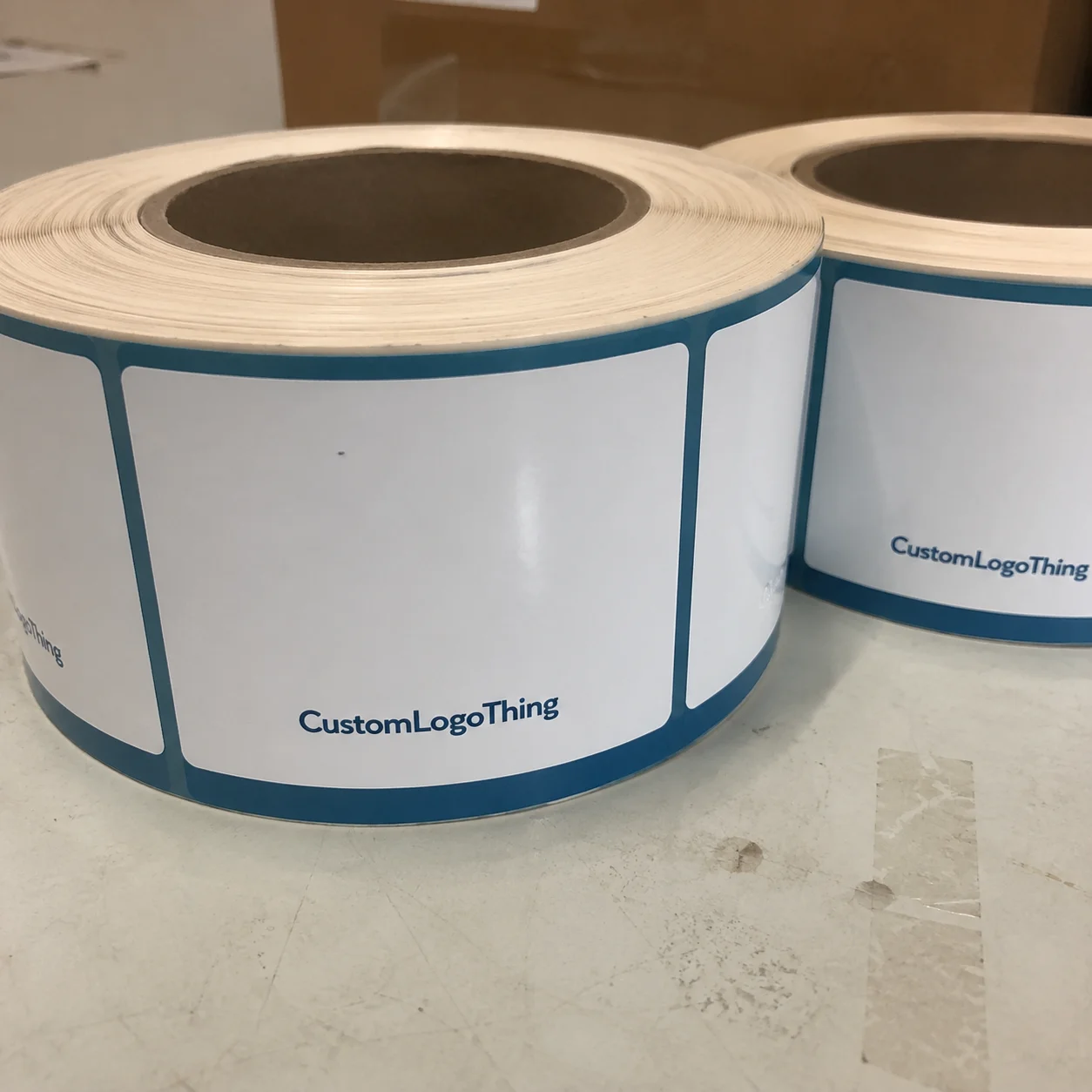
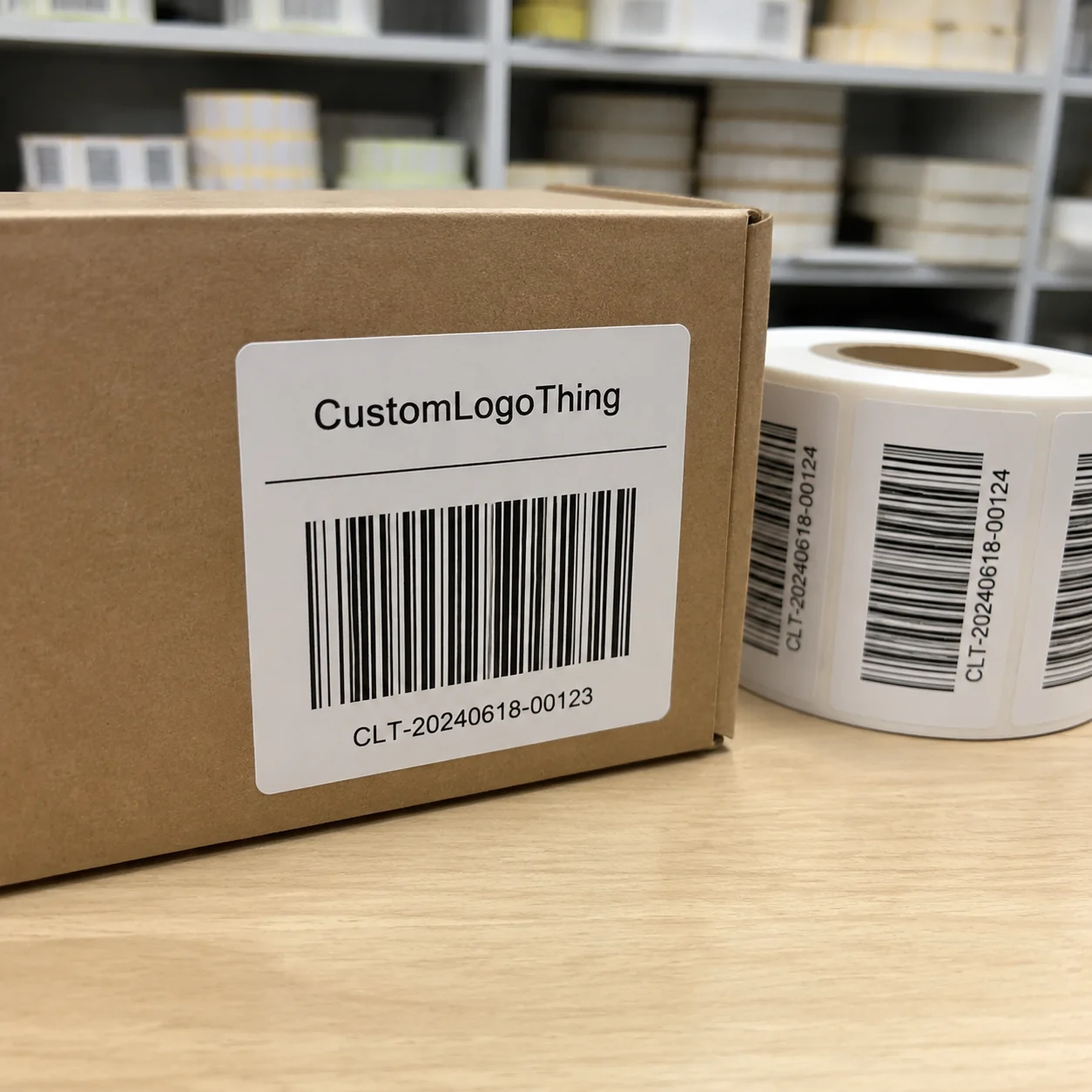
Small label. Large price swing. Woven Labels Unit Cost for tea brands can look tame on a quote sheet, then change quickly when the size, fold, thread count, backing, or quantity changes. That is not supplier mystery. It is the way setup-heavy products behave.
A woven label must be woven, cut, folded, checked, packed, and shipped before it reaches a tea pouch, tin, gift box, or reusable sleeve. If the order is 500 or 1,000 pieces, the setup work is divided across a small run. The unit cost rises. The math is blunt, but it is also predictable.
Tea brands feel that pressure more than many other buyers because packaging is often seasonal and fragmented. A spring blend, a holiday sampler, a limited herbal SKU, and a wholesale cafe run may each need a different quantity. The more the spec moves, the more the price moves with it.
Why Tea Brands Notice Label Cost Changes So Fast
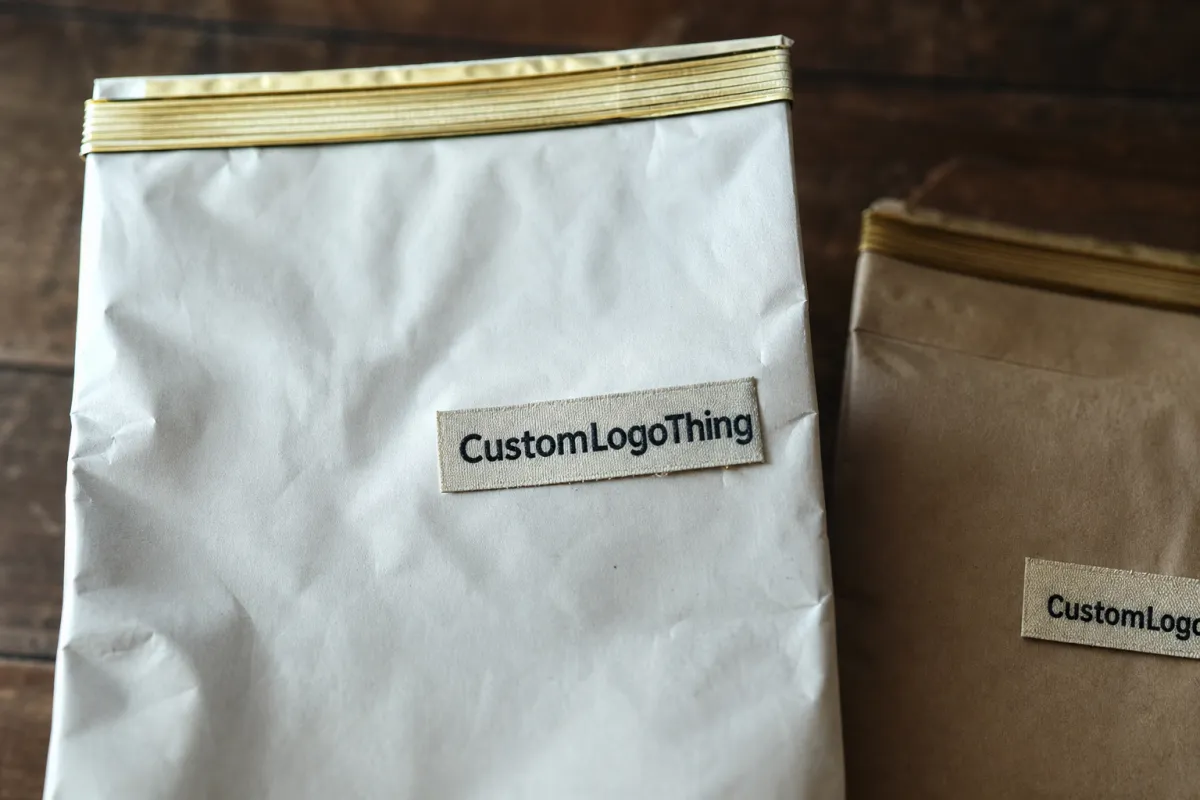
Tea packaging is usually compact. A pouch label may be 25 mm x 50 mm. A tin wrap label might be 30 mm x 70 mm. A loop label on a small sachet can be even smaller. Because the label itself is tiny, buyers often assume the cost should stay tiny too. That is the first misconception.
The actual price is tied to the whole production path, not just the thread. Width, height, fold type, yarn colors, loom layout, cutting method, backing, packing requirements, and inspection tolerance all influence the number. A 10 mm size increase may look harmless in email. On the loom, it can change yield and finishing efficiency.
Tea brands also notice label pricing more sharply because their runs are often smaller than apparel or promotional goods. A clothing brand may order 20,000 neck labels. A tea company testing three blends may need 1,000 labels per flavor, or less. Same product category. Very different price behavior.
Practical rule: below 2,000 pieces, setup charges and MOQ usually matter more than the thread cost itself.
Many buyers compare woven labels to stickers. That comparison falls apart quickly. Digital sticker runs can scale down easily. Woven labels still carry machine setup and finishing work whether the order is 500 pieces or 50,000 pieces. That is why exact construction matters so much.
For tea packaging, the label should be quoted against the actual application, not a vague “small woven label” request. A pouch seam label, a fabric belly band, and a gift box accent may share the same logo, but they are different jobs with different cost structures.
Woven Label Formats for Tea Pouches, Tins, and Gift Boxes
Format matters because the label has to live somewhere. It may be sewn into a cotton tea pouch, wrapped around a tin, attached to a reusable sleeve, tied to a sampler set, or stitched to a gift wrap band. If the construction is wrong, even a clean weave can look cheap. Packaging is unforgiving that way.
The common woven label formats are straightforward, but each serves a different use.
- Straight cut: Flat label with cut edges. Useful for patches, tin wraps, and labels sewn on all sides.
- End fold: Both ends fold under for a neat edge. Common when the label is sewn onto fabric or inside a seam.
- Center fold: Folded in the middle and often used in seams. A practical choice for tea pouches and soft sleeves.
- Loop fold: Designed to create a hanging loop or small side tag. Useful for branding accents and sample packs.
- Mitre fold: Angled fold at the ends. More decorative, often used for premium packaging and gift items.
Loose-leaf pouches usually favor center fold or end fold labels because they sit neatly in seams and do not distort the pouch shape. Herbal blends with a natural brand style often use muted polyester thread or cotton-look textures. Premium gift assortments may call for a straight cut woven label stitched to a sleeve, ribbon, or wrap band.
Tins are different. A woven label on a tin is usually decorative rather than structural. It may wrap around a sleeve, sit on a fabric belly band, or attach to an outer carton that protects the tin. If the label is part of the retail face, it has to survive handling, shelf friction, and packing pressure. A soft edge can help, but only if the finishing is clean.
For brand positioning, restraint usually works better than noise. A two-color damask label with solid contrast often looks more premium than a crowded five-color design with tiny text nobody can read. Tea packaging already has ingredients, flavor notes, weight, barcode, batch code, and compliance copy competing for space. The woven label should support the pack, not fight it.
For broader custom label options, Custom Logo Things has a dedicated Custom Labels & Tags category that covers woven, printed, and specialty label formats.
Woven Labels Unit Cost for Tea Brands: What Drives Price
Woven Labels Unit Cost for tea brands comes down to a small group of variables that are easy to overlook until the quote lands. The good news is that they are all explainable. The bad news is that they do not behave like decoration in a design tool. They behave like production inputs.
Size is the first driver. A 20 mm x 40 mm label uses less material than a 40 mm x 80 mm label. That part is obvious. What is less obvious is that the layout on the loom does not scale in a perfectly neat line. A slightly wider label may push the weave into a less efficient arrangement, which changes yield and cost.
Stitch density is next. Higher-density damask weaving gives sharper small text, cleaner lines, and a smoother hand feel. It also takes more time and more precision. For many tea brands, high-density polyester damask is the practical default. Taffeta is more economical, but it can look flatter. Satin can feel softer and shinier, though it is not always the best choice for tiny lettering.
Color count matters too, but not in the lazy “more colors means better branding” way. A two-color label with strong contrast may be cheaper and more readable than a four-color design with pale accents. Woven labels do not print gradients or photos. They build artwork with thread. Fine shadows, hairlines, and tiny decorative details usually turn into soft blur.
Finishing choices also move the unit price:
- Sew-on finish: Common for cloth pouches, sleeves, and gift wraps. Usually efficient.
- Heat seal backing: Adds material and processing. Useful for some fabrics, less useful for others.
- Adhesive backing: Helpful for placement tests and non-wash applications, but surface compatibility matters.
- Laser cut edges: Cleaner edge control and less fraying, usually with an added charge.
- Special folds: Center fold, loop fold, mitre fold, and book-style constructions add finishing work.
There may also be tooling fees or setup charges, especially for new artwork, special widths, or unusual construction. Some suppliers fold those costs into the unit price. Others break them out. Separated pricing is easier to compare and far easier to reorder later without confusion.
These planning ranges are typical, not fixed. Freight, sampling, currency, rush timing, and the exact spec can move the numbers.
| Label Spec | Typical Quantity | Likely Unit Cost Range | Best Use |
|---|---|---|---|
| Small 2-color center fold, polyester damask | 1,000-2,000 pcs | $0.18-$0.38 each | Tea pouch seam labels and sampler bags |
| Medium 3-color end fold, higher density weave | 2,500-5,000 pcs | $0.12-$0.26 each | Loose-leaf pouch branding and reusable sleeves |
| Large straight cut woven label with clean edge | 5,000-10,000 pcs | $0.08-$0.18 each | Gift boxes, fabric bands, tin wrap accents |
| Special fold or backing with 4+ colors | 2,000-5,000 pcs | $0.20-$0.45 each | Premium tea sets and limited edition packaging |
At a planning level, the same label may cost $0.32 at 1,000 pieces and fall near $0.14 at 5,000 pieces if the spec stays stable. That gap is not a trick. It is the effect of spreading setup and finishing over a larger run.
Pricing, MOQ, and Quote Benchmarks for Small Runs
MOQ exists because a production line has to absorb setup time somewhere. A tiny custom run can use the same machinery, proofing, and inspection as a larger job, but it spreads those fixed costs across fewer pieces. The machine does not care that the order is charmingly small.
For standard woven labels, many custom orders begin around 500 to 1,000 pieces, depending on size and finish. More complex labels often start closer to 2,000 pieces. Metallic thread, special backing, unusual folds, or tight color matching can raise the entry point. Ask for the MOQ on the exact construction, not just the product family.
For a tea startup, the most efficient first order is often a core brand label rather than separate labels for every blend. One woven identity mark can sit across six pouch flavors while printed stickers or pouch printing carry the flavor-specific copy. That keeps the woven label volume high enough to improve pricing.
A clear quote should separate the pieces that usually get blurred together:
- Sample or strike-off cost: Often $35-$120 depending on complexity and shipping method.
- Setup charges: Commonly $25-$95 for new artwork or loom setup, though policies vary.
- Production unit cost: Based on quantity, size, color count, weave, and finish.
- Freight: Lightweight labels still add up if the schedule forces express shipping.
- Rush fees: Possible when the job has to move ahead of standard scheduling.
If those numbers are blended into one line, comparison gets messy fast. One quote may look cheaper only because freight is excluded. Another may look higher because it includes a physical strike-off. The only useful comparison is like-for-like.
As a rough planning range, a basic tea pouch woven label order may land around $220-$450 total for 1,000 pieces after setup, depending on spec and shipping. A 5,000-piece order may land around $600-$1,200 for many standard constructions. Premium finishes can push above that.
Woven Labels Unit Cost for tea brands is easiest to control when you request two or three quantity breaks at once, such as 1,000, 2,500, and 5,000 pieces. That shows the real price curve without changing the spec midstream.
Production Steps, Turnaround, and Proof Approval
The production path is simple when the artwork is ready. First comes artwork review. Vector files are the safest option: AI, EPS, or a clean PDF. A low-resolution PNG copied from a website is not artwork. It is a hint.
After review, the supplier prepares a digital proof. That proof should show size, fold type, thread colors, background color, edge finish, and any backing. For a new tea package, or a color-critical one, a physical sample is worth the time. It catches errors before thousands of labels are woven.
The usual sequence looks like this:
- Artwork and spec review
- Digital proof
- Sample or strike-off, if required
- Proof approval
- Weaving
- Cutting and folding
- Backing or finishing
- Inspection and packing
- Shipment
Standard production often takes 10 to 18 business days after proof approval for many Custom Woven Label runs. Samples can add 5 to 10 business days. Larger orders, special yarns, tight color requirements, or peak-season scheduling can stretch the timeline. Capacity matters, so a launch date should be confirmed before anyone starts promising one.
Speed usually comes from clean inputs. Approve the proof quickly. Send the right artwork the first time. Confirm the shipping address early. Those three steps save more time than asking a production team to “move faster” after the file went back and forth twice.
For packaging that has to survive transit and warehouse handling, broader transport guidance from the International Safe Transit Association can be useful. A woven label is small, but the package around it still has to arrive in usable shape.
If sustainability claims are part of the brand story, keep the wording disciplined. A polyester woven label is durable, but durability is not the same thing as a verified environmental claim. If the pack includes paper components with recycled or certified fiber claims, those should be checked against standards such as FSC. Claims need documentation, not just a soft palette and good intentions.
Quality Checks That Keep Tea Packaging Consistent
Thread color should be checked against the real packaging, not only against a screen mockup. Screens lie in predictable ways. A matte black tin, a kraft gift box, a cream tea pouch, and a natural cloth sleeve will all change how the same thread appears.
Ask for thread references or a sample if the brand color matters. Pantone guidance can still help, but woven thread has texture and reflectivity. A dark green logo on charcoal may look polished in a PDF and nearly disappear on the finished label. Readability beats cleverness.
Before approving a full run, check these points:
- Logo readability: Fine lines and small letters should remain legible at actual size.
- Edge finish: Cut edges should be clean, sealed when needed, and free from fraying.
- Fold accuracy: Center folds and end folds should land consistently, usually within about 1 to 2 mm for most packaging uses.
- Color consistency: Thread color should match the approved sample within practical textile tolerance.
- Backing performance: Heat seal or adhesive backing should be tested on the real pouch, sleeve, or wrap material.
Inspection standards vary by supplier and application, but structured checking pays off. Some buyers reference ASTM packaging methods for transport or material validation. A tea label does not need laboratory theatrics. It does need clear acceptance criteria before the order is released.
Repeat orders are where discipline saves money. Keep the size, fold, thread colors, weave type, backing, approved artwork, and sample reference in one place. If the same woven label is used on winter chai and summer mint, that record protects consistency across both runs.
That consistency also helps woven labels unit cost for tea brands because repeat specs reduce proof churn. Fewer changes. Fewer questions. Faster quoting. Less room for a bad surprise.
Why Tea Brands Reorder the Same Label Spec
The best packaging buyers keep a master spec. Not because they enjoy administration for its own sake, but because repeatable specs cut down on avoidable errors and wasted time.
For a tea brand, one master woven label can anchor the identity across multiple SKUs. The pouch artwork changes by flavor. The woven label stays fixed. That is sensible because the production history is already there, the quote is easier to repeat, and the brand looks steadier from batch to batch.
Stable specs also protect the visual system. If every seasonal blend gets a different woven label size, fold, and thread mix, the range starts to feel patched together. Gift sets make the problem even more obvious. A sampler box with six inconsistent labels can look like a pile of leftovers, even when the tea inside is excellent.
Consistency does not mean dull. It means controlled. Let the woven label do one job well, then vary the printed pouch, belly band, sticker, sleeve, or insert. That keeps the tactile detail without forcing every SKU into a new woven label run.
From a buyer’s perspective, reorders should be boring. Same spec. Same approved file. Same color reference. Same fold. Same shipping method unless the timeline changes. Boring reorders are usually the profitable ones.
If you want to see how packaging specs affect presentation and buying decisions, the Case Studies page is a useful reference point for custom branding applications.
What to Send for a Fast, Accurate Quote
A fast quote starts with a complete request. Not a long one. Just a complete one.
Send the finished label size, fold type, color count, order quantity, attachment method, and packaging type in one message. Add the artwork file or at least a clear logo image. If you know the pouch material, tin wrap material, or sleeve fabric, include that too. Attachment method matters more than many buyers expect.
Use this checklist:
- Finished size: Width x height in mm or inches
- Fold: Straight cut, end fold, center fold, loop fold, mitre fold, or unsure
- Weave type: Damask, satin, taffeta, or supplier recommendation
- Color count: Number of thread colors, including background
- Quantity breaks: 1,000 / 2,500 / 5,000 pieces if comparison pricing is needed
- Attachment: Sew-on, heat seal, adhesive, tied, wrapped, or inserted into a seam
- Packaging use: Tea pouch, tin, gift box, sleeve, sampler bag, or reusable cloth pack
- Deadline: Ship date or in-hand date
- Sample need: Digital proof only, physical sample, or strike-off
- Shipping address: At least city, state, and country for freight estimate
If you are unsure about the fold, describe how the label will be attached. A good supplier can recommend construction from the use case. A pouch seam usually points toward center fold or loop fold. A flat sewn brand patch may need straight cut or end fold. A gift-wrap accent may call for a softer finish.
For the most accurate woven labels unit cost for tea brands, keep the spec fixed while comparing quotes. Same size, same fold, same colors, same quantity breaks. If three suppliers are asked to quote three different constructions, the cheapest number tells you very little.
The final number depends on size, weave, colors, MOQ, finish, setup charges, and freight. Keep the construction simple, approve proofs quickly, and reorder the same master spec whenever possible. That is how tea brands keep label costs steady without making the packaging look generic.
Frequently Asked Questions
How does woven label unit cost for tea brands change with color count?
More colors usually mean more weaving complexity and a higher unit price. A simple two-color label is often the most economical starting point for tea packaging. If contrast is the real goal, a cleaner weave can outperform a crowded multicolor design on both price and readability.
What MOQ should I expect for tea pouch woven labels?
MOQ depends on label size, finish, and how custom the spec is. Small standard labels may start around 500 to 1,000 pieces, while specialty folds, backing, or sealed edges often require higher quantities. Ask for the MOQ on the exact construction, not just the product category.
Can I order a sample before a full tea label run?
Yes. A sample is worth ordering when the design is new, color-sensitive, or tied to a fixed pouch seam. It helps confirm size, fold, thread color, and placement before full production starts. It also reduces rework if the label has to fit a gift wrap edge, reusable sleeve, or small pouch seam.
Do fold types affect woven label pricing for tea brands?
Yes. Fold type changes finishing labor and can shift both setup and unit cost. Straight cut is usually simpler. Loop folds, center folds, mitre folds, and special constructions add more handling. Choose the fold based on how the label will be attached, not just how it looks in a mockup.
How fast can woven labels ship for a tea launch?
Turnaround depends on artwork readiness, order size, sample needs, and production capacity. Many standard Custom Woven Label runs take about 10 to 18 business days after proof approval, with samples adding extra time. Clean files and quick proof approval shorten the schedule most. If the launch date is fixed, share it early in the quoting process.