For bakery buyers, Courier Mailer Bags for bakeries unit cost is usually the first number on the page. It is also the easiest number to misread. A bag that looks cheap in isolation can turn expensive if it traps steam, scuffs easily, or fails at the seal and forces a resend. In practical terms, the packaging has to do three jobs at once: protect soft edges, hold up under courier handling, and keep the pack moving through a busy line without slowing staff down.
That is why the real buying decision starts before the quote. Size, film thickness, closure type, print coverage, MOQ, and shipping method all affect both performance and price. Some bakeries only need a lightweight stock mailer for boxed cookies or wrapped loaves. Others need a stronger co-extruded film with a wider seal, better puncture resistance, and a more controlled presentation. The cheapest option is rarely the one that survives the best under real transit conditions.
Why bakery shipping bags fail when the product looks simple
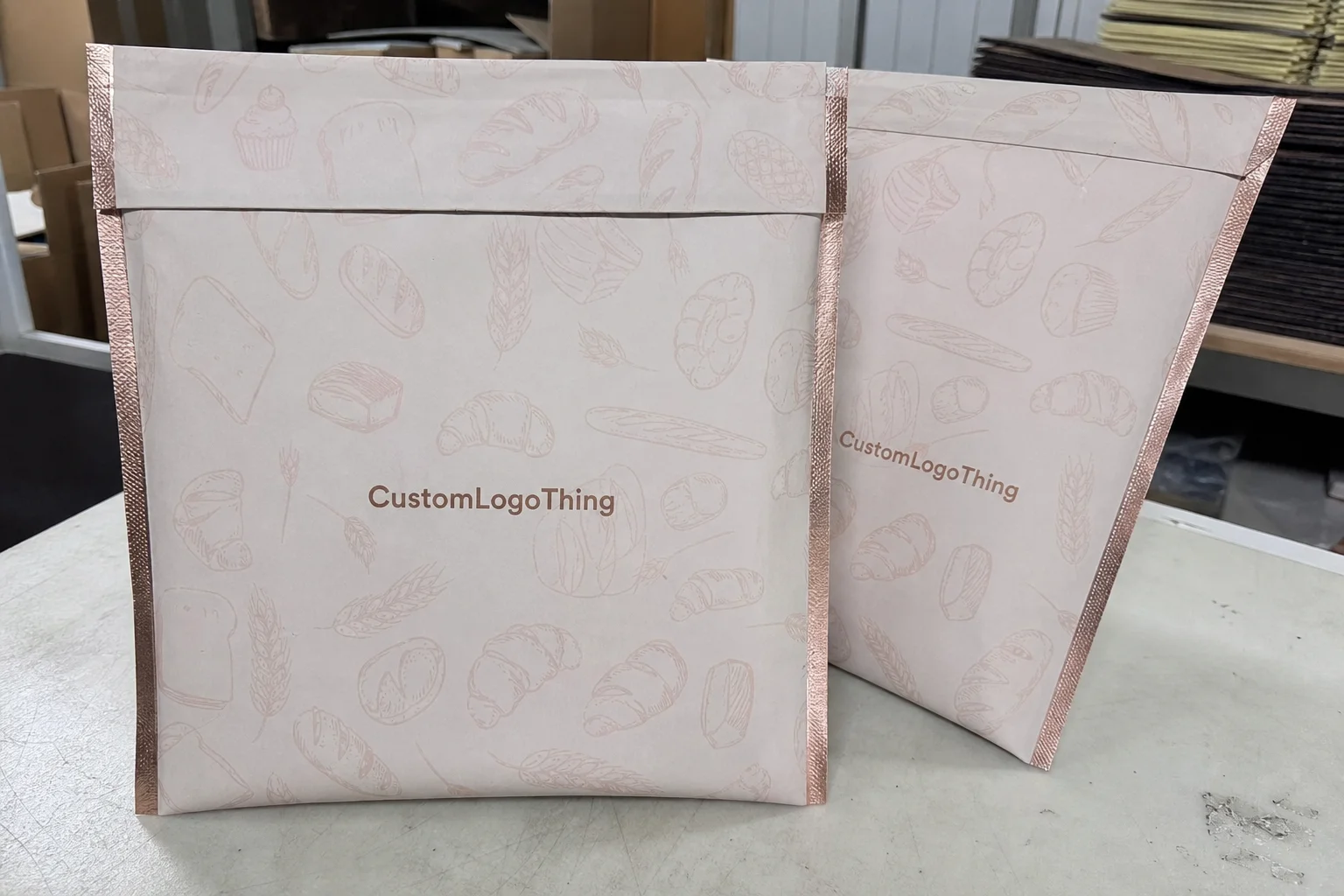
Bakery products are deceptively difficult to ship. A cookie stack, a loaf, or a small pastry box may seem harmless, but the failure points are usually grease, steam, movement, and compression. Those four things account for most of the complaints. Soft items shift inside the pack, paper wraps pick up condensation, and a weak seal can open after repeated sorting and scanning. Couriers are not gentle by design. Parcels get stacked, tipped, and handled by machines that do not care what is inside.
Courier Mailer Bags work well when the product does not need rigid crush protection. They are a light outer layer, not a replacement for primary packaging. For wrapped loaves, cookies, brownies, dry snacks, and boxed bakery items, they can reduce material use and shipping bulk compared with a carton. The value is not only branding. It is keeping the shipment clean, dry, and presentable without paying for unnecessary structure.
From a buyer’s perspective, courier mailer Bags for Bakeries unit cost has to be judged against the cost of damage. If a lower-priced bag causes returns, remakes, or customer complaints, the “saving” disappears quickly. The useful metric is total landed cost per shipped order, not only the factory quote. That matters more for online bakeries than for almost any other food segment because the same defect can repeat hundreds of times in a month.
One common mistake is to ask for the cheapest mailer first and the fit second. That approach usually leads to a bag that is technically affordable and operationally awkward. A better question is simpler: what pack protects the product at the lowest reliable cost per unit? Once that is clear, thickness, seal style, and print can be adjusted with more discipline.
A bakery mailer should be judged by how it performs after packing, stacking, and transit, not by the price printed on the quotation.
Courier mailer bag construction for bakery orders
The most common material choices are LDPE, co-extruded film, and recycled-content blends. LDPE is flexible, easy to seal, and often suitable for light to medium-duty mailing. Co-extruded film usually gives better puncture resistance and a more balanced feel, which helps when the inner pack has corners, clips, trays, or a shape that does not sit flat. Recycled-content options can reduce virgin plastic use, but the film structure still has to be tested for strength and seal reliability. A greener spec that fails in transit is not a good trade.
Flexibility matters more than many teams expect. A stiff bag can slow packing because the operator has to force the product into place, and that stress can transfer to the inner box or wrap. A film with enough give makes insertion faster and less awkward, especially during peak periods when orders are moving in batches. For boxed bakery items, a moderate-gauge film usually packs better than an unnecessarily heavy one that fights the line.
Closure style affects both performance and labor. Self-seal adhesive strips are common because they are fast, tidy, and reduce tape mistakes. Tamper-evident closures are useful when a buyer needs visible proof that the pack has not been opened. Zipper styles exist, but they add cost and generally slow fulfillment. On a high-volume line, even a small increase in closing time compounds quickly.
Printing can be plain or heavily branded, but simpler artwork usually keeps pricing more predictable. Flexographic printing is common for larger runs because it handles repeat artwork well and works best when the design is not overloaded with fine gradients or too many color shifts. A clean one- or two-color logo tends to produce better registration and lower setup complexity than a crowded design. That matters to unit cost more than many buyers expect.
Moisture resistance, opacity, and puncture protection should all match the condition of the product at packing time. Warm goods are a problem. If the product is still releasing steam, condensation can fog the inner wrap or reduce adhesive performance. The practical sequence is usually: cool the product, pack the inner wrap or box, then seal the mailer. For items where freshness presentation matters but visibility is not needed, an opaque or lightly tinted film can be more practical than clear film.
For some buyers, a plain stock bag is enough. For others, custom print gives a cleaner brand presentation and a more controlled unboxing sequence. The right choice depends on packing speed, consistency of order volume, and how much the outer pack contributes to the customer’s perception. If the pack format is still changing, plain stock lowers risk. Once the format stabilizes, custom print usually becomes easier to justify.
Specifications to match with bakery products and shipping method
Start with the finished bakery pack, not the product in isolation. Measure the outer dimensions of the wrapped item, inner box, tray, or pouch after it is fully prepared for shipping. Then add enough clearance for insertion without forcing the pack. A mailer that is too tight can stress seams and slow the line; one that is too loose lets the product slide around and can make the shipment look poorly handled.
Common size ranges vary widely, but many bakery shipments fit in flat mailers or medium gusseted bags. A thin cookie pouch may only need a narrow, lightweight bag. A boxed pastry set may need a wider opening and extra length to accommodate the seal flap. The best spec is the one that gives a neat pack without excessive dead space, because dead space increases freight efficiency problems and can also make the pack look oversized.
Thickness is usually described in microns or mils, and thicker is not automatically better. A stronger film can improve puncture resistance, but it can also make the bag less forgiving during packing. For a light bakery shipment with soft edges, a moderate gauge often works well. For heavier trays, sharp-edged inner boxes, or longer courier routes, a stronger film is safer. The right choice depends on how the product behaves inside the bag, not just on the quote sheet.
Seams and gussets matter more than many first-time buyers realize. A clean side seal, a consistent bottom seal, and the right gusset depth help the bag hold shape during filling. If the outer pack has to be opened and closed repeatedly on the line, tear resistance around the opening area becomes important. A weak tear line can split too early or snag during packing. That kind of defect is small on paper and expensive in practice.
| Bakery pack type | Suggested mailer style | Typical film focus | Practical note |
|---|---|---|---|
| Wrapped cookies or dry snacks | Flat poly mailer | Light to medium gauge | Works well for low-weight, low-sharp-edge items |
| Boxed pastries or sliced cake | Gusseted courier mailer | Medium gauge, stronger seal | Helps fit wider cartons without crushing corners |
| Greasy or soft items with inner wrap | Opaque or co-ex film mailer | Better puncture and moisture resistance | Usually works best with an inner barrier first |
| Higher-value branded bakery shipper | Custom printed mailer | Consistent print surface and seal reliability | Useful when presentation matters as much as protection |
Print coverage, color count, and finish affect both appearance and price. A one-color logo on a clean film is simpler than a full-wrap layout with several spot colors. Matte or soft-touch finishes can look premium, but they add cost and are not always necessary for a pack that goes straight into courier handling. If the mailer touches food directly, the boundary should be clear: the mailer is usually outer packaging, and the bakery product still needs an inner wrap or box where appropriate.
That line is easy to miss. The mailer is there to ship, not to replace safe primary packaging. If the product needs a liner, greaseproof wrap, or sealed pouch before bagging, that should be specified before the mailer size is fixed. Otherwise the outer pack can end up too small or too loose, both of which create avoidable problems.
Courier mailer bags for bakeries unit cost: what changes the price
The main drivers behind Courier Mailer Bags for bakeries unit cost are predictable: bag size, film thickness, print colors, material choice, and quantity. Bigger bags use more resin and more print area. Thicker film uses more material and may require a different production setup. More colors usually mean more plates, more press time, and more opportunity for error. Every step that adds material usage or production handling pushes the price per piece upward.
MOQ matters just as much. Lower quantities usually carry a higher unit cost because setup charges, tooling fees, and production prep are spread across fewer bags. That is why a first run can look expensive compared with a repeat order at higher volume. If a supplier does not state MOQ clearly, the quote is hard to compare. The economics can shift dramatically once quantity tiers are added.
As a broad market pattern, plain stock bags sit at the lowest end, simple custom print adds a moderate premium, and premium film or more complex artwork pushes the price higher. A clean design makes the quote easier to control. If the artwork requires multiple colors, tight registration, or special finishes, the price gap widens. The logo itself is rarely the main cost driver. Setup, color count, and material grade usually matter more.
| Option | Typical cost behavior | Best fit | Buyer watch-out |
|---|---|---|---|
| Plain stock mailer | Lowest unit cost | Testing, short runs, generic fulfillment | Less brand impact |
| Simple custom print | Moderate increase in unit cost | Regular bakery shipping volumes | Confirm how many print colors are included |
| Premium film with custom print | Higher unit cost | High-value presentation orders | Check whether the finish justifies the spend |
Freight changes the total landed cost, and that is where some quotes become misleading. A low factory price can become a poor deal if carton pack counts are awkward, shipping is inefficient, or storage requirements are higher than expected. Ask whether the quote includes carton quantities, shipping method, and delivery terms. If those items are vague, the final number can move after approval.
For comparison shopping, request pricing by exact size, thickness, closure type, print method, and quantity tier. That gives a real apples-to-apples view. If one supplier quotes a 60-micron co-ex film bag and another quotes a 40-micron LDPE bag, the lower number is not the same product. Good buyers compare specifications first, price second. That sounds basic, but it is where most pricing confusion begins.
As a working range, plain stock in high-volume commodity runs is often priced in cents per bag, while small custom runs with multiple colors or specialty film can move into a much higher per-unit band. The exact number varies by market, freight, and spec, but the pattern is consistent: lower MOQ and heavier customization raise the courier mailer Bags for Bakeries unit cost faster than most people expect.
Ordering process and timeline from artwork to delivery
The order flow is usually practical and fairly predictable. It starts with sizing, then material recommendation, artwork review, proof approval, production, inspection, and shipping. If the first sizing step is correct, the rest moves faster. If the dimensions are guessed, the project can stall while everyone rechecks the fit against the actual bakery pack.
Before requesting a quote, prepare a simple spec sheet. Include product dimensions, packing format, expected monthly usage, preferred closure type, print colors, and any special handling requirement such as grease resistance or tamper evidence. If the logo files are in vector format, that helps too. Clear artwork reduces back-and-forth and makes the proofing stage easier to control.
Sampling or digital proofing is useful because it shows whether the bag fits and whether the artwork sits where you want it. A digital proof is not a transit test, but it catches layout problems, color placement issues, and text errors early. For bakery packs, checking the actual product fit with a sample bag is still worth doing whenever the shape is unusual or the inner packaging has corners.
Timing depends on quantity and print complexity. Plain stock orders move faster. Custom jobs take longer because the printer has to prepare artwork, confirm plates or digital setup, and allow time for inspection before dispatch. A realistic production window for custom courier mailers is usually measured in business days after proof approval, not hours. Peak season demand, special finishes, and freight method can all extend the schedule. If a launch date matters, build in time for the proof cycle and at least one revision.
For bakeries that ship regularly, the best practice is to reorder before inventory gets tight. Running out of packaging forces rushed decisions, and rushed orders usually cost more. A modest safety buffer gives enough room to manage spikes without paying for premium shipping or accepting a weaker substitute. That buffer is not waste. It is insurance against schedule drift.
Useful standards also matter when you are reviewing supplier claims. For package testing, references such as ISTA shipping test methods can help frame performance expectations, especially if the buyer is comparing bag strength, handling, or packing durability. For general packaging stewardship and recyclability questions, the EPA recycling guidance is a practical place to check language and local assumptions.
How to compare suppliers without paying for avoidable extras
Supplier comparison gets easier when the specifications are identical. The headline price means very little if one quote uses a thinner film, fewer print colors, smaller carton packs, or an unclear seal style. The cleaner method is to line up the same size, same material, same closure, same print method, and same quantity. Then the numbers tell you something useful.
Check whether the quote includes proofing, artwork adjustments, carton pack count, and shipping terms. Also ask what the supplier considers standard and what counts as a custom add-on. Transparent communication on MOQ, bulk pricing, and delivery terms prevents awkward surprises later. A quote that appears low but hides extras is usually the most expensive one in the end.
Good signs in a manufacturer include clear measurements, practical advice on film thickness, consistent print registration, and quick prepress feedback. If a supplier can explain why one bag size is better than another for the bakery pack, that is useful. If they only repeat the request without checking the bag’s behavior in transit, that is less reassuring. A few technical questions up front are usually a positive sign because they reduce the chance of avoidable problems after approval.
There are also times when a revised quote makes sense. If the first offer is high, ask whether the bag can be resized slightly to reduce material use. If the design uses too many print colors, simplify it. If the film is heavier than needed, step down a grade after confirming the product still packs safely. Small changes can affect setup charges and ongoing cost more than the brand team expects.
For teams managing more than one packaging format, it can help to compare mailers against other outer packaging options such as Custom Poly Mailers. The right choice is not always the most elaborate one. Sometimes a lighter, simpler format gives a better balance of shipping weight, presentation, and cost control.
If the packaging program includes paper-based secondary components, FSC-aligned sourcing may matter too. You can review FSC certification information when paper elements are part of the final pack system. Even if the mailer itself is plastic film, the broader packaging mix can still improve through better material choices elsewhere.
Next steps for bakery teams ready to order mailers
Before asking for a quote, confirm the product dimensions, estimate monthly usage, and decide whether the mailer is for local delivery, parcel shipping, or both. Those three pieces tell the supplier far more than a vague request for “bakery bags.” If the shipment includes greasy goods, warm items, or fragile corners, say so early. That is how the material recommendation gets aligned with the real use case.
Prepare artwork files and a short specification sheet before pricing. Include size, thickness target, closure type, print colors, and whether you want plain stock or custom print. Then ask for a tiered quote across two or three quantity levels so the best breakpoint is visible. That is usually the simplest way to judge courier mailer bags for bakeries unit cost without guessing.
Ask for a sample or proof if the bag needs to fit an actual bakery product, not just a theoretical dimension. A sample can show whether the seal is easy to close, whether the bag tears too easily, and whether the pack looks presentable after insertion. That small check often saves money later, and it catches problems that look minor in a drawing but become obvious on the packing table.
If the goal is a practical buying decision, focus on the exact bag spec rather than a generic estimate. The final courier mailer bags for bakeries unit cost should be based on the real size, film, Print, and Order quantity you plan to use, not a rough placeholder number that changes once production starts.
FAQ
What affects courier mailer bags for bakeries unit cost the most?
Bag size, film thickness, print colors, and total quantity usually have the biggest impact. Custom printing and lower MOQs tend to raise the per-bag price, especially when setup charges and tooling fees have to be spread over a smaller run.
What thickness should bakery courier mailers use?
Use a thickness that balances puncture resistance with easy packing, and choose based on whether the item is boxed, wrapped, or loose. Heavier bakery packs or items with sharper edges usually need a stronger film than a soft, flat, wrapped product.
Can courier mailer bags be used for greasy or warm bakery items?
They can help with outer protection, but warm items should be cooled before packing to reduce condensation and seal issues. Greasy products often need an inner wrap or box before the mailer bag so the outer film does not become stained or weakened.
What is a typical MOQ for custom bakery mailer bags?
MOQ varies by size, print method, and material, but custom runs usually start at a quantity that covers production setup efficiently. Requesting tiered pricing helps you see which order level gives the best cost per piece without overbuying.
How long does production usually take for custom courier mailer bags?
Timing depends on artwork approval, print complexity, and order size. A proofing stage comes first, then production, inspection, and shipping, so accurate files and clear specifications usually shorten the schedule.


