Clubs run through packaging faster than they expect. Team stores, snack sales, kit parts, raffle bundles, and membership packs all need the same thing at the same time: clean, resealable packaging that does not split at the table or slow volunteers down. That is why a Zip Lock Bags for sports clubs order guide matters. It keeps the buying decision focused on the factors that affect cost, delivery, and presentation instead of vague bag descriptions and guesswork.
The cheapest bag is not the cheapest order if it leaks, tears, or forces volunteers to rebag items by hand.
From a packaging buyer’s point of view, the job is simple: match the bag to the item, the event, and the budget. Everything else is noise.
Why Clubs Run Out of Packaging Faster Than They Expect
Sports clubs usually buy packaging in bursts. One week it is uniform accessories. The next week it is snack packs for a fundraiser, then sponsor inserts, then end-of-season merchandise. The problem is not just volume. It is timing. Three different people can place three different small orders, and suddenly the club has a pile of mixed bag sizes that do not fit anything properly.
Random bags create slow, low-grade losses. Items slide around. Snacks get crushed. Small parts disappear. Branding looks sloppy. Volunteers spend extra time taping, folding, or rebagging because the original pouch was too small or too flimsy. That costs more than the bag itself. It also slows down checkout, packing tables, and distribution day.
Zip Lock Bags solve several of those problems in one move. They control portions, protect against moisture, store flat, and stack neatly. They can be reused by members, parents, and players. For clubs that hand out small apparel items, ticket packs, badges, wristbands, or kit spares, a resealable bag is often the cleanest option.
The buying decision should be shaped by use case, not habit. A pack of socks needs a different structure than a raffle bundle. Snack bags need a different compliance check than sponsor literature. That is the practical starting point for any Zip Lock Bags for sports clubs order guide: decide what is going inside, how often the bag will be opened, and whether the contents need to stay visible.
Order timing matters too. If the club shop restocks monthly, a smaller recurring order may make more sense. If the club runs one large seasonal campaign, a single larger run usually lowers the unit cost and reduces admin. Either way, planning beats panic buying.
Club Use Cases and the Right Bag Style
The first mistake most clubs make is treating every zip bag as interchangeable. It is not. A flat pouch, a gusseted bag, and a slider bag each solve a different problem. If you know the contents, the style choice gets much easier.
Flat zip bags work well for ticket packs, paper inserts, membership cards, wristbands, and small accessories. They sit neatly on a table and are usually the most economical option. Gusseted bags add depth, so they are better for folded apparel, bulkier snack packs, mini merchandise bundles, and mixed contents with awkward edges. Slider styles are easier for frequent opening and closing, which is useful for teams that reuse the same pack more than once.
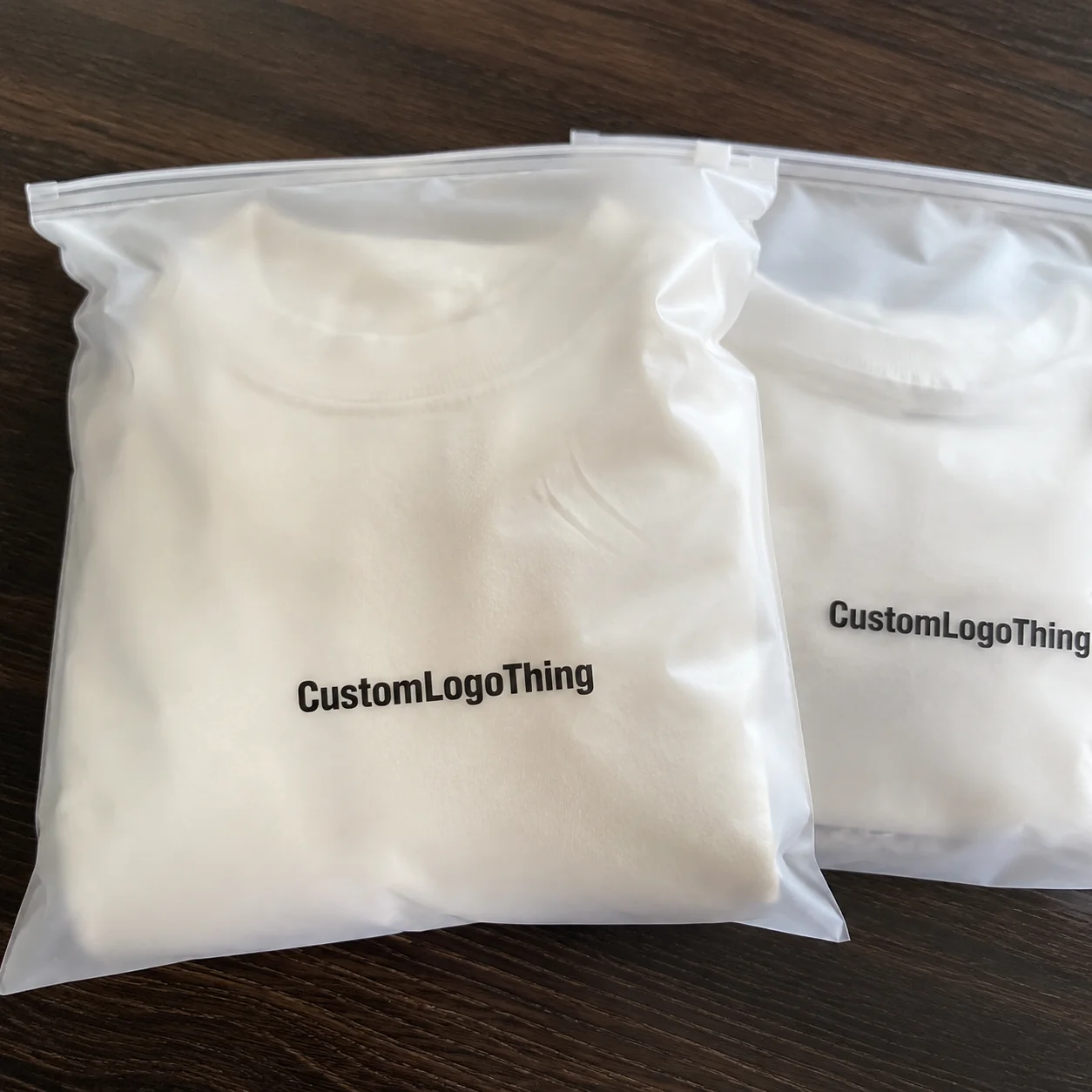
Clear bags are the default for a reason. They show the contents immediately, which helps with distribution and retail-style presentation. Printed bags add a stronger brand moment, especially when the club sells merchandise or wants sponsor visibility. If the item will sit in a shop, at a registration desk, or at an event table, a simple logo print can do more than a big stack of blank plastic ever will.
The right size depends on the real product mix. A 3" x 4" bag is fine for patches and small parts. A 4" x 6" or 5" x 7" bag works better for cards, accessories, and folded paper inserts. Apparel add-ons and snack bundles often need 6" x 9", 8" x 10", or larger. If the bag is even slightly too tight, the zipper line becomes awkward to close and the film takes a beating at the corners.
For clubs with multiple teams, the smartest move is often standardization. Pick one or two bag sizes that cover most uses. That keeps reorders simple and avoids dead stock in three nearly identical sizes. If the club runs a seasonal merchandise line, one clear stock bag for internal use and one printed bag for retail or sponsor packs is a practical split.
Here is the simple rule: if the bag will be handled once and handed out, use a practical flat pouch. If it will be opened repeatedly, use a sturdier seal and thicker film. If presentation matters, print the logo. If the contents are high value or awkwardly shaped, go larger than you think you need.
Specifications That Actually Affect Performance
Bag specs sound boring until the order arrives and the zipper feels weak. Then everyone suddenly becomes an expert. The reality is straightforward: a few technical details decide whether the bag feels decent or cheap.
Material matters first. Most club orders use polyethylene film, usually low-density or linear low-density depending on the feel and seal performance. The practical difference shows up in clarity, flexibility, and puncture resistance. For light club accessories, 2 to 3 mil is usually enough. For sharper contents, frequent reuse, or heavier bundles, 4 to 6 mil gives more confidence. Thin film is cheaper, but thin film also fails faster. That tradeoff is not hard to understand.
Thickness should be measured in mils, not described as “strong” or “premium.” If the supplier cannot quote thickness clearly, ask again. On larger club orders, a film test based on ASTM D882 tensile properties is a much better sign than a vague sales pitch. Clubs do not need a lab report for every reorder, but they do need a supplier who can explain the spec in plain language.
Seal style also matters. Standard press-to-close zippers are common, and they work fine for most items. Slider zippers are easier for repeated use, but they cost more. A good zipper should close evenly across the top with no weak spots at the ends. If the seal is inconsistent, the bag will look fine in the stack and then fail in the hands of a parent, volunteer, or player.
Print options are where the budget starts to move. A one-color logo on a clear bag is usually the lowest-cost branded route. Full-color print raises setup and production costs, but it can be worth it if the bag is part of a retail sale or sponsor pack. Unprinted stock bags are cheapest and quickest, but they do not add much to club identity.
Useful specs to request include size, film thickness, zipper type, print colors, hang hole if needed, food-contact documentation if snacks are involved, and whether the bags need to stack flat for storage. If the club wants a retail feel, ask whether the bag can be paired with FSC-certified paper inserts or backing cards. That gives the package a cleaner finish without forcing the bag itself to do all the work.
One more practical point: ask for a sample or proof before committing to a full run. Even a simple pre-production check can catch obvious problems, like a logo placed too low, a bag that is too short for folded apparel, or a zipper that feels flimsy. Small corrections before production are cheap. Corrections after production are not.
Cost, Pricing, MOQ, and Quote Drivers
Price is driven by five main things: size, thickness, print coverage, number of colors, and quantity. That is it. Everything else usually sits underneath one of those variables.
Stock unprinted bags are the cheapest route. For planning purposes, clubs often see small-format stock bags somewhere around $0.03 to $0.09 per unit at higher volumes, depending on size and film weight. Printed bags usually move into the $0.08 to $0.20 range for common club-sized runs, and larger or heavier-duty formats can climb to $0.15 to $0.35 or more. Those are planning numbers, not a promise. A 4" x 6" clear bag with one-color print will not price like a 10" x 12" gusseted bag with full coverage.
MOQ changes by style and print method. Stock bags can often be ordered in lower quantities, sometimes around 1,000 to 2,500 units. Custom printed runs more commonly start around 5,000 units, and custom dimensions usually push the threshold higher. Digital or hybrid print options can sometimes reduce MOQ, but the unit cost tends to rise. Clubs should decide whether they care more about quantity flexibility or per-unit savings. Both at once is usually where people start lying to themselves.
There are sensible ways to save money without making the bag useless.
- Use standard sizes instead of custom dimensions whenever possible.
- Keep print layouts simple. One clean logo often beats a crowded design.
- Consolidate orders across teams so the club buys one larger run instead of three tiny ones.
- Choose clear stock bags for internal packing and reserve printed bags for retail or sponsor-facing uses.
If you are collecting quotes, send the supplier the item size, quantity, artwork, and end use in one message. Add whether the contents are food, apparel, literature, or mixed kit. That shortens the back-and-forth and usually gets you a better quote faster. For recurring buying, our Wholesale Programs page is the right place to start. If you are still sorting out basic ordering questions, the FAQ is useful before you send specs.
| Bag Option | Best For | Typical Thickness | Common MOQ | Planning Price Range |
|---|---|---|---|---|
| Stock clear flat bag | Tickets, cards, inserts, small accessories | 2 to 3 mil | 1,000 to 2,500 | $0.03 to $0.09 |
| Printed flat zip bag | Club shop items, sponsor packs, membership bundles | 2 to 4 mil | 5,000+ | $0.08 to $0.20 |
| Gusseted zip bag | Folded apparel, snack packs, bulkier bundles | 3 to 5 mil | 5,000+ | $0.12 to $0.28 |
| Slider zip bag | Frequent reuse, higher perceived value, easier opening | 4 to 6 mil | 3,000+ | $0.15 to $0.35 |
After the table is where buyers usually get more practical. If the club needs a fast repeatable pack, standardize the spec. If the bag is part of a saleable item, spend for print and thicker film. If it is only for internal distribution, keep it simple and save the money for the actual program.
Process and Timeline: From Quote to Delivery
The ordering process should be boring. If it is not, something is off. A clean run usually follows the same sequence: quote request, spec confirmation, artwork submission, proof approval, production, packing, and shipping. Clubs that keep this sequence tidy usually get fewer surprises.
Lead time depends on the bag type and how much design work is needed. Stock unprinted bags can move quickly, sometimes in under a week if inventory is already available. Simple printed orders often land around 10 to 15 business days after proof approval. Custom sizes, multi-color print, or special materials can stretch into 15 to 25 business days, and shipping time sits on top of that. If the order has to land before a tournament or registration day, build in a cushion. Hope is not a production plan.
Proofing is often the real bottleneck. Clubs lose time when artwork is still being argued over after the quote has already been approved. The fix is simple: decide the logo version, placement, and print color before you request production. If you want a sponsor lockup, get that approved internally first. Then send the file.
Rush orders are possible in some cases. They are easier on stock sizes and single-color prints. They are harder on custom dimensions, heavy coverage, or mixed bag styles. If someone promises a rush on a complex job without asking questions, they are either very confident or not paying attention.
For shipping-heavy orders, especially where the bags will travel in bulk or be distributed at multiple club locations, it is worth checking packaging and transit expectations against recognized testing methods. The ISTA test framework is a useful reference when you want to know whether cartons and packed goods can survive normal handling. It is better than guessing.
A realistic timeline example helps. If artwork is ready on Monday, the proof is approved by Wednesday, and the order is a standard printed run, production might finish in two to three weeks. Add freight time, and the club should plan for three to four weeks total. That is not slow. That is normal production reality.
What Sets a Reliable Packaging Supplier Apart
Most clubs do not need a glamorous supplier. They need one that gets the spec right, quotes accurately, and answers the email before the deadline passes. That is the whole job.
Start with quoting discipline. A good supplier asks for the bag size, thickness, print method, quantity, artwork, and use case before they give a price. A bad supplier gives a number and sorts out the details later. That is how orders drift. If the quote is vague, the final invoice usually is too.
Consistency matters more than people think. Clubs often reorder the same bag for multiple teams, multiple seasons, or multiple fundraising cycles. If the print shifts, the bag size changes, or the zipper quality varies, the whole program starts to look sloppy. A reliable supplier can repeat the same spec without forcing the buyer to rebuild the order from scratch every time.
Documentation is another useful signal. For food-related club packs, ask for appropriate compliance information. For larger organizations, material traceability and basic quality support are worth having on file. If the club is using paper inserts, backing cards, or printed sleeves, FSC certification on those paper components can help with broader sustainability goals. For recycling claims on plastic bags, check local rules and current guidance from the EPA rather than assuming every clear bag is recyclable everywhere. That assumption causes more trouble than it solves.
Quality control should be visible, not hidden. Useful checks include zipper closure testing, visual inspection for seal lines, print alignment, film thickness verification, and carton count checks before dispatch. Clubs do not need to audit every production line, but they do need a supplier who can explain what is checked and when. A sample bag that looks fine on a desk can still fail if the seal is uneven or the print is misplaced by a few millimetres.
Support after the sale is where the real test shows up. Does the supplier help with artwork fixes? Can they explain why the unit price moved? Will they keep the same spec on reorder? Those answers matter more than a polished sales deck.
Custom Logo Things fits that practical buyer profile because the focus is on clean execution, not drama. Clubs want fewer surprises. They want the bag to show up on time, match the proof, and do the job. That is not asking for much. It is just competent supply.
Next Steps for a Clean Club Order
Before requesting quotes, gather three things: target bag size, expected quantity, and whether the bag needs printing. That alone will save a lot of back-and-forth. Then check the actual item dimensions, because product measurements beat guesswork every time.
If the order includes apparel, food, or mixed contents, ask for a sample or proof before you lock the run. The small extra step is cheaper than discovering the bag is too tight or the print is off after production. If multiple teams are ordering in the same season, combine the demand. Bigger consolidated orders usually improve unit cost and reduce admin.
For most clubs, the smartest buying process is simple: match the bag style to the contents, Choose the Right thickness, keep the print clean, and confirm the timeline before the event date gets too close. That is the practical version of a Zip Lock Bags for sports clubs order guide, and it works because it respects how clubs actually buy.
If you are comparing Specs and Pricing, start with the item dimensions and artwork file. Then lock the format, approve the proof, and place the order once the numbers make sense.
What size zip lock bags work best for sports clubs and team packs?
Small flat bags suit accessories, tickets, and inserts. Larger flat or gusseted bags work better for apparel, snack packs, and bundled items. The right size depends on what actually goes inside, not on a generic product name.
Can sports clubs order printed zip lock bags in small quantities?
Yes, but MOQ depends on size, print method, and whether the bag is stock or custom. Small runs usually cost more per unit, so clubs should expect a higher unit price on limited orders.
How long does a custom zip lock bag order usually take?
Timeline depends on artwork approval, print complexity, stock availability, and shipping distance. Simple stock-based orders move faster than custom sizes or multi-color print jobs.
What affects the price most on club packaging orders?
Size, material thickness, print coverage, number of colors, and order volume are the main drivers. Standard sizes and simpler artwork usually keep pricing under control.
Are zip lock bags for sports clubs suitable for food or snacks?
Only if the material and supplier documentation support food contact use. Buyers should confirm compliance before ordering snack packs, concession items, or fundraiser food bags.