A bag quote can look attractive right up until the freight invoice, carton count, and storage bill arrive. A Zip Lock Plastic Bags moq guide only works if the buyer reads the whole cost stack, not just the unit price on the first line. The cheapest number often comes with a larger minimum order, a thinner film, or a print method that is inexpensive to start but rigid later.
That is why the first job is to define the bag, not chase the quote. If the product size, pack count, opening style, and usage environment are vague, suppliers fill in the gaps themselves. The result is usually a tidy-looking offer that changes once the artwork lands, the closure changes, or the production team sees the real spec.
The Hidden Cost Behind a Cheap Bag Quote
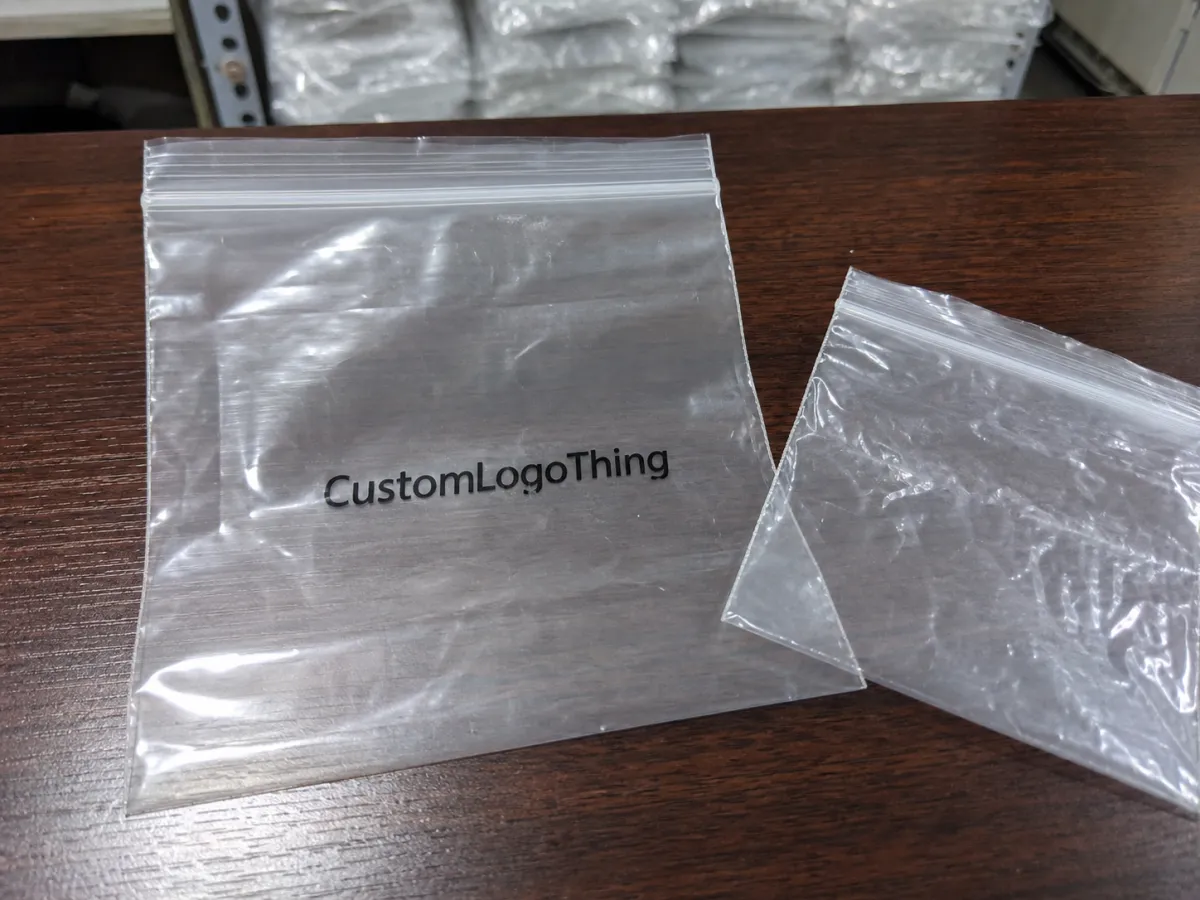
Low unit cost is useful only if the order fits your actual demand cycle. A supplier can bring the price down by raising MOQ, simplifying the print, or moving to a lighter gauge. That can be smart sourcing, but it is not always a savings. If the warehouse ends up holding four extra months of inventory, the apparent discount is partly swallowed by storage and cash tied up on the shelf.
This is especially true with zip lock packaging because small changes in spec can shift the economics quickly. A plain press-to-close bag may look inexpensive, then a frosted finish, hang hole, barcode panel, or multi-color logo pushes the setup cost higher than expected. Even if the dimensions stay the same, the bag may behave differently once the contents are heavy, sharp-edged, or opened repeatedly by end users.
One common buying mistake is comparing quotes that are not actually comparable. Supplier A may include inner packs, carton labels, and freight to port. Supplier B may quote only the film and conversion cost. Both numbers can be real, but they do not describe the same transaction. The real landed cost includes resin grade, print setup, packaging format, and shipping volume.
For that reason, the best quote is rarely the cheapest one on the page. It is the one that matches the product, the shelf life of the inventory, and the pace of your reorder cycle. A bag that fits the product cleanly, ships in a reasonable quantity, and avoids rework usually beats a bargain that looks good only before production starts.
A packaging quote is a chain of assumptions. The weakest assumption is usually the one nobody measured before asking for price.
Bag Specs That Set the Real Buying Baseline
The spec sheet is where the deal is really decided. For a zip lock plastic bags moq guide, the baseline should include size, usable opening, film thickness, material type, closure style, finish, and print requirements. Leave out one of those details and the quote becomes a rough estimate. Leave out two and the supplier is forced to guess the production method.
The same nominal size can perform very differently depending on thickness and material. A 6 x 9 inch bag at 2 mil is fine for lightweight accessories or sample kits. The same footprint at 4 mil is more suitable for hardware, repeat handling, or products with corners that can stress the seal. Buyers who skip gauge confirmation often discover too late that a bag failed in transit or split during packing.
Before asking for pricing, confirm the variables that change both MOQ and manufacturability:
- Film type: LDPE, PE blend, or a specialty barrier structure.
- Closure style: press-to-close, double seal, slider, or tamper-evident.
- Finish: clear, frosted, tinted, or matte.
- Use requirement: food contact, component storage, retail display, or internal kitting.
- Pack count: bags per carton, cartons per pallet, and any retail-ready inner pack.
- Extras: hanger holes, venting, tear notches, barcode area, or custom print panel.
There is a practical reason to be precise. A supplier can quote a repeatable job only if the job is defined with enough detail to run it again next month. If the first RFQ is built from a photo, a memory, and a rough size guess, the factory will still quote it, but the number is more likely to move after proofing. That is where buyers lose time.
If you already have a current bag or a reference sample, send that instead of trying to describe it in prose. A simple photo, a measured sample, or an old spec sheet reduces back-and-forth far faster than a long email. For common packaging questions, the FAQ can help you frame the request before you send it out.
How Pricing, MOQ, and Sample Fees Usually Work
MOQ is tied less to size than to setup cost and production complexity. A stock-style clear bag can often start at a lower minimum because the film or tooling already exists. A custom printed bag usually needs a higher MOQ because the factory has to absorb plate work, print registration setup, and conversion waste before the first saleable unit leaves the line.
That is where the quote can be misleading. A lower unit price at a higher quantity is not automatically a better deal if the first order creates excess inventory. Sample fees, setup charges, tooling, freight, and carton pricing all belong in the same comparison. If one supplier includes inner packs and another bills them separately, the numbers are not equivalent.
Ask for the line items separately. Clean pricing is easier to challenge, easier to compare, and easier to revise if the brief changes. A serious supplier should be able to show:
- Sample cost: pre-production samples, test bags, or courier samples.
- Setup charges: print setup, plates, or die-related work.
- Tooling fees: only if the design needs a new tool or a nonstandard conversion step.
- Unit cost: the production price at the quoted quantity.
- Freight: export carton freight, sea booking, air courier, or domestic delivery.
- Packing format: inner packs, master cartons, pallet pattern, and label requirements.
Typical pricing ranges vary by resin, closure, print coverage, and order size, but buyers often see patterns like this: plain stock Zip Lock Bags may fall around $0.03-$0.10 per piece, custom printed bags around $0.08-$0.28, and slider or heavy-duty bags higher still. Those ranges are not promises. They are a practical starting point for budget planning before a supplier converts the brief into an actual quote.
For common buying situations, the table below gives a rough sense of how MOQ and cost move together:
| Bag Type | Typical MOQ | Typical Unit Cost | Best Fit | Main Cost Driver |
|---|---|---|---|---|
| Plain stock zip lock bag | 500-2,000 pcs | $0.03-$0.10 | Internal storage, samples, simple retail needs | Material gauge and pack count |
| Custom printed zip lock bag | 5,000-20,000 pcs | $0.08-$0.28 | Branding, retail display, barcode or compliance text | Print coverage and setup charges |
| Heavy-duty slider bag | 3,000-10,000 pcs | $0.12-$0.35 | Hardware, parts, repeated open-close use | Closure style and film thickness |
| Special-size or multi-feature bag | 10,000+ pcs | Quote based | Custom kit packaging, unusual dimensions, venting, hanger hole | Tooling fees and conversion complexity |
If the first order includes multiple artwork versions, different sizes, or split SKUs, say that upfront. Otherwise the supplier may quote one neat line and then revise after realizing the job is really several jobs. That is how a good-looking starting number turns into a frustrating final invoice.
Production Steps and Lead Time from Proof to Ship
Lead time is usually decided long before the factory starts running. The sequence is predictable: RFQ, spec review, artwork check, digital proof, sample approval, production, inspection, packing, and shipment booking. If any step is unclear, the schedule slips. The line may still run on time, but the order can stall in approval.
The most common delay is not machine time. It is decision time. Artwork arrives incomplete, colors are not confirmed, or the buyer changes the closure after proof approval. Even one change can add a day or two. Two changes can add a week, especially if the supplier has already reserved material or booked a production slot.
Realistic lead time depends on stock availability, print complexity, order quantity, and shipping method. A plain stock bag may ship in 7-15 business days if material is on hand. A custom printed order often needs 15-30 business days, sometimes longer if the project needs new plates, special film, or extra inspection. Export freight can add another layer of timing, particularly when a buyer wants a specific arrival window.
For larger or more sensitive shipments, carton strength and transit handling matter too. A bag can pass internal quality checks and still arrive crushed if the master cartons are too weak or stacked poorly on the pallet. Buyers who want a cleaner transit profile sometimes align the packing method with standard shipment testing such as the ISTA standards. That does not make the bag complicated, but it does make the shipment easier to defend.
The fastest route is usually the most disciplined one. Lock the size first. Then confirm thickness and closure. After that, approve artwork, pack count, and carton format. This order keeps the project from reopening itself halfway through production, which is where many small jobs quietly lose margin.
Thickness, Closure, and Print Options by Use Case
Different products create different stress on the bag. Lightweight apparel tags, cosmetics samples, hardware, food items, and electronic components do not ask the same thing of a zipper or seal. Buyers still try to use one generic spec across every application because procurement wants simplicity. The result is often a bad compromise: too light for the product, or too heavy for the margin.
For lightweight inserts, paper items, or small retail accessories, a thinner press-to-close bag is often enough. For hardware, fasteners, cables, or heavier parts, stronger film and a more secure closure matter more than cosmetic print. Food packaging adds another layer of review because direct contact may require material confirmation, compliance documentation, or a different barrier structure.
Closure style changes both cost and user experience:
- Press-to-close: lower cost, simple, common for general use.
- Double seal: better closure security, slightly more material and conversion work.
- Slider: easier for repeated opening, higher price, better for retail and hardware.
- Tamper-evident features: useful for controlled distribution, usually adds cost and setup complexity.
Printing is worth the spend when the bag has to do more than hold a product. Branding, barcode readability, compliance text, and shelf visibility all justify print if the bag is part of the selling process. If the bag is used only for internal kitting or storage, plain stock packaging usually delivers better economics. A logo is not automatically valuable; it has to earn its place on the bag.
There is also a freight and handling tradeoff. Heavier film can improve confidence, but it increases weight and can change carton cube. On a small order, that may not move the numbers much. On a larger order, it can erase part of the savings from a lower factory price. If sustainability claims are part of the brief, buyers should also check the EPA recycling resources before assuming a bag can carry recycled-content or disposal language without qualification.
The best spec is usually the lightest one that still protects the product and fits the brand requirement. Anything heavier than that needs a reason.
Supplier Checks That Prevent Rework and Delays
Price is only one part of supplier selection. Before production starts, ask for spec confirmation, sample policy, inspection standards, and the proofing workflow. That is not paperwork for its own sake. It is the difference between an order that repeats cleanly and one that needs rework after the cartons are already moving.
For products that must hold weight, protect food, or survive repeated open-close cycles, ask for test data or at least clear visual evidence of quality control. Even a basic seal consistency check can reveal whether the bag build is right. For printed work, request proof controls on color, logo placement, and barcode readability. A clean-looking bag is still a problem if the barcode will not scan or the print sits too close to the zipper.
Documentation matters more than most first-time buyers expect. Clear QC notes, carton labeling, and export paperwork reduce chargebacks and receiving disputes later. If a supplier gives a good price but cannot explain how they check dimensions, seal quality, and print placement, the risk has moved from the factory to the buyer.
The most useful suppliers do not just answer quickly. They narrow the spec until the order can be repeated without guesswork. That matters in any zip lock plastic bags moq guide, because the first order teaches you what the second order will cost.
When evaluating vendors, ask for three proof points:
- A written spec confirmation with dimensions, film thickness, closure style, and carton pack count.
- A sample or digital proof process that shows exactly what will be approved.
- An inspection standard that explains how defects, print misalignment, and seal failures are handled.
If a supplier can answer those three questions clearly, the quote is usually more trustworthy than the cheapest offer in the inbox.
Common Ordering Mistakes That Inflate Cost
The most expensive mistake is changing dimensions or artwork after approval. That can restart setup, trigger new proofing, and add lead time. A second mistake is asking for too many SKUs or colors in one quote while expecting one MOQ. The factory may still accept the job, but the production efficiency drops and the cost structure gets worse.
Guessing is another problem. If product weight, fill volume, or packaging method has not been checked, the buyer is essentially asking the supplier to estimate the bag from a description. That is how bags arrive too small for the closure to work or too large and wasteful for the shelf plan.
Freight and storage also distort the final picture. A low bag price can become expensive if the cartons are bulky or the pallet pattern is inefficient. Sometimes a slightly higher unit cost on a denser pack format wins because it reduces shipping volume and warehouse handling. Buyers who only compare production price miss that second layer of economics.
These are the errors that show up most often:
- Approving artwork before the bag size is final.
- Requesting multiple specs in one quote and expecting one MOQ.
- Ignoring sample cost, freight, or cartons.
- Choosing a closure style that is convenient but unnecessary.
- Forgetting that repeated opening cycles can change the bag requirement entirely.
Disciplined buyers usually treat the first order as a learning run. They keep the brief narrow, verify fit, and scale only after the bag performs in real use. That approach is slower on day one, but it usually saves money on the second and third orders.
Questions to Answer Before Requesting a Quote
If you want a fast, accurate quote, lock the size, closure style, thickness, print needs, quantity, and delivery target before you send the RFQ. That one step removes most of the friction in a zip lock plastic bags moq guide process and keeps the supplier from building the wrong offer.
Send one reference sample, one target photo, or one current supplier spec sheet. That gives the quoting team something concrete to compare against. If the order has multiple versions, separate them clearly. A clean brief beats a long email every time.
Ask for a tiered quote that includes sample cost, MOQ breakpoints, unit Cost, and Lead Time in the same response. If those numbers are split across different emails, it becomes harder to compare vendors on equal terms. For packaging details, it also helps to cross-check answers against the FAQ so the brief stays consistent from one supplier to the next.
Here is the simplest version of the buying checklist:
- Product dimensions and fill weight
- Bag size and usable opening
- Film thickness and material preference
- Closure style and any special features
- Print coverage, artwork status, and barcode needs
- Target quantity, delivery location, and first-order timing
Do that, and the quote becomes usable instead of decorative. Skip it, and you will spend the next week comparing numbers that were never built for the same bag. For a buyer trying to control cost per piece without creating a storage problem, that difference matters more than a small headline discount.
Gather the spec sheet, confirm the use case, and request a production-ready quote before you compare vendors. That is the fastest route to a clean decision, and the best way to keep the order from turning into an avoidable correction cycle.
What is the usual MOQ for custom zip lock plastic bags?
MOQ depends on size, film type, and print method, so stock-style bags usually start lower than fully custom printed bags. Ask the supplier for separate MOQs by spec instead of one blanket number, because closures and artwork can change the minimum quickly.
How do I get the most accurate zip lock plastic bags quote?
Send dimensions, material preference, thickness, closure type, print details, pack count, and destination before asking for pricing. Include a sample photo or current bag spec so the supplier can match the quote to the real application rather than a rough estimate.
How long is the lead time after artwork approval?
Lead time depends on stock availability, print complexity, order size, and shipping method, so the proof stage matters more than many buyers expect. Ask for a production schedule that separates sample approval, manufacturing, inspection, and freight booking.
Can I order samples before meeting the MOQ?
Yes, most suppliers can provide samples or test bags before the full order, but sample cost and freight are usually separate from production pricing. Use the sample to confirm seal quality, fit, and handling before committing to the full MOQ.
Which spec changes affect price the most on zip lock bags?
Thickness, print coverage, closure style, and custom sizing usually move pricing more than cosmetic changes. Freight can also reshape the final cost, especially when a heavier film or larger carton count increases the shipping cube. That is why the smartest buyers treat the zip lock plastic bags moq guide as a spec tool first and a price tool second.


