If you are sourcing clear Zip Lock Bags with logo custom logo, the bag itself is rarely the hard part. The harder part is getting all the invisible decisions right: film type, zipper strength, print contrast, bag size, and whether the logo still reads clearly after the product is inside. Transparent packaging is unforgiving. Every weak choice shows up immediately.
That is also why these bags are popular across such different uses. They protect products, let customers see what is inside, and give a brand mark enough presence to feel deliberate without covering the whole package. Used well, they fit retail packaging, samples, cosmetics, accessories, and small parts. Used poorly, they look generic even when the product is strong.
What clear zip lock bags with logo custom logo actually are
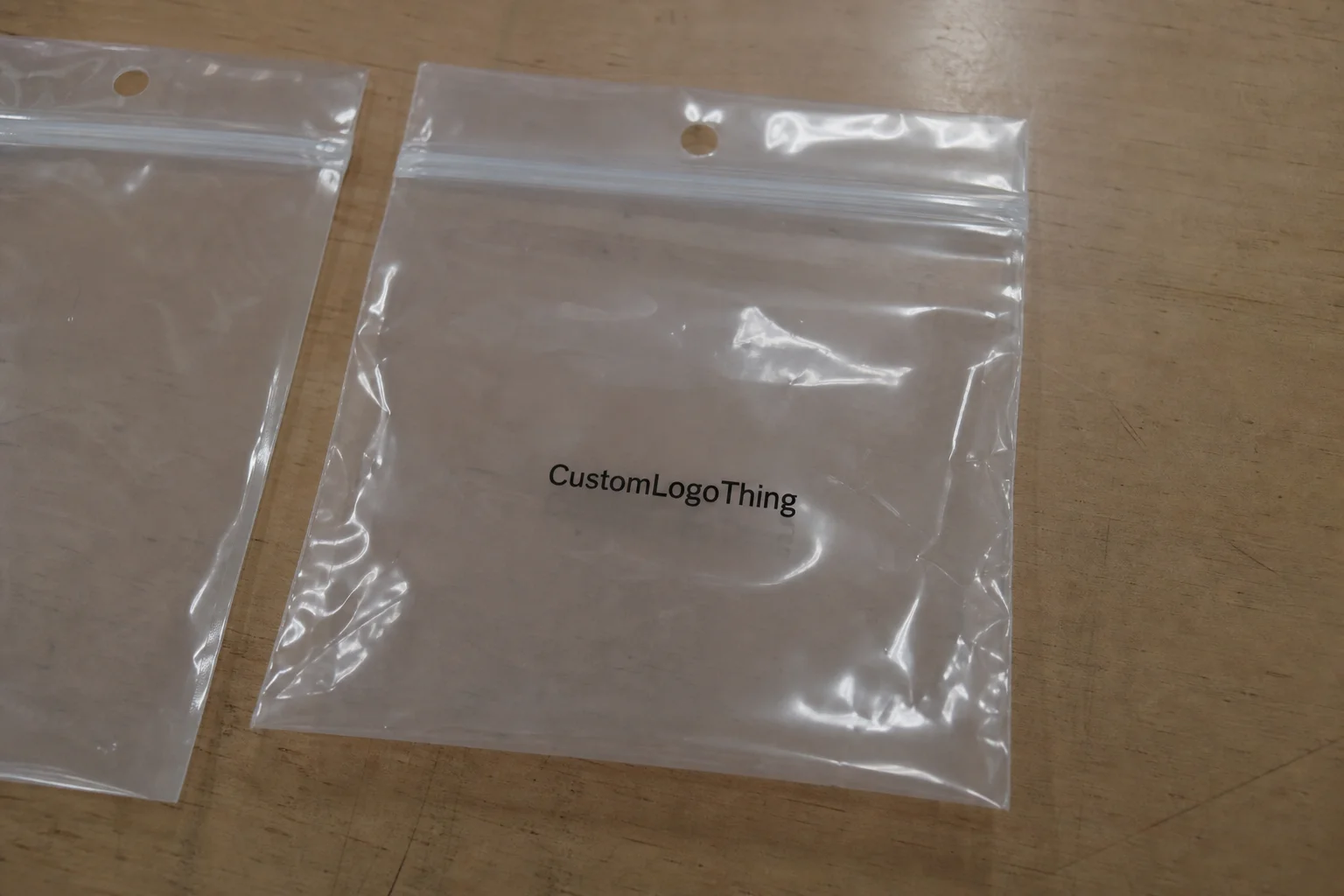
In practical terms, clear zip lock Bags with Logo custom logo are resealable plastic bags made from transparent film and printed with a logo, product name, or other branding element. The clear body keeps the contents visible. The printed area gives the package identity. That sounds simple, but small changes in material and construction can shift both appearance and performance in a big way.
Most buyers will hear terms like LDPE, PP, or PE during quoting. LDPE is usually softer and more flexible, which makes it common for apparel, kits, and lightweight retail items. PP tends to be crisper and glossier, so the package can feel a little sharper on shelf. PE is often used as a broad category name, but the real specification is the exact film grade, clarity, thickness, and how the bag behaves when folded or opened repeatedly.
The zipper matters just as much as the film. A standard press-to-close zipper works for many lightweight applications and short-term storage. A slide zipper usually feels more premium and is easier to use repeatedly, but it adds cost and sometimes a slightly different production setup. If the bag will be handled often, moved in shipping cartons, or reopened many times, closure quality becomes a functional requirement rather than a detail.
There is also a difference between stock bags with a logo and fully custom printed bags. Stock bags usually begin with existing dimensions and construction, then receive branding within defined print limits. Fully custom bags are built around your size, artwork, and closure preference. Stock options are usually faster and safer for small orders. Fully custom versions make more sense when the bag is part of a larger packaging system or has to align with other branded materials.
From a buyer’s perspective, these bags sit at the intersection of protection, presentation, and package branding. They are not just storage. They are part of the product’s first impression.
How the printing and sealing process works
Printing on clear film is less forgiving than printing on paperboard. Transparent plastic will not hide weak contrast, misregistration, or artwork that is too delicate. The usual printing methods are flexographic printing, gravure, and digital printing. Each one serves a different order profile.
- Flexographic printing is usually the practical choice for medium to large runs. Once setup is complete, the unit price can be attractive. Plate costs and color limits make it less appealing for very small quantities.
- Gravure printing offers strong consistency and sharp image quality, especially on repeated high-volume orders. Tooling costs are higher, so it makes the most sense when the design is stable and the order volume is significant.
- Digital printing works well for low MOQ orders, short runs, prototype launches, and faster artwork changes. The unit price is usually higher, but the absence of plate costs can make it the better option for testing a market.
On clear film, white ink is often the difference between a logo that pops and one that barely appears. A dark logo printed directly on transparent plastic can look fine in a file and weak on the actual bag. White underprint improves opacity and helps colors hold their shape. It is especially useful for fine lines, small text, and lighter brand colors.
The manufacturing sequence is usually straightforward: film extrusion, printing, cutting, zipper installation, sealing, and inspection. Some suppliers vary the order depending on construction, but the principle is the same. Before production starts, the buyer should confirm the bag dimensions, artwork, print area, color count, closure style, and finish. Gloss and matte film can change the overall feel more than people expect.
Proofing matters more here than it does in many other packaging categories. A logo that looks centered on a digital proof may sit too high once the zipper seam is added. A line that looks acceptable on a monitor may almost disappear on clear film. That is why a pre-production proof or sample is not a formality. It is the checkpoint that keeps the run from turning into a very expensive correction.
“If the bag is clear, you are not only approving the bag. You are approving every visual decision that sits inside it.”
For shipments that have to travel through normal distribution channels, it helps to think beyond appearance. Packaging that looks good on a desk can still fail once it is compressed in a carton, rubbed against other items, or handled repeatedly. Buyers who need higher confidence often ask for testing references or performance checks that resemble common packaging standards such as ISTA methods for distribution testing. Not every order needs a full lab program, but transport is rarely gentle, and packaging should be specified with that in mind.
Key specs that affect cost, durability, and shelf appeal
Many packaging problems begin with the logo and end with the specs. Buyers often focus on artwork first and only later realize that size, thickness, zipper style, and print coverage drive both the price and the finished look. For clear zip lock Bags with Logo custom logo, the following details have the most practical impact.
Thickness is usually measured in mils. For lightweight retail products, 2.0 to 3.0 mil is common. For heavier items or a bag that needs a more substantial feel, 3.5 to 4.0 mil is often a better fit. Too thin, and the bag can feel flimsy or tear more easily. Too thick, and it can become stiff, expensive, and less elegant for smaller products. There is no award for specifying the thickest bag on the quote sheet.
Size matters just as much. A bag that fits too tightly makes insertion awkward and can crowd the product visually. One that is too large allows movement, which can make the package look untidy and weaken the presentation. If you are packing inserts, cards, accessories, or multiple components, measure those items too. Buyers often size for the main product and forget the extras, then end up with a package that feels off by a small but obvious margin.
Zipper style changes both function and perception. Standard press-to-close zippers are usually fine for light use or single-purpose storage. A double-track or slide zipper can feel more premium and support repeated opening, but it raises cost. Hang holes are worth considering if the bag will be displayed on pegs or in a retail fixture. A small hole can decide whether a product belongs in a shelf display or gets pushed aside into generic storage.
Gussets also deserve attention. Side gussets and bottom gussets add capacity and help the bag stand more naturally. That matters for products that need a better shelf profile or more room than a flat bag can provide. A gusset does not magically make a package premium, but it can make the presentation feel more stable and intentional.
Artwork complexity can change pricing faster than many buyers expect. One-color logos are usually the easiest and cleanest to produce. Two to four colors increase setup and print management, especially if white underprint is needed. Large solid areas and full-coverage artwork raise ink usage and can increase the risk of minor variation. On transparent film, a simple logo often looks more confident than a crowded design trying to do too much.
| Option | Typical use | Cost effect | Practical tradeoff |
|---|---|---|---|
| 2.0-3.0 mil LDPE, one-color logo | Samples, lightweight accessories, basic retail packaging | Lower | Good price, but less rigidity and a lighter feel |
| 3.0-4.0 mil PP or PE, two-color logo with white underprint | Branded packaging for retail display | Medium | Better contrast and shelf appeal, more setup cost |
| Custom size, gusset, slide zipper, full-color print | Higher-end product packaging and kits | Higher | Stronger presentation, but MOQ and unit cost rise |
Sustainability questions come up often, and they should. Some buyers want recycled content, others want recyclable film, and a few need documentation for retail compliance. The answer depends on the exact film structure and the recycling system where the end customer lives. A generic “eco-friendly” claim is not enough. Ask for the material composition and any documentation that supports the claim. Local recycling acceptance varies, so broad resources such as the EPA recycling resources are useful as a starting point, even though they do not override municipal rules.
Cost, pricing, and MOQ: what buyers should expect
Pricing for clear Zip Lock Bags with logo custom logo usually breaks into five parts: setup, print tooling, material, labor, and freight. A unit price that looks low can become less attractive once proof fees, plate costs, packaging, and shipping are added. Many buyers compare only the per-bag figure and miss the rest of the bill.
The relationship between quantity and price is predictable. Small runs carry a higher unit cost because the setup burden is spread across fewer pieces. Larger runs usually bring the unit cost down because the production prep is diluted over more bags. That is why suppliers often quote in thousands rather than hundreds. It is not simply a sales preference; short runs are less efficient on print equipment.
As rough guidance, a simple low-MOQ digital run may land around $0.30-$0.70 per unit, and sometimes more if the bag is large or the print area is heavy. Mid-volume flexographic orders can often fall into the $0.12-$0.30 range at higher quantities, depending on size, material, color count, and closure type. Add white ink, gussets, or a premium zipper, and the number moves up. Those figures are not universal, but they are close enough to keep unrealistic expectations in check.
Minimum order quantities usually follow the print method. Digital suppliers may accept a few hundred pieces for a test run. Flexographic and gravure suppliers often prefer 5,000, 10,000, or more, particularly when custom plates are required. Bigger volumes can reduce unit cost, but only if the inventory will actually be used. Ordering 20,000 bags to save two cents each is not a win if half of them sit in storage for a year.
When comparing quotes, ask every supplier for the same details:
- Exact bag dimensions and film thickness
- Material type
- Print method and number of colors
- White ink use, if any
- Zipper style and hang hole option
- MOQ
- Proof fee or plate cost
- Freight estimate
That list prevents false comparisons. It also helps you determine whether a quote fits a broader Custom Packaging Products plan or just looks cheap on the first page. Flexible packaging has tolerances, and those tolerances affect cost, appearance, and performance.
If your team is used to custom printed boxes or rigid packaging, remember that film behaves differently. Artwork placement, tension, seal position, and color opacity can all shift the final appearance. A quote for a printed bag is not only a price for materials. It is a price for a manufacturing process.
Production steps, lead time, and approval timeline
The process usually begins with an inquiry and a quote. After that comes artwork review, proofing, sample approval if needed, production, quality control, and shipping. On paper, the sequence is tidy. In real orders, the delays usually come from missing information rather than the factory schedule.
For standard custom runs, lead time is often about 12-20 business days after proof approval. Larger runs, special closures, complex artwork, or unusual film requirements can extend that. If a physical sample is requested, add several more days depending on shipping and review time. Rush production can sometimes be arranged, but fast and inexpensive rarely live in the same lane.
The common delay points are familiar:
- Artwork arrives as a raster file instead of vector artwork
- Logo colors are not specified clearly
- Bag size is still changing after quoting starts
- White ink requirements are discovered late
- The layout keeps changing after proof approval
That is why the approval timeline deserves more attention than it often gets. If the bags are tied to a seasonal launch, event kit, or retail reset, build in extra time for cleanup, proof review, and sample checking. Orders crossing borders or passing internal brand approvals need even more buffer. Packaging schedules tend to look relaxed until they suddenly become urgent.
If the bag will ship with product inside, ask about how it holds up under compression and abrasion. A bag can look perfect in production and still struggle in transit. For heavier or more sensitive goods, ask whether the supplier has any testing references tied to common distribution methods. That conversation can prevent a lot of avoidable damage.
Common mistakes when ordering printed zip lock bags
The first mistake is choosing the wrong size. Too small, and the product looks cramped and awkward. Too large, and the package loses shape and shifts around in shipping. Measure the product first, then add room for insertion and closure. That extra step prevents a surprising number of problems.
The second mistake is assuming the logo will read well just because it looked good on screen. Clear film is hard on weak contrast. Buyers often approve artwork from a digital mockup, skip white underprint, and then discover that the logo is faint on the actual bag. Transparent packaging is blunt about this sort of mistake.
The third mistake is ignoring function in favor of appearance. If the contents are heavy, sharp, or opened repeatedly, zipper strength and film thickness matter more than a decorative print. A beautiful bag that fails in use is still a failed package. The fourth mistake is skipping sample approval. One sample can reveal problems with logo placement, scaling, opacity, zipper feel, or seal quality before the full run is underway.
The fifth mistake is comparing unit price only. A better comparison is landed cost: product, setup, sample, freight, and any extra finishing. The lowest quote on paper is not always the lowest final cost. That is one of the most common traps in packaging procurement.
Expert tips for better branding and fewer headaches
If the logo is small, keep it bold. Thin strokes and tiny text can disappear quickly on clear film, especially if the product inside adds visual clutter. A simple mark usually performs better than an overly detailed design. That is true for branded bags, and it is true for most packaging that has to work in a split second.
Leave some transparent space on the bag. Not every inch needs ink. Clear areas help the product show through and keep the package from feeling heavy. In many cases, the strongest packaging design is the one that stays out of its own way.
Ask for a physical sample if the order is large, the color is sensitive, or the package will be reviewed by retail buyers. Digital proofs are useful, but they cannot fully show how ink behaves on film. A real sample lets you inspect opacity, zipper feel, seal strength, and the way the product actually looks in the bag.
Choose thickness based on product weight and shape, not optimism. Light, soft products can often work with 2.5 to 3.0 mil. Heavier products or items with edges usually need more material. Overspecifying thickness just because it sounds safer can raise cost without noticeably improving performance.
Plan around sales velocity. If a product moves quickly, structure the order so reorders do not create a stockout. If it moves slowly, avoid tying up cash in a huge print run. Good package branding should support the business, not strain it.
You can also use these bags as part of a broader branded system that includes labels, inserts, and matching Custom Packaging Products. Consistency matters. A package line feels more credible when the visual language stays aligned from the outer bag to the insert card.
Next steps: how to order the right bag the first time
Start with the product. Measure width, height, depth, and any extra components that need to fit with it. Then choose bag dimensions with enough room for insertion and closure. If the product may change slightly in the next reorder, leave a little flexibility so the packaging does not become obsolete too quickly.
Prepare artwork in vector format whenever possible. AI, EPS, and print-ready PDF files are the safest options. Confirm logo colors, placement, and print limits before production starts. If white ink is required, mention it early. That one detail changes the print setup, and it should not be a last-minute surprise.
Then request quotes using identical specifications from each supplier. Same size. Same thickness. Same closure. Same print area. Only then does the pricing comparison mean anything. Ask about MOQ, proof process, lead time, freight, and sample costs before approving the order.
If the order is strategic rather than routine, inspect a sample in real light. Check the logo, zipper feel, seal strength, and how the product looks inside the bag. Once the sample passes, schedule the run and plan reorders based on actual sell-through rather than panic.
That is the most reliable path to ordering clear zip lock bags with logo custom logo without wasting money or time. Measure carefully, proof carefully, and do not let a transparent bag make a bad decision obvious.
FAQ
Are clear zip lock bags with logo custom logo good for retail packaging?
Yes. They work well when you want the product visible while still adding branding and basic protection. Apparel, accessories, samples, cosmetics, and small parts are all common uses. The main advantage is that the bag handles display and function at the same time.
What affects the price of custom clear zip lock bags the most?
Bag size, material thickness, print colors, and order quantity are the biggest drivers. Setup costs and white ink use can raise pricing quickly. Freight and packaging extras also matter more than many buyers expect.
How long does production usually take for printed zip lock bags?
Lead time depends on artwork approval, print method, and quantity. Simple orders may move faster, while custom runs with proofs and sample approval take longer. Delays usually come from artwork changes or unclear specifications.
What logo format should I send for custom bag printing?
Vector files like AI, EPS, or PDF are best because they stay sharp at any size. High-resolution PNG or PSD may work for review, but vector is safer for production. Always confirm spot colors, white ink needs, and placement before printing.
Can I order low MOQ clear zip lock bags with logo custom logo?
Sometimes, but low MOQ usually comes with a higher unit cost. Digital printing or stock-based options can help smaller buyers. If you need a test run, ask for sample quantities before committing to a larger order.


