Buyer Fit Snapshot
| Best fit | Recycled Paper Pouches with Logo projects where brand print, material claims, artwork control, MOQ, and repeat-order consistency need to be specified before quoting. |
|---|---|
| Quote inputs | Share finished size, material target, print colors, finish, packing count, annual reorder estimate, ship-to region, and any compliance wording. |
| Proofing check | Approve dieline scale, logo placement, barcode or warning zones, color tolerance, closure strength, and carton packing before bulk production. |
| Main risk | Vague material claims, crowded artwork, missing packing details, or unclear freight terms can make a low unit price expensive after revisions. |
Fast answer: Recycled Paper Pouches with Logo: Film, Print, MOQ, and Carton Packing should be specified like a repeatable production item. The safest quote records material, print method, finish, artwork proof, packing count, and reorder notes in one written spec.
Production checks before approval
Compare the actual filled-product size with the drawing, then confirm tolerance on folds, seals, hang holes, label areas, and retail display edges. Reserve space for logos, QR codes, warning copy, and material claims before decorative graphics fill the panel.
Quote comparison points
Review material grade, print process, finish, sampling route, tooling charges, carton quantity, and freight assumptions side by side. A quote is only useful when the supplier can repeat the same color, closure quality, and packing count on the next order.
Recycled paper pouches with logo are a smart pick for brands that want packaging to feel deliberate instead of decorative by accident. A good pouch can carry a premium look, protect the product, and reduce virgin fiber use without turning the whole thing into a lecture. A bad one looks like it was approved during a fire drill.
The useful part is this: recycled paper pouches with logo are not just paper bags with a print file dropped on top. They are a structure, a branding surface, and a product-protection choice all at once. Pick the wrong build and the design cannot save it. Pick the right build and even a simple logo can look considered, sharp, and more expensive than it is.
For coffee, tea, snacks, dry goods, cosmetics, sample kits, and retail inserts, the pouch has to earn its keep. It needs to survive transit, hold up on shelf, and explain the brand without a long speech. That sounds simple. The details are where projects get expensive or quietly excellent.
If you are comparing suppliers, look at the full picture: recycled content percentage, barrier requirements, print method, closure style, seal strength, and how the pouch behaves after a hot truck ride or a humid storeroom. Sustainability matters. So do shelf appeal and product protection. Customers buy the pack they trust first.
Recycled Paper Pouches with Logo: What They Are and Why They Matter
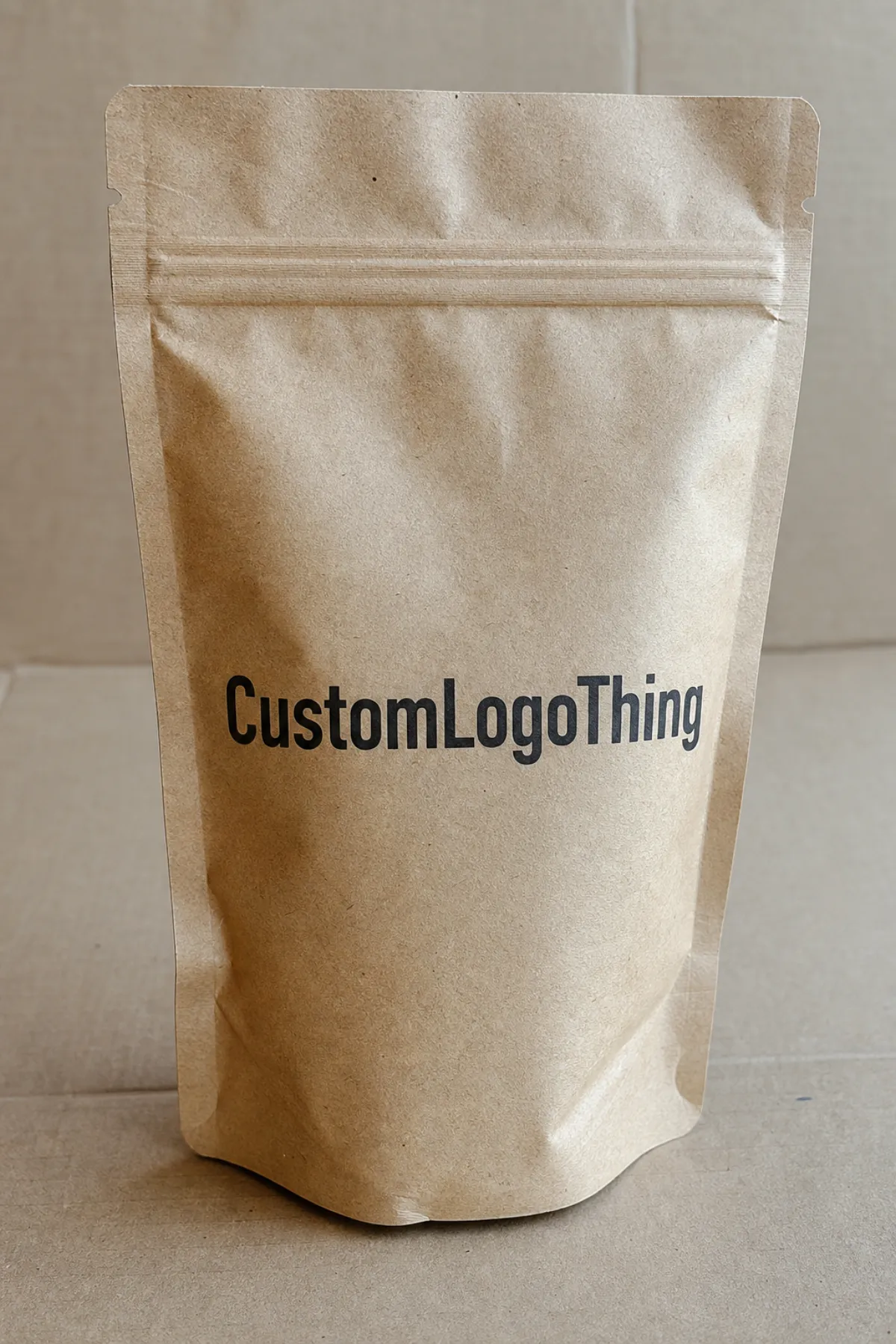
At the simplest level, recycled paper pouches with logo are pouches made with paper that contains recycled fiber, then printed or finished with a brand mark, product details, or custom artwork. Some use mostly paper with a light coating. Others pair paper on the outside with a different inner layer for protection. The word “recycled” sounds clean and tidy. The actual construction matters more than the headline.
Brands usually choose this format for three reasons. It helps tell a lower-impact packaging story. It gives the pack a tactile, honest look that fits food, wellness, and handmade products. It also provides enough printable space for a logo, ingredients, instructions, or a simple front-facing design without moving to full plastic packaging.
There is one detail buyers miss all the time: recycled content is not the same thing as post-consumer recycled content. A pouch may use post-industrial fiber, post-consumer fiber, or a blend of both. Those are not interchangeable in a sourcing conversation. If your brand has a packaging claim to support, ask for the exact specification and documentation instead of taking a broad label at face value.
That makes these pouches useful across a lot of categories:
- Coffee and tea samples
- Dry snacks and trail mixes
- Powders, salts, and dry pantry goods
- Cosmetics and personal-care sachets
- Retail inserts and gift set components
- Trade show samples and starter kits
The value is not limited to “eco packaging.” Buyers usually want a better-looking package that supports the brand story and does not feel generic. A recycled paper pouch with a clean logo can make a product feel more intentional than a plain poly bag. That matters on shelf, in subscription boxes, and in ecommerce photos where packaging does a lot of selling before the product gets a chance.
There is a practical side too. Plenty of brands want packaging that feels less sterile than glossy film, especially for products positioned as natural, artisanal, or ingredient-focused. Recycled paper gives that look without forcing the design into a predictable rustic costume. Done well, it reads as premium, not precious.
“The best pouch is not the one that talks the loudest about sustainability. It is the one that protects the product, prints cleanly, and still makes the brand look like it knows what it is doing.”
Set expectations early. Recycled content does not automatically mean high barrier performance. A pouch that holds dry tea beautifully may fail with oily granola or moisture-sensitive powder if the liner, seal, or coating is wrong. Print quality also shifts with the paper surface. Texture gives character, but it can soften fine details and thin strokes.
One more practical point: not every recycled paper pouch belongs in curbside recycling, even if the outer face is paper. Adhesives, zippers, barrier films, and coatings can change the disposal route completely. If your packaging claim needs to be specific, confirm the full build with the supplier and check local recycling guidance before you print a promise into the design.
How Recycled Paper Pouches with Logo Work
A pouch is a stack of decisions disguised as a simple bag. The outer layer is usually recycled paper or a paper-based laminate. Inside, there may be a liner, sealant layer, or barrier film to control moisture, oxygen, aroma, or grease. Closure options range from heat seal to zipper, tin tie, tear notch, or a folded-and-sticker setup for lighter applications.
The logo is not just decoration. It changes how the pouch is printed, how much detail survives the paper texture, and how the final color appears under store lighting. On smoother stock, small type can stay crisp. On more fibrous recycled paper, fine lines can blur a bit, so the design should lean on bold shapes, strong contrast, and clean spacing.
Common pouch formats show up often:
- Flat pouches - Good for samples, small fills, and lightweight products.
- Stand-up pouches - Better shelf presence and more stable display.
- Gusseted pouches - Useful for bulkier fills and products that need a wider base.
- Window pouches - Let the product show through, though the window material can affect recyclability.
- Resealable pouches - Better for products used over multiple openings.
Materials change performance in ways that matter. If the product is dry and low-risk, a simpler structure may be enough. If it is prone to moisture pickup, grease migration, fragrance loss, or puncture damage, the pouch needs more than a nice outer paper face. That usually means a barrier layer or laminated structure, and yes, that can make recycling more complicated. Packaging is full of tradeoffs. Buyers usually discover that after the sample stage, which is always charming.
Print and finish choices shape the result too. A few options come up often:
- Spot colors for clean, controlled branding with fewer ink variables
- Full-color printing for photos, gradients, and richer storytelling
- Embossing or debossing for subtle tactile branding
- Foil alternatives for a metallic effect without the full luxury-film feel
- Minimal branding for brands that want the recycled texture to carry the look
From a buyer’s point of view, the logo should fit the material instead of fighting it. A highly detailed badge or thin script might look great on a screen and miserable on textured paper. Bold wordmarks, simple icons, and good negative space usually perform better. That matters even more when the order is smaller and every production variable feels louder.
The same rule applies to barcodes, ingredient panels, and regulatory copy. If the front design is busy, the back panel usually suffers. Leave enough quiet space for the information people actually need. That is the unglamorous part of packaging design, and also the part that keeps customer service from getting a pile of avoidable emails.
For a broader view of packaging formats and sustainability language, the Packaging Machinery Manufacturers Institute at packaging.org is useful for grounding the category, while the U.S. EPA’s recycling guidance at epa.gov helps keep “recyclable” claims tied to actual reality instead of wishful copy.
Key Factors That Decide Quality, Sustainability, and Shelf Appeal
The first thing buyers ask about is recycled content percentage. Fair enough. That number matters, but not as much as people think unless you also know the full structure. A pouch can contain recycled fiber and still have a non-recycled inner layer. That does not make it bad. It just means the sustainability story is more layered than the line on the quote sheet.
In practice, you are balancing three things: product safety, shelf life, and end-of-life profile. A dry snack may not need aggressive barrier properties. A coffee product probably does. A powdered cosmetic sample may land somewhere in between, depending on fragrance sensitivity, moisture exposure, and how long it stays in distribution.
Barrier performance is where a lot of buyers overcorrect. They ask for the greenest structure available, then wonder why the product arrives stale or clumped. Other buyers go the opposite way, spec a high-barrier pouch for a shelf-stable product that does not need it, and the unit cost climbs without giving customers any visible benefit. The right answer depends on what the product actually does in the real world, not on what looks clean in a slide deck.
Printing is another quality filter. Recycled paper texture changes ink behavior, especially for small type and gradients. If the logo depends on delicate linework, ask for a sample on the actual material. If the brand uses lots of white space and a bold mark, recycled paper often looks better than expected. Natural texture can make a simple design feel premium if the proportions are right.
Finish choice matters too. Matte varnish, aqueous coatings, and uncoated paper all feel different in hand and behave differently in transit. A finish that resists scuffing can be useful for long shipping routes, but it may also change the paper’s recycled story and alter the feel customers notice first. The best selection is usually the one that matches how the pouch is sold, handled, and displayed.
Food-safety and product-safety requirements also matter. If the pouch touches edible goods, confirm the structure is suitable for food contact and check local compliance requirements. If it holds personal-care items, fragrance compatibility and migration resistance become more important. Never assume the phrase “paper pouch” covers every compliance issue. It does not. Packaging rarely gets to be that polite.
Here is a practical comparison of common pouch builds:
| Option | Best Fit | Typical Cost Impact | Barrier / Protection | Tradeoff |
|---|---|---|---|---|
| Recycled paper outer, simple inner structure | Dry goods, inserts, lightweight samples | Lower | Basic moisture resistance | Easier on budget, weaker for shelf life |
| Recycled paper outer with coated or laminated barrier | Coffee, tea, snacks, light cosmetics | Medium | Better moisture and aroma control | Better performance, more material complexity |
| Recycled paper outer with reseal and high barrier | Premium food, repeated-use products | Higher | Strong protection and usability | Best function, hardest to keep simple or fully recyclable |
There is also the shelf appeal question, which gets ignored by buyers who focus only on sustainability claims. A pouch that looks dull, wrinkled, or off-color can hurt conversion even if it checks the environmental boxes. Customers do not inspect a spec sheet before buying. They see a pouch, decide whether it feels trustworthy, and move on. That is the reality.
If you want to understand how testing and transit standards shape packaging choices, ISTA’s resources at ista.org are useful. Packaging that cannot survive distribution is expensive theater. A recycled fiber story is nice. A product that arrives intact is better.
Process and Timeline: From Brief to Final Pouch
The production flow for custom pouches is usually straightforward, but every weak brief turns it into a mess. The cleanest process starts with a one-page spec: product type, fill weight, target dimensions, shelf-life needs, closure preference, logo files, quantity, and any regulatory notes. That gives the supplier enough context to recommend a structure instead of just quoting the easiest thing to produce.
A normal workflow looks like this:
- Initial brief and product review
- Material and structure selection
- Artwork setup and dieline placement
- Digital proof or physical sample approval
- Production run
- Quality check and packaging of finished goods
- Freight booking and delivery
Typical lead times vary, but a practical range for custom recycled paper pouches with logo is often 12 to 20 business days after proof approval for simpler builds, and longer if the pouch has special finishes, extra compliance review, or unusually complex print. That is not a promise. It is a sane planning range. If a supplier claims every custom pouch ships fast, ask what part they left out. There is always a catch.
What slows projects down most often?
- Artwork sent in the wrong format
- Missing dielines or unclear logo placement
- Last-minute copy changes after proofing
- Waiting on ingredient or regulatory approval
- Revising size after the first sample does not fit the product well
Sampling deserves its own budget line. A digital proof is great for checking layout, spelling, barcode placement, and general proportions. It does not tell you much about texture, print depth, seal strength, or how the logo sits on the actual paper. A physical sample costs more and takes longer, but it catches the mistakes that matter most before you order thousands of units.
That matters even more for a brand launch or seasonal drop. If the packaging is tied to an event date, build in buffer time. A buyer who plans for one proof round often wishes they had planned for two. One extra week here is a lot cheaper than reprinting a full run because the tint looked too warm or the pouch stood awkwardly on shelf.
File prep is another place where projects go sideways. Vector files such as AI, EPS, or print-ready PDF are the safest option for a logo. High-resolution raster files can work for review, but they are not the ideal starting point for production. Confirm color values, logo size, safe zones, and copy placement before signing off. The proof stage is where you catch the awkward little mistakes that become expensive later.
If the package includes a barcode, test the scan quality on the final artwork file, not just on a flattened mockup. Textured recycled paper can reduce contrast in a way that surprises people. A barcode that scans in the design proof should still scan after print and after a few scuffs in transit. That is a tiny detail until it is not.
Cost and Pricing: What Changes the Quote
Packaging quotes are not mysterious. They are just crowded with variables. The biggest price drivers are size, material structure, print coverage, barrier level, closure type, and order quantity. A small flat pouch with one or two colors will usually cost less than a large resealable stand-up pouch with full-bleed artwork and a high-barrier liner. That is not supplier greed. That is material use, setup time, and production complexity doing what they always do.
MOQ, or minimum order quantity, matters a lot. Lower volume usually means a higher unit cost because setup gets spread across fewer pieces. If you are ordering 1,000 units, the price per pouch may look painful. At 10,000 units, the math often gets friendlier. The flip side is obvious: if the product is still being tested, ordering too many units can leave you with outdated packaging and a pile of regret.
Here is a realistic pricing mindset for buyers:
- Simple branding - Best if the pouch already has strong shape and good paper texture.
- Mid-level customization - Good balance for most retail products.
- Full-surface print plus special finishing - Worth it only if the product and price point justify the spend.
Hidden costs can be annoying if they are not spelled out early. Ask about setup charges, plate fees, sampling fees, freight, and rush production before you compare quotes. A low unit price with high setup and expensive shipping is not a better deal. It is just a more creative invoice.
For planning, I usually think in ranges rather than fantasy numbers. Small custom runs of recycled paper pouches with logo can come in at a meaningfully higher per-unit cost than larger runs, especially if you need reseal features or barrier layers. Once volume increases, unit pricing often improves faster than buyers expect. The real question is whether your demand justifies the step-up.
One useful way to budget is to spend where customers notice it most. If the pouch is heavily displayed and photographed, invest in clean print quality and structure. If the product is low-margin and shipped inside another box, skip the fancy finish and focus on durability. Nobody needs a foil effect on a sample pouch that lands in a dark shipping carton.
Recycled paper pouches with logo also sit inside broader packaging standards. If a supplier references sustainability certificates, ask what they actually mean. FSC can help verify responsible fiber sourcing, while transport and performance testing should still be checked independently. The Forest Stewardship Council explains certification basics clearly at fsc.org. Certification is useful. It is not a substitute for a pouch that works.
Common Mistakes When Ordering Recycled Paper Pouches with Logo
The first mistake is buying something that looks eco-friendly but cannot protect the product. That usually happens when a brand falls in love with the paper texture and forgets about shelf life, grease resistance, or humidity exposure. A pouch that fails in transit is not sustainable in any meaningful business sense because you will be reordering, replacing, and probably refunding.
The second mistake is trying to print a design that belongs on coated art paper onto rough recycled stock without adjusting it. Fine typography, subtle gradients, and tiny icons can all disappear into the surface. A strong recycled-paper design usually uses fewer colors, larger type, and better contrast. It is not about being boring. It is about respecting the material.
The third mistake is ignoring fill weight and product shape. A pouch may be the right width on paper and still look awkward once filled. If the product is lumpy, fragile, or oddly shaped, the pouch needs extra headspace or a different gusset. Otherwise the pack bulges badly, seals poorly, or sits at a strange angle on shelf. Packaging that cannot stand up straight is still more common than it should be.
The fourth mistake is skipping regulatory checks until the end. If the pouch carries ingredients, nutrition facts, warnings, or lot codes, those details need space and approval before print. If it is food-contact packaging, confirm the structure and ink set are appropriate. If it carries personal-care products, check whether your labeling needs change across markets. None of this is glamorous, but neither is reprinting 8,000 pouches because a compliance line got cut off.
The fifth mistake is choosing the cheapest quote without asking what got removed to get there. Was the barrier downgraded? Was the closure simplified? Was the print area reduced? Was freight excluded? Cheap packaging can be perfectly fine, but cheap and vague is how budgets get ambushed.
Another common miss is forgetting how the pouch will be opened in the real world. If customers need to reseal it, a weak zipper or a flimsy tear notch becomes a complaint generator. If the product is single-use, a resealable closure may just be dead weight. Match the opening experience to the product, not the mood board.
Here is a quick buyer filter that helps avoid problems:
- Ask for the exact material build, not just “recycled paper.”
- Request proof on the actual pouch size and structure.
- Confirm whether the pouch needs to survive heat, humidity, or long shipping routes.
- Check that the logo design still reads clearly on textured paper.
- Compare total landed cost, not just the factory quote.
If a supplier cannot explain the difference between appearance, barrier, and print performance, keep looking. A good packaging partner should be able to tell you why one build is better for your product than another. If they only say “it will look nice,” that is not a plan. That is a mood.
Expert Tips and Next Steps for a Better Order
Start with the product, not the packaging trend. Ask how long the product needs to stay fresh, how much moisture or oxygen exposure it will see, whether it ships hot or cold, and whether it will be opened more than once. Those answers should drive the material choice. A pouch that is perfect for dry tea may be wrong for coffee, and both may be wrong for oily snacks.
Ask for a proof that reflects your actual logo and layout. Generic mockups are fine for mood boards, but they do not reveal whether the brand mark is too small or whether the copy line sits too close to the seal. A real proof catches those details. It is boring work. It also saves money, which tends to make people less bored.
Keep the design cleaner than you think you need to. Recycled textures already bring visual interest. A strong wordmark, one accent color, and a clear product name often look better than a busy layout with too many claims. If the pouch is doing the sustainability signaling, let the material do some of the work instead of fighting it with visual clutter.
Ask for a quote that breaks out the money cleanly:
- Unit cost
- Setup or plate charges
- Sampling cost
- Freight
- Rush fees, if any
That breakdown makes supplier comparison honest. Without it, you are comparing apples to a box of labels and one suspiciously optimistic spreadsheet. Clear pricing also helps you decide whether to improve the pouch structure or simplify the decoration.
A practical next step is to build a one-page spec sheet before you request quotes. Include the product name, fill weight, desired pouch style, closure type, logo file, target quantity, and any compliance notes. Then ask for two or three structures: one budget-conscious option, one balanced option, and one higher-protection option. That gives you an actual choice instead of a single take-it-or-leave-it number.
If you want a sane launch plan, work backward from the delivery date. Leave room for artwork edits, proofing, sample approval, and freight. That timeline matters more than people admit. Packaging delays are rarely dramatic. They are usually death by a thousand small revisions.
The most useful discipline here is to decide what Matters Before You ask for quotes. If the pouch needs to protect aroma, make barrier the priority. If it needs to sell on shelf, spend on print clarity and shape. If it needs to do both, accept that the price will rise. That is not bad news. That is how packaging works when it is doing its actual job.
Choosing the Right Pouch for Your Product
The best purchase is usually the one that matches the product’s actual risk profile, not the one that sounds best in a sales deck. Recycled paper pouches with logo can look sharp, feel more considered than plain plastic, and support a credible brand story. They can also fail if the structure is wrong, the artwork is too fussy, or the pricing is judged only by unit cost.
For dry products, lightweight samples, and retail inserts, a simpler pouch may be enough. For moisture-sensitive or aroma-sensitive products, spend more time on barrier performance and closure style. For premium retail presentation, pay close attention to print quality, logo placement, and how the recycled texture changes the final appearance. That is the part customers actually see.
For buyers dealing with coffee, tea, and snacks, I usually recommend testing at least two structures: one optimized for cost and one optimized for protection. The difference is often obvious once you handle the samples side by side. The cheaper option may be fine. Or it may be the one that starts looking tired the minute you put it under warehouse conditions.
From a packaging buyer’s point of view, the sweet spot is usually a pouch that balances protection, shelf appeal, and cost without pretending you can get all three at the absolute cheapest number. You cannot. Packaging physics has a mean streak.
If you are ordering recycled paper pouches with logo for your brand, the smart move is to define the product needs first, then shape the pouch around them. Get the specs right, keep the artwork clean, ask for a real proof, and compare quotes by total value rather than unit price alone. Do that, and recycled paper pouches with logo will do what they are supposed to do: protect the product, support the brand, and look good enough to earn the second look.
Are recycled paper pouches with logo actually recyclable?
Not always. Recyclability depends on the full build, including any plastic liner, coating, adhesive, zipper, or barrier layer. Paper-only structures are easier to recycle, but they may not protect the product as well. Always check the complete material spec instead of assuming “recycled paper” automatically means curbside recyclable.
What products work best in recycled paper pouches with logo?
Dry goods, snacks, tea, coffee accessories, samples, and lightweight retail items are common fits. Moisture-sensitive, greasy, or fragrance-heavy products usually need a stronger barrier or a different pouch structure. The pouch should match the product’s shelf life and shipping conditions, not just the brand aesthetic.
How much do recycled paper pouches with logo cost per unit?
Pricing depends on size, quantity, print coverage, barrier needs, and whether you add resealable features or specialty finishing. Lower MOQs usually carry a higher per-piece cost. A basic small run may be priced very differently from a larger order, so compare total landed cost, not just the headline unit number.
How long does production usually take for custom recycled paper pouches?
Lead time varies with artwork complexity, sample approval, and factory workload. Simple orders move faster, while custom structures or special finishes take longer. A practical planning range is often 12 to 20 business days after proof approval, but you should build extra time into the schedule if the packaging is tied to a launch.
What file type should I send for the logo artwork?
Vector files such as AI, EPS, or print-ready PDF are usually best because they stay sharp at any size. High-resolution raster files can work for review, but they are not ideal for final production. Confirm color values, logo placement, and spacing before approving the proof so you do not discover a layout problem after printing.
Related packaging resources
Use these related guides to compare specs, costs, quality checks, and buyer decisions before making the final call.


