Acrylic Winter Hats Wholesale Supplier for Event Merch Buyers
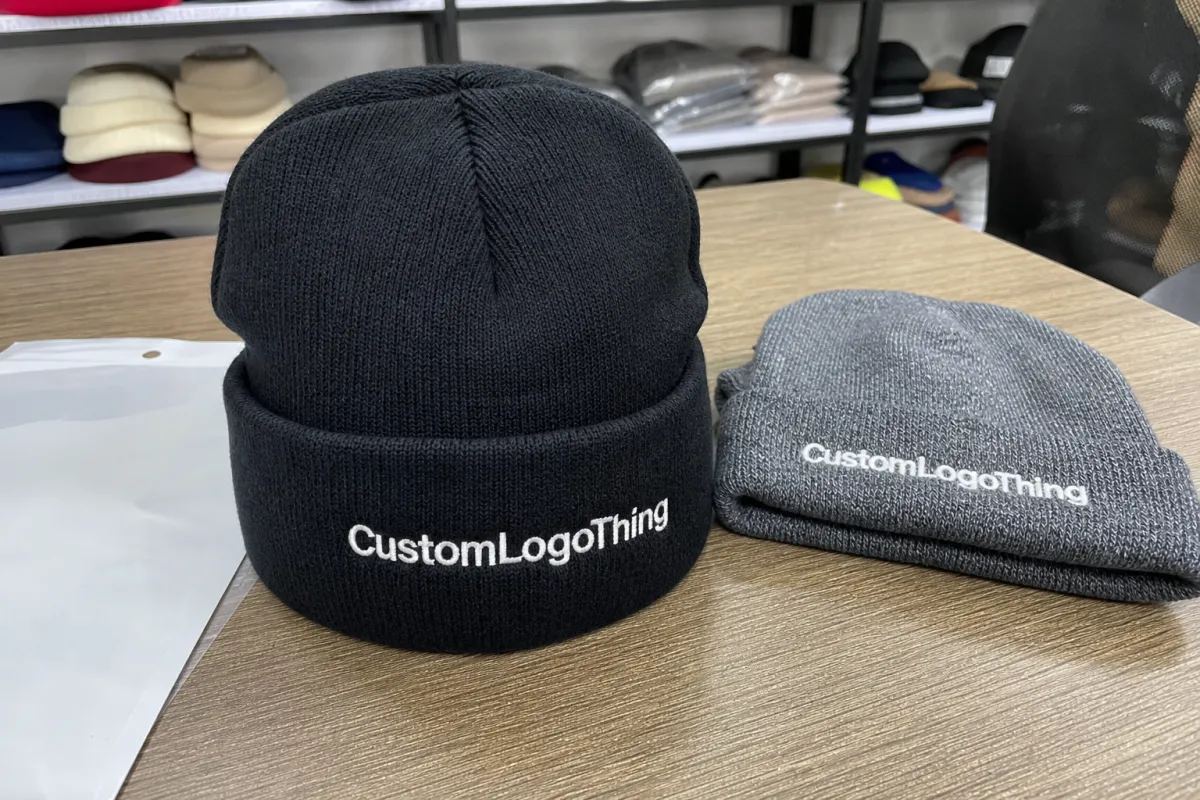
If you are sourcing an acrylic winter Hats Wholesale Supplier for event merch buyers, the safest starting point is consistency. Event merch does not get the luxury of a slow reveal. It has to arrive on time, look the same across hundreds or thousands of units, and hold up once people start pulling beanies on and off in the cold, in crowds, and often with gloves on. Acrylic hats are popular because they do those practical jobs well. They pack tightly, ship efficiently, and keep logos readable without requiring a heavy price tag or complicated care instructions.
That said, not every acrylic beanie is the same. A hat that works for a winter festival giveaway may fail in a premium sponsor kit if the knit feels scratchy, the cuff curls, or the logo sits too low on the forehead. Buyers usually learn this the hard way: the sample looks acceptable on a desk, then the bulk run lands and the decoration feels smaller than expected, the color shifts under daylight, or the fit is too shallow for a mixed audience. A useful supplier should be willing to talk through those limits before production starts.
For event merchandise, the best result is not the fanciest hat. It is the one that can be repeated cleanly, quoted accurately, and delivered without drama. That means fewer surprises in the yarn, a clear decoration method, and a real understanding of how the hats will be handed out. Stadium activations, trade shows, holiday markets, and sponsor packages all push the product in different directions, but the buyer's priorities usually stay the same: warmth, brand visibility, and a run that matches the approved sample.
Materials and Knit Structure That Change Comfort
Most wholesale Acrylic Winter Hats are built from either 100 percent acrylic or an acrylic blend. Pure acrylic is common because it holds color well, resists shrinkage, and gives suppliers a stable base for bulk production. It also keeps pricing more predictable from lot to lot. Blends can feel softer or slightly more breathable, depending on the fiber mix, but the hand feel may vary more than buyers expect if the yarn spec is not tightly controlled. For event merch, variation is often the bigger problem than softness. One odd batch can undermine a whole program.
Gauge and knit structure matter as much as the fiber content. A rib knit stretches easily and recovers well, which makes it useful for one-size programs where head sizes vary widely. A tighter knit usually looks neater on camera and gives embroidery a more stable base. A looser knit can feel warmer because it traps more air, but the surface may show the stitch structure more clearly and let fine decoration sink into the fabric. If the hat is intended for a premium box or sponsor gift, ask for the exact knit gauge and not just the yarn type. “Acrylic” alone is not enough information.
Cuff height changes both fit and branding. A deeper cuff gives more forehead coverage and a larger decoration zone. A shallow cuff can look more modern, but it leaves less room for a logo to sit cleanly. Double-layer construction adds warmth and gives the cuff more body, which helps prevent the logo area from collapsing or puckering after wear. That body can be important if the hat will carry a woven patch or a dense embroidery file. A thin knit may be fine for a simple giveaway, but it is less forgiving when the design has structure.
There is also a comfort issue that does not show up in a spec sheet: first-touch feel. Some acrylics feel smooth out of the box and then soften after a short period of wear. Others start out a little coarse and stay that way. If your audience will wear the hats immediately at an outdoor event, ask for a physical sample and not just product photos. A screen cannot tell you whether the edge of the cuff sits flat or whether the crown feels too tall when the hat is pulled down over ears.
Logo Decoration Choices for Beanies and Cuff Space
Decoration decides whether the hat looks sharp or crowded. Flat embroidery remains the default for many acrylic beanie orders because it is durable, relatively affordable, and easy to reproduce across a large run. It works best with bold marks, short words, and thick letterforms. Once the design starts relying on thin lines, tiny internal details, or gradient effects, embroidery can blur the artwork faster than buyers expect. Knit fabric does not behave like a smooth twill patch or a woven label. The stitches shift, and small type disappears first.
That is why many event programs move to a woven patch or PVC patch when the logo needs more definition. A patch lets the artwork be built on a separate surface, then sewn onto the cuff or front panel. Woven patches handle small text better than embroidery and usually give a cleaner retail-style finish. PVC patches bring more dimension and a tougher visual character, but they are not the right answer for every brand. If the event audience expects a soft, classic winter look, a patch that reads as too rigid may feel off.
Cuff placement is still the cleanest option for most orders because the knit is more stable there. Front panel branding can work on thicker hats, especially double-layer styles, but it can also show distortion if the knit stretches unevenly during wear. Side placement is useful for secondary marks or sponsor callouts. Keep those marks simple. The more places you ask the hat to carry artwork, the more likely the design becomes cluttered, especially once the hat is folded, packed, and worn by different head shapes.
One practical rule saves a lot of grief: if the logo depends on small details, ask for a sew-out or patch proof before the bulk run is approved. A digital mockup only proves that the art file exists. It does not prove that the smallest letters can survive a knit surface. On a real beanie, stitches widen, edges compress, and curved seams can steal a few millimeters from the placement. Buyers who understand that early tend to get cleaner results.
A readable beanie logo is usually simple, high-contrast, and placed where the cuff stays flat. If the design needs close inspection, it probably needs simplification before production.
Specifications to Lock Down Before You Request Pricing
A quote is only as good as the spec behind it. If the request is vague, pricing usually comes back with assumptions, and those assumptions become change orders later. Start with the basics: hat dimensions, cuff height, crown depth, knit gauge, yarn type, color count, decoration method, decoration size, and packaging format. If the hats need polybags, hang tags, belly bands, or folded pack-out, include that too. Packaging sounds minor until the unit price moves because each hat must be handled three extra times.
- Size and shape: crown depth, cuff depth, slouch or standard fit, and whether the hat needs extra stretch.
- Material: 100 percent acrylic, acrylic blend, brushed hand feel, or heavier winter weight.
- Color control: stock shade, custom yarn match, or Pantone target for supporting items.
- Branding: embroidery, woven patch, PVC patch, woven label, or multiple placements.
- Pack-out: bulk carton, individual polybag, retail insert, or kit packaging.
Do not skip the sample stage if the order matters. A sample shows color accuracy, stretch, seam placement, logo scale, and how the fabric behaves when folded or packed. It also tells you whether the knit feels soft enough for the intended audience. A city marathon giveaway and a luxury holiday box do not need the same hand feel. A supplier worth using should explain tolerances in plain terms: what can be matched exactly, what may vary slightly, and what is risky to promise.
Material buyers also pay attention to the secondary parts of the order. If packaging insert cards, carton labels, or instruction sheets are part of the shipment, some teams ask for FSC-certified paper products, which can be verified through FSC. That does not change the hat itself, but it can affect how the event kit is approved internally. For transit-heavy programs, carton durability matters too. A beanie that leaves the factory neatly packed can still arrive crushed if the outer packaging is too light for the route. Standards such as ISTA distribution guidance are useful when shipments move through multiple warehouses or long freight chains.
The more exact the spec sheet, the easier it is to compare vendors. You are no longer pricing “a beanie.” You are pricing the same beanie, built the same way, with the same decoration and the same packing instructions.
Cost, Pricing, MOQ, and Unit-Cost Drivers
Price is shaped by a small set of variables: quantity, decoration method, number of colors, packaging, custom yarn, and how many versions are in the order. A simple stock acrylic beanie with one-color embroidery may land around $2.25-$3.75 per unit at a few hundred pieces. Larger runs often drop to roughly $1.60-$2.70, depending on the body, the decoration, and whether the buyer is asking for special pack-out. Woven patches or PVC patches raise the price, but the increase is often less dramatic than buyers fear if the quantity is healthy and the artwork is not oversized.
MOQ is really a production math problem. A standard stock beanie with a simple mark may have a fairly low minimum. Add custom yarn colors, multiple placements, special labels, or personalized packaging, and the minimum rises because the setup time and waste increase. That is normal. It is also why buyers often get a better quote by simplifying the order rather than splitting it into too many versions. One body color and one decoration method usually beats three colorways and two patch types.
Event merch teams should think in terms of total landed cost, not just unit price. Freight, carton size, sample charges, and revision cycles all matter. A cheaper quote can become the more expensive option if the supplier is slow to confirm proofs or if the packaging needs to be reworked after approval. If the hats must be handed out at a specific event, the cost of a missed deadline is far higher than the difference between two close quotes.
| Decoration Option | Typical MOQ | Price Impact | Best Use |
|---|---|---|---|
| Flat embroidery | Low to moderate | Lowest setup, strongest value | Simple logos, clean cuff branding |
| Woven patch | Moderate | Medium increase | Fine text, retail-style presentation |
| PVC patch | Moderate | Medium to higher increase | Bold logos, rugged look, high visibility |
| Sewn label | Low to moderate | Usually modest | Secondary branding or subtle identity |
For the cleanest quote, send the logo file, Pantone references, quantity split, decoration method, packing needs, destination ZIP, and deadline. If the event date is fixed, include it. A good acrylic winter Hats Wholesale Supplier for event merch buyers should tell you whether the schedule is safe, tight, or unrealistic before you commit to artwork.
Process, Timeline, and Turnaround from Art to Shipment
The production path is straightforward when the buyer and supplier are both disciplined: inquiry, mockup, quote, sample or preproduction approval, bulk production, inspection, and shipment. Each step exists to catch a different kind of mistake. Mockups verify shape and placement. Samples test color, feel, and fit. Bulk production locks in the repeatable elements. Inspection checks for loose threads, crooked patches, color drift, and packing errors before cartons leave the facility.
Lead time varies with complexity and season. Simple stock-color hats with standard embroidery can sometimes move in 12-15 business days after proof approval, but that is not a universal number. Custom yarn, patch production, or retail packaging can push the schedule into the 20-35 business day range. Fall and early winter are the busiest periods, and that is where many event programs get squeezed. Buyers often forget that their deadline is shared by every other team trying to launch in the same season. If the event is fixed, plan backward from the delivery date and leave room for sampling and revisions.
Rush orders are possible, but they usually come with tradeoffs. Faster timelines may limit decoration choices, reduce the number of revisions, or increase freight cost. That is acceptable if the buyer understands the constraint. It becomes a problem when a last-minute approval is expected to behave like a normal production run. Clear deadlines and fast artwork responses matter more than people think. A delayed logo decision can cost more time than the knit run itself.
It also helps to ask what the supplier checks before shipment. A practical inspection list should cover stitch quality, patch alignment, measurement consistency, carton counts, and whether the approved color matches the final run. If a supplier cannot describe those checks in specific terms, the process may be less controlled than the sales sheet suggests.
How to Vet a Supplier for Repeat Event Merch Orders
If the order will repeat, the supplier is part of the product. A supplier that treats every run like a one-off risks creating small changes that become big problems later. The hat may still fit, but the cuff height shifts, the logo size changes, or the yarn tone drifts enough that the second batch does not match the first. Event teams notice that kind of inconsistency immediately, especially when the same hat appears across several dates or venues.
Factory-direct suppliers can offer tighter control over yarn, decoration, and scheduling, but they require clearer specs from the buyer. Brokers can help when the program is still being defined or when several product options need to be compared. Distributors can move faster on stock items and may suit simple giveaway programs, though the margin structure can be different. None of those models is automatically better. The right choice depends on how much visibility you need into production and how much speed the order requires.
- Ask for production photos from recent runs, not only polished sales images.
- Check whether color matching is explained in Pantone terms or vague descriptions.
- Confirm defect handling, including replacement timing and credit policy.
- Ask whether repeat orders can be rebuilt from the same approved file set.
- Verify that packaging, labels, and carton counts remain consistent across batches.
The most reliable suppliers are usually boring in the best way. They answer the same question twice without changing the answer. They explain tolerances before you ask. They know which details are fixed and which are approximate. For repeat event merch, that matters more than a glossy pitch deck.
Next Steps for a Clean Quote and Final Approval
Before requesting pricing, gather the information that actually changes the quote: logo file, Pantone targets, quantity by color or event date, decoration method, packing requirements, and ship-to address. If the deadline is firm, say so. If the timeline has some room, say that too. A supplier can work with a range. It cannot work with missing context.
For a straightforward event program, embroidery is usually the cleanest place to start. It is durable, familiar, and inexpensive enough to keep the budget under control. If the artwork has fine detail or the brand wants a more polished retail finish, a woven patch or PVC patch may be the better choice. The decision should be driven by the art, the audience, and how the hat needs to look once it is unpacked in the real world.
For a repeat program, build the spec as if you will reorder it later. Save the approved art, record the cuff height, note the stitch count, and keep the packaging format unchanged unless there is a real reason to revise it. That reduces future approvals and helps unit cost stay stable from run to run.
If you need an acrylic winter Hats Wholesale Supplier for Event merch buyers, the most useful request is a line-by-line quote with MOQ, turnaround, decoration options, and packing details spelled out clearly. Good results usually come from specific inputs, realistic timing, and a supplier willing to explain exactly what the hat can and cannot do.
What MOQ should buyers expect from an acrylic winter hats wholesale supplier?
MOQ depends on whether the hat is stock or custom, how many decoration steps are involved, and how much color matching is required. Simple stock beanies often start lower than fully custom yarn programs. Ask for tiered pricing so you can see how the unit cost changes as quantity increases.
Which decoration method works best for event merch acrylic winter hats wholesale orders?
Flat embroidery works well for simple logos and keeps the look clean on the cuff. Woven and PVC patches are better when the artwork has small text, sharp edges, or a more finished retail feel. The right choice depends on logo detail, budget, and how much wear the hat needs to survive.
How long does production usually take after artwork approval?
Production time depends on quantity, decoration complexity, sample approval, and seasonal demand. Straightforward runs can move faster, while custom yarn or special packaging adds time. Ask for a realistic range before setting the event date in stone.
What details should be included in a quote request for acrylic winter hats?
Include quantity, logo file, Pantone colors, decoration method, packaging needs, and the ship-to ZIP. Add the event date or hard delivery deadline so the supplier can check feasibility before quoting. Clear inputs reduce revisions and help prevent price changes later.
How can event merch buyers compare wholesale supplier options fairly?
Compare sample quality, communication speed, lead-time honesty, and how clearly the supplier explains production limits. Look for proof that the supplier understands knit behavior, decoration placement, and repeat-order consistency. Reliable pricing is useful, but reliable execution matters more.


