Foam Trucker Hats Wholesale Supplier for Trade Show Buyers
A Foam Trucker Hats Wholesale Supplier for trade show buyers is selling more than a cap. The product has to do a very specific job: carry a logo through a noisy exhibit hall, survive long wear, and still look presentable after a box ride, a freight handoff, and a full day on the floor. That narrows the field fast.
The appeal is practical. Foam-front trucker hats give you a large imprint area, a structured surface, and a low enough unit cost that they still make sense for bulk giveaways and booth uniforms. Compared with softer caps, they are easier to read from a distance. Compared with premium apparel, they are easier to budget for in volume.
Trade show buyers tend to judge these hats on three things: how the logo prints, how the fit holds up, and how the order ships. Get those right and the cap does its job. Miss one, and even a cheap hat can become wasteful inventory.
Why foam trucker hats move fast at trade shows
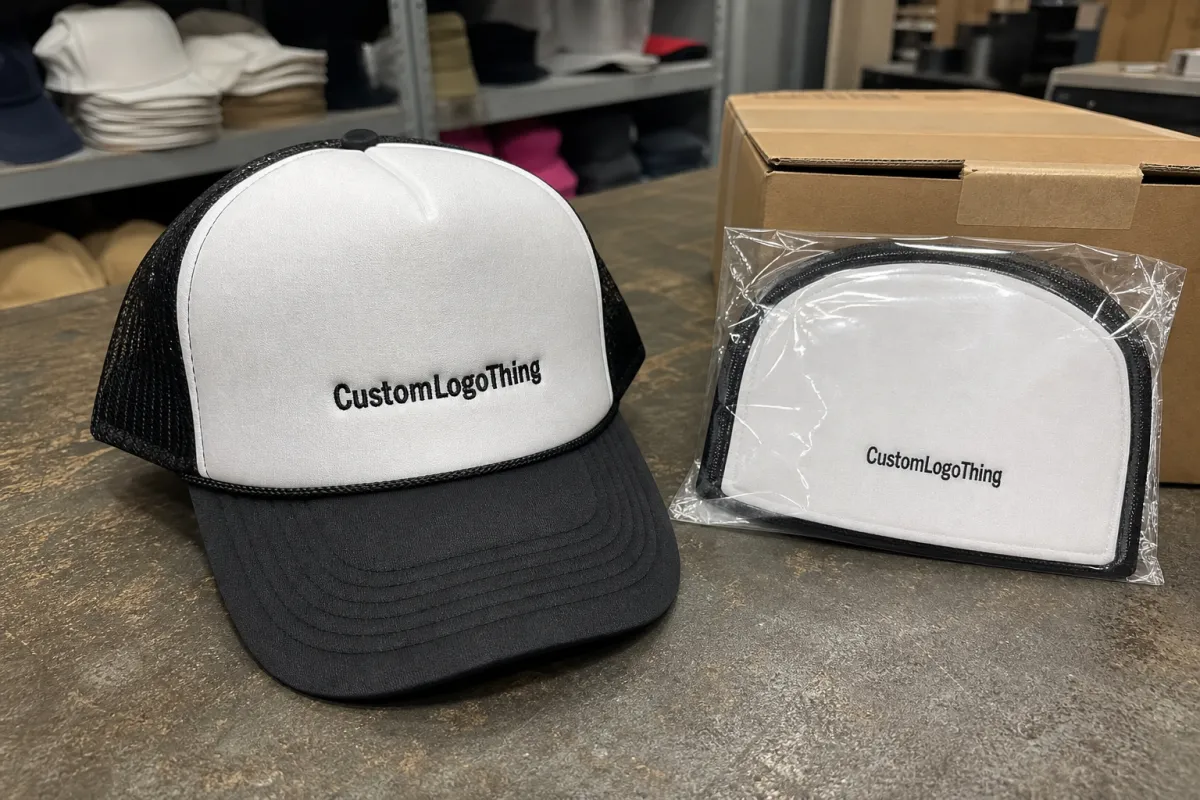
Trade show floors are built for speed. People scan booths, not details. A foam front panel helps because it gives the logo a flatter, more billboard-like surface than a soft knit cap. That matters in a hall where the average attendee is moving, distracted, and carrying a tote bag at the same time.
The other advantage is repetition. If a hat gets worn by staff all day and then leaves the booth with a visitor, the brand keeps moving after the event closes. That is a stronger return than a giveaway that stays in a bag until it gets thrown away later.
For booth programs, foam trucker hats usually serve three purposes at once. They identify staff, create a uniform look, and support fast handouts. That combination is hard to beat at a busy show where the first impression happens in a second or two.
- Booth visibility: The foam front gives the logo enough surface to read from across an aisle.
- Simple sizing: One-size snapback construction reduces fitting issues during distribution.
- Photo value: Staff photos and attendee selfies keep the brand visible after the event.
If the logo disappears at ten feet, the cap is doing less work than it should.
That is why these hats keep showing up in trade show kits. They are not trying to be subtle or fashion-forward. They are built for visibility, volume, and short lead times. For a buyer managing event inventory, that is a useful trade-off.
Foam construction and fit details buyers should confirm
Not every foam trucker hat is built the same way. The front panel is usually a structured foam face over a fabric shell, with mesh in the back for ventilation. The front can feel lightly padded or fairly firm depending on the supplier, and that difference changes how the hat holds shape under a logo.
Buyers should ask about foam thickness, crown height, and bill stiffness before approving a run. A front panel that is too soft can wrinkle under print pressure. One that is too rigid may feel awkward in long wear. For trade show use, a medium-firm structure is often the safest middle ground.
Fit matters more than many RFQs admit. A standard plastic snapback is still the most common closure because it gives a broad fit range and packs efficiently. Some styles use a softer adjustable strap, but those are less common in wholesale programs and can be slower to source in consistent quantity.
Mesh quality deserves a check as well. Most bulk hats use polyester mesh, though the hand feel and openness of the weave can vary. If staff will wear the cap for ten hours or more, a scratchy sweatband or a stiff seam can turn a cheap giveaway into something people stop wearing after lunch.
A few specs are worth confirming in writing:
- Front panel: Foam-faced and structured, usually designed for clean decoration.
- Back panel: Polyester mesh for airflow and lighter weight.
- Closure: Plastic snapback is the most common wholesale choice.
- Crown: Mid-profile or high-profile, depending on how prominent you want the logo to feel.
That last point affects the visual result more than buyers expect. A high-profile crown gives the logo more vertical space and a stronger promotional look. A lower profile feels less aggressive and may be easier to wear casually. The right choice depends on whether the hats are going to staff, prospects, or a mixed audience.
Decoration areas and artwork specs for clean branding
The foam front can handle a large imprint, but that does not mean every logo will look good on it. Clean shapes, bold type, and controlled color counts usually print best because the decoration area is still curved and subject to the seams of the cap. Fine lines and tiny text are where artwork starts to fail.
Simple branding tends to outperform busy layouts. A strong one-color mark often looks better at event distance than a multi-color design with too much detail. That is not a design failure. It is a surface limitation. The hat is a moving object, not a flat poster.
Ask for the actual decoration size, not just the hat style name. Good suppliers will show logo placement against the panel dimensions so you can see the spacing around the brim seam and the edge of the crown. If the logo sits too low, it can get visually crowded. If it sits too high, the cap may look top-heavy.
Vector files are the safest starting point: AI, EPS, or a print-ready PDF. If color matching matters, include Pantone references in the first message. That saves time during proofing and reduces the chance that a brand color turns into a close-enough guess.
- Best artwork: Vector files with clean lines and limited tiny text.
- Best placement: Centered on the front panel with clearance from seams and curves.
- Best color strategy: One or two solid colors usually reproduce more cleanly than complex blends.
Some decoration methods work better than others on foam. Screen print is common because it handles bold logos well. Heat transfer can work for certain artwork, but it deserves caution on textured or highly curved surfaces. Embroidery is often a poor fit for foam fronts because the stitches can distort the panel or sink unevenly. If the supplier recommends one method over another, ask why.
That conversation is more useful than debating design taste. The surface decides a lot of the final result.
Cost, pricing, MOQ, and unit cost drivers
Price depends on more than the number printed on the quote sheet. Quantity matters, but so do decoration method, color count, style availability, freight, and any rush handling. A stock cap with a single-color logo is the lowest-complexity version of the order. Every added variable pushes the number upward.
For trade show planning, the smartest comparison is landed unit cost, not base price. A lower hat price can be offset by setup charges, proofing fees, split shipments, or higher freight. Buyers who compare only the decoration line often miss the real total.
| Order profile | Typical MOQ | Typical unit cost | Best use |
|---|---|---|---|
| Blank stock foam trucker hat | 100-250 | $1.40-$2.20 | Internal samples, staff testing, backups |
| One-color logo print | 250-500 | $2.20-$3.50 | Standard booth giveaway |
| Two-color logo print | 500-1,000 | $2.70-$4.25 | Branded handouts with stronger identity |
| Rush or mixed-version run | 300-500 | $3.25-$5.25 | Short deadlines, color splits, small variants |
Those ranges are practical wholesale estimates, not fixed promises. A larger run should lower the unit cost, but only if the supplier is not adding fresh setup costs for every variation. Ask whether the price break actually improves the total. Sometimes moving from 250 to 500 units saves very little once freight and proof revisions are included.
There is also a quality ceiling to remember. Extremely low pricing can mean thin foam, inconsistent crown shape, or mesh that feels rough under heat and humidity. For a one-day event, that might still pass. For a multi-day show with staff wearing the hats all shift, those differences become visible quickly.
Process, timeline, and production steps for bulk orders
A clean bulk order usually moves through six steps: artwork submission, digital proof, approval, production, quality check, and shipping. The order slows down at proofing more often than anywhere else. If the buyer keeps adjusting logo size or placement after the first mockup, the calendar starts slipping immediately.
For stock foam trucker hats, a typical turnaround is often around 12-18 business days after proof approval. Complex decoration, color splits, or factory congestion can extend that window. Peak trade show season can stretch it further. Buyers who need caps for a fixed event date should pad the schedule, not trust the shortest estimate in the quote.
Sample strategy matters. A digital proof is fast and usually enough for simple orders, but a physical sample may still be worth the extra time if the logo is large, the color match is tight, or the team has not ordered this style before. That is especially true when the foam face or the crown shape has to look right from booth distance.
Good suppliers do a few things before anything ships: they check placement, confirm print clarity, and verify that the quantity matches the approved proof. Ask about that quality-control step directly. If the answer is vague, the order process may be vague too.
A useful buyer rule: final artwork plus final quantity equals faster production. Open-ended artwork plus uncertain quantity equals delay.
Packaging, carton packs, and event-day distribution
Packaging sounds minor until the boxes hit the dock. Most wholesale orders are carton packed, and the carton count should be part of the quote. Ask how many hats fit per case, whether they arrive bagged or loose, and whether the supplier can separate staff hats from giveaway hats before shipping.
That separation helps on event day. If a team has to sort mixed cartons at the venue, the setup takes longer and the chance of handing out the wrong version goes up. Labeled cartons save time. Mixed cartons are only useful if the buyer has a clear sorting plan before the freight leaves.
Some programs need palletizing or extra outer protection, especially if the freight is traveling with booth materials. Transit damage does not usually ruin the hats themselves, but crushed cartons can create a messy first impression. For buyers who care about shipping standards, ISTA provides test methods that help frame how packaging should handle vibration and compression. If packaging sustainability is part of the brief, FSC is the reference point for certified paper language.
That may sound far removed from a foam cap, but it is not. A good promotional item can still land badly if the cartons arrive dented or the bins are not labeled clearly. Event teams remember the shipping experience almost as much as the product.
- Case-packed orders: Best for quick distribution and simple inventory control.
- Separate cartons: Best when staff, VIP, and giveaway quantities need to stay distinct.
- Palletized freight: Best for larger runs or shipments traveling with booth materials.
What to compare in a foam trucker hats wholesale supplier for trade show buyers
A useful supplier is specific before the buyer has to chase details. A vague quote can hide problems until the proof stage or, worse, until the shipment lands. The better vendors spell out MOQ, Lead Time, decoration method, and shipping options without forcing the buyer to decode every line.
Start with material consistency. Ask whether the foam face, mesh back, and closure are stable across the run. Then ask how the supplier handles color consistency from sample to production. If they cannot explain that process clearly, the order is carrying more risk than the price suggests.
Proof handling is another signal. A solid supplier will flag off-center art, thin lines, or poor color contrast before production begins. That is more valuable than a friendly sales email. It prevents the kind of mistake that shows up only after the boxes are already in transit.
The Wholesale Programs page should make the buying structure easy to follow. If it does not show order tiers, production expectations, or contact details clearly, the quote process may feel equally unclear. Buyers should treat that as a warning, not a minor inconvenience.
Here is the short list worth comparing:
- MOQ and price breaks: Clear thresholds, no guessing.
- Proof detail: Actual imprint size, placement, and color information.
- Turnaround: A date range that includes production and shipping, not just production.
- Packaging: Carton counts, labeling, and whether the order can be split by version.
- Quality control: Visible checks for print placement and cap consistency before shipment.
That kind of comparison is how buyers separate a workable supplier from a cheap one. Price matters. Reliability matters more once the event date is fixed.
Next steps for requesting a trade show quote that converts
The strongest RFQs are plain and complete. They tell the supplier what the hat needs to do, how many are needed, when the event happens, and which imprint details are already locked. That is enough information for a quote that is actually useful.
Include the artwork file, target quantity, cap color, imprint location, and deadline in the first message. If there are multiple versions, spell out how many units belong to each version. If the logo must stay one color, say so. The fewer assumptions a supplier makes, the fewer corrections show up later.
- Send vector artwork: Use AI, EPS, or print-ready PDF and include Pantone references if brand color matters.
- Confirm the build: Note whether the order is for staff, giveaway, or a mixed program.
- Ask for the full quote: Request proof timing, production window, freight estimate, and carton counts together.
A quote without those pieces is only half a quote. For trade show planning, the missing part is often the part that causes the delay.
If the deadline is tight, the safest path is to compare a few suppliers, confirm MOQ and turnaround in writing, and leave enough time for one proof correction. That is the practical way to buy foam trucker hats for an event without turning a simple promotional item into a schedule problem.
What MOQ should I expect from a foam trucker hats wholesale supplier for trade show buyers?
MOQ depends on the style and decoration method, but many wholesale runs start in the 100-250 range for blanks and 250-500 for printed orders. The exact threshold matters less than the price breaks around it, so ask for both in writing before you decide on quantity.
Which decoration method usually works best on foam-front trucker hats?
Bold screen print is often the safest choice because it handles strong shapes and limited colors well. If the logo has fine lines, tiny text, or soft gradients, ask the supplier whether the artwork should be simplified before production starts.
How long does production usually take for trade show orders?
Many stock orders move in roughly 12-18 business days after proof approval, but complexity and seasonal demand can stretch that window. If the show date is fixed, build in extra time for proof changes and shipping delays.
Can I order multiple hat colors or logo versions in one run?
Often yes, but each color split or version can affect setup, price, and timing. Ask how the quantities must be divided and whether each version needs its own proof so the order stays organized.
What files should I send with my quote request?
Send a vector file such as AI, EPS, or PDF, plus Pantone references if the brand color needs to match closely. Add the desired imprint size and placement so the proof reflects the final look instead of a rough estimate.