Fitness Five Panel Caps Unit Cost: Buy Smarter in Bulk
The cheapest quote on a five-panel cap is often the one with the most gaps. A clean-looking number can hide embroidery setup, digitizing, custom closure fees, upgraded sweatband tape, carton packing, and freight assumptions that only appear after the sample is approved. By then, the order has momentum, and the buyer is negotiating from a weaker position.
That is why fitness Five Panel Caps unit cost should be read as a finished-product number, not a headline price. The real comparison starts only after the spec is fixed: fabric, crown shape, closure, decoration, packaging, and delivery term. Leave one of those out and the quote becomes a moving target.
For fitness and training brands, the five-panel cap is attractive for a practical reason. It gives the front panel a broad, uninterrupted field for a logo or word mark, and the shape tends to sit lower and cleaner than many traditional six-panel caps. That matters for gym merch, event giveaways, supplement launches, and retail drops where the product has to look intentional rather than promotional.
What buyers usually underestimate is how many small choices sit behind the final number. A structured front panel costs differently from a soft unstructured build. A metal buckle does not price the same way as a plastic snap. A woven patch, a rubber badge, and flat embroidery each bring different labor steps. None of that is dramatic on its own. Together, they can move a quote by a wide margin.
The best buying decisions come from treating the cap as a manufactured item with multiple cost layers. Once those layers are visible, the budget becomes easier to manage and the supplier list becomes easier to compare.
“The first quote is only useful if it shows what it actually includes. Otherwise you are comparing assumptions, not suppliers.”
Why the cheapest-looking cap often costs more per unit
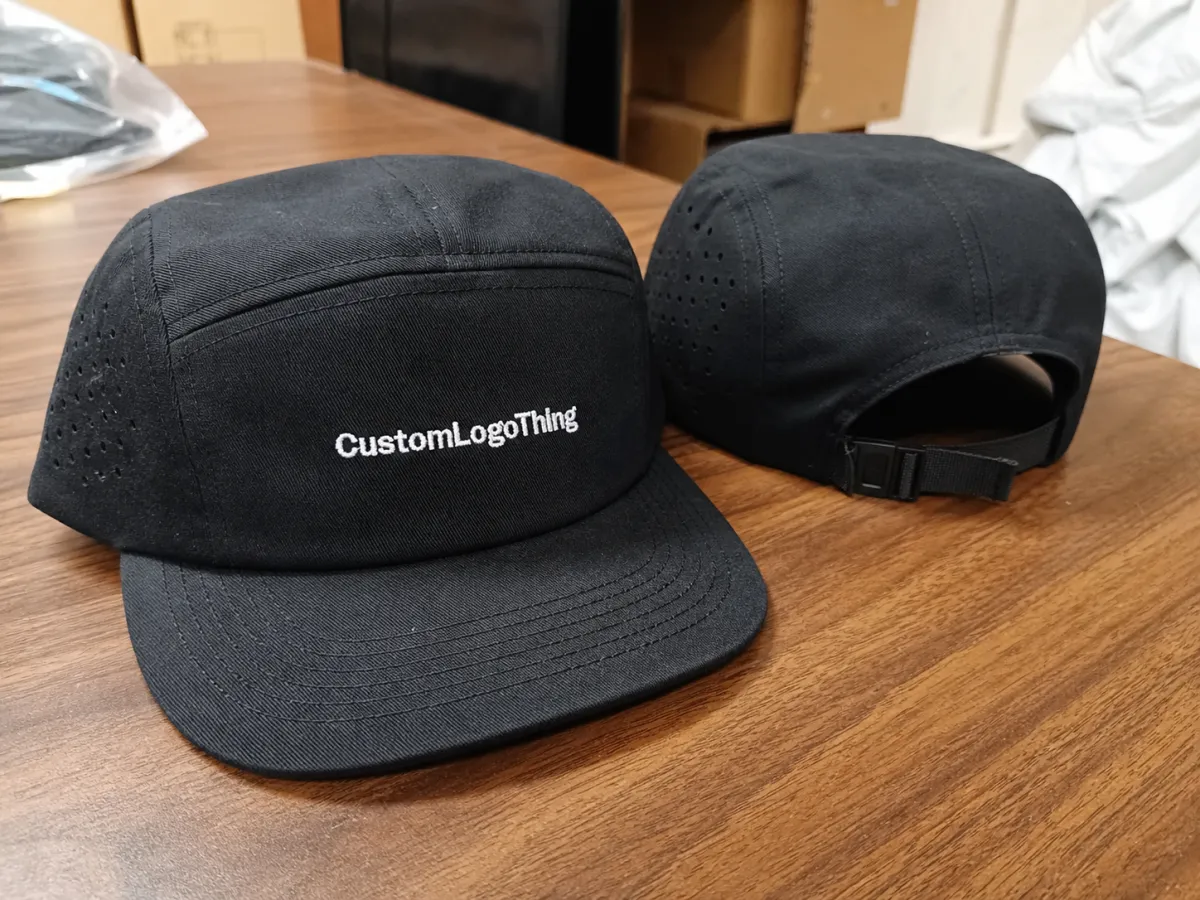
Many bulk buyers start with the same instinct: ask for the lowest price, then work backward. That can work for commodity goods. Caps are trickier. A five-panel style can look simple, but the final build usually includes more decisions than the first email suggests.
A bare-bones quote may exclude embroidery digitizing, sampling, packaging, or even the precise closure type. It can also assume the easiest possible decoration placement and the lowest labor path. That makes the number look competitive until the buyer asks for the actual product. Once the real spec is inserted, the quote climbs.
There is also a difference between cheap and easy to produce. A plain cap in a standard cotton twill is simple. A cap with a structured front, dense embroidery, custom inner labeling, and retail-ready folding is not. The materials are only part of the story; the handling time and inspection steps matter too.
Shipping can distort the picture as well. A lower factory price does not help if the cartons are packed loosely, the shape collapses in transit, or the freight term shifts risk back to the buyer. On small orders, freight can erase the advantage of a low unit price. On larger orders, packing quality still matters because damaged stock turns into rework or write-offs.
The practical test is this: ask whether the quote reflects a cap you can actually receive and sell. If the answer is no, the number is decorative.
For bulk purchasing, the useful comparison is not “which supplier is cheapest?” but “which supplier is quoting the same finished product at the lowest all-in cost?” That question exposes missing charges quickly.
Inside the five-panel cap build for gym and training brands
A five-panel cap uses one continuous front panel instead of two front panels. That gives a logo more room to breathe and avoids the seam break that can disrupt some designs on six-panel caps. For fitness brands, that front panel often carries the entire visual identity: a word mark, a symbol, or a slogan that needs to read cleanly from a distance.
Profile matters more than many buyers expect. A low-profile cap sits closer to the head and feels more modern. A mid-profile cap gives more internal volume and can be easier to fit across different head shapes. Structured fronts keep their shape better on display and through repeated wear, while unstructured builds feel softer and more casual. None of those options is universally better; they suit different brand positions.
Fit is another quiet detail that can make or break reorder satisfaction. Some caps are sold as one-size-fits-most, but that phrase covers a lot of ground. Closure range, crown depth, and interior sweatband construction all affect how the cap sits once it is actually worn. If the audience includes thicker hair, braids, or ponytails, the closure and rear opening need to be checked carefully before production starts.
Decoration space is a genuine advantage, but it should not be treated as unlimited. A large logo may require stitch count control, backing support, or art simplification to avoid puckering. Flat embroidery is the easiest method to manage. Raised embroidery, multi-layer patches, or mixed decoration methods can deliver a stronger retail look, but they also increase labor and the chance of variance between samples and bulk stock.
Buyers should also confirm the details that are easy to overlook:
- Brim shape: flat, pre-curved, or lightly curved.
- Crown height: low, mid, or deeper fit.
- Interior finish: basic seam tape, sweatband, or cleaner lined construction.
- Eyelets: stitched vents, hidden vents, or no vents for a smoother look.
- Rear closure: snap, buckle, strap, or Velcro.
These choices are not cosmetic trivia. They influence comfort, packing method, and cost. A cap that looks straightforward on a mockup can become a different product once the construction details are fixed.
Materials, closures, and decoration specs that change the quote
Fabric is one of the first places the price moves. Cotton twill is a common starting point because it is familiar, stable for embroidery, and easy for most factories to source in bulk. It has a natural hand feel that suits lifestyle fitness brands, especially if the cap is meant to live as everyday merch rather than pure performance wear.
Polyester and nylon blends cost differently because they behave differently in production and use. They are lighter, dry faster, and often hold up better in damp or sweaty conditions. For training-focused lines, that practical performance can matter more than a soft hand feel. A 100% cotton cap may look richer; a synthetic blend may wear better in a gym environment. That tradeoff should be deliberate.
Fabric weight also changes the final result. A lighter cloth can reduce cost and feel cooler, but it may lose shape faster or show embroidery backing more clearly. Heavier twill usually gives a more substantial cap, though it can feel less breathable. Buyers who want a premium retail impression often lean toward a midweight material rather than the lightest option available. The cheapest cloth is rarely the best value if the cap loses its shape after a few wears.
Closures have a bigger cost effect than many buyers expect. Standard plastic snaps are usually the least expensive. Metal buckles, fabric straps, and branded hardware add cost because they require more finishing or special sourcing. Custom hardware can also trigger tooling or color-match questions, which slows quoting and increases the risk of revision charges.
Decoration is where the quote can change fastest. Flat embroidery is usually the simplest to control. Once the design moves into 3D puff, layered patches, or multiple placements, labor increases and quality control becomes more sensitive. A front logo plus a side mark plus an interior label sounds like a small upgrade. In production terms, it is three jobs, not one.
Packaging matters too. Bulk-packed caps are cheaper to make and ship, but they are not always suitable for retail or direct-to-consumer fulfillment. Individual polybags, size stickers, hangtags, and folding instructions add handling. A buyer who needs shelf-ready product should expect the unit price to move upward. That is normal. The packaging is part of the product.
A clean quote usually includes the following:
- Target quantity by color and logo version.
- Fabric type and approximate weight.
- Closure style and any branded hardware.
- Decoration method, size, and placement.
- Packaging format and carton requirements.
- Delivery term such as EXW, FOB, or DDP.
Without those details, the factory is forced to guess. Guessing is what creates price swings later.
fitness five panel caps unit cost: pricing, MOQ, and sample math
fitness Five Panel Caps unit cost is shaped by quantity, decoration complexity, fabric, packaging, and shipping term. The order size matters because setup charges get spread across more units as volume rises. A small run absorbs the same sampling and prep work as a larger one, which is why the per-piece number can look high on low minimum orders.
MOQ is not fixed across the category. Simple builds with standard materials may be available at lower thresholds, while custom labels, special closures, and private packaging often push the minimum upward. For practical planning, many buyers see straightforward orders starting around 100 to 300 pieces, with more customized programs often sitting at 500 pieces or above. That is a working pattern, not a universal rule.
Sample charges deserve separate attention. A pre-production sample can include pattern work, embroidery digitizing, label setup, or custom closure sourcing. Some factories roll these costs into the unit price; others show them separately. Separate line items make the quote easier to read, and they also make supplier comparisons fairer. If one supplier is hiding sample work inside the cap price while another is charging it openly, the lower number may be misleading.
Here is a realistic way to think about pricing bands:
| Order size | Basic embroidery cap | More custom build | What usually changes the price |
|---|---|---|---|
| 100 pieces | $3.80-$6.20 per piece | $6.50-$10.00 per piece | Setup charges, digitizing, low-volume labor |
| 300 pieces | $2.80-$4.50 per piece | $5.20-$8.00 per piece | Fabric grade, patch application, packaging choice |
| 1,000 pieces | $1.60-$3.00 per piece | $3.80-$6.20 per piece | Decoration complexity, carton pack, freight terms |
Those are working ranges, not promises. A simple cap with one-color embroidery and bulk packing can sit near the lower end. A structured cap with custom label sets, denser stitch counts, and retail packaging will sit higher. Freight can widen the gap further. On smaller orders, the shipping line can matter nearly as much as the cap itself.
The best comparison method is to normalize every quote to the same assumptions: same fabric, same decoration, same closure, same pack-out, same delivery term. A lower factory number means very little if the competing quote includes features the first supplier left out. That is how budgets get distorted and why a “cheap” cap often ends up costing more.
Production steps and lead time from approval to packed cartons
Cap production follows a straightforward sequence, but only if the spec is complete. First comes inquiry and quoting. Then artwork review, sampling, sample approval, bulk production, inspection, packing, and shipment. If the order is moving in a different sequence, something is being rushed or left unclear.
For a simple five-panel cap, sample development often takes about 5 to 12 business days. That window can stretch if the logo is complex, the closure is custom, or the fabric is not standard stock. A buyer asking for several variations at once should expect the timeline to widen. More versions mean more approval points and more chance for mismatch.
Once the sample is approved and the deposit or purchase order is in place, bulk production commonly takes 12 to 25 business days. Small runs with simple embroidery move faster. Orders with patches, multiple colors, special labels, or retail packaging move slower. If an order requires new printed inserts, care cards, or FSC-certified paper components, sourcing those parts can add days or even a week.
Good production control depends on checkpoints. The factory should confirm the artwork size before sampling, approve the material and color before cutting, lock the sample before bulk work begins, and verify the packing method before cartons are sealed. Skipping any of those stages creates avoidable risk. Buyers often think delays come from manufacturing speed. In practice, many delays come from unclear approvals.
Transit deserves a look before the cartons are closed. A cap packed loosely can arrive crushed or misshapen, especially if the order uses softer unstructured construction. Retail boxes, carton dividers, or controlled folding can protect shape, but they also increase cost and volume. The buyer needs to decide what the cap must survive: warehouse handling, retail shelving, or direct shipping to customers. Each path asks for a different pack-out.
Public references such as ISTA are useful if the order needs transit testing or distribution-style packing checks. FSC matters when the order uses paper inserts or packaging components that need a documented sourcing standard. Not every cap order requires those frameworks, but they are useful guardrails when the order is headed into organized retail or cross-border distribution.
Simple approvals usually save money in a very literal way. Every revision after sampling costs time, and sometimes it costs material. When the spec is locked before the bulk run begins, the factory can price the order more accurately and the buyer gets fewer surprises.
What makes a supplier easier to buy from at bulk scale
At bulk scale, a good supplier is not the one with the longest pitch. It is the one that can quote clearly, explain tradeoffs, and keep repeat orders consistent. Many suppliers can make one sample look good. Fewer can make the second and third production run match the first without drift.
The first sign of reliability is the quote structure. A usable quote separates the cap body, decoration, setup, packaging, and shipping term. It also shows MOQ, sample charges, and any optional add-ons. That level of clarity is a good indicator that the supplier understands where problems usually show up later.
Speed matters, but only after accuracy. A fast reply that changes every time the buyer asks about closure type or logo size does not help. A better supplier will explain why the price changes when the fabric changes, why a stitch count increase adds cost, or why a custom buckle needs more lead time. That kind of explanation makes the buying process easier and keeps Fitness Five Panel Caps unit cost grounded in actual production realities.
Repeatability is just as important. If a brand reorders six months later, the second run should match the first in shade, fit, and stitching. Color matching should not drift because a different batch of fabric was used without warning. Stitch density should not change because a different operator made the sample and the bulk run. Those failures are common enough that they deserve direct prevention, not hope.
Look for suppliers who can handle practical complications without acting surprised:
- Repeat orders with the same spec and no drift.
- Multiple logo versions in one production run.
- Clear revision handling for artwork and labeling.
- Advising where to save money without degrading the cap.
That last point is underrated. A good factory can tell you that a standard snapback closure saves cost without harming the product, while the cheapest fabric option might save very little and make the cap feel thin or weak. Buyers should want that kind of honesty. It usually protects margin better than squeezing one more cent from the material spec.
Next steps for a cleaner quote and fewer back-and-forths
The easiest way to improve quoting is to send a complete brief first. Include quantity, artwork, fabric, closure, decoration method, packaging needs, and delivery destination. That is enough for a supplier to price the order with much less guesswork. Partial briefs usually create partial quotes, and partial quotes are where disputes begin.
Before comparing suppliers, line up the assumptions. Check whether the quotes include digitizing, whether sample costs are refundable, whether packing is bulk or individual, and whether the delivery term is EXW, FOB, or DDP. Once those pieces match, the real cost becomes visible. Without that step, a lower number may simply be missing more items.
A short comparison checklist keeps the process honest:
- Same fabric and crown profile.
- Same logo placement and stitch count.
- Same closure and interior finish.
- Same packaging format and carton standard.
- Same lead time and delivery term.
If one supplier is much lower because the quote leaves out setup, labels, or packing, the apparent savings will disappear later. The final invoice tells the truth. Better to see that truth before production begins.
For buyers managing private label or retail-ready orders, the most useful deliverable is a locked spec sheet and a sample timeline before the bulk run is released. That keeps the budget visible, the sequence clear, and the fitness five panel caps unit cost aligned with the actual product instead of a stripped-down placeholder.
What affects fitness five panel caps unit cost the most?
Quantity, decoration method, and fabric choice usually have the strongest effect. Packaging, custom labels, closure type, and sample or setup charges can also move the number quickly if they are not separated clearly.
What MOQ should I expect for custom five panel fitness caps?
Simple builds often start around 100 to 300 pieces, while more customized versions usually require higher quantities. The MOQ can change by color count, logo version, and whether the supplier is using stock materials or custom components.
How long does production usually take after sample approval?
After sample approval, bulk production often takes about two to four weeks for straightforward orders. More complex decoration, custom packaging, or a crowded production schedule can extend that timeline.
Can I lower the unit price without making the cap look cheap?
Yes. Keep the build simple, reduce decoration to one method, use standard packaging, and choose a fabric that balances cost with structure. Small changes in spec are usually safer than chasing the lowest possible material grade.
What should I include when asking for a quote?
Send the quantity, logo file, fabric preference, closure type, decoration method, packaging request, and delivery destination. A complete brief gives the supplier enough information to quote accurately and reduces revision cycles later.


