Apparel Frosted Zipper Bags packaging insert checklist may sound technical, but it is really a control document. It keeps the insert, the bag, the garment fold, and the printed message aligned before production starts. That matters because the insert is often the first thing a customer reads after opening the pouch, and it can make the difference between packaging that feels deliberate and packaging that feels improvised.
Frosted Zipper Bags already carry a premium cue. The translucent finish softens the product reveal and gives the package a cleaner retail presence than a plain poly bag. The insert has to do the rest: sizing, care instructions, barcode data, brand story, legal copy, or a simple visual anchor. If it is too large, too thin, badly folded, or printed on the wrong stock, the whole presentation loses balance fast.
A useful insert has to fit the pouch cleanly, read fast, and stay flat through packing, shipping, and shelf handling.
That is why a real checklist should cover more than artwork. It should confirm dimensions, material, print side, fold style, quantity, pack-out position, and the way the insert sits against the garment. If you are also coordinating broader Custom Packaging Products for a launch, this is the same kind of upfront thinking that keeps the packaging system consistent from the first sample to the final carton.
Apparel Frosted Zipper Bags Packaging Insert Checklist: What to Confirm First
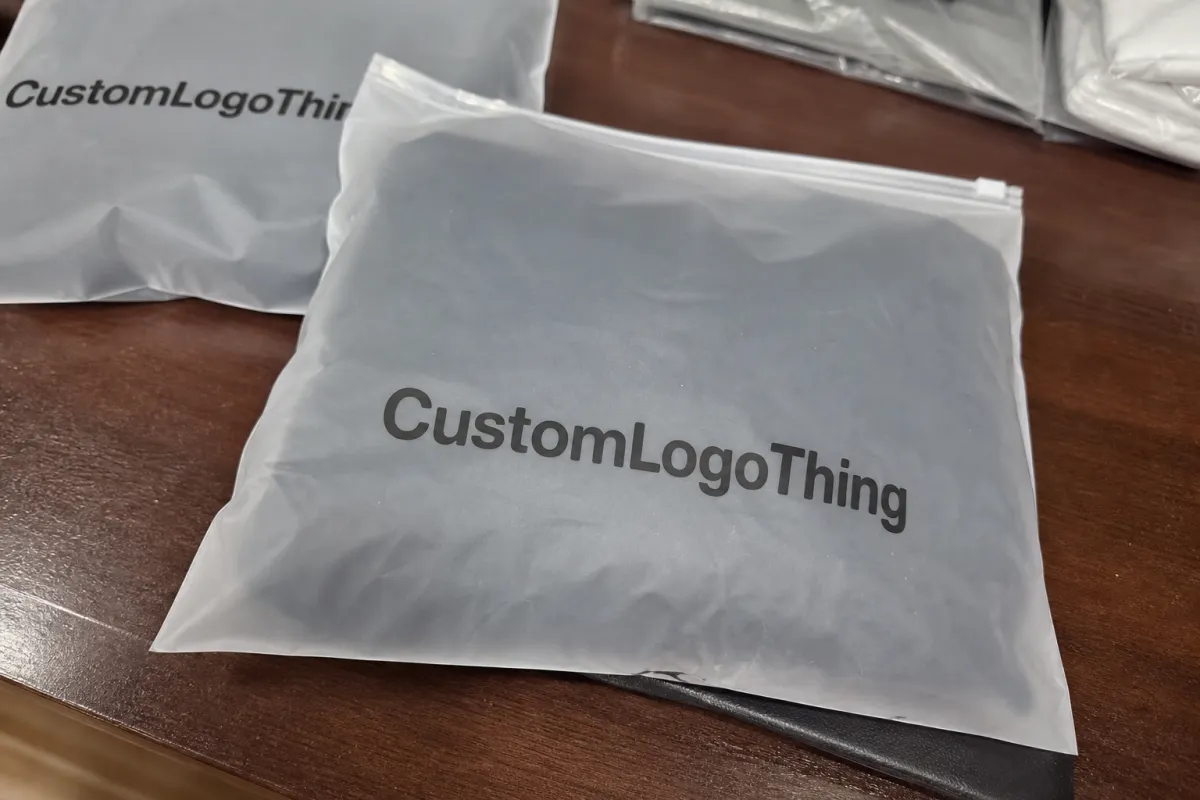
Start with the bag, not the design file. The inside dimensions matter more than the outer quote size because the usable space changes once the zipper seam, film thickness, and folded garment are accounted for. A 9 x 12 inch frosted zipper bag may look generous on paper, then turn tight once a folded tee and a card insert are inside it. A smaller pouch can do the same job if the pack-out is cleaner.
From a buyer's point of view, the biggest mistake is treating the insert like a separate creative asset. It is part of the packaging structure. The bag, the garment fold, the insert size, and the zipper closure all affect one another. A layout that looks polished on screen can fail at the packing table if the card creates pressure points or covers the product view.
- Bag size: confirm usable interior width and height after seam and zipper allowance.
- Insert size: match the actual fold and product footprint, not just the artboard.
- Print side: decide whether one side is enough or whether a second side is needed for care, sizing, or compliance text.
- Fold direction: define how the insert opens and what the customer sees first.
- Pack position: specify whether the insert sits in front of the garment, behind it, or between layers.
- Quantity: align the insert run with garment production so kitting does not stall.
The reason this matters is simple. Apparel packaging often needs to hold a lot of information in a very small field. A size guide, care icons, QR code, fiber content, or short brand note may all need to fit on one card. If the type is too fine or the contrast is too low, the frosted film makes that weakness more obvious, not less. In production, translucent packaging rewards clarity and punishes clutter.
How the Insert Works Inside a Frosted Zipper Bag
The frosted film creates the first layer of presentation. The insert creates the message. That balance is useful because it keeps the garment visible while still giving the package structure. In a clean setup, the insert frames the product instead of competing with it. That sounds obvious, but many inserts are designed as if they will be read on a table, not seen through film, under warehouse lighting, while the bag is moving down a packing line.
Flat cards are the most common format because they are fast to pack and easy to keep aligned. Folded sheets are better when the insert needs more content, such as care instructions, multilingual copy, or a size chart. Narrow slips work for smaller accessories or light apparel. Header-style cards can look more elevated, but they need tighter control because they can crowd the zipper area or make the pouch feel overfilled.
Placement changes the read. Some brands want the logo visible through the frosted film the moment the package is picked up. Others want the insert tucked behind the garment so the reveal happens only when the pouch is opened. Both approaches work. The important part is deciding early so the layout, trim, and fold all support the same result instead of fighting one another.
For a neutral reference on board, paper, and structural basics, the resources at Packaging School and Packaging Education resources are useful because they stay grounded in fundamentals. That helps when choosing between a light text stock, a heavier cover stock, or a recycled sheet that may behave differently in folding and packing.
Stiffness is usually underestimated. A heavy insert can spring against the pouch and create a little lift near the zipper. A light insert may curl or drift during shipping. The right stock depends on the garment weight, the amount of copy, and whether the insert needs to sit perfectly flat once the bag is sealed. That is one of the details that separates a neat sample from a stable production run.
The apparel Frosted Zipper Bags packaging insert checklist is really a fit-and-finish system. It keeps a small printed piece from becoming the reason the whole package feels off.
Sizing, Material, and Print Details That Change the Insert
Insert size is not a cosmetic decision. It is a fit decision. A card that is off by even a few millimeters can buckle inside the pouch, hide a garment edge, or create a crease that shows through the film. The safest approach is to measure the folded product first, then build the insert around the remaining usable space. That leaves less room for surprises during pack-out.
Material choice changes both appearance and behavior. Uncoated stock has a softer hand and is easier to mark if a production team needs to add SKU notes or batch codes. Coated stock sharpens image reproduction and keeps color fields cleaner, which helps if the insert carries photography or a stronger branding layout. Recycled stock can support a sustainability story, but brightness, texture, and stiffness should be checked against the pouch finish so the materials do not look mismatched.
For buyers balancing appearance and budget, the best stock is the one that fits the job, not the one that looks most expensive on a spec sheet. A clean one-color insert on a strong cover stock often performs better than a busy full-color sheet if the job is to communicate size, care, and brand name quickly.
- Single-sided print: useful for a short brand mark, limited copy, or a clean premium look.
- Double-sided print: better for care instructions, sizing tables, QR codes, and multilingual content.
- One-color print: often fits minimalist packaging and tight budgets.
- Full color: works best when the insert needs photography or stronger shelf impact.
- Bleeds and safe margins: keep critical text away from trim and fold lines.
Finishing details matter too. Trimming, scoring, rounded corners, and fold registration all affect the way the line runs and how the final piece looks inside the bag. A QR code should have enough quiet space around it to scan properly. Barcodes need the same treatment. If the insert is part of a broader packaging system with custom printed boxes or hang tags, those details should be aligned early so the brand language stays consistent across formats.
| Insert Option | Typical Stock | Best Use | Practical Note |
|---|---|---|---|
| Flat card | 14pt C1S or 16pt cover | Tees, socks, simple brand messaging | Fast to pack and easy to keep flat inside the bag. |
| Folded sheet | Text stock or light cover | Care instructions, size charts, multi-panel copy | Needs scoring or controlled folding to avoid cracking. |
| Narrow info slip | Uncoated or coated text stock | Accessories, intimates, small apparel items | Good when space is tight and the message is short. |
| Header-style card | Heavier cover stock | Premium retail packaging presentations | Can interfere with the zipper line if sizing is not checked closely. |
If the job needs a recycled or certified paper, FSC language should be checked before print. The FSC site is the right place to verify certification wording so the claim matches the actual stock and the final artwork does not overstate anything. That saves awkward correction later.
Line tolerances also matter. A die line that is loose by a couple of millimeters may be acceptable on a simple promo card, but not when the insert has to sit flush with a folded garment inside a tight pouch. Small errors show up fast in packaging because every edge is visible. The closer the fit, the more exact the die and fold need to be.
Process and Turnaround: Proofing to Production Schedule
A smooth schedule starts with clean inputs. Before artwork approval, the supplier should have the bag size, insert dimensions, copy deck, fold style, and quantity target in one place. Delays usually begin when one of those pieces is still changing while the rest of the job is already in motion. Apparel teams do this all the time: the garment label is still under review, the insert is already in prepress, and no one has confirmed which version wins.
Proofing should catch more than spelling. It should confirm barcode placement, safe margins, image resolution, fold positions, and whether the copy reads correctly after trimming or folding. A good proof is part visual check, part production check. If the fold line lands on the wrong sentence, or the barcode sits too close to the edge, the first run may need to be paused while files are corrected.
- Prepress review: confirm file size, bleed, resolution, and copy accuracy.
- Digital proof: check layout, fold marks, line breaks, and visual hierarchy.
- Material order: reserve the correct stock if it is not already available.
- Print and finish: run the sheet, trim it, score it, fold it, or add special finishing.
- Inspection and pack-out: verify count, registration, and carton labeling before shipment.
Turnaround depends on complexity. Simple inserts on standard stock can often move in 7 to 10 business days after proof approval. Specialty paper, heavy coverage, folded construction, or larger quantities can push that to 12 to 15 business days or more. Add kitting labor if the inserts will be packed with garments. That part is regularly underestimated because it looks small until 5,000 pieces need to be handled one by one.
For jobs traveling through distribution before retail, handling tests are worth a look. The ISTA framework is useful because it keeps the focus on transport, vibration, carton strength, and practical handling rather than aesthetics alone. If the insert is bundled, boxed, or sealed inside a master carton, shipping performance can matter as much as print quality.
Ask for separate timing on proof approval and production. Those are not the same step, and blended estimates hide the bottleneck. A cleaner timeline makes launch planning easier because the team can see whether the delay is creative, material, or labor-related instead of guessing after the fact.
Cost, Pricing, and MOQ Drivers for Inserted Packaging
Pricing usually comes down to six variables: size, stock, print coverage, number of colors, finishing, and quantity. Add folding or assembly and the quote changes again. Buyers get better information by asking for a line-item breakdown rather than a single total. That makes it easier to see whether the biggest cost is paper, press setup, or labor.
Inserts are often less expensive than adding more complex printed bag components, but they still carry setup costs. Small runs have a higher unit price because prepress, proofing, and cutting are spread across fewer pieces. Larger runs generally improve the per-piece cost, as long as the art stays stable and the trim layout does not waste too much parent sheet.
Minimum order quantities move with the material. A common cover stock may be available at a lower MOQ, while specialty paper, exact color matching, or Custom Die Cutting can push the minimum higher. Recycled board, textured sheets, and coated finishes often need earlier confirmation because sourcing can be slower than the design schedule assumes.
| Order Scenario | Typical MOQ | Indicative Unit Cost | What Moves the Price |
|---|---|---|---|
| Simple one-color flat insert | 500-1,000 | $0.18-$0.32 | Setup spread, stock choice, trim size |
| Full-color double-sided insert | 1,000-2,500 | $0.10-$0.22 | Ink coverage, proofing, finishing |
| Folded insert with scoring | 2,500+ | $0.08-$0.18 | Additional labor, fold accuracy, packing speed |
| Specialty stock or custom trim | 3,000+ | $0.12-$0.28 | Material sourcing, die cutting, waste |
Those are planning ranges, not fixed quotes. Change one variable, such as heavier stock or a second print side, and the cost can shift more than expected. If the insert program is part of a larger packaging rollout, it is smart to compare it with other printed components to see where the brand gets the best value for the budget.
Labor can be the hidden cost. A simple flat insert is easy to count, but a fold, a card inserted at a specific angle, or a packed set with multiple pieces can add real time on the line. That extra work shows up as manual handling, not as a material line item, so it is easy to miss until the quote is reviewed closely.
Common Mistakes That Slow Packing or Create Reprints
The first mistake is designing before confirming fit. A strong layout can still fail if the insert is too large for the folded garment and the actual inside space of the frosted zipper bag. In production, that usually appears as corner curl, zipper interference, or a package that looks overfilled even when the count is correct.
The second mistake is copy drift. Care instructions change. Web addresses go stale. A barcode that worked in one system may not match the next system. Those errors are costly because they are not always caught by the creative team. They usually show up during proofing, or after print approval if the file set was not locked.
The third mistake is assuming frosted film hides weak design. It does not. Low contrast, crowded text, and tight line spacing are harder to read through translucent material. If the insert tries to say too much, the package feels noisy instead of premium. Minimal copy often performs better than a dense layout, especially on small apparel items where the opening moment is short.
- Do not skip a hand-pack test with the actual garment.
- Do not approve artwork before checking fold lines and trim limits.
- Do not mix stock weights without confirming how each one behaves in the pouch.
- Do not assume a screen proof reflects how the insert reads through frosted film.
- Do not send inserts and garments to different schedules unless the inventory plan is written down.
A simple packing test catches more issues than many teams expect. One sample, one garment, one real insert, and one quick check of zipper closure can save a reprint later. That is a small step compared with pulling back a full run because the card curled or the fold direction did not match the line setup.
Another common miss is over-specifying finishes that do not help the customer. Soft-touch coatings, heavy lamination, and special varnishes can look attractive, but they also change cost, schedule, and recyclability. If the insert is mainly informational, a clean matte or uncoated finish may do the job better and travel through production with fewer variables.
Next Steps: Build a Clean Approval Packet and Launch Plan
If the goal is a smooth order, gather everything into one approval packet before requesting a quote: bag size, garment fold method, insert dimensions, print files, copy deck, barcode needs, and target quantity. That is the point where the apparel Frosted Zipper Bags packaging insert checklist stops being a reminder and starts acting like a practical production tool.
Then print one sample and do a hand-pack test. Check that the insert lies flat, the zipper closes cleanly, the brand panel remains visible, and the package still feels balanced when someone lifts it. If the insert shifts or the pouch bulges, adjust the trim or the fold before production, not after.
Ask for a quote that separates material, print, finishing, folding, and assembly. That makes it easier to decide whether to reduce colors, simplify the layout, or change quantity to hit budget. It also helps if you are comparing the insert against other branded components in the same rollout.
The best checklist is the one a team can reuse without rebuilding it every season. Keep it tied to the bag spec, the garment fold, the proofing steps, and the pack-out method, and it will save time on reorders while keeping the presentation consistent across the line. That consistency is what buyers notice, even if they never name it.
FAQ
What should be on an apparel frosted zipper bag packaging insert checklist?
Confirm bag size, insert size, fold direction, and where the insert will sit inside the package. Include branding copy, care instructions, SKU or barcode needs, and any compliance text. Verify paper stock, print sides, quantity, and the target delivery date before approval.
How do I size an apparel frosted zipper bag insert so it fits cleanly?
Measure the usable inside space after the garment is folded, not just the outside bag dimensions. Leave enough clearance so the insert lies flat and does not buckle against the zipper seal. Test one sample with the actual product to confirm the insert does not block visibility.
What affects the price of frosted zipper bags with packaging inserts?
Price is driven by insert size, stock thickness, print coverage, finishing, and total quantity. Lower quantities usually raise unit cost because setup and proofing are spread across fewer pieces. Special folds, custom trims, and kitting services can add labor and increase the quote.
How long does the process usually take for custom packaging inserts?
Timing depends on proof approval, material availability, print complexity, and quantity. Simple jobs move faster, while specialty stock or folding can extend production time. Ask for separate proof and production timelines so launch dates are easier to plan.
How can I keep inserts from shifting inside frosted zipper bags?
Choose an insert size that fits the folded garment and the bag with minimal extra space. Use a fold style or placement method that helps the card stay centered and flat. Run a packing test with real product before approving the final run.


