Film thickness sounds like a small line item until a bag starts failing in the hand, on the shelf, or inside a shipping carton. A pouch that looks polished at first glance can crease at the zipper, split at a corner, or feel flimsy enough to hurt the product’s perceived value. That is why a chocolate frosted zipper bags material thickness guide should do more than define gauge; it should connect material choice to real handling, packaging speed, and how the finished bag survives the trip from filling room to customer.
For chocolate frosted snacks, bakery items, and similar confectionery packs, thickness is rarely just about “stronger versus lighter.” It shapes zipper performance, panel rigidity, puncture resistance, seal consistency, and even how the frosting finish reads under retail lighting. A film that is too thin can fold in the wrong places and feel cheap. A film that is too heavy can slow filling, make closure awkward, and add cost without solving the actual problem.
The useful way to approach it is to match the film to four realities: product weight, product shape, storage and transit conditions, and the level of presentation the brand needs on shelf. If those four are clear, the thickness decision becomes a specification exercise instead of a guess.
Chocolate Frosted Zipper Bags Material Thickness Basics
Thickness is usually measured in mils or gauge. In packaging, 1 mil equals 0.001 inch, or about 25.4 microns. That sounds abstract until you compare a 2.5 mil film with a 4 mil film and see how differently they behave. The thicker sheet resists bending, holds the zipper line straighter, and gives the bag a more upright, retail-ready posture. The lighter sheet bends faster and is easier to pack, but it does not forgive much if the contents are uneven or the product is handled roughly.
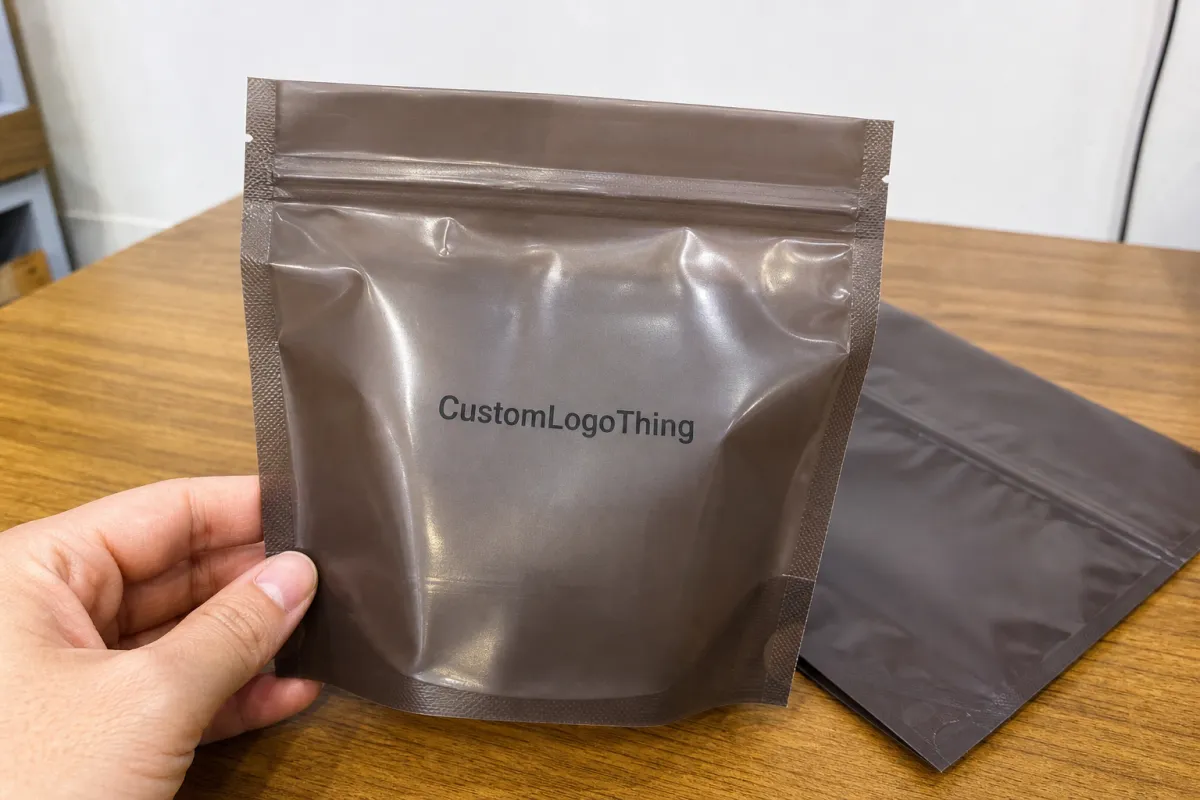
For Frosted Zipper Bags, that difference is visible before the bag is even filled. A lighter film drapes. A heavier one stands with more memory. Once filled, the heavier bag often looks cleaner because it shows fewer panel waves and less zipper ripple. That said, a heavier bag is not automatically better. If the product is soft, low-weight, and sold in small quantities, extra stiffness may create a package that feels overbuilt rather than premium.
The zipper area is where thickness matters most. The body of the bag can be strong enough, yet the closure still fail to align cleanly if the surrounding film is not matched to the zipper profile. A too-soft film can wrinkle around the track. A too-stiff one can make the zipper feel pinched or hard to re-seat. Either way, the customer notices.
There is also a visual effect specific to frosted finishes. Frosting softens glare and helps hide fingerprints, which is useful for bakery and confectionery packaging where handling is frequent. A thicker frosted film tends to reduce panel distortion, so the package looks more deliberate on a shelf. The tradeoff is opacity. If the brand wants the product color, decoration, or frosting pattern to remain partly visible, thickness and surface finish need to be reviewed together rather than separately.
One practical comparison: a 2.5 mil pouch may work for a light bakery item with a short shelf life and gentle handling, while a 4 mil pouch often fits better for retail packs that will be opened and closed more than once. Push beyond that, and the pack usually moves into heavier-use territory where the extra material only pays off if the product or distribution channel actually needs it.
A zipper bag can feel solid in the hand and still fail where the zipper meets the side seal. That is where real durability is earned or lost.
If a shipment will move through parcel networks or repeated handoffs, distribution thinking matters as much as the bag itself. The testing language used by ISTA is useful here because it reflects what happens after the order leaves the factory: vibration, stacking, rehandling, and a fair amount of incidental abuse.
How Film Gauge Changes Performance and Feel
Gauge changes behavior in ways buyers can feel immediately. Thicker film improves puncture resistance and usually resists tearing better at the corners and zipper ends. That matters for chocolate-coated or frosted products that may have firmer edges than the packaging team first expects. A bag only needs one awkward bump against a carton seam or a stack of trays to reveal a weak point.
Thicker film also improves zipper stability. The closure track stays straighter, the opening feels more controlled, and the bag closes with less waviness. That is one reason premium pouches often have a slightly firmer hand feel; the stiffness signals structure, even when the contents are light. The opposite is also true. Thin film can make a bag look economical, even if the print is sharp and the product is excellent.
Still, there is a functional cost to stiffness. A light film bends quickly and is easier to fill, especially on a hand-packing line. A heavier film may resist folding and require more attention at the opening. On a fast line, that extra stiffness can slow operators down or create uneven closure if the bag has to be seated by hand after filling. The right gauge is the one that protects the product without becoming a nuisance in production.
Food packaging also has to deal with temperature and humidity. Cold rooms make some films feel harder and less forgiving. Humidity can affect handling, especially if the product has grease migration or surface moisture. A bag that seems fine in a dry sample room may behave differently after several hours in a bakery environment. This is one of the main reasons real-use testing beats hand-feel alone.
The surface finish interacts with gauge as well. A frosted texture can reduce gloss and hide minor scuffs, but it does not erase structural weakness. A thin frosted film may still telegraph every crease. A thicker one usually looks calmer, especially under retail lighting, because the panel surface holds flatter.
In practice, the best gauge is not the thickest option available. It is the one that balances three things: easy filling, clean closure, and enough body to survive the worst condition in the supply chain. For a short local distribution cycle, lighter film may be enough. For longer storage, repeated opening, or less controlled handling, the answer usually moves up one step.
Key Specs That Affect Thickness Selection
Product shape is the first variable to check. Fill weight matters, but it does not tell the whole story. A rounded, soft item spreads pressure evenly inside the bag. A brittle confection or a product with firm corners concentrates stress in one place. Two packages with the same ounce weight can need very different film builds if one has sharp edges and the other does not.
Storage conditions come next. If the product will sit in a cold room, pass through humid packing areas, or be shipped across temperature swings, the film needs enough structure to stay predictable. Greasy items deserve special attention because oils can change the way the interior surface feels after storage. A bag that opens well on day one may feel slightly different after a week in a warm warehouse.
Bag size and format also matter. Larger pouches need more support because the panels span a wider area. Gusseted bags, bottom folds, and wider front panels usually benefit from a little more body. The extra structure helps the bag stand, stack, and present well inside a carton. If the outer packaging is doing some of the work, that does not mean the pouch can be underspecified. It only means the whole system should be designed together.
Printing adds another layer. Heavy ink coverage can change the way a film feels, especially on frosted or matte surfaces. The same nominal gauge can feel different once print, lamination, and zipper profile are added. That is one reason sample comparison should use the same artwork, or at least the same print coverage, before anyone draws conclusions.
Compliance and food-contact suitability belong in the same conversation. If the bag touches food directly, the material structure should be appropriate for that use and documented as such. If the order includes secondary packaging, that is where FSC certified paper, recycled materials, or post-consumer waste content may come into play. These are separate from the zipper bag film itself, but they affect the overall package specification. If the outer system is supposed to support biodegradable packaging claims, the exact material mix needs to be clear. Vague environmental wording creates more risk than value.
Operators matter too. A hand-filled line can usually tolerate a slightly stiffer pouch if the opening is generous. A semi-automated or high-speed line may need a more forgiving gauge so the bags feed cleanly and close without snagging. Buyers often ask for “premium” as if it were a universal material property. It is not. Premium means different things in different setups: better shelf posture, less zipper drag, fewer rejects, or a higher perceived finish.
Step-by-Step Thickness Sizing and Sampling Process
The fastest way to get thickness wrong is to test only a perfect sample. Real packaging has to survive the awkward fill, the slightly overpacked pouch, the operator who closes the zipper a little off-center, and the carton that gets handled harder than expected. A good sampling process starts with the worst credible condition, not the most flattering one.
- Define the actual product: fill weight, shape, surface texture, and whether corners are soft or sharp.
- List the handling environment: hand packing, semi-automated filling, cold storage, retail display, parcel shipping, or a mix.
- Ask for at least two gauge options around the likely target, usually one lighter and one heavier.
- Pack the same product into each option using the same method and the same closure process.
- Check zipper alignment, side-seal appearance, seal width, and how the bag sits after filling.
- Run a simple use test: open and close the zipper several times, stack the bags, move them through a carton, and inspect for crease recovery.
- Repeat the inspection after a few hours, since some materials relax once packed.
That last step matters more than many buyers expect. A bag can look acceptable immediately after packing, then tighten, wrinkle, or lose some of its lay-flat behavior after the material settles. A few hours can reveal whether the film is stable or merely cooperative for the first five minutes.
For shipment-based packaging, distribution testing should reflect parcel reality, not just shelf presentation. Vibration, compression, and repeated handling often expose the wrong gauge faster than a static desk review. A formal lab test is not always necessary, but the review should be structured and repeatable. Otherwise, the sample comparison turns into a preference contest.
One practical rule: compare samples side by side with the same product, the same closure speed, and the same carton size. If one sample has heavy artwork and the other is mostly open film, judge with caution. Ink coverage, film color, and finish can all change how thickness is perceived. The chocolate Frosted Zipper Bags material thickness guide only becomes reliable when it is grounded in the real product and the real pack-out method.
Cost, Pricing, and MOQ Tradeoffs
Thicker film increases material usage, and that usually pushes the unit price upward. In small runs, the increase can look minor. In larger runs, it adds up fast because raw material cost, processing speed, and shipping weight all move at the same time. The right way to view it is landed cost, not isolated piece price. A slightly more expensive bag can still save money if it reduces damage claims, repack labor, or returns.
MOQ and print complexity matter just as much. A plain unprinted pouch has a very different cost structure from a custom-printed frosted zipper bag with special sizing, a heavier gauge, and a unique closure profile. Sometimes the gauge only explains a small part of the quote. Artwork coverage, surface treatment, zipper style, and setup time often explain the rest.
| Gauge Range | Typical Use | Relative Unit Cost | What You Usually Gain |
|---|---|---|---|
| 2.5-3 mil | Light bakery items, short handling cycles | $0.08-$0.14 at 5,000 units | Lighter feel, easier filling, lower material cost |
| 3.5-4 mil | Retail packs, moderate storage, stronger presentation | $0.11-$0.18 at 5,000 units | Better zipper stability, improved puncture resistance, firmer shelf look |
| 5-6 mil | Heavier fills, repeated use, rough handling, longer storage | $0.14-$0.24 at 5,000 units | Higher protection, better stiffness, more premium feel |
Those figures are directional. Bag dimensions, resin mix, zipper construction, print coverage, and order size can move pricing in either direction. Even so, the trend holds: the more structure you ask for, the more you pay for it. That only makes sense if the added structure solves a problem you actually have.
A useful buyer habit is to compare the pouch against the outer packaging system, not against another pouch in isolation. A thicker zipper bag may reduce the need for extra inserts, simplify corrugated carton packing, or lower the chance of product shifting inside the shipper. If that happens, the material upgrade can pay for itself even when the unit cost goes up.
For small brands, MOQ is often the hidden pressure point. A higher gauge or special print build can push the supplier into a different production run or a more specialized material purchase. That does not automatically make the order bad, but it does mean lead times and cash flow should be reviewed before approval. A low sticker price means very little if the order has to be reworked or reordered because the film was chosen too lightly.
Production Timeline and Lead Time Planning
Most custom zipper bag orders move through the same sequence: spec review, proof approval, material confirmation, production, inspection, and shipping. The schedule usually slips not because the machinery is slow, but because the specs are not locked early enough. Gauge, zipper style, finish, and carton requirements should be settled before artwork is finalized if the order is meant to stay on time.
Thickness can affect line setup. A lighter film and a heavier one may behave differently during sealing and zipper registration. That means the production team may need to confirm settings before the full run starts. If the bag also has special print coverage or a nonstandard zipper profile, the first pass through production matters even more. Good specs reduce back-and-forth; vague specs multiply it.
For many custom runs, a realistic lead time is about 12-15 business days after proof approval. Complex builds can take longer, especially if the order includes new tooling, a novel film stack, or extra verification steps. First orders deserve a buffer. Reorders are easier, but only if the original specification was clear enough to replicate without interpretation.
Testing can extend the schedule too. If the buyer wants sample confirmation, package QA checks, or documentation tied to shipping performance, those steps should be planned early rather than added at the end. The most expensive timing mistake is waiting until the final week to decide the pouch needs to be thicker. At that point, there is usually no good option except delay.
The best timing habit is simple: approve the gauge while the product sample is still available on the table. That keeps the decision tied to the actual item rather than a memory of a good-looking prototype from a different project.
Common Thickness Mistakes to Avoid
The first mistake is choosing by hand feel alone. A bag can feel reassuring and still fail in use. Hands detect stiffness quickly, but they do not reveal zipper alignment, puncture risk, or how the film behaves after stacking and transport.
The second mistake is over-specifying every product. Extra gauge increases cost, can slow filling, and may make the bag feel more rigid than the customer expects. Not every bakery item needs the heaviest film available. A light, well-managed pouch can look more refined than a bulky one that is trying too hard to be durable.
A third mistake is ignoring the zipper interface. The body of the bag may be strong while the closure area is mismatched to the film structure. Once the zipper wrinkles or pulls unevenly, usability drops fast. In repeat-use packaging, that flaw shows up quickly because the customer handles the closure several times.
Another common error is skipping real-use testing. A neat sample on a flat desk does not behave like the same bag in a carton with other packs pressing against it. Grease, slight overfill, and ordinary shipping vibration all change the result. A small pilot lot costs far less than a full order of the wrong thickness.
Finally, keep material claims precise. If the overall package includes kraft paper, recycled content, or post-consumer waste, document exactly which component has which attribute. If biodegradable packaging is part of the brief, it should be tied to the actual material used, not a general marketing direction. The same applies to FSC certified paper. Clarity is part of quality control.
Expert Tips for Final Specs and Next Steps
Lock the final decision around three anchors: fill weight, handling condition, and the shelf impression the brand wants to create. Those three inputs usually narrow the gauge range quickly. They also keep the conversation practical, which is where packaging decisions tend to improve.
Side-by-side samples are still the fastest way to separate preference from performance. Use the same product, the same fill method, and the same closure sequence. If one version closes cleaner, stands better in the carton, or looks less distorted after handling, that result matters more than a spec sheet alone. Small differences in film thickness become visible once the bag is opened, closed, stacked, and shipped.
Write the final specification down in one place: bag size, gauge, zipper style, finish, print coverage, approved product use, and storage conditions. Reorders get much easier when the packaging team does not have to reconstruct decisions from memory. A clean spec sheet also reduces the chance of a “same as before” order turning into a different bag.
Quality control should be straightforward and measurable. Check seal width, zipper alignment, film consistency, print registration, and panel flatness. If the order is large enough to justify it, include a simple incoming-material check and a final lot review before shipment. Those checks do not need to be elaborate to be useful. They only need to be consistent.
The most durable choice is usually the one that answers the product’s real stress points without adding unnecessary weight. A careful chocolate Frosted Zipper Bags material thickness guide should end there: not with the thickest option, not with the cheapest option, but with the film that fits the product, the packing line, and the distribution route.
What thickness is best for chocolate frosted zipper bags with light bakery items?
Start with the lightest gauge that still keeps the zipper aligned and the pouch stable during filling. If the product has sharper edges, a greasy surface, or extra handling before sale, move up one step so the bag holds its shape and the closure stays reliable.
How do I compare chocolate frosted zipper bag thickness options?
Use the same product, the same fill weight, and the same closure method for every sample. Judge zipper action, puncture resistance, shelf posture, and pack-out behavior rather than hand feel alone.
Does a thicker zipper bag always mean better protection?
No. Thickness helps, but film structure, zipper quality, and seal design all matter together. If the gauge is too heavy for the product, the bag can become harder to fill, more expensive, and more rigid than the application needs.
How does thickness affect pricing and MOQ for custom zipper bags?
Higher gauge usually raises material cost and can affect production speed, which increases unit price. MOQ can also shift if the film build, zipper style, or print setup becomes more specialized.
What should I confirm before approving chocolate frosted zipper bags material thickness?
Confirm performance with the real product, not a placeholder sample. Then lock the final specification, verify the quote against the full packaging system, and check lead time before production starts.


