Apparel Jacquard Knit Beanies Factory Quote: Buyer's Brief — A useful apparel jacquard knit Beanies Factory Quote starts before pricing begins. The buyer who locks artwork, quantity, yarn type, and finishing details usually gets a number that can actually be compared. The buyer who sends only a logo and asks for “custom beanies” gets a stack of assumptions disguised as a quote.
Jacquard knit pricing is built from construction, not from decoration alone. Stitch count, gauge, color changes, yarn blend, label method, and packaging all affect the final number. Two beanies can look nearly identical in a mockup and still land in very different cost bands once the knit file is translated into machine instructions.
That is the main reason quote requests go wrong. A spec that sounds complete to a marketing team may still leave a factory guessing about size, hand feel, or acceptable tolerance. The result is familiar: a low first price, a round of revisions, and a second quote that looks nothing like the first one.
What changes an apparel jacquard knit beanies factory quote the most?
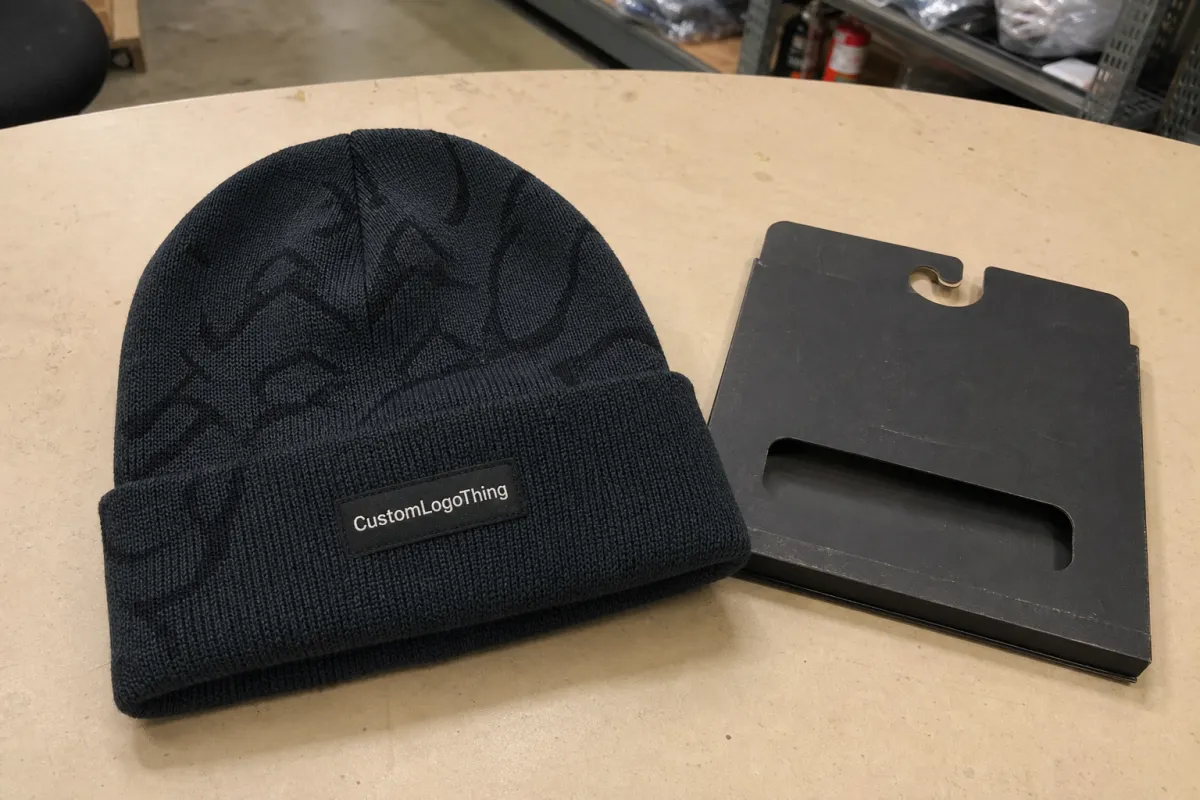
The most important cost driver is how hard the artwork is to knit cleanly. A small two-color logo on a cuff is straightforward. A full-body repeat with six colors, tight curves, and thin lettering is a different job. Every added color means more yarn feeding, more program setup, and more opportunities for the pattern to wander if tension is not controlled well.
Gauge is another major variable. A chunky 7-gauge beanie gives you a heavier winter feel and usually handles bold graphics with less visual noise. Finer gauges can hold more detail, but they also demand closer file preparation and tighter quality control. If the beanie is knit as one continuous structure, the factory is not printing a graphic onto fabric. It is building the image into the fabric itself, stitch by stitch.
Decoration outside the knit body changes the quote too. A woven label, heat transfer, care label, faux leather patch, pom-pom, or custom hangtag all add material and labor. Buyers sometimes treat these as afterthoughts because they are small pieces. Factories do not. They see separate operations, separate time, and separate failure points.
There is also a hidden cost in file work. Some art only needs color blocking. Some art needs stitch mapping, row-by-row adjustment, and simplification so the design survives in knit form. Thin diagonal lines, tiny text, gradients, and photo-style effects are frequent troublemakers. The quote has to cover that technical work, or it is incomplete.
A quote is only useful when every line item matches the same spec. If yarn, gauge, size, and labeling are not written down, the price is a guess dressed up like a figure.
One more point matters: the quote should tell you whether the design is production-friendly. If the factory cannot explain how the logo will be converted into knit instructions, or if it keeps asking whether the mark is knit, embroidered, or patched, the brief is still too loose. The strongest early quotes usually identify problems before sampling starts.
Jacquard knit beanie build details buyers should lock first
A jacquard knit beanie uses colored yarns to create the pattern inside the fabric structure. That makes it durable and visually integrated, which is why it works well for retail, team gear, and branded winter programs. It also means the artwork has to respect knit limitations. A logo that looks sharp on screen may need simplification to stay legible in yarn.
Start with the shape. Decide whether the beanie is cuffed or uncuffed, single-layer or double-layer, and whether it needs a pom-pom. Then decide how the brand should appear. In many programs, the cleanest result is a knit logo on the body plus a small woven label on the cuff. Other programs need more branding support, such as a care label, size mark, barcode sticker, or folded retail insert.
Use case changes the whole conversation. A promotional give-away can tolerate a simpler finish. A private label retail program usually cannot. Retail buyers tend to care more about folding consistency, hangtag placement, and carton presentation. Team orders often care more about matching a specific color standard across repeats. The shape may be the same, but the commercial expectations are not.
Artwork should be sent in vector form whenever possible. Include clear placement notes, exact color references, and any text that must stay readable. A production team can usually move faster when it sees a clean reference file plus a short spec sheet. A photo sent with the instruction “make it like this” creates extra interpretation, and interpretation is where errors start.
One practical habit helps a lot: define the product in one sentence before asking for pricing.
- Example: cuffed acrylic jacquard knit beanie, 2-color logo, woven side label, no pom-pom, retail fold, 500 pieces.
- Example: double-layer wool blend beanie, all-over pattern, inside heat transfer, 1,000 pieces.
That kind of sentence gives the factory a usable framework. It also gives the buyer a reference point later, when sample and bulk are compared side by side.
Specs that keep artwork, fit, and yarn quality consistent
The cleanest quote requests include a basic spec sheet with the same fields every time. At minimum, that should cover yarn material, knit gauge, beanie dimensions, cuff height, stretch range, color count, and any second decoration method. If the factory has to infer those details, small mismatches become much more likely later.
Material choice changes both feel and price. Acrylic is common because it knits evenly, keeps cost under control, and handles broad color matching well. Wool blends feel warmer and more premium, but they often tighten the budget and need closer attention to shrinkage, itch factor, and finishing. Recycled yarns can support a sustainability message, though they still need the same technical scrutiny as conventional yarns.
Fit deserves real numbers, not vague descriptions. A beanie that is “one size” can still come back too shallow, too loose, or too tight if the crown depth and rib tension are not checked. Ask for measurements in centimeters or inches. Buyers who rely on general language tend to discover fit problems only after production has started, when correction is expensive or impossible.
There is a similar issue with color. A mockup can look stable even when the yarn supply will not be. Ask how dye lots are handled, whether the factory matches against a physical reference, and how color variation is checked across the run. That matters more than many first-time buyers expect. In knitwear, a small shift in yarn shade can change the entire look of the logo.
Quality control should be part of the quote conversation, not something added at the end. A serious supplier will explain how it checks color, stitch consistency, size, and finishing before packing. If the beanie includes a repeat pattern, ask how the first and last pieces are compared so the layout does not drift from one carton to the next.
Packaging and transit planning belong in the same discussion. The ISTA library is useful if you want a practical reference for parcel and pack testing, especially when the order will move through distribution instead of going straight from factory to one receiving dock.
Common quote traps that distort comparisons
One of the easiest ways to misread a quote is to compare incomplete offers. A supplier can look cheaper simply because the estimate excludes sample cost, artwork setup, label application, carton packing, or freight. The initial number is lower, but the landed cost is not. That is a classic trap in apparel sourcing, and Jacquard Knit Beanies are no exception.
Another trap is comparing different constructions as if they were the same. A flat knit beanie, a fully jacquard body, and a knit style with surface embroidery are not interchangeable even if the mockup looks similar. Each one uses a different process, and each process carries different labor, waste, and quality risks. If the quote does not state the knitting method clearly, the comparison is already distorted.
Sampling can also mislead buyers. Some suppliers make a sample on a different machine or use a hand-finished version that looks cleaner than the bulk run will. That does not automatically mean the supplier is dishonest, but it does mean the sample has to be reviewed as a production reference, not as a promise. Ask whether the sample was made on the same gauge and the same equipment planned for bulk.
Small design choices can create oversized costs. A logo that is only a few millimeters too detailed may require simplification. A cuff label positioned too close to the seam may need rework. A pom-pom that is not standardized can slow packing. These are not dramatic problems, but they do affect the quote because they affect time. Factories price time, even when they express it as a material or setup line item.
The most honest pricing discussions separate what is fixed from what is variable. Fixed items include pattern setup, sample development, and basic packaging. Variable items include yarn selection, run length, label count, and carton volume. Once those are separated, a buyer can finally compare the real cost of each offer instead of comparing the marketing version of the offer.
Pricing, MOQ, and quote variables buyers should compare
Unit price is built from the full construction, not just the logo. Yarn type, knit complexity, number of color changes, size of the knit area, finishing steps, and packaging all move the number. Custom hangtags, care labels, barcode stickers, and folded polybags each add a small amount per piece, which becomes meaningful once the order grows.
MOQ is where buyers are most likely to be surprised. Smaller runs help when you are testing a market or launching a style without a long forecast. The tradeoff is simple: setup costs are spread across fewer units, so the price per piece stays higher. A 300-piece order may be practical for a pilot run, but a 1,000-piece order can often move much closer to the cost structure a brand actually wants.
Here is a practical way to compare offers side by side:
| Beanie build | Typical MOQ | Illustrative unit price range | Best fit |
|---|---|---|---|
| Simple acrylic cuff beanie, 2-color logo, woven label | 300-500 pcs | $2.10-$3.80 | Promotions, team gear, test orders |
| All-over jacquard pattern, 4-6 colors, retail fold | 500-1,000 pcs | $2.90-$5.50 | Brand drops, seasonal retail, resale |
| Wool blend or recycled yarn, premium finish, custom packaging | 500-1,500 pcs | $3.60-$7.25 | Higher perceived value, private label |
Those numbers are illustrative, not universal, but they show the shape of the market. Complexity and finish usually move price faster than the logo itself. A quote that looks low can become expensive if it leaves out a required label, a pre-production sample, or any packaging detail that matters to the final customer.
Ask every factory to separate the following:
- sample fee
- bulk unit price by volume
- label or packaging add-ons
- freight estimate
- any setup or programming charge
For private label packaging made with paper hangtags or branded cartons, FSC-certified material can be a useful signal. If that matters to your program, the certification reference at FSC is a straightforward place to check chain-of-custody expectations before approving the pack plan.
Production steps and lead time from art approval to shipment
The production flow is easy to understand once it is laid out clearly. Artwork review comes first, then knit file development, sample approval, bulk yarn sourcing, production knitting, finishing, inspection, and final packing. If any of those stages is vague, the schedule becomes hard to trust.
Lead time is usually won or lost at the approval stage. Clean art, a locked spec, and quick feedback keep the order moving. Changes after sampling are the most common reason a quote turns into a longer timeline, because the factory may need to revise the knit file, resample, or reorder yarn in a different shade.
A reliable supplier should give two timeframes: one for sampling and one for bulk production. For many jacquard beanie programs, sampling can take about 5-10 business days, while bulk production often lands around 12-20 business days after approval, depending on quantity and complexity. Freight is separate and should be stated separately, because shipping time is not production time.
Ask how rush orders are handled. Some factories can hold a production slot once the deposit and artwork are confirmed. Others cannot. If you need a faster ship date, the real question is what gets changed to make that date possible. Sometimes the answer is a simpler label plan. Sometimes it is a smaller order. Sometimes the honest answer is no.
Before approval, look for written checkpoints. A solid process usually includes sample photos, measurement confirmation, and a final packing check. That may sound basic, but it prevents the failures that show up most often in headwear: the logo is scaled wrong, the color shifts under bulk lighting, or the finished piece looks right in one size and wrong in the carton.
One detail buyers often miss is that knitwear can shift slightly after finishing. Blocking, steaming, and packing pressure can change the final hand feel and sometimes the dimensions. A good factory will account for that in the spec rather than treating it as an accident. That is especially useful for beanies with tight fit expectations or retail presentation requirements.
What a reliable beanie factory should prove before you order
Do not buy on promises alone. A dependable factory should show a controlled process for matching pattern, size, and color across the full run. If it cannot explain how it keeps stitch count stable from sample to bulk, that is a sign the process may be looser than the sales language suggests.
Look for proof points, not vague claims. Pre-production sample photos, measurement checks, and a final inspection routine are normal signs of discipline. If a supplier skips those steps or talks around them, the risk shifts to the buyer. That matters most on jacquard pieces, where a small pattern shift becomes visible very quickly.
Documentation matters as much as workmanship. You should receive the confirmed artwork file, the approved sample reference, and written notes for any label or pack instructions. If carton marks, size stickers, or hangtag positions matter, they should be captured before bulk begins. Memory is not a quality system.
A serious supplier will also tell you when the design is unstable. That may feel less convenient than a quick yes, but it saves money. Thin lines, tiny text, and too many color changes can distort in knit form, and the right answer is sometimes a simplified construction rather than a heroic attempt to force the art through production.
The strongest factories talk plainly about tradeoffs. If they always say “no problem,” that is usually a warning sign. A supplier who can explain that one part will knit cleanly while another part needs to be simplified is far more useful than one who promises everything and fixes nothing.
Practical checks are usually more revealing than polished sales sheets. Ask how the team measures finished size, how it records color approvals, and what happens if a carton contains a piece that falls outside tolerance. The answer should sound procedural, not improvised.
Next steps to request a clean quote and avoid revisions
Send a complete brief the first time. That means artwork, target quantity, material preference, size needs, color references, packaging request, and the destination country for freight planning. If you have a rough idea of the retail or promotional use, include that too, because it affects the finish the factory should quote.
The best comparison set is side by side. Ask for a sample fee, a unit price at two or three volume breaks, and a separate estimate for freight. That gives a real buying picture instead of a single number that looks attractive until the add-ons appear later.
Before production starts, confirm the approval checklist:
- final artwork file
- confirmed knit specification
- approved sample or sample photos
- label and packaging details
- payment terms and shipping method
If you are requesting an apparel Jacquard Knit Beanies factory quote, the simplest way to get a number that holds up is to lock the product spec before asking for pricing. That reduces revisions, exposes production risks early, and keeps the quote tied to a real build rather than a loose idea. The more exact the brief, the less likely the factory is to fill in the blanks with its own assumptions.
One final buyer habit is worth keeping: compare the approved sample against the bulk sample using the same lighting and the same measurements. Knitwear can hide small changes in a clean product photo. A side-by-side check usually catches issues faster than a sales call ever will.
How do I compare apparel jacquard knit beanies factory quotes?
Compare the same spec set on every offer: yarn, gauge, color count, size, labeling, packaging, sample cost, and freight. Ask whether the quote includes artwork setup, pre-production sampling, and final inspection so you are not comparing partial pricing. If one quote is lower, check whether it left out a required step rather than assuming it is the better deal.
What is the usual MOQ for jacquard knit beanies?
MOQ depends on yarn availability, color count, and whether the design needs a custom knit file or special finishing. Simpler builds can sometimes start at a few hundred pieces, while more complex retail programs may need larger runs to keep unit cost reasonable. The real question is not only the minimum; it is how the price changes as quantity increases.
What artwork is needed before I request a quote?
Send vector artwork whenever possible, along with clear notes for logo placement, colors, and any required text. A simple reference image can help at the start, but the factory will still need production-ready art to build an accurate knit file. If the design includes thin type or tight curves, ask for a production review before sampling begins.
How long does production usually take after approval?
Lead time depends on sampling, yarn sourcing, and order size, but the factory should give a separate schedule for sample and bulk stages. Fast approvals and locked specs reduce delays, while design changes after sample approval usually extend the timeline. Freight time should be quoted separately so production and shipping do not get mixed together.
Can I get a private label finish with jacquard knit beanies?
Yes, many buyers add woven labels, hangtags, care labels, or custom packaging to support retail or brand resale use. The labeling plan should be confirmed before bulk production so the factory can price it correctly and place it in the right stage of the process. The finish should match the channel: simple for promotions, more complete for retail.


