The trade show jacquard knit Beanies Unit Cost can look high next to a pen or sticker, but that comparison misses how these items are used. A beanie stays visible after the event: on the commute home, during travel, and through regular winter wear. For buyers trying to justify spend, the more useful lens is cost per impression, not just cost per piece.
A disposable handout may be cheaper on paper, but it often disappears before the attendee reaches the next booth. A knit beanie has a longer life cycle, so it can continue carrying the brand long after the show floor closes. That is the main reason experienced buyers evaluate both price and retention when they review event merchandise.
"If it survives the commute and gets worn again, it stops being swag and starts acting like a branded asset."
That is the frame for the rest of this article: what affects fit, logo clarity, pricing, production time, and inspection risk. When those basics are clear, the buying decision gets much easier.
Why Jacquard Beanies Outperform Disposable Giveaways
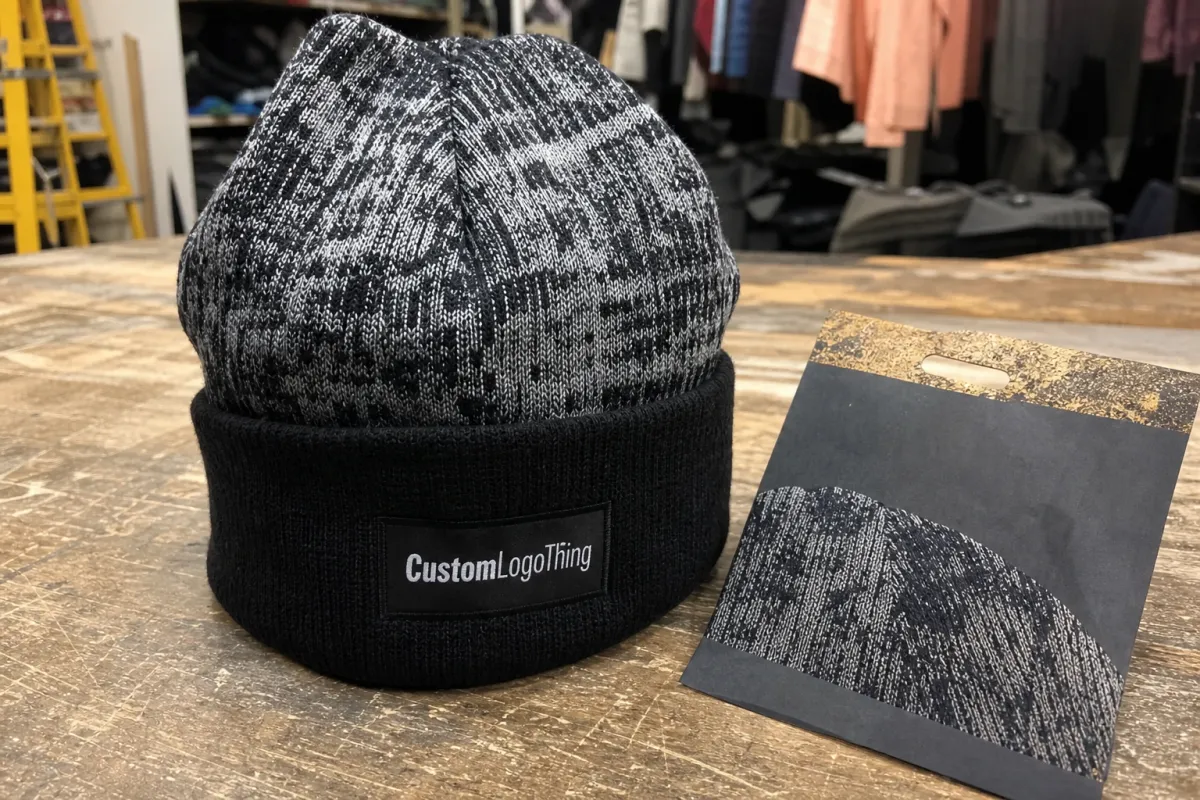
Jacquard knitting is a strong fit for logos, stripes, icons, and block lettering because the design is built into the fabric instead of printed on top of it. That usually gives the beanie a more finished look than a flat giveaway item.
The value is practical. One attendee may wear the same beanie on the way to work, at a weekend event, and in casual settings where the logo is seen by other people. Each repeat wear increases the return on the original purchase.
Wearable items also tend to be perceived as more useful than desk clutter. That perception matters at crowded events where low-value giveaways blend together. A knit accessory suggests the brand spent money on something the recipient can actually use.
Buyer math should include three factors:
- Visibility: the item gets seen outside the booth.
- Retention: wearable goods usually stay with the recipient longer than paper or plastic.
- Brand signal: a knit cap communicates more intent than a disposable handout.
This does not mean every event should use a premium knit style. If the campaign depends on the lowest possible cost and a short shelf life, another format may fit better. But if the goal is better perceived value and longer wear, the unit cost has to be judged against use over time, not just the invoice total.
Design Limits That Protect Logo Clarity and Fit
Jacquard knit works best with simple, bold artwork. Fine lines, tiny text, gradients, and photo-style art usually lose clarity once they are translated into stitches. That is not a flaw in the product; it is a limitation of the process.
The safest artwork usually uses limited colors, thick letterforms, and strong contrast. A logo that looks perfect on screen may need to be simplified so it reads well in knit form. If the design is too detailed, the final result can look crowded or soft at the edges.
Fit matters just as much as the artwork. Most custom beanies use a one-size stretch range, but cuff height, crown depth, and slouch profile change the way the hat sits and how much room exists for branding. A cuffed beanie usually gives the logo a cleaner, more structured position. A slouchier style feels more casual but can place the design lower on the head.
Before quoting, confirm these points:
- How many knit colors the final artwork actually requires.
- Whether the logo belongs on the cuff, crown, or both.
- Whether the fit should be snug, standard, or relaxed.
- Whether a woven label, patch, or interior tag is needed.
The simplest artwork usually produces the fastest approval cycle and the least revision risk. That matters when several people need to review the sample and the event date is fixed. Clean design decisions also make it easier for the supplier to estimate trade show Jacquard Knit Beanies unit cost accurately.
Materials, Knit Gauge, and Branding Specifications
Most trade show beanies use acrylic because it is warm enough for typical event use, easy to source, and cost-effective at volume. It also supports consistent color matching better than many lower-cost alternatives. If the brief calls for a softer handfeel or a more premium presentation, wool blends or recycled yarns may be worth considering.
Fiber choice affects both price and performance. Tighter yarns can improve edge definition and make the pattern look sharper, while looser knits may feel softer but reduce stitch clarity. That is one reason pricing can vary even when the beanie size and artwork seem similar.
Knit gauge matters too. Higher gauge usually means denser stitching, which can improve logo definition but also adds manufacturing time. Buyers comparing quotes should ask whether the gauge is standard or tighter, because that choice affects both appearance and cost.
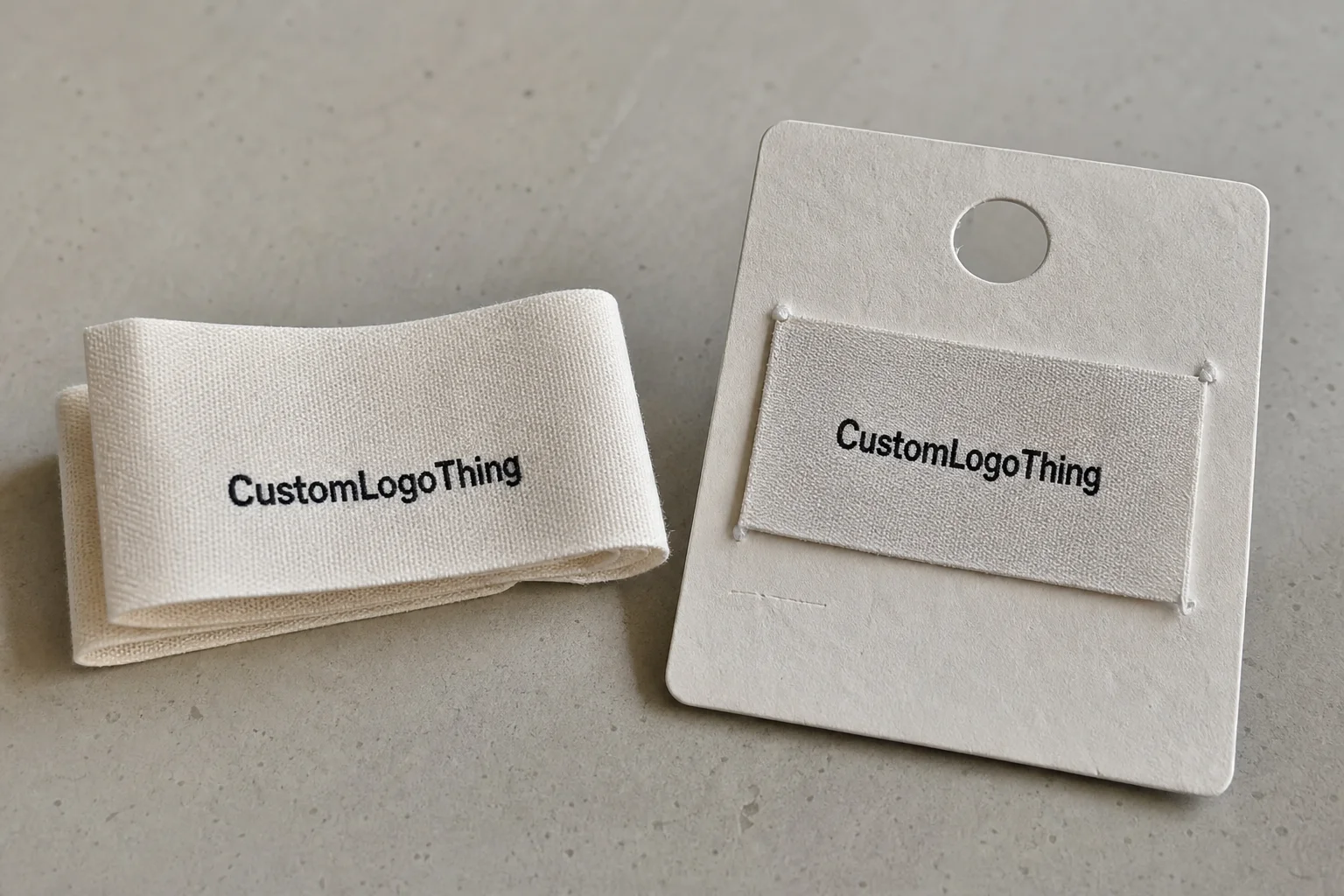
Branding options change the quote as well. A jacquard-only beanie is usually the most efficient route. Adding a woven label, rubber patch, or interior tag creates a more finished presentation, but it also adds finishing steps and cost. Those additions make sense for VIP kits or retail-style giveaways, but they should be priced in from the beginning.
Before requesting pricing, confirm these specs:
- Yarn type: acrylic, wool blend, or recycled fiber.
- Gauge: standard or tighter knit, based on design detail.
- Decoration: jacquard only, woven label, patch, or interior tag.
- Packaging: polybag, hang tag, FSC-certified insert card, or retail wrap.
If printed inserts are part of the package, FSC certification can be a useful procurement filter. For shipment planning, especially when cartons move through multiple legs before the event, ISTA test protocols are worth asking about.
Pantone matching in knit should be treated as controlled consistency, not print-level exactness. Yarn availability, dye lots, and stitch structure can shift the final color slightly. A supplier that promises identical results under every lighting condition is overselling what knit can do.
Trade Show Beanie Pricing, MOQ, and Unit Cost Drivers
Quantity is the biggest pricing lever. A 250-piece order will usually carry a much higher unit cost than a 2,000-piece order because setup work is spread across fewer units. That is true for almost every custom knit program.
MOQ depends on design complexity, color count, and yarn availability. A simple cuffed beanie with one or two colors may start around 100-200 pieces. A denser jacquard pattern with multiple colors usually lands closer to 300-500 pieces. If the design includes specialty yarns, a patch, or custom packaging, the minimum may rise again.
For budgeting, these ranges are a useful starting point for trade show Jacquard Knit Beanies unit cost:
| Option | Typical unit cost | MOQ | Lead time | Best use |
|---|---|---|---|---|
| Standard acrylic jacquard beanie | $2.40-$4.20 | 200-300 pcs | 12-18 business days | Core trade show giveaway with clean artwork |
| Premium jacquard with woven label or patch | $3.90-$6.50 | 300-500 pcs | 15-22 business days | Higher perceived value and stronger presentation |
| Premium packaged version with custom insert | $5.50-$8.50 | 500+ pcs | 18-25 business days | VIP handouts, launch kits, or executive gifting |
Those ranges move based on setup charges, tooling fees, freight, and rush timing. Some suppliers include pattern programming in setup; others list it separately. Ask for a line-item quote so you can compare options fairly.
There is also a difference between production cost and landed cost. A factory quote can look competitive until freight, labeling, and split delivery are added. Procurement teams usually get a more realistic view by asking for delivered pricing instead of factory-only pricing.
Main cost drivers include:
- Color count: more yarn colors usually mean more knitting complexity.
- Packaging: polybags are inexpensive; custom inserts and retail wraps are not.
- Split shipments: sending cartons to multiple venues adds handling and freight.
- Rush orders: short timelines often raise labor or shipping cost.
A good way to compare options is to price three versions side by side: a standard jacquard beanie, one with a woven label or patch, and a premium packaged version. That shows exactly how each upgrade affects the total spend and where the line between useful finishing and extra cost sits. It also explains why a small order can feel disproportionately expensive: setup work is fixed, so lower quantities absorb more of it.
Production Steps, Proofing, and Lead Time
A typical knit order moves through quote request, artwork review, digital proof, sample or pre-production approval, bulk knitting, finishing, packing, and shipment. The sequence is straightforward, but schedules slip when the artwork is vague or the approval chain is too long.
Proofing is where many projects lose time. A minor color change, logo adjustment, or line of copy can trigger another review. The fastest projects usually have one clean file and one decision maker. Every extra approval step adds delay risk.
After proof approval, straightforward orders often ship in about 12-18 business days. More complex programs usually take 15-25 business days. Seasonal demand can extend that window, and shipping method matters too. Air freight shortens transit but can erase some of the savings from lower manufacturing cost.
Sample timing deserves attention. A physical sample or pre-production sample can add several days before bulk production even starts, and revisions add more time. If the event date is fixed, buyers usually benefit more from fast approval on a simplified sample than from chasing small changes that do not materially improve the final product.
Good suppliers usually provide checkpoints like these:
- File confirmation: the artwork is usable and the colors are mapped correctly.
- Digital proof: the layout is checked before knitting starts.
- Pre-production sample: used for color, scale, and fit approval.
- Packing verification: cartons, labels, and counts are checked before dispatch.
Saving even a day or two during proofing can protect the whole schedule later. In a trade show calendar, that may be the difference between a smooth receiving dock and a costly rush shipment. Buyers who ask about lead time early also tend to get a more reliable quote on Trade Show Jacquard Knit Beanies unit cost, because the supplier can price the project against a real production window.
What Repeat Buyers Get From a Reliable Beanie Supplier
Repeat orders show quality drift fast. If dye lots change, cuff size shifts, or knit tension varies, the whole program starts to look inconsistent. That causes rework and makes each new event order harder to trust.
A reliable supplier does more than fill the order. It helps keep the program stable across seasons and regions. That matters when one event needs 500 units, another needs 1,200, and a third needs a smaller restock for partners or staff.
Operational details are part of the value too. Carton labeling, barcode tracking, inventory holds, and split delivery instructions can save the buyer from last-minute manual work. If beanies need to go to a booth, a distributor, and a fulfillment center, the ability to organize cartons cleanly is a real advantage.
Repeat buyers also need reorder control. The next run should match the previous one closely enough that the colors, fit, and finish do not feel like a different product. That usually means keeping the knit spec, yarn codes, and packaging instructions on record instead of rebuilding the order each time.
"The cheapest quote is not always the lowest-risk order. In event merchandising, rework is where the real money leaks out."
For recurring programs, the best suppliers usually provide:
- Repeatable sizing and stitch quality.
- Stable artwork records for reorder accuracy.
- Clear communication on stock, shipment, and carton counts.
- Fast replies when the brand needs a second drop date or region split.
That kind of operational discipline lowers the odds that a trade show handout becomes a receiving problem. It is less visible than design, but it often matters more after the order is placed.
Final Order Checklist Before You Request a Quote
If you want an accurate quote, send the supplier a complete brief the first time. Partial information usually means more questions, slower pricing, and a wider range on trade show jacquard knit beanies unit cost.
Use this checklist before you submit the order:
- Final vector artwork in AI, EPS, or PDF format.
- Target quantity and any tiered quantities for comparison.
- Preferred yarn colors or Pantone references.
- Delivery deadline and event date.
- Shipping destination or split-shipment instructions.
- Sample approval requirement, if any.
- Packaging needs, including inserts, labels, or retail wrapping.
It also helps to decide internally who can approve artwork, pricing, and delivery terms. A single decision maker keeps the order moving. If several teams need to sign off on one sample image, the schedule becomes fragile fast, especially in a seasonal production window.
Ask for a quote that separates unit cost, setup charges, sample fees, freight, and premium packaging. That makes comparison easier and prevents a low headline price from hiding a higher total spend. Once those numbers are visible, the buying decision becomes a lot more manageable.
For procurement, the best quote is the one that ties quantity, timeline, and finishing choices together clearly. Send a complete brief once, get a complete answer back, and you reduce revisions, delays, and surprise costs.
What affects trade show jacquard knit beanies unit cost the most?
Quantity is the biggest lever because more units spread setup work across a larger run. Color count, yarn type, packaging, and rush timing also move the number quickly, especially if the order needs split shipments or extra handling.
What MOQ should I expect for custom jacquard knit beanies?
MOQ depends on design complexity, yarn availability, and how dense the knit pattern is. Simple builds can start lower, while multi-color jacquard designs usually need a larger minimum. Ask with your actual artwork, because the pattern itself can change the threshold.
How long is the lead time after proof approval?
After proof approval, straightforward orders often ship in about 12-18 business days, while more complex builds may take 15-25 business days. Seasonal demand, sampling, and freight method can extend the schedule, so build in a buffer before your show date.
Can a jacquard knit beanie support a multi-color logo?
Yes, but the artwork usually needs to be simplified so it reads cleanly in knit form. Bold shapes work better than tiny text or gradients. A good supplier will suggest adjustments that preserve brand recognition without muddying the stitch pattern.
What should I send to get a fast quote on trade show beanies?
Send vector artwork, target quantity, delivery date, preferred colors, shipping destination, and packaging needs. If you need samples or retail-style presentation, say so up front. The more complete the brief, the faster the vendor can price trade show jacquard knit beanies unit cost without a back-and-forth delay.