If you are sourcing from an Apparel Poly Bags with logo manufacturer, the job is bigger than printing a brand mark on plastic. The bag has to protect a folded garment, show the product cleanly, survive warehouse handling, and still look intentional when it reaches a store table, a bin, or a customer’s hands.
That sounds simple until you start comparing real specs. A slightly cloudy film can dull a premium tee. A bag that is too tight can wrinkle at the seal. One that is too large wastes material and makes the garment look underpacked. Packaging is often judged in seconds, which is why details that seem minor on paper become obvious in use.
The best suppliers treat the bag as part of the product system, not as a separate print job. They ask how the garment folds, how it is packed, whether it travels in cartons or mailers, and how much visual polish the brand actually needs. That is the difference between a bag that merely exists and one that supports the sale.
What an apparel poly bags with logo manufacturer actually supplies
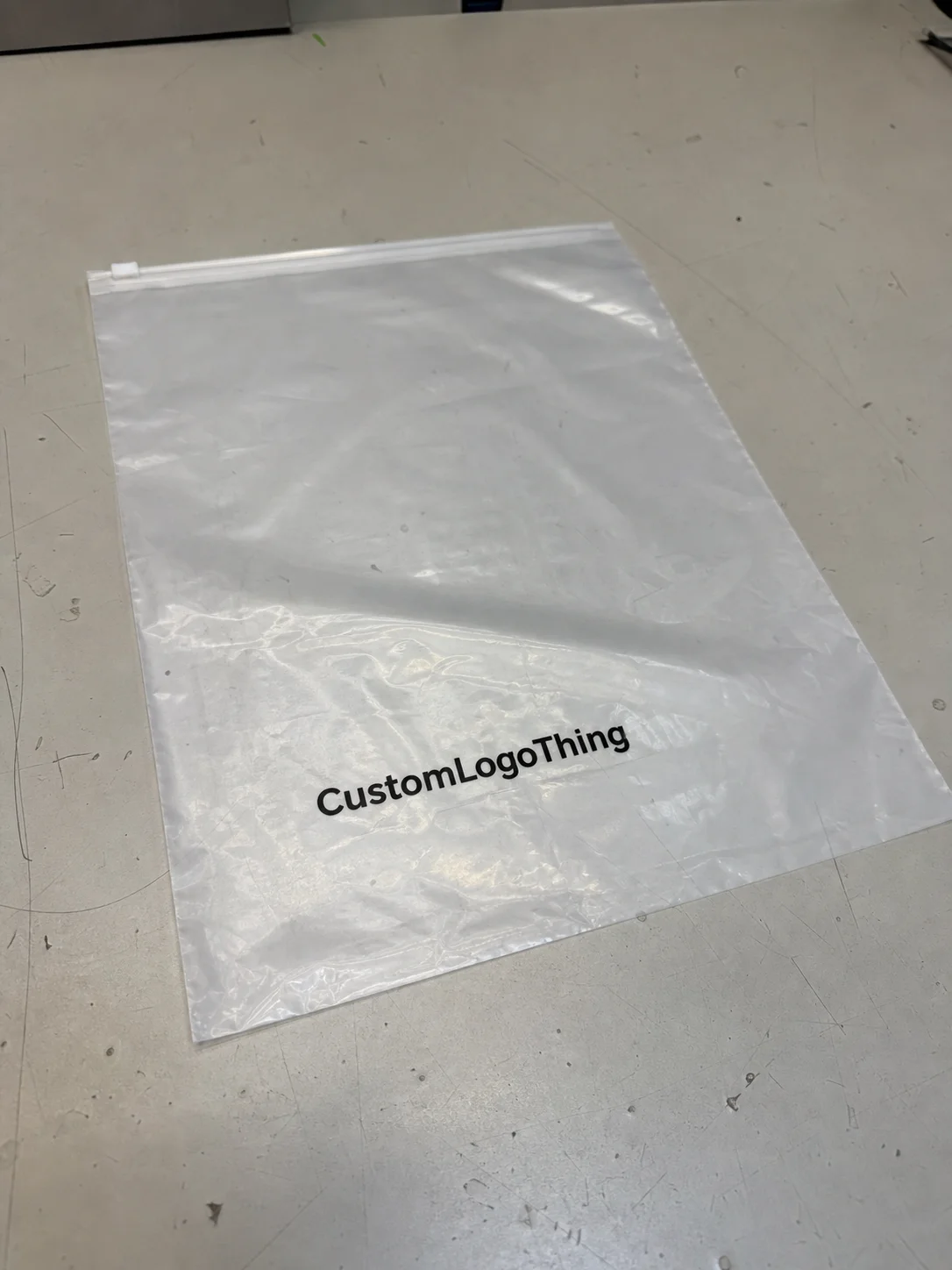
A capable Apparel Poly Bags with Logo manufacturer supplies more than printed sleeves. In practice, the order usually includes film selection, bag sizing, print setup, closure style, carton packing, and a proofing step that confirms the artwork lands where it should. Those pieces matter because a garment bag is both a presentation layer and a handling tool.
For retail apparel, the bag is often the first visible surface before a buyer touches the garment. A crisp logo and a clean fold create a stronger impression than a loose bag with heavy wrinkles or poor proportions. That does not require luxury packaging, but it does require consistency. Brands underestimate how quickly poor packaging signals carelessness, even when the garment itself is well made.
Warehouse teams look at the same bag differently. They care about how fast it loads, whether the seal stays closed, whether the bag snags in a carton, and whether the pack count matches the receiving process. A supplier that understands both retail presentation and fulfillment can recommend a spec that works on the line instead of only in a mockup.
The actual product mix matters too. Tees, hoodies, sleepwear, socks, infant apparel, and multi-piece sets do not behave the same way in film. A heavyweight hoodie with drawcords needs more room than a slim tee. Baby garments usually need tighter proportions and a cleaner print field. A multi-piece set may require extra width so the stack sits flat instead of bulging at one corner.
That is where experience shows up. An experienced supplier will not simply ask for a logo file and call it done. They will ask for folded dimensions, intended use, and whether the bag is meant for retail display, internal transfer, or shipping protection. That leads to better material choices and fewer surprises later.
If your packaging program spans more than one format, it helps to compare how apparel bags fit alongside other components. Related packaging references such as Custom Packaging Products and Custom Poly Mailers can help keep the presentation and shipping system aligned rather than improvised piece by piece.
Film, print, and closure options that change performance
The biggest performance differences usually come from the film and the closure, not the logo itself. LDPE is common because it is flexible, forgiving, and usually gives a softer, more practical hand for folded apparel. PP feels stiffer and can look brighter or more glass-like, which some brands prefer for retail presentation. Each material has tradeoffs; the right choice depends on how the bag is used, not on abstract preference.
Film thickness has a real effect on both durability and appearance. Thin film can work well for lightweight tees and short handling cycles, but it may wrinkle more and offer less puncture resistance. Heavier film resists pinholes and edge splits better, especially when garments have buttons, hang tags, clips, or sharp folded corners. Too much thickness, though, can make the bag feel stiff and harder to pack quickly.
Print coverage is another factor buyers often understate. A simple one-color logo on clear film usually costs less and runs faster than a multi-color design with solids, gradients, or tiny text. Poly film is unforgiving with fine detail. Hairline rules, small copy, and subtle tonal changes often need simplification if you want the bag to print cleanly and stay legible at a glance.
Closure style should follow the workflow. Adhesive flaps work well for retail presentation and final packing. Open-top bags make more sense when the garment is loaded quickly and sealed elsewhere. Zipper closures are useful for reusable storage or display. Header bags fit hanging or pegged merchandising systems. A supplier should be able to tell you which style supports the operation instead of just the artwork.
Quality control sits underneath all of this. The important checks are usually plain ones: bag dimensions, seal width, print registration, haze, ink consistency, and whether the adhesive holds after repeated handling. A bag that looks fine in a PDF can still fail in production if the film choice and the print coverage are not matched properly.
If you are comparing claims about material sourcing or package performance, outside references help keep the conversation grounded. The Paper and Packaging Board / packaging industry resources can help with terminology and responsible packaging context, FSC is useful when evaluating fiber-based components or sourcing claims, and ISTA provides a practical framework for transport and package testing.
How to size bags for folded garments and mixed SKUs
Sizing should start with the folded garment, not with the last bag you ordered. Measure the product after it has been folded the way it will actually ship or display. Then record width, height, and thickness. That sounds tedious, but it prevents the most common packaging error in apparel: buying a bag that fits the concept and fails the actual fold.
A slim tee, a heavyweight hoodie, and a baby bodysuit can all be “small” in merchandising terms while needing very different pack dimensions. Too-tight bags wrinkle, stress the seal, and look cheap. Too-loose bags let the garment slide around and make the package look vague. Either problem weakens the presentation.
For mixed SKU programs, the issue is not just size. It is consistency. A bag that works across a few similar items can simplify inventory, but only if the folded dimensions stay close enough that the garments still sit flat. Once the product line stretches across lighter and heavier items, one universal bag often becomes a compromise that creates waste at both ends: too much empty space on one SKU, too much pressure on another.
Thickness and puncture resistance become more important as the garment profile gets irregular. Buttons, clips, snaps, and folded corners create stress points. A slightly stronger gauge can protect against pinholes without turning every package into overbuilt packaging. That balance matters because a heavy bag that is technically durable may still be wrong if it slows down packing or looks oversized in the carton.
For planning, a simple comparison table often helps buyers see the tradeoffs more clearly:
| Apparel Type | Typical Bag Approach | Practical Notes | Common Risk |
|---|---|---|---|
| Slim tees | Light to medium film, compact fold | Good clarity and fast packing | Oversized bag looks loose |
| Heavy hoodies | Wider bag, stronger gauge | Handles bulk and drawcords better | Tight bag stresses seal |
| Baby apparel | Small format with clean print area | Presentation matters as much as protection | Too much empty space |
| Multi-piece sets | Extra width and height allowance | Supports thicker folded stacks | Wrinkling if bag is too shallow |
This is where an experienced Apparel Poly Bags with logo manufacturer can reduce waste. If one size can cover two or three related SKUs without looking sloppy, that may be enough. If it cannot, forcing it usually costs more later in rework, damaged presentation, or extra inventory that never gets used.
Process and timeline from artwork approval to delivery
The production path is usually straightforward. It starts with the quote, then artwork review, then bag specification confirmation, proofing, printing, converting, inspection, and shipment. Every stage depends on the quality of the information received. A clear spec moves quickly. A vague spec creates back-and-forth that can stall the job for days.
Artwork readiness is one of the biggest schedule drivers. A repeat order with an existing file moves faster than a new design that needs vector cleanup, color correction, or layout changes. New sizes and new closures add another layer because the manufacturer has to confirm how the artwork sits on the film and whether the fold leaves enough clean space around the logo.
The usual delays are not exotic. They are predictable: missing vector files, color references that are described in words instead of standards, last-minute size changes, and sample revisions after someone notices the logo is too low or the bag is shorter than expected. Most of those issues are preventable if the buyer sends complete information from the start. A good supplier will catch problems early, but a clean brief still saves time.
For planning purposes, many custom orders land in the 12 to 15 business day range after proof approval, assuming the spec is settled and the material is available. Repeat runs may be shorter. Rush orders can happen, but they usually cost more and leave less room for correction. If the launch date is fixed, build in a buffer. Packaging should support the timeline, not become the reason it slips.
There is also a practical checkpoint that often gets skipped: sample approval. A screen proof tells you the artwork location, not the real-world feel of the bag. A sample shows whether the film clarity is right, whether the seal holds, how the logo reads through the material, and whether the closure behaves the way the packing team expects. For a new build, that sample is not optional in any serious program.
“If the artwork is not final, the bag is not final.” Packaging teams repeat that rule for a reason. A small file issue can stop an entire production run.
Cost, pricing, MOQ, and quote drivers
Price is shaped by a few variables that interact with one another: bag size, film thickness, print coverage, number of colors, closure type, and order volume. Buyers sometimes compare two quotes that are not actually the same spec. One may use thinner film, a simpler print method, different packing quantities, or a lower service level. A low number is not useful if the underlying offer is not equivalent.
MOQ exists because setup costs have to be spread across the order. Plates, press setup, proofing, and converting all carry fixed costs before the first finished bag ships. That is why small runs often look expensive on a per-unit basis. As quantity increases, those fixed costs are diluted and the unit price usually improves. There is nothing mysterious about that curve, but it still catches first-time buyers off guard.
For planning, many custom apparel programs fall somewhere around $0.18 to $0.45 per bag, depending on size, print complexity, and volume. That is a practical working range, not a quote. A single-color tee bag at volume will not price like a large hoodie bag with heavier film and multi-color branding. If the quote lands far below or above that range, ask what changed in the spec.
When you request pricing, ask for the line items that matter:
- Film type and gauge
- Print method and number of colors
- Closure style and any special features
- Packing quantity per carton
- Tooling, setup, and sample charges
- Freight assumptions and destination terms
This is the cleanest way to compare an apparel poly Bags with Logo manufacturer with another supplier. If setup, freight, or sampling is hidden, the final number will usually move after approval. That is where many budgets get strained, not in the first quote but in the extras that were never spelled out.
There are also small costs that matter once you start approving real work: art rebuilds, extra sample rounds, rush scheduling, carton labeling changes, and special pallet wrapping. None of those are unusual. They just need to be visible before approval. Buyers who look at landed cost rather than just unit price usually make better decisions because they see the cost of rework, not only the cost of printing.
Common mistakes that create waste, delays, and weak branding
The first mistake is choosing the bag before confirming the folded garment size. That is how brands end up with packages that are too tight, too loose, or visually off. A few minutes of measurement prevents a lot of waste.
Another frequent problem is artwork that looks clean on a monitor but prints poorly on poly film. Tiny text, fine rules, low contrast, and busy gradients can lose clarity fast. Plastic film is not coated paper. It reflects light differently, and that affects how the logo reads once the bag is handled or stacked.
Some buyers overspecify the bag because they want it to feel premium, then discover the garment goes directly into a mailer. In that case, a heavier bag may add cost without adding much value. The better question is not whether the bag looks luxurious in isolation. It is whether the bag does the work the operation actually needs.
One-size orders across every SKU create another hidden problem. They simplify purchasing, but they often cause inventory waste or ugly presentation. A bag sized for a hoodie can swallow a lightweight tee. A bag sized for a tee can stress a thicker item. Neither result helps the brand.
Skipping the physical sample is a costly shortcut. A proof can show placement, but it cannot show how the film feels, how the seal behaves, or how the package sits when folded and loaded. For any new artwork or new size, the sample is the most efficient insurance in the process.
These issues are avoidable when the buyer treats packaging as a specification exercise instead of a quick print order. A good apparel poly bags with logo manufacturer can guide the process, but the brief still needs to define the use case clearly. Without that, even competent suppliers end up guessing.
If you need context on how different custom packaging formats fit together, About Custom Logo Things provides a useful overview of the broader packaging focus and how product presentation can be aligned across formats.
Next steps for a cleaner RFQ and faster sample approval
The fastest quote comes from sending the information a manufacturer actually needs. Start with the folded garment dimensions and the intended use: retail display, warehouse handling, or shipping protection. Then add the closure style, logo artwork, print colors, and film thickness target. Those details are not decoration. They change the recommended structure.
If you have the artwork in vector format, include it. If you know your annual usage or first order quantity, include that too. If carton packing targets matter to your operation, say so. The more complete the brief, the less time gets spent correcting assumptions later. That matters even more if your launch window is fixed.
For new jobs, ask for a sample or pre-production proof before full approval. That is especially useful if the bag is a new size, a new print layout, or a new material. A sample exposes proportion issues early, and proportion is where a lot of apparel packaging goes wrong. Once printed, those mistakes are expensive.
Compare lead time, unit price, and presentation quality together. Those three should be balanced. A lower price is not helpful if the bag slows packing or dulls the product. A prettier bag is not helpful if it blows the budget or delays shipment. The right supplier should help you land a spec that works across the brand, the warehouse, and the calendar.
A focused buying process usually comes down to this: define the garment, define the use case, define the print, then confirm the sample. That sequence is boring, but it works.
What should I send to an apparel poly bags with logo manufacturer for an accurate quote?
Send the folded garment dimensions, bag style, target film thickness, closure type, logo artwork, print colors, and estimated order quantity. Include whether the bag is for retail display, warehouse handling, or shipping, because those uses call for different structures. Ask the supplier to separate unit cost, setup, sampling, and freight so you can compare quotes fairly.
What MOQ is typical for custom apparel poly bags with logo?
MOQ depends on bag size, print method, and the number of colors. More setup work usually means a higher minimum. Small test orders can sometimes be arranged, but they often carry a higher unit price because fixed production costs are spread over fewer bags. If repeat orders are likely, ask for pricing at several volume levels.
How long does production usually take for printed apparel poly bags?
For a new order, many projects land around 12 to 15 business days after proof approval, assuming the artwork is ready and the material is available. Repeat runs can move faster. New sizes, special materials, or delayed approvals can extend the schedule. If your launch date is fixed, build in extra time for sample review and freight.
Which bag thickness works best for folded shirts and hoodies?
Light tees often do fine with thinner film, while heavier hoodies, multi-piece sets, or items with accessories usually need a stronger gauge. The right thickness balances clarity, puncture resistance, and handling speed. A sample is the best way to confirm whether the bag feels too soft, too rigid, or properly matched to the garment.
Can one printed bag size work across multiple apparel SKUs?
Sometimes, but only if the folded dimensions stay close enough that the garments still sit flat. One size can simplify inventory, but oversized bags can look sloppy and undersized bags can stress seals or wrinkle the product. A short SKU-by-SKU sizing check usually prevents expensive reorders later.


