Apparel Printed Poly Mailers Unit Cost Review: where savings really come from
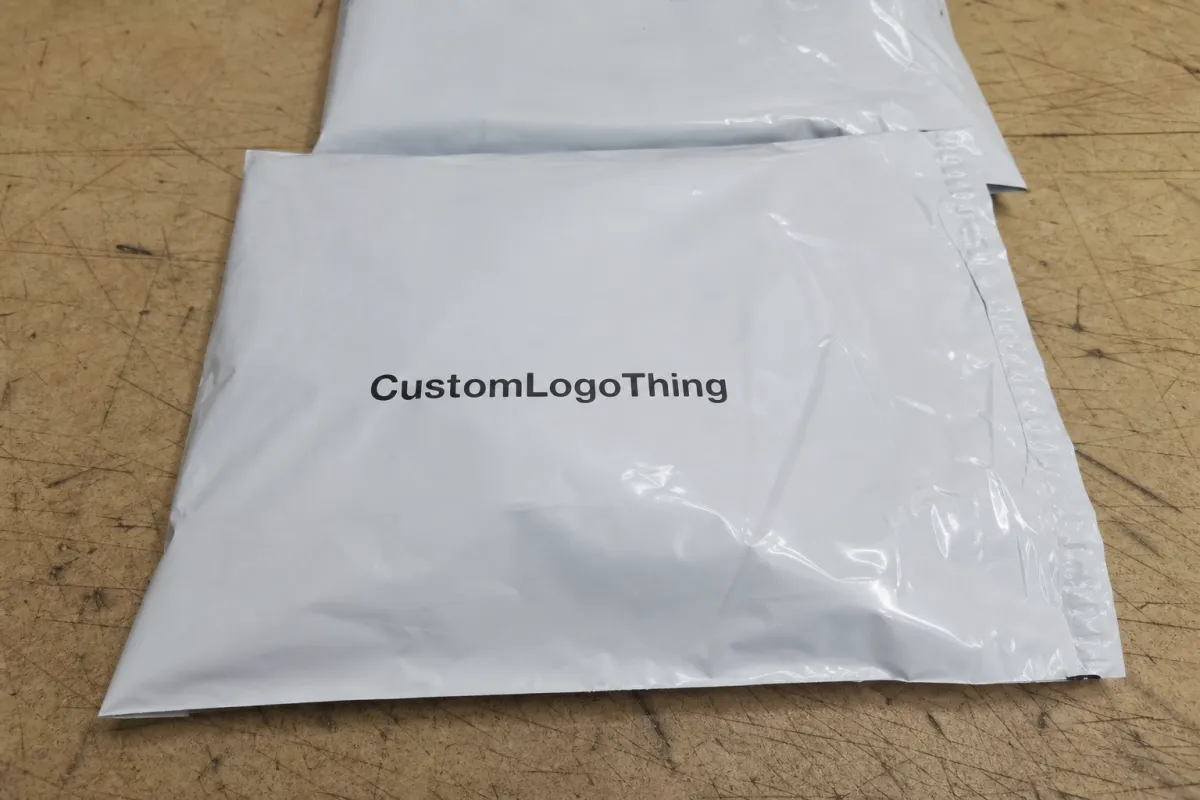
If you are comparing suppliers, the apparel printed poly mailers Unit Cost Review should start with one simple truth: the word “poly mailer” hides a lot of variables. A 10 x 13 bag with a one-color logo is not in the same pricing lane as a larger mailer with full-surface branding, a heavier film, and a stronger seal. In practice, print coverage, bag size, and film gauge usually move the price more than the basic mailer category itself.
That matters because apparel mailers are not just a shipping pouch. They are part of the product presentation for tees, hoodies, leggings, socks, and other folded soft goods that need to arrive clean, protected, and easy to handle in a warehouse. A well-sized branded mailer can make a modest order feel organized and deliberate, while a flimsy one can create wrinkles, tears, or a sloppy customer experience before the garment is even opened.
From a packaging buyer’s point of view, the real question is not “What is the cheapest quote?” It is “What is the landed cost after damage, repacking, and customer complaints?” A mailer that costs a few cents more but seals better and resists puncture can reduce return handling and the hidden labor that goes with it. That is why a solid apparel printed poly mailers Unit Cost Review looks at the full cost picture, not just the factory line on the quote.
A lower unit price is useful only if the mailer still fits the garment, protects the shipment, and keeps the brand presentation intact.
For buyers building a broader packaging program, this is also where it helps to compare options across Custom Packaging Products and narrow down the right format instead of treating every mailer as interchangeable. If the shipment mix includes retail-ready pieces, returnable soft goods, or subscription apparel, the right specification can save more than a small discount ever will.
Print, size, and closure details that shape the final look
Logo size and print placement do more than decorate the bag. They affect setup, registration, and how clean the final piece looks in hand. A centered one-color imprint is usually simpler than a wraparound design that uses multiple colors or tight alignment near the edges. More ink coverage can raise cost because it adds press time, drying or curing attention, and more inspection pressure on the line.
The same is true for size. Apparel mailers should be chosen around the folded garment, not guessed from the product name. A basic tee may fit comfortably in a smaller flat bag, while a heavy hoodie can need extra width and a little more length to avoid bulging at the seal. Oversizing wastes film and raises freight weight slightly; undersizing creates stress on the seam and a poor unboxing shape.
Closure choice is another detail that buyers sometimes treat as an afterthought. A reliable self-seal adhesive strip can speed warehouse packing and reduce rework, especially when teams are sending high-volume orders. If the strip closes cleanly the first time, the pack-out line moves faster. If it does not, people start double-checking every bag, which eats labor and slows the schedule.
Color and opacity are tied to both branding and privacy. A white mailer gives a clean retail look, while a colored film can hide the garment better and create stronger shelf contrast. Gloss or matte finish changes the feel in hand and the way light lands on the printed surface. Buyers who want a premium presentation often focus on print first, but the surface finish and opacity do just as much work.
- One-color prints usually keep setup simpler than multi-color layouts.
- Full-coverage graphics can make the bag look better, but often increase press time.
- Self-seal adhesives improve packing speed when the strip is consistent.
- Proper sizing protects the garment and helps the bag sit flat in transit.
Film gauge, dimensions, and performance specifications
Spec sheets can look dry, but they are where the real buying decisions happen. For apparel printed mailers, the fields that matter most are thickness, width, length, seal strength, and whether the film is clear, white, or colored. Those details tell you more about the final performance than any generic promise of “good quality.”
Film gauge is especially important because it changes how the bag behaves under stress. Thicker film usually offers better puncture resistance and a more substantial feel, which can matter if the parcel will be stacked, sorted, or pushed through a busy fulfillment environment. Thinner film can lower unit cost, but it may stretch more easily, scuff faster, or feel less premium in the customer’s hands.
That does not mean thicker is always better. For lightweight folded apparel that ships in standard cartons or through efficient parcel networks, a moderate gauge can be the sweet spot. The key is matching the bag to the load, the fold style, and the shipping method. A mailer for a single T-shirt is a different proposition from a mailer holding a hoodie with a return insert and barcode label.
Before locking a specification, confirm the actual garment dimensions after folding. A mailer that fits the label description but not the folded product is a planning error, not a manufacturing issue. Buyers should also ask how the bag handles barcode labels, return labels, and outer shipping labels, because adhesion can vary with the surface finish and print ink layout. If the mailer will carry scan-critical labels, that detail matters.
For buyers who need outside guidance on packaging performance or material selection, the standards resources at ISTA are useful for understanding transit testing expectations, and FSC is relevant when recycled fiber or certified paper components enter the packaging mix. Poly mailers themselves are typically evaluated through practical fit and shipping performance, not only appearance.
A buyer doing an apparel printed poly mailers Unit Cost Review should also ask about tear resistance and opacity. If the bag is too translucent, the garment may show through in a way that weakens the branded look or reveals internal inserts. If the seam is weak, the savings on paper become expensive once a carton splits in transit.
Unit cost, pricing, MOQ, and quote inputs
Pricing for printed apparel mailers usually follows a familiar ladder: higher quantities lower the cost per piece, while short runs carry more setup overhead. That is why one supplier may quote a noticeably better bulk pricing number at 10,000 pieces than at 2,000 pieces, even if the bag design looks almost identical. The fixed work is being spread across more units.
There are several cost drivers beyond quantity. Artwork with more colors can increase printing time and setup attention. Larger bags use more resin, which affects the raw material cost. Heavier film adds weight and stiffness, and special closure features can add assembly expense. If the order needs custom sizing, tooling fees or setup charges may appear to cover plate preparation, print alignment, or die-related work depending on the production method.
MOQ deserves plain language. A supplier’s minimum order quantity is not arbitrary; it is often the point where a production line can run efficiently without wasting material and time. Below that level, the quoted unit cost rises because the fixed costs are spread too thin. Buyers sometimes assume the minimum is only a sales rule, but it is often a manufacturing reality.
| Order profile | Typical unit cost pattern | What drives the price | Best fit |
|---|---|---|---|
| Short run, 1-color print | Higher cost per piece | Setup charges spread across fewer bags | Seasonal launches, trial SKUs |
| Mid-volume, standard size | Moderate cost per piece | Balanced MOQ and material use | Core apparel lines |
| High-volume, larger format | Lower unit cost | Bulk pricing offsets print and setup | Established fulfillment programs |
| Heavy film, full-coverage print | Higher than standard run | More film, more ink, more inspection | Premium presentation and added protection |
For an accurate quote, a supplier needs the flat width and length, the film thickness, print colors, artwork file, quantity, ship-to destination, and any special features like a stronger adhesive strip or barcode panel. If the product is being evaluated as part of a wider sourcing plan, it also helps to compare it against other Custom Poly Mailers so the packaging spec matches the actual use case instead of a generic catalog size.
Here is the practical rule: if two quotes look far apart, check whether they are truly the same spec. A thinner bag, smaller dimensions, or simpler print may explain the gap. A clean apparel Printed Poly Mailers unit cost review should compare the same size, same gauge, same print coverage, and same shipping terms before anyone calls one quote “better.”
Production steps, proof approval, and lead time
Most printed mailer orders follow a predictable path: artwork review, digital proof, setup, printing, curing or finishing, inspection, and packing. That sequence sounds simple, but time can slip at any step if the artwork needs cleanup, if the size is still being debated, or if the proof is not approved quickly. In many projects, the delay is not the press; it is the back-and-forth before the press runs.
Lead time is usually shaped by three things: order size, print complexity, and current production load. A straightforward order with final artwork and a confirmed size can move much faster than a custom run that still has open questions. Rush requests are possible in some cases, but they may narrow the available size range or limit print options, and they almost always reduce scheduling flexibility.
From a buying standpoint, the cleanest way to keep the schedule moving is to send final files, exact dimensions, and shipping details before asking for commitments. That prevents the “we need one more revision” cycle that can add several days. If there is any uncertainty about artwork resolution, a vector file is usually easier to work with than a low-resolution image, especially when logos must stay crisp on a narrow bag surface.
Proof approval deserves real attention. A digital proof should confirm placement, color intention, dimensions, closure position, and any label area you expect to use. If the order includes a security seal, special opacity, or a return address panel, that should be visible on the proof, not only discussed in email. Once approved, production is easier to schedule and the result is less likely to surprise anyone.
Buyers who care about brand consistency often ask for a sample or production-like mockup before the full run. That is a reasonable step. It is much cheaper to adjust a logo position on a proof than on 20,000 finished bags.
What to ask before comparing supplier quotes
Two quotes can look similar and still hide very different packaging outcomes. The first question should always be whether the specs are identical. Compare the same bag size, the same film gauge, the same print colors, the same adhesive closure, and the same quantity. If one price is lower because the film is thinner or the bag is slightly smaller, that is not a like-for-like comparison.
Ask about overrun and underrun tolerances as well. Some production runs allow a small variance above or below the ordered quantity. That is normal in converted packaging, but it should be stated clearly so the receiving team can plan inventory correctly. Buyers should also ask whether samples are available, how defects are handled, and whether replacement bags are issued for proven quality failures.
Documentation can matter too. If you need material statements, recycled-content details, or carton labeling instructions for a distribution center, bring that up early. The supplier should be able to tell you what they can document and what they cannot. A good partner explains the tradeoffs in plain language instead of chasing the lowest number and leaving the rest vague.
For buyers managing regulated or sustainability-focused programs, it helps to ask whether the mailer contains recycled content, whether the film structure changes opacity, and how the package is packed for shipment. Those details can affect warehouse handling and customer perception even when the outer size stays the same.
One practical checklist for a supplier comparison:
- Confirm dimensions in flat width and length, not just a product name.
- Match film thickness before comparing unit cost.
- Review print coverage and color count carefully.
- Ask about MOQ, setup charges, and tolerance windows.
- Check lead time from proof approval, not from the first email.
That is the difference between a quick quote and a workable sourcing decision. A sharp apparel Printed Poly Mailers unit cost review should tell you exactly what the money buys, where the risk sits, and how the bag will perform after it leaves the dock.
Next steps for ordering the right apparel mailer
The fastest way to get useful pricing is to send one complete spec sheet. Include garment dimensions after folding, artwork files, target quantity, destination zip code, and any branding or sealing requirements. If the order will ship mixed apparel types, say so. A hoodie, a folded tee, and a lightweight accessory do not always share the same mailer size.
Request a sample or a digital proof before production begins. That single step usually catches the most expensive mistakes: a logo that sits too low, a bag that is too tight, or a finish that looks different from what the buyer expected. If the order is large, a physical sample can be worth the extra time because it shows how the film feels, how the seam closes, and how the printed surface reads under normal warehouse lighting.
If you are comparing multiple suppliers, do not stop at sticker price. Compare fit, print quality, closure reliability, and lead time together. The right packaging choice is rarely the cheapest line item in isolation; it is the one that performs consistently, protects the garment, and keeps the pack-out team moving.
For a buyer doing an apparel printed poly mailers unit cost review, the cleanest next move is simple: send one exact spec, ask for an apples-to-apples quote, and judge the result by landed cost and presentation rather than by price alone. That approach is usually where the real savings show up.
FAQ
What drives apparel printed poly mailers unit cost the most?
The biggest drivers are quantity, film thickness, bag dimensions, and how much of the surface is printed. Setup complexity and any special finish or seal feature can also push the unit price up, especially on shorter runs where the fixed work is spread across fewer bags.
How does MOQ change printed poly mailer pricing?
A higher MOQ usually lowers the cost per piece because setup charges are spread over more units. Short runs cost more per mailer, even when the final spec looks simple, because the same production effort is carried by a smaller order.
What specs should I send for an accurate quote?
Send flat width, length, thickness, print colors, artwork file, quantity, and ship-to destination. If you have a garment fold style or target product weight, include that too so sizing is not guessed.
Can I request a sample before placing an apparel mailer order?
Yes, and it is the easiest way to verify size, seal strength, print placement, and overall feel. A proof or sample helps catch issues before the full run is released, which is especially useful on custom packaging.
What lead time should I expect after proof approval?
Lead time depends on order size, print complexity, and current production load. Once the proof is approved and all specs are final, the schedule is usually much more predictable, and the order can move through printing, finishing, inspection, and packing without avoidable delays.


