An apparel Trucker Caps Bulk order looks simple until the quote lands. Cost shifts with the cap body, mesh grade, closure, logo size, decoration method, and packaging. Trucker caps are small items, but they still behave like production goods, not blanks that can be fixed later.
The best way to control cost is to remove variables early. Lock the cap style, the decoration placement, and the quantity tier before asking for pricing. If you already buy through our Wholesale Programs, the same rule applies: tighter specs produce tighter quotes.
The cheapest quote is rarely the cheapest order. Clear specs, one proof path, and one production run do more to protect budget than last-minute changes.
Apparel Trucker Caps Bulk Order: What Actually Saves Money
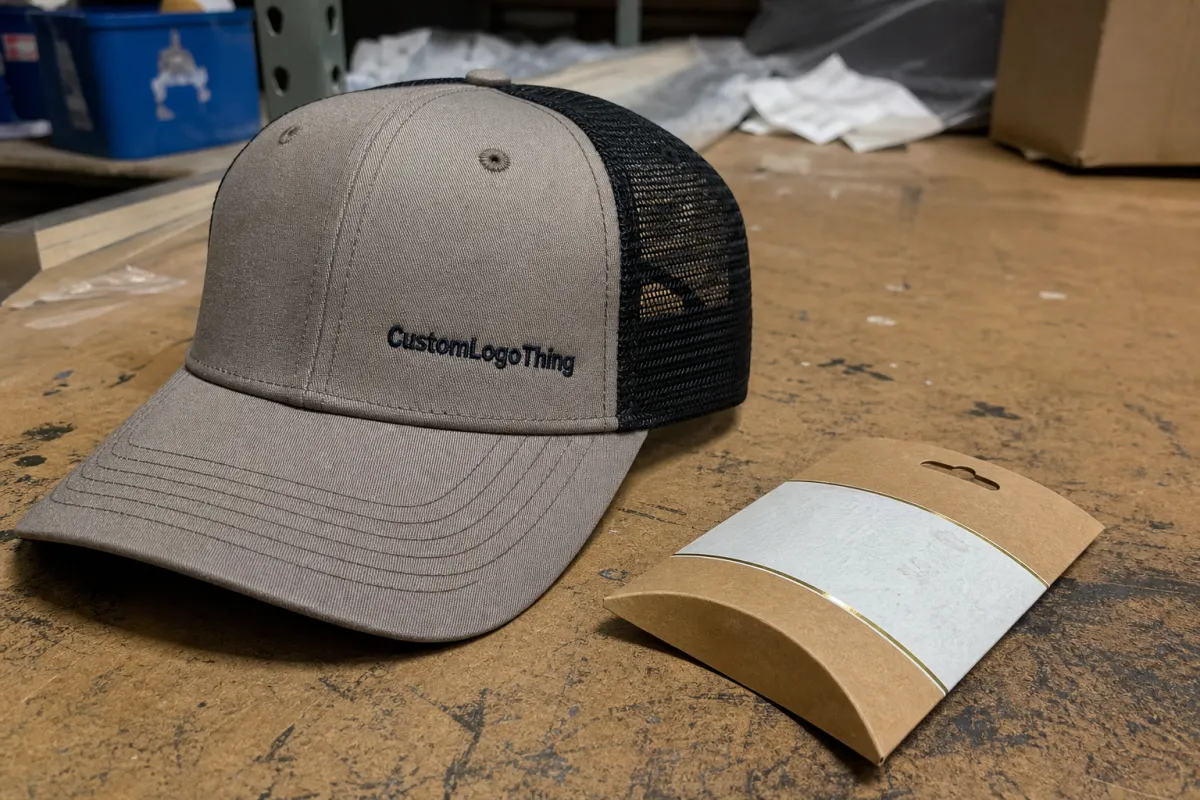
Most savings come from consistency. One cap body, one artwork version, one decoration method, one closure style. Every added variable creates extra setup time, and that setup cost gets spread across the run. Mix cap colors, split placements, or combine multiple decoration methods, and the unit price usually rises fast.
A real quote needs more than a logo file. The supplier should know panel count, crown shape, mesh type, closure style, decoration method, artwork size, color count, and packaging needs. If those details are still changing, the quote is only a rough placeholder.
Large orders become cheaper when they stay repeatable. A 500-piece order with one front logo can be efficient. A 500-piece order with several cap colors, multiple logo positions, and branded inserts is a different job entirely. The machines, the packing table, and the inspection step all feel the difference.
The simplest cost controls are also the most practical:
- Use one decoration location, usually centered front.
- Keep one construction type instead of mixing structured and unstructured builds.
- Limit color splits so materials do not need separate pulls.
- Standardize packaging unless retail presentation is required.
Those choices lower cost and reduce proof errors, packing mistakes, and reorder problems later.
Mesh, Crown, and Closure Choices That Change Wearability
Trucker caps are defined by the mesh back, but the front panel and crown shape influence fit, comfort, and decoration quality just as much. A classic build usually pairs a structured front with polyester mesh at the back. That gives the cap breathability and a stable surface for logos.
Foam fronts are common in traditional trucker styles and hold shape well for bold branding. Cotton twill fronts feel less glossy and can read as more premium. Polyester fronts often handle color consistency well and resist wrinkling. Each material takes decoration differently, so the cap body and logo method need to be matched early.
Mesh quality is easy to underestimate. Cheap mesh can feel rough, look uneven, or collapse around seams. Better mesh holds shape, breathes properly, and keeps the cap looking cleaner after wear. Buyers do not always ask about mesh weight, but they should.
Closure choice affects fit and inventory. Snapbacks are usually the safest bulk option because they adjust easily and work across mixed sizing. Hook-and-loop closures can suit staff programs, but they are not always the most durable. Fitted trucker variants are possible, but they require tighter size control and more inventory discipline.
Three details separate a cap that gets worn from one that gets shelved:
- Crown depth affects fit and silhouette.
- Brim shape changes the look more than many buyers expect.
- Sweatband quality affects comfort during longer wear.
Use case matters. A uniform cap needs durability and consistent sizing. A merch drop can tolerate a more fashion-driven profile. A giveaway cap must look good in a photo and still feel acceptable after the first wear. The same cap body will not do all three jobs equally well.
If caps are heading into retail channels, ask how they will be folded, packed, and cartonized. A crushed front panel can undo the rest of the work. For packaging and transit references, ISTA standards are useful because they frame handling and shipping expectations clearly.
Decoration Specs Buyers Should Lock Down Before Quoting
Decoration method affects price, proof timing, and how the cap wears over time. For an apparel trucker Caps Bulk Order, the common choices are embroidery, patches, woven labels, and in some cases print-based decoration. Each one behaves differently on a curved front panel.
Embroidery is the most common choice because it is durable and reads well from a distance. The tradeoff is stitch count. Tiny type, narrow lines, and dense fills can blur or crowd together, especially on thinner fronts. Simple logos usually stitch best.
Patches work well when the art is too detailed for direct stitching or when the front panel needs a cleaner finish. Woven patches can hold sharper line work than embroidery. Printed patches handle gradients and small lettering better. Leather and PVC patches create a different look, but they are not the right fit for every brand.
Before quoting, lock down these items:
- Placement — centered front, side, or rear hit.
- Size — exact width and height, not an estimate.
- Color control — thread matching, Pantone references, or acceptable variation.
- Artwork format — vector files are the easiest to produce from.
- Patch structure — woven, printed, merrowed edge, custom cut, or molded.
Seams and curves create real limits. A logo that crosses a seam may need redesign. A design too close to the edge can distort. Mesh-backed panels are not flat canvases, even if the artwork was created that way. Good suppliers flag these issues early instead of waiting for the buyer to discover them in the proof.
File quality also matters. AI, EPS, and editable PDF files are best for production. PNG and JPG can work as references, but they are weak starting points for embroidery or patch development. If the logo has tiny type or narrow lines, ask whether simplification is needed before production starts.
There is a clear difference between what looks good on screen and what survives on a cap. Thin strokes can disappear. Small type can blur. Multi-color logos can raise cost if every added color increases setup. Buyers who understand that gap make cleaner decisions and get fewer surprises after proof approval.
For orders that include paper inserts, hang tags, or retail cartons, the FSC standard can matter if packaging materials need documented sourcing. That does not affect the cap itself, but it can matter in broader merchandising programs.
Pricing, MOQ, and Unit Cost Math for Bulk Orders
Pricing usually breaks into four parts: the blank cap, decoration, setup, and freight. Buyers often focus on unit price, while suppliers focus on the whole run. Both views miss part of the picture. The real landed cost appears only after sample charges, packaging, and shipping are included.
MOQ, or Minimum Order Quantity, exists because setup work does not disappear at low volume. Digitizing a logo, preparing patches, setting machines, checking samples, and packing cartons all take time. A low quantity simply spreads those fixed costs across fewer caps, which is why a 100-piece order can look expensive. That is normal production math.
Typical working ranges often look like this:
| Decoration Method | Typical Setup | Typical Unit Range | Best For |
|---|---|---|---|
| Flat embroidery | $35-$85 digitizing/setup | $2.10-$4.25 at 500+ units | Simple logos, staff caps, repeat orders |
| 3D puff embroidery | $45-$95 setup | $2.75-$5.50 at 500+ units | Bold front logos with more depth |
| Woven or printed patch | $60-$150 tooling/art setup | $3.00-$6.50 at 500+ units | Detailed art, retail merch, sharper edges |
| Blank cap only | Minimal or none | $1.40-$3.20 depending on body quality | DIY decoration, mixed branding programs |
These are working ranges, not promises. Material quality, cap profile, mesh grade, closure type, and packaging can move the final number. A foam-front snapback with one-color embroidery at 1,000 pieces should not cost the same as a custom patch job with branded inserts and individual polybags.
Compare quotes line by line. Check whether they include digitizing, revision rounds, sample freight, carton packing, polybags, and final delivery. A lower headline price can hide costs that appear later. A cleaner quote with fewer surprises is usually the better buy.
One useful test is to compare the cost at three quantities, not one. 250, 500, and 1,000 units often reveal whether setup costs are being absorbed properly. If the unit price barely changes as quantity increases, something may be off. If it drops sharply at the higher tier, that shows where the factory is actually efficient.
Process, Timeline, and Production Steps From Proof to Ship
A clean production path usually follows the same sequence: inquiry, spec review, artwork proof, approval, production, inspection, packing, and shipment. If any step is rushed or skipped, the timeline becomes unstable. Production starts earlier than payment; it starts when the spec becomes usable.
The slowest jobs are usually the ones that arrive with missing vector art, undecided placement, or quantity changes after quoting. One revision is normal. Several rounds of “make it a little bigger” can turn a two-week order into a three-week order. If the delivery date matters, state the in-hand deadline immediately.
Typical lead times depend on complexity:
- Simple repeat orders: often 10-15 business days after proof approval.
- New decorated orders: often 15-25 business days depending on patch or embroidery setup.
- Highly customized runs: often 20-30 business days if tooling, samples, or special packaging are involved.
Rush orders can work, but they cost more and leave less room for correction. A trade show order should not be treated like an ordinary replenishment. If a supplier is vague about the schedule, assume the time risk is yours.
Quality control should include first article approval, placement checks, stitch or patch inspection, color review, and carton verification before shipment. For caps, one crooked logo can make a whole box feel wrong. The closer the order is to retail or uniform use, the stricter those checks should be.
Shipping deserves its own planning. Carton count, freight class, and destination matter if the caps are going to multiple locations or into a distribution center. Internal deadlines often fail because freight arrives late, even when production finishes on time. That is a logistics issue, not a decoration issue.
If the order travels with other printed goods, transit protection matters more than buyers expect. Cap fronts crush easily under poor stacking. The packing method should match the trip, not the cheapest carton size.
What to Verify in a Supplier Before You Scale Past the First Run
A supplier that can quote is not automatically a supplier that can repeat the same cap cleanly on the next order. That difference becomes obvious once a test run turns into a larger program. For repeat work, consistency matters more than a polished sample photo.
Ask how the supplier handles color matching, sample approval, tolerance checks, carton labeling, and inspection failures. You want a process, not a promise. “Close enough” is how reorder disputes begin.
Communication tells you a lot. A supplier who returns proofs cleanly, answers questions directly, and tracks revisions carefully usually saves money over a cheaper vendor that creates confusion. Confusion is expensive because it creates delays and duplicate approvals.
Before scaling past the first run, ask these questions:
- Can you match the same cap body on a reorder?
- Do you keep approved artwork and stitch files on record?
- What changes trigger an extra setup charge?
- Can you split shipments if departments need different delivery dates?
- How do you handle a failed inspection before goods leave?
Honest suppliers talk plainly about risk. They will tell you which elements are stable and which ones can move slightly because of material supply or production method. If the conversation stays vague around packaging, lead time, or color matching, the second order will be harder than the first.
That is also why a solid FAQ page matters. The boring questions are often the ones that prevent rework, especially when purchasing is spread across marketing, operations, and finance.
Next Steps to Finalize Artwork, Quantities, and Delivery
If you are preparing an Apparel Trucker Caps bulk order, the cleanest path is practical. Confirm the cap body. Decide on the decoration method. Gather vector artwork. Lock the quantity tier. Ask for a line-item quote that separates setup, unit price, samples, and freight.
Before approving production, send these details:
- Preferred cap body and closure
- Exact logo placement and decoration size
- Vector files and color references
- Target quantity and any color splits
- Delivery zip code and in-hand date
- Any split-shipment or retail packing requirements
If the caps are for uniforms, get sign-off from whoever controls brand standards. If they are for retail, confirm packing and labeling. If the order is for an event, work backward from the dock date, not the launch date. Those are not the same thing.
If a reorder is likely, say so before production starts. Reorders go faster when the cap body, closure, and decoration files are already documented. Otherwise the second run turns into a search for old notes and old proofs.
A clean result usually comes from three things: clear specs, realistic timing, and a supplier that does not guess. That combination keeps the order on budget and increases the odds that the caps arrive looking like the approved proof.
What counts as a bulk order for apparel trucker caps?
Bulk usually means a quantity high enough to spread setup and decoration costs across the run. The exact threshold shifts by cap style, decoration method, and whether the order uses one logo or several versions. Ask for pricing at more than one quantity break so you can see where the unit cost starts to flatten.
What affects the unit cost of an apparel trucker caps bulk order?
The main drivers are cap quality, decoration method, stitch or print complexity, and total quantity. Setup fees, digitizing, samples, packaging, and freight can also change the landed cost. Late artwork changes, extra colorways, or additional logo placements usually raise the price fastest.
What artwork do you need for trucker cap production?
Vector artwork is best because it scales cleanly for embroidery or patches. You should also provide logo placement, exact colors, preferred cap colors, and any size limits for the front panel. If the logo is detailed, ask whether it needs simplification before production starts.
How long does a bulk trucker cap order usually take?
Lead time depends on decoration method, quantity, and how quickly proofs are approved. Simple repeat orders move faster than new designs with custom patches or multiple revision rounds. If timing matters, state the in-hand date early and ask for a realistic production window.
Can I mix colors or closures in one bulk order?
Yes, but mixing options can raise cost and complicate inventory planning. The more variables you add, the more likely the order needs separate runs or higher minimums. If flexibility matters, ask which changes are safe and which ones create a new setup charge.