Pricing apparel Unstructured Dad Hats moq is usually driven by more than the blank cap. Decoration setup, panel behavior, closure choice, packaging, and proofing all affect the final number. A soft-front dad hat can work well for retail, merch, staff wear, and events, but the quote only becomes useful once the spec is clear.
The buyer decision is less about finding the cheapest cap and more about avoiding surprises after production starts. If the artwork, construction, and delivery window are not aligned, small changes can trigger extra charges or delays. That is why the order should be judged on fit, decoration, and lead time together.
A cap order gets expensive when the spec is vague. One undecided closure, one extra decoration location, or one logo that does not suit a relaxed front panel can force another proof cycle and new charges.
Why Unstructured Dad Hats Fit Retail and Promo Programs
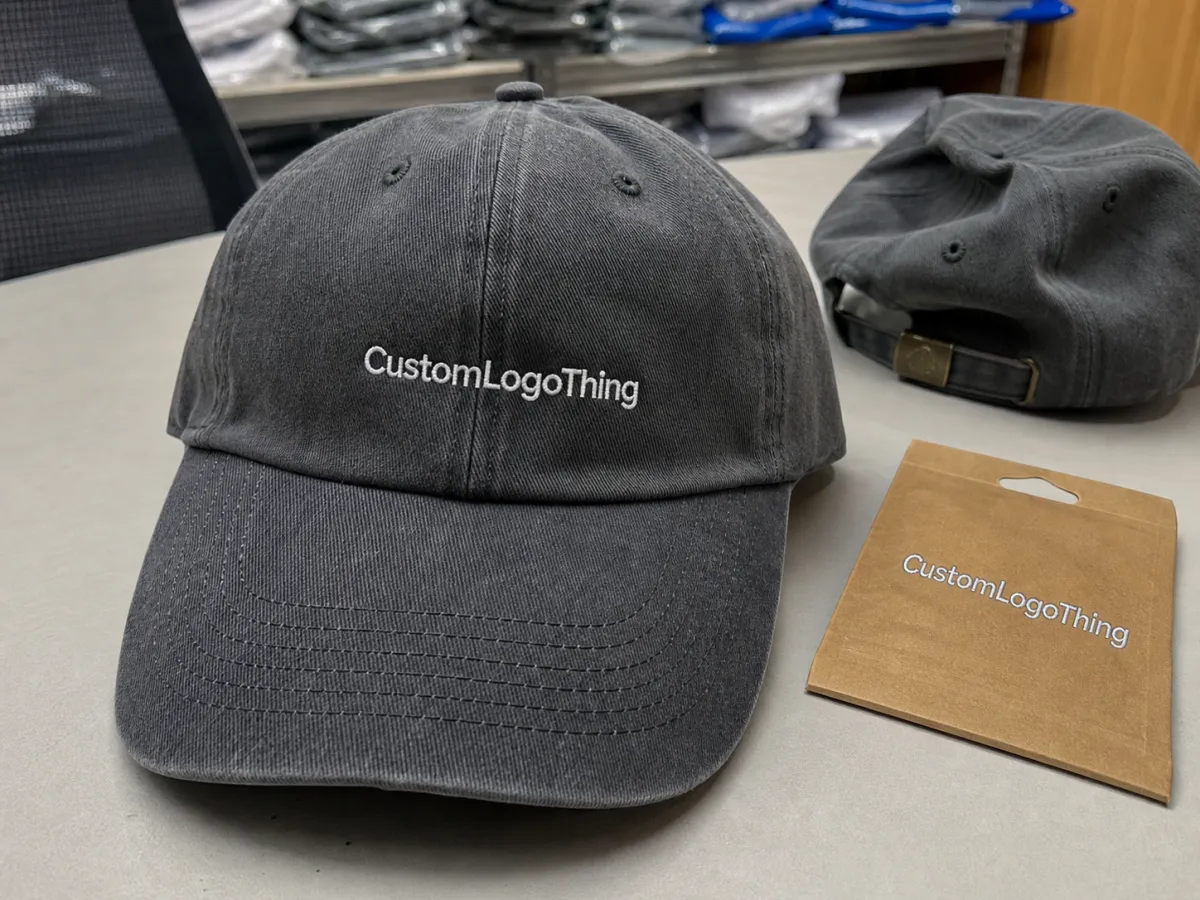
An unstructured dad hat wears like a finished product without the stiff look of a structured crown. That softer profile is why it works across different programs. Lifestyle brands use it for an easy retail look, promo teams use it because it feels more deliberate than a giveaway cap, and uniform buyers like the comfort for all-day wear.
The style also fits different price tiers. A clean cotton twill cap can sit in a midrange assortment, while a garment-washed version with a patch can move closer to premium merchandise. The silhouette stays familiar, but the materials and decoration can shift the hat into a different budget.
Repeat ordering is another advantage. Once the crown shape, stitch density, and closure are approved, the same cap can be reordered with less risk than trend-driven headwear. That matters when the same look must stay consistent across stores, events, or employee kits.
The style is forgiving, but not immune to quality issues. Weak seam support can let embroidery distort the front panel, and a cheap closure can make the whole cap feel lower grade. The base construction still needs to support the decoration.
Panel Shape, Crown Feel, and Brim Options
A true unstructured dad hat has a relaxed crown, a lower profile, and a front panel that naturally breaks in. It does not stand upright like a structured six-panel cap, and that softer shape changes how it looks on a shelf, on a head, and in photos.
That behavior matters when placing logos. Artwork centered on a flat mockup may sit slightly lower once the cap is packed, steamed, or worn. If the logo is too close to a seam or the panel slope is steep, the mark can appear off-balance. Placement should be checked against the actual cap pattern, not only a digital art board.
Brim shape changes the final impression too. A pre-curved bill usually reads more ready-to-wear and retail-friendly. A flat bill gives a cleaner blank presentation and lets the end user shape it later. The right choice depends on whether the cap should feel broken-in from day one or more customizable.
- Strapback: familiar, adjustable, and usually the easiest closure to spec.
- Buckle closure: slightly more polished and often better for retail presentation.
- Self-fabric or fabric strap: softer at the back and common for casual programs.
These details affect fit, shipping bulk, and appearance. A relaxed crown with the wrong trim can look unfinished. The same cap with the right closure and brim shape reads intentional, which is why small construction choices matter as much as the logo.
Fabric, Stitching, and Decoration Specifications to Confirm
Start with the base fabric. Cotton twill is still the standard, but brushed cotton, pigment-dyed fabric, washed finishes, and cotton blends all change hand feel and color depth. Pigment-dyed caps usually feel more broken-in, while cleaner twill gives a sharper retail look. The spec should match the brand direction.
Fabric weight matters too. A lighter cap feels casual, but it can lose shape faster. Heavier twill gives the crown more body and helps the hat hold up after wear and packing. The best choice depends on whether the decoration needs more support or the customer wants a softer drape.
Stitching quality is where lower-cost hats often show weakness. Check seam consistency, crown reinforcement, sweatband finish, and the inside finish. The customer may never inspect the interior, but weak construction often shows up later as poor shape retention or a front panel that wrinkles too easily.
Decoration method is usually the biggest visual decision. Flat embroidery is common for apparel Unstructured Dad Hats moq orders because it works well on a soft crown and keeps setup manageable. Patches can create a bolder retail look, especially for logos with thin detail or a badge-style mark. Woven labels, sewn twill patches, and heat-applied badges each have their place, but they also change tooling, lead time, and approvals.
Artwork needs practical review, not just visual approval. Thin lines, tiny type, and tightly packed elements can disappear on a relaxed front panel. Ask for the minimum stitch size, safe art area, and exact placement in writing. Thread colors, interior labels, hangtags, and carton presentation should also be confirmed before production starts.
If the order is still being shaped, the ordering FAQ is useful for checking which details usually need confirmation before a quote is locked.
What Drives Apparel Unstructured Dad Hats MOQ
For apparel Unstructured Dad Hats moq, the minimum usually comes from blank availability, decoration complexity, and setup time. There is rarely one fixed rule. A stock blank with one embroidery location can support a lower minimum, while a custom patch build, special label package, or unusual closure raises the threshold because the factory is committing more time and material per unit.
Setup cost is the part buyers often underestimate. Digitizing, thread loading, machine prep, proofing, and color matching cost about the same whether the run is 50 pieces or 500. On a small order, those costs are concentrated. On a larger order, they spread out. That is why a 60-piece run and a 300-piece run can use the same decoration method but land in very different price brackets.
| Decoration option | Typical MOQ impact | Common setup or tooling fees | Estimated add-on per piece | Best use |
|---|---|---|---|---|
| Flat embroidery, one location | Lowest | $35-$75 digitizing/setup | $1.25-$2.50 | Simple logos, staff wear, promo runs |
| Multi-color embroidery | Moderate | $45-$90 setup | $1.75-$3.25 | Retail logos with more detail |
| Woven or embroidered patch | Moderate to higher | $60-$180 tooling fees | $2.00-$4.50 | Bold branding and textured finishes |
| Limited 3D puff embroidery | Higher | $45-$100 setup | $2.50-$4.00 | Chunky lettering and select logos |
Most starting quantities fall around 48 to 100 pieces for stock blanks with simple decoration. Once the order adds custom-dyed fabric, custom labels, or patch construction, 100 to 300 pieces becomes more realistic. Those are not hard rules, but they reflect how headwear is usually quoted.
Simple specs usually lower the minimum. A stock color, one decoration area, and a standard closure give the production team fewer variables to manage. Add a second branding location, special packaging, or a custom inside label, and the order becomes more labor-heavy even if the cap itself has not changed much.
Sampling can also affect the first quote. A pre-production sample or detailed digital proof helps protect against mistakes, but it may add cost and push the schedule back a few days. When comparing apparel Unstructured Dad Hats moq options, ask which items are included in the base price and which are billed separately. That clears up most of the confusion early.
Production Steps, Lead Time, and Delivery Windows
A clean order flow should be easy to follow. Most runs move through quote request, artwork review, proof approval, production scheduling, decoration, packing, and transit. If one stage stalls, the whole calendar shifts. Proof approval is often the slowest step because that is where buyers notice placement, color, or sizing issues.
- Quote review: quantity, color, closure, logo placement, and packaging are confirmed.
- Artwork check: the file is reviewed for stitch count, line weight, and placement limits.
- Proof approval: the buyer signs off on the mockup or sample details.
- Production scheduling: materials and machine time are allocated.
- Decoration and packing: caps are finished, counted, and packed for shipment.
- Transit: cartons move to the delivery address or distribution center.
Lead time depends on what needs to be sourced. A stock blank with one-location embroidery may move in roughly 10 to 15 business days after approval. Patch work, multiple decoration areas, or special labeling can push that to 15 to 25 business days. If fabric, trim, or closure needs to be sourced for the order, a longer window is normal. Tight launch dates should be shared early, not after proof approval.
Packaging deserves attention too. Hats that ship to stores or direct to consumers need carton specs that protect the brim and keep the crown from collapsing. ISTA testing methods are a sensible reference if the product will move through several handling points. If the order includes hangtags or inserts, FSC-certified paper is a reasonable material standard to request.
Before the order is locked, verify the practical milestones: art approval, sample signoff if needed, pre-press confirmation, and shipment notice with tracking. Build in buffer time if the delivery date is fixed. Custom headwear rarely rewards a rushed schedule.
Why Buyers Keep Reordering the Same Cap Program
Consistency is the main reason a cap program survives beyond the first order. Once the fit, fabric, and decoration are approved, the next run can move faster and with less risk. That predictability matters to retail buyers because a hat that sold once needs to look the same on reorder. It matters to promo teams too, because uniforms and event kits often depend on the same look across multiple shipments.
The strongest reorder files leave little to chance. A useful spec sheet shows the exact cap style, color reference, closure type, logo placement, thread calls, carton count, and approved packaging. If those details are missing, the order starts drifting. The result is usually a slower quote, a longer approval cycle, or a mismatched rerun that should have been avoidable.
The cleanest cap programs are the ones with disciplined paperwork. A clear spec sheet, a saved proof, and a full approval trail do more for long-term control than a discount ever will.
Change drift is the thing to guard against. A small untracked edit, such as a different closure, a slightly larger logo, or a different label position, can create extra proof cycles and pricing changes that were never part of the original plan. For apparel unstructured dad hats moq orders meant to repeat, the real value is being able to come back later and get the same result without rebuilding the order from scratch.
What to Send Before We Quote and Cut
The fastest path to an accurate quote is a complete brief. Send the logo file, target quantity, color preferences, decoration location, closure choice, and any packaging or labeling needs. If there is a required delivery date, include the ship-to address as well. Freight can shift landed cost more than many buyers expect, especially for multi-location delivery.
- Artwork: vector file preferred, plus any Pantone or thread color references.
- Quantity: target run size and any split sizes by color or logo version.
- Construction: closure, brim shape, crown feel, and fabric preference.
- Branding: embroidery, patch, woven label, inside tag, or mixed decoration.
- Delivery: deadline, ship-to address, and whether the order is retail packed.
Ask the quote to separate what is included from what is extra. Setup charges, tooling fees, proof costs, and packaging line items should be visible before approval. If the first price comes back higher than planned, ask whether the spec can be simplified without changing the core look. In many cases, one adjustment to decoration or trim is enough to move the order into a more workable range.
If the goal is a clean buying process, keep the discussion focused on fit, decoration, and timing. Then confirm the apparel unstructured dad hats moq, review the proof carefully, and approve only when the spec, price, and ship date all match the brief. For common approval questions, the FAQ is a useful check.
FAQ
These are the questions buyers usually ask before placing an order for unstructured dad hats.
What is a realistic apparel unstructured dad hats MOQ for embroidery?
MOQ usually depends on blank availability, thread count, and whether the cap is a stock style or a more customized build. A simple single-location embroidery run on a standard blank often allows a lower minimum than patch-heavy or multi-location decoration. The clearest quote comes from sharing quantity, artwork, and color information up front so the supplier can price the actual job instead of a rough estimate.
Can I lower the MOQ on unstructured dad hats by simplifying the design?
Yes. A simpler logo with fewer stitch changes, one decoration area, and standard trim usually reduces setup burden. Stock colors and standard closures also tend to keep the order moving faster than custom-dyed fabric or specialty labeling. If a lower minimum is the goal, a simplified spec sheet is the fastest way to see what is possible.
What artwork files work best for dad hat decoration?
Vector files are preferred because they preserve clean edges for embroidery, patches, and labels. Small text, thin lines, and tight details should be reviewed closely because cap panels have limited usable space and a soft crown does not hold every shape the same way. Pantone references or clear brand color notes help keep thread and trim choices consistent across the run.
How long does production usually take after approval?
Timing depends on blank availability, decoration complexity, and whether sampling is needed. In many cases, the clock starts after artwork and specification approval, not at the first inquiry. If the order has a hard ship date, say so early so the timeline and shipping method can be checked before the job is locked.
What affects unit cost most on apparel unstructured dad hats MOQ orders?
Quantity is the biggest factor because setup cost is spread across more units as the order grows. Embroidery complexity, patch construction, custom labels, and special packaging all add cost. Using stock materials and one decoration location is usually the most efficient way to control unit price and keep the quote competitive.