A Hotel Unstructured Dad Hats factory quote should do more than give a unit price. It should show how the cap is built, how it packs, and what changes the cost. In hospitality, these hats are often used for retail, welcome kits, staff issue, or event programs, so the quote has to match the actual use case.
Soft-crown caps work well because they store flat, feel relaxed on first wear, and usually travel better than stiff promotional caps. Those details affect freight density, carton damage, and how the product looks when it arrives. For a buyer, that matters as much as the decoration method.
A useful quote starts with the brief. A hotel that wants shelf-ready merch needs a different build than one ordering staff hats for daily wear. The better factory will ask about logo size, closure type, fabric finish, packaging, and delivery date before pricing. That is what turns a quote into something you can actually compare.
Why hotel teams choose soft-crown hats for bulk orders
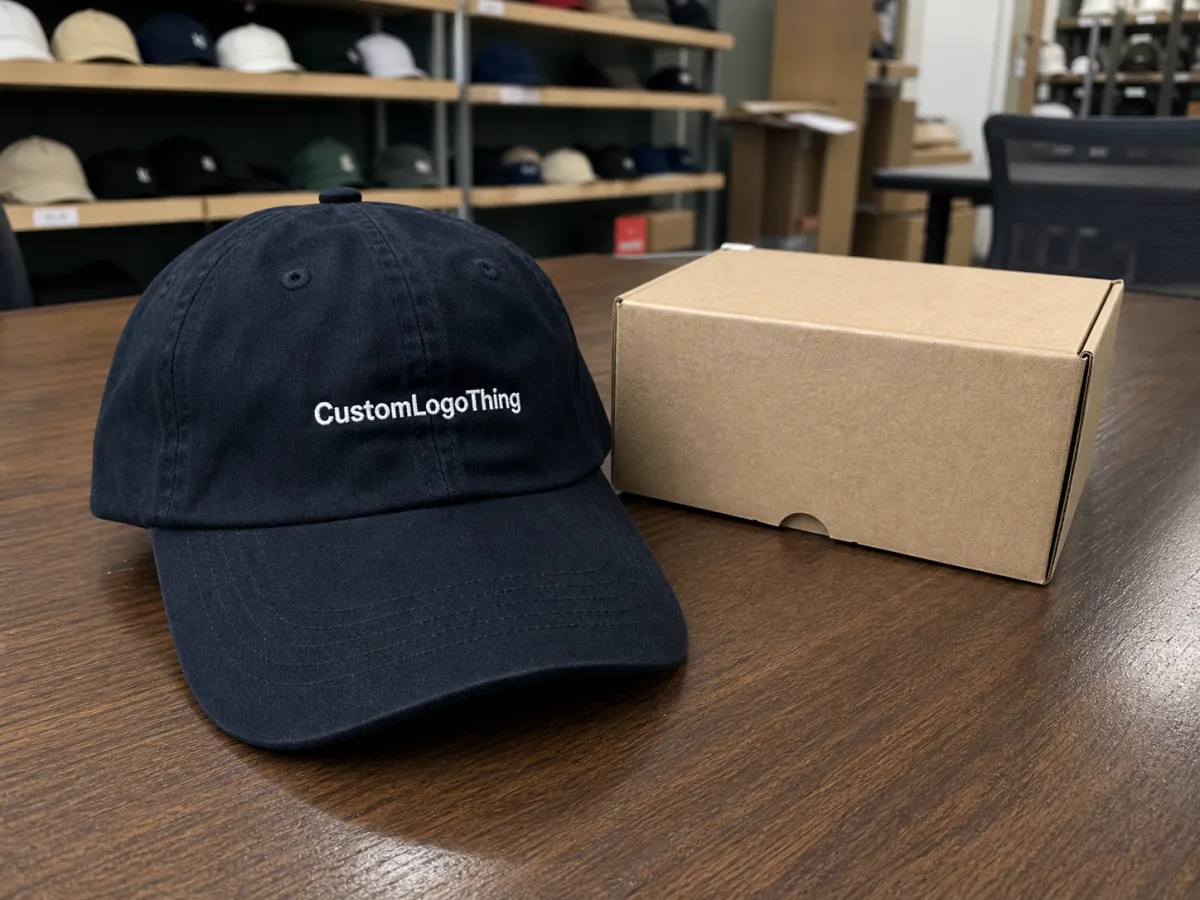
Hotel teams usually choose Unstructured Dad Hats because the style fits many settings without looking forced. A low-profile cap works in resort shops, marina bars, golf clubs, heritage properties, and staff wardrobes where a rigid promo hat would feel out of place. It reads casual, but still polished when the crown shape and brim curve are controlled.
There is also a storage advantage. Unstructured caps compress more easily in cartons than structured ones, which can lower cube and reduce crushed-front complaints. On a few hundred pieces that may be minor, but on larger shipments it can meaningfully affect freight and damage rates.
Comfort matters too. Guests are more likely to wear a cap that feels broken in from the first try-on, especially in warm climates. Soft fronts breathe better and do not fight the shape of the head. That makes the hat more likely to be kept and worn, rather than tossed aside.
For hotel programs, the strongest brief is usually simple: one-size fit, moderate price, easy storage, clean branding, and a style that looks premium without being loud. That gives the factory a clear target and gives the buyer fewer surprises after sample approval.
Factory-ready construction and branding options for hotel programs
A factory-ready dad hat is usually specified as low-profile, unstructured, six-panel, and curved brim. Small construction choices still change the result. Crown height controls how close the hat sits to the head. Brim stiffness affects whether it keeps its curve after packing. Seam finish affects how neat the inside feels during wear.
Fabric choice affects both appearance and decoration. Washed cotton gives the softest handfeel, but it can show subtle tone variation. Brushed twill keeps embroidery edges cleaner and holds logo detail well. Chino twill sits in the middle: tidy, dependable, and easy to specify for a cleaner retail look. Recycled blends can work, but only if the buyer checks weight, shrink behavior, and finishing consistency.
Branding should suit the cap, not overpower it. Flat embroidery is still the most practical option for a hotel logo that needs durability. Patch embroidery is useful for crest-style artwork or destination marks with more texture. Woven patches handle finer lines and small lettering better than dense stitching. A woven label on the side or back keeps the front clean if the hotel wants something quieter.
Closures deserve the same attention. Self-fabric straps with a metal buckle feel more polished and fit retail merchandising well. Tri-glides are durable and practical. Hook-and-loop works for staff issue or low-cost giveaways, but it usually reads less refined on a souvenir shelf. If the cap sits beside premium goods, the closure should match that tier.
A good quote should say whether the logo is embroidered directly onto the cap or applied as a patch before sewing. That affects lead time, texture, and correction cost. If that detail is missing, the quote is probably built for speed, not accuracy.
Material specs, fit details, and decoration limits to confirm
Before approval, the spec sheet should state panel count, crown height, brim length, sweatband type, eyelet placement, seam finishing, and whether the front panel has hidden structure. For a true unstructured cap, the front must stay soft. If the factory adds heavy buckram, the silhouette changes and the whole point of the order shifts.
Fit needs real numbers, not “one size fits most.” Ask for the actual adjustment range, usually around 56-60 cm, and confirm strap length so the back closure does not look oversized on smaller heads. A crown that is too shallow can ride up. A crown that is too deep can fold awkwardly at the front.
Decoration limits are tighter on soft fronts than on structured caps. Dense stitching across a loose panel can pull the fabric, especially if the logo is oversized or too close to a seam. A factory should be able to tell you the practical embroidery width, not just what the machine can technically produce. For many hotel programs, a front logo around 90-110 mm wide is realistic, but artwork density and fabric weight can push that lower.
Color control needs discipline. Send Pantone references for both fabric and thread, then ask how the factory will match them. Digital proofs can look exact and still drift once thread sheen and daylight are involved. Navy may read greener under showroom light. Charcoal may look warmer under yellow bulbs. Approval should happen under neutral light whenever possible.
If the hotel cares about sustainability or paper inserts, ask for FSC-certified packaging components where available. The cap itself may not need elaborate claims, but cartons, hang tags, and swing cards often sit inside a broader brand standard. Those details are easy to miss and expensive to retrofit later.
The strongest sample answers three questions at once: does it fit correctly, does the logo sit cleanly, and does the color still look right in real light?
Hotel unstructured dad hats factory quote: cost, MOQ, and unit pricing
A useful hotel Unstructured Dad Hats factory quote separates the costs that actually move the number. Fabric grade, decoration method, stitch count, closure type, label type, packaging style, and any folding or kitting request all affect pricing. If the factory gives only a flat unit price, the buyer cannot tell whether the quote includes setup, sample prep, or carton work.
MOQ changes with construction. A stock-style cap with simple embroidery can often run at a lower minimum than a fully custom color, a patch build, or a special closure. If a hotel needs two versions of the same cap, such as guest retail and staff issue, ask for MOQ by color and by decoration version. That avoids awkward reordering later.
| Option | Typical MOQ | Typical Unit Price | Best Use | Notes |
|---|---|---|---|---|
| Washed cotton, flat embroidery, self-fabric strap | 300-500 pcs | $3.20-$5.10 | Gift shops, welcome kits | Soft handfeel, good value, moderate stitch counts work best |
| Brushed twill, embroidered patch, metal buckle | 500-800 pcs | $4.40-$6.80 | Retail shelves, resort merch | Cleaner visual finish, better for crest-style artwork |
| Recycled cotton blend, woven label, hook-and-loop | 800-1,000 pcs | $4.10-$6.20 | Staff issue, eco-led programs | Works well when the front logo should stay understated |
| Fully custom color, patch branding, premium buckle | 1,000+ pcs | $5.80-$8.50 | Signature property merch | Higher setup, tighter color control, better for repeat programs |
One-time fees can matter more than buyers expect. Digitizing is usually a setup charge. Woven patches, custom labels, and special packaging are often priced per piece. Sample preparation may be free, credited later, or charged outright depending on the factory. If you are comparing suppliers, ask for sample cost, production cost, freight, and packaging upgrades as separate lines.
A low unit price can become expensive once cartons, inner packs, labels, or air freight are added. A quote that looks higher on paper may still win after duties and delivery are counted. Buyers often miss that because the unit number gets all the attention while freight and packaging move the landed cost in a meaningful way.
For hotel buyers with sustainability requirements, carton board and paper inserts should be specified early. If the property wants FSC-certified materials, that should be written into the brief, not added after the proof stage. Small paper components are cheap to forget and annoying to replace.
Production steps, sample approval, and lead time from quote to ship
The cleanest orders follow a predictable chain: inquiry, artwork review, spec confirmation, mockup, sample or proto approval, bulk production, inspection, packing, and shipment. If any step is vague, the timeline starts to slip. A buyer should know whether the factory is waiting on art, fabric, or final approval.
Lead time usually starts after sample approval, not after the first email. For straightforward orders, production often runs 12-15 business days once everything is approved. More custom builds, special closures, or patch-heavy designs can push closer to 18-25 business days. Peak season, holiday congestion, and fabric shortages can add more time.
Sample review is where most preventable mistakes show up. Check crown shape, logo scale, thread color, closure hardware, inside label, and any contrast stitching. If the front panel sits too shallow or the logo crosses a seam line, fix it before bulk sewing starts. Small changes at sample stage are cheap. Changes after 1,000 pieces are not.
A practical checklist keeps the order moving:
- Vector logo file in AI, EPS, or high-resolution PDF
- Target quantity by color and by decoration version
- Preferred closure and packaging method
- Ship-to address and required in-hand date
- Any retail insert, hang tag, barcode, or kitting need
Carton packing deserves real attention. Hats should be packed so the brim does not flatten and the crown does not crush under stack pressure. Some factories can provide carton dimensions, unit packs, and stacking guidance based on the shipping method. That helps even when the order is simple, because transit damage usually shows up in the last mile, not on the sewing line.
What a dependable cap factory should show before you place the order
A dependable supplier writes specific quotes. The document should list construction, decoration method, size details, carton spec, sample timing, and payment terms without making the buyer guess. If the quote is vague on paper, it will be harder to control in production.
Consistency matters because hotel buyers often reorder the same cap months later in the same color, with the same logo size and closure. Small shifts in crown depth, fabric shade, or thread tone can make the second batch look wrong beside the first. A good factory should explain normal tolerance and where variation becomes a reject.
Ask for pre-production proof images or real sample photos before bulk starts. Those images should show logo placement, brim curve, stitch density, and the handfeel of the front panel. If the cap looks too stiff in the proof, or if the logo appears oversized for the crown, that is worth fixing before sewing begins.
Quality control should be practical, not decorative. Look for trim control, embroidery alignment, measurement tolerances, seam clean-up, closure function, and final packing inspection. A factory that says it inspects but cannot describe what it inspects is not giving useful control. For hospitality programs, the basics matter: thread ends trimmed, labels aligned, hardware secure, carton counts correct.
Good factories also know when to push back. If oversized artwork will distort on an unstructured front, or if a requested color is too close to a stock shade to guarantee consistency, the better supplier says so early. That kind of restraint saves the buyer from a predictable failure.
If the factory cannot explain how a repeat order will match the first batch, the relationship is not ready for reorders. Hotel merchandising often runs on seasonal replenishment, so the supplier needs to understand that rhythm.
Best next steps to request an accurate hat quote
If you want a useful price fast, send a complete brief. Include the logo file, target quantity, cap color, preferred closure, decoration method, delivery location, and the date the hats need to arrive. If you already know the crown profile, inside label choice, or packaging style, add those too.
Also decide how the hats will be used. Guest retail, staff wear, and event giveaways point to different build decisions. Guest retail usually benefits from better fabric, a cleaner closure, and tighter packaging. Staff issue can tolerate simpler finishing. Giveaway programs often need lower cost and faster turnaround.
Ask for tiered pricing at several quantities and ask for freight estimates in the same message. A lower piece price can be misleading if the sample fee, packaging, or shipping cost is higher. If the supplier can separate embroidery, patch work, and packaging, the comparison becomes much clearer.
The strongest hotel orders are usually the least dramatic ones. The cap fits, the logo sits cleanly, the carton survives transit, and the reorder matches the first run. That is the standard a well-built hotel unstructured dad hats factory quote should support.
Can hotel unstructured dad hats be quoted with embroidery and woven labels?
Yes. Both can be included in the same quote, but each method changes setup, lead time, and unit cost. Embroidery is usually the simplest route for a front logo. Woven labels work better for small branding, side placement, or inside identification. Ask the factory to price each method separately so the comparison is fair.
What MOQ should I expect for a hotel dad hat factory order?
MOQ depends on fabric availability, decoration method, and whether the cap is standard or fully custom. Simple embroidery on a stock-style cap often runs lower than patch work or custom color matching. If you need multiple hotel properties in one purchase, request MOQ by color and by logo version.
How long does production usually take after sample approval?
For straightforward orders, production often takes 12-15 business days after sample approval. More custom builds can run 18-25 business days. Add buffer time for peak season, shipping delays, or any revision to the artwork or placement.
Which closure is best for hotel unstructured dad hats?
Self-fabric straps with metal buckles usually give the best retail feel. Tri-glides are durable and practical. Hook-and-loop can work for staff use, but it looks less refined for guest-facing merchandise. The right choice depends on the wearer and the setting.
What information do you need to prepare a factory quote?
Send the logo file, quantity, cap color, decoration method, target ship date, and delivery address. If you already know the crown profile, closure type, packaging style, or label requirements, include those too. A complete brief shortens quoting time and reduces revision risk.


