Apparel unstructured dad hats Reorder Plan for Bulk Buys
If you already approved the cap, the smartest next move is an apparel Unstructured Dad Hats reorder plan that protects the spec and gets the next run moving without rebuilding the sourcing work. Reorder mistakes usually come from spec drift, artwork drift, or missing records from the last approved sample.
For merch brands, breweries, campus stores, sports programs, and promo teams, the value is consistency. A good reorder should look like the last one, feel like the last one, and arrive on time. If you need a broader buying path, our Wholesale Programs page lays out how bulk orders usually scale.
Why an apparel unstructured dad hats reorder plan beats a fresh quote
Fresh quotes are useful when you are still choosing a style. Reorders are different. If the crown, closure, stitch count, and logo placement were already approved, the better move is to lock those details and rebuild only the missing pieces. That is the point of an apparel Unstructured Dad Hats reorder plan: fewer variables, fewer surprises, fewer delays.
The most common problem is a buyer saying, “Just match what we did before,” without sending the old proof, PO, or sample photo. The factory is left guessing whether the previous run used washed twill or chino cotton, whether the strap was self-fabric or a brass buckle, and whether the front logo sat 1 inch or 1.5 inches above the brim seam. Those small differences matter.
Repeat orders work best when you treat them like a spec lock. Keep the approved crown shape, keep the closure type, keep the decoration location, and keep the label details unless there is a clear reason to change them. That matters for lifestyle brands and retail merch where the hat itself is part of the brand image.
The buyers who benefit most are the ones who sell or distribute the same hat style across seasons:
- Merch brands that need the same fit across restocks.
- Breweries and distilleries that want casual retail appeal.
- Campus stores that reorder on demand and hate color drift.
- Sports programs that need quick replenishment for staff, teams, and boosters.
- Promo teams that want a clean repeat order without rebuilding artwork every time.
For shipping and carton performance, ISTA is a better reference than vague “ship-safe” promises. The hat can be soft; the carton should not be.
How the unstructured dad hat fit actually wears
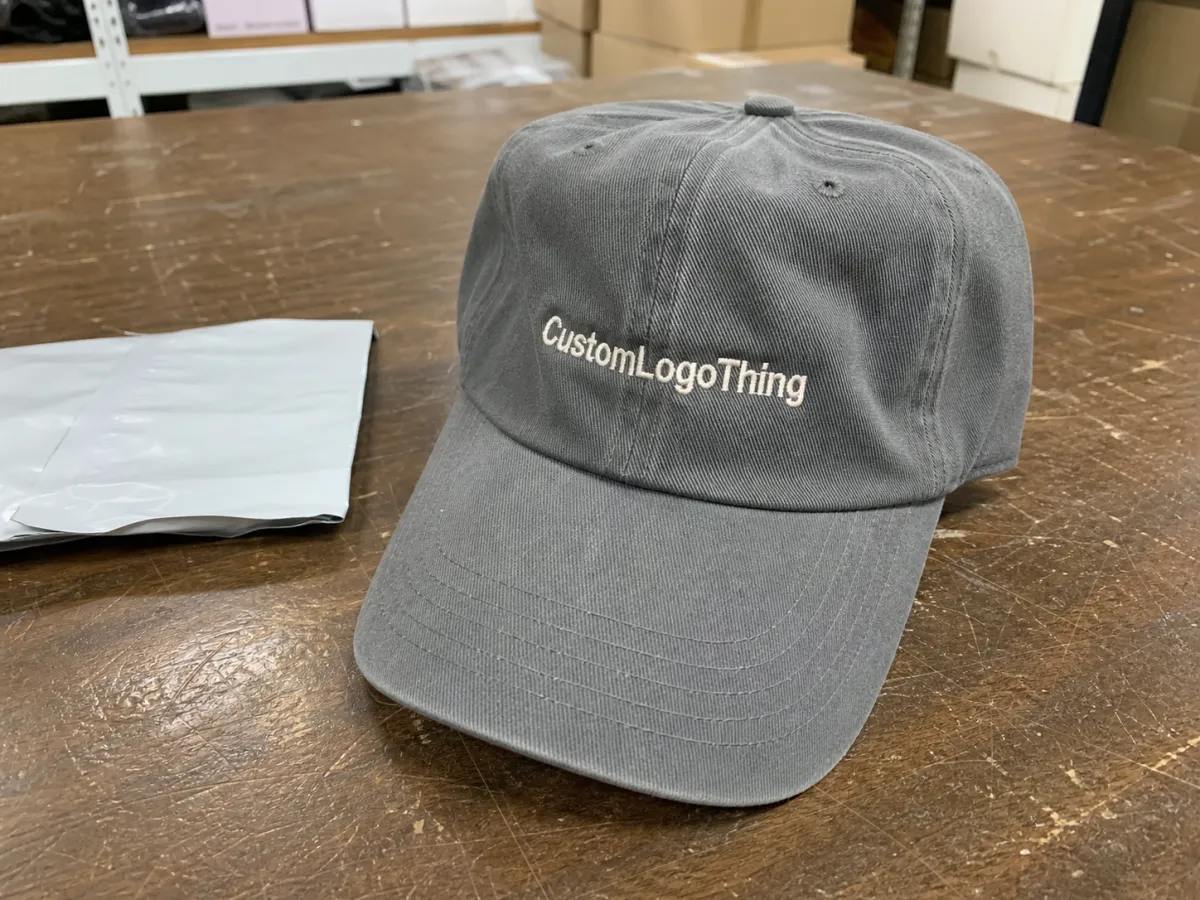
An unstructured dad hat has a soft front crown with no firm internal support, so it collapses naturally instead of holding a rigid shape. That gives it the low-profile, broken-in look buyers expect from this style. It wears more casually than a structured cap, and that is the point.
Fit-wise, the biggest difference is feel. The front panel is lighter, the crown sits lower, and the hat usually breaks in faster. That makes it easier to wear all day, especially for buyers who want a relaxed silhouette instead of a promotional cap that feels boxy.
It also photographs well for lifestyle branding. A soft crown reads as approachable. A hard-front structured cap reads more corporate, which can be fine for uniforms but less useful for retail merch. The same logo can feel very different depending on the cap body, which is why reorders should preserve the original fit if the first run sold well.
Here is the quick comparison buyers usually need:
| Style | Look | Comfort | Best Use |
|---|---|---|---|
| Unstructured dad hat | Soft, relaxed, lower profile | High, easy all-day wear | Retail merch, casual branding |
| Structured cap | Stiffer front, more upright | Moderate, more form-fitted | Uniforms, sports promo, corporate use |
| Washed or pigment-dyed dad hat | More vintage and faded | High, softer hand feel | Lifestyle brands, outdoor brands, fan gear |
That difference matters because the hat can still be the same size and still feel wrong if the front panel shape changes. Buyers notice that immediately, especially when colors sit side by side in retail.
Core specs that keep repeat orders consistent
A clean reorder starts with the spec sheet, not the price. If you want the next run to match, you need the fields that actually control the body shape and decoration result. The useful spec list is short:
- Panel count and panel construction, usually 6-panel for classic dad hats.
- Crown height, because a few millimeters changes the silhouette.
- Brim curve, from gently curved to more relaxed and pre-bent.
- Closure type, such as self-fabric strap, fabric-and-buckle, or metal clasp.
- Stitch count and thread density for embroidery consistency.
- Sweatband finish, especially if the previous run used a padded or printed band.
Fabric choice matters too. Chino cotton is a common baseline because it is durable and easy to decorate. Washed twill gives a softer, more broken-in look. Pigment-dyed cotton adds a faded retail feel. Blended fabrics can help when buyers want a smoother hand feel or a slightly different drape, but they should not be swapped casually on a reorder.
For decoration, the safest repeat options are flat embroidery, woven patches, leather patches, and clean front placement. Flat embroidery is usually the easiest to reorder because the placement and thread count are straightforward. Patches work well too, but only if the patch size, edge finish, and application method are locked.
Before production starts, confirm these details:
- Color standard for the hat body and trim, ideally tied to a Pantone target or a physical sample.
- Logo file format, with vector art preferred for embroidery or patch tooling.
- Label details, including woven label, printed label, or inside tape if the first run had one.
- Pack method, especially if hats should be individually polybagged or carton-packed in size/color lots.
If the packaging uses paper inserts, hang tags, or retail cartons, ask for paperboard or recycled content that meets your sustainability target. FSC is the easiest standard to reference when the buyer wants certified paper materials.
Pricing, MOQ, and unit cost on reorder quantities
Reorder pricing is usually built from five pieces: blank hat cost, decoration, setup, packaging, and freight. A plain stock hat with one-color embroidery costs differently from a pigment-dyed style with a woven patch, custom inside tape, and individual polybags.
For stock Unstructured Dad Hats, the minimum order quantity often starts lower when the body is already in warehouse inventory. Once you add custom color work, special closures, or a unique trim package, the MOQ rises because the factory has to allocate materials and time.
| Order type | Typical MOQ | Typical unit cost | Notes |
|---|---|---|---|
| Stock hat + flat embroidery | 100-300 pcs | $4.80-$7.50 before freight | Best for simple restocks and fast approvals |
| Stock hat + woven or leather patch | 300-500 pcs | $5.40-$8.90 before freight | Patch tooling and application push the price up |
| Custom trim or special packaging | 500-1,000 pcs | $6.80-$10.50 before freight | Inside labels, custom tape, and polybags add cost quickly |
Where does the unit cost drop fastest? Higher quantities, simpler decoration, and fewer extra steps. A 1-color flat embroidery on a stock hat is usually cheaper than a multi-location patch package. A standard carton pack is cheaper than individually bagged hats with custom stickers.
Setup fees are the line item buyers underestimate. Embroidery digitizing, patch mold setup, woven label setup, and proof revisions can add $35-$150 per design depending on the method and how much art cleanup is needed. Rush charges are separate. So are freight and carton upgrades. If a quote is not itemized, ask for it.
For buyers already on a standing restock cycle, the Wholesale Programs route usually makes more sense than re-quoting as if the order never happened. It gives you a clearer path for quantity breaks when demand jumps from 250 units to 750 units.
Process and turnaround for a clean reorder
A clean reorder follows a short path if the spec is already approved: quote, proof, sample check if needed, production, inspection, and pack-out. The delays usually happen when one of those steps has to be rebuilt from scratch because nobody can find the last proof or the old logo file.
For repeat jobs on stocked styles, production often falls in the 12-15 business day range after proof approval. If the order needs new embroidery digitizing, new patch tooling, or a revised closure, 15-25 business days is more realistic. Then add transit time, which can be 3-7 business days domestically and longer for cross-border or consolidated freight. Rush service exists, but only if the blank is available and the decoration is simple.
Common delay triggers are boring, which is why they keep happening:
- Missing vector art or a low-resolution logo.
- Unclear Pantone targets for color matching.
- Changing the closure after the proof was already approved.
- Trying to match a discontinued blank exactly instead of approving the closest real match.
- Changing shipping details after production has started.
Buyers often ask whether they should wait for the exact original blank or approve a close match. It depends on the audience and the use case. If the hat is for retail and fit consistency is critical, waiting can make sense. If the order is for an event or a seasonal restock, a close match is often the smarter business choice.
Separate production days from transit days in the schedule. That distinction matters for promos, campus stores, and any buyer planning around launch dates.
For shipment testing, ISTA is still the cleanest reference point for pack-out and transit abuse. Its test methods are useful because they focus on what the box actually experiences, not what a sales deck hopes will happen.
What makes reorder support more dependable than a one-off order
The real advantage of a reorder-friendly supplier is memory. Stored specs, prior proofs, prior order notes, and approved samples reduce the chance of small errors snowballing into a bad run. That matters more on repeat orders than on first orders because buyers notice the differences faster.
A decent rep should flag drift before you approve the next run. That means catching changes in fit, trim, or decoration placement and asking whether the buyer wants an exact match, a close match, or a revised spec. Those are different decisions. Exact match means staying as close as possible to the previous build. Close match means matching the visible result with available materials. Revised spec means you are intentionally changing the product.
Quality control matters more on repeat orders because the customer is comparing one batch against another. Tiny differences in crown shape or patch placement that might go unnoticed on a first run look obvious on the second run. That is especially true when the hat is sold side by side in retail or handed out at a recurring event.
That is why reorder support should include archived artwork, saved measurements, and clear production notes. It is also why buyers should not assume the cheapest quote is the safest one. A low quote that ignores the old spec costs more when the fit changes and the inventory no longer matches the original sell-through.
From a packaging buyer’s point of view, dependable support is mostly about controlled repeatability: same blank, same crown, same decoration location, same pack method.
What to send for the fastest next reorder quote
If you want the quickest price back, send the order history before the back-and-forth starts. The best reorder requests include the previous PO number, approved mockup, any sample photos, quantity by color, logo file, target ship date, and the delivery address. That gives the supplier enough information to quote the actual job instead of guessing at the parts you forgot.
Also say whether you want the same fit and decoration or a revised spec. If the hat body changed, say so. If the closure changed, say so. If the only new detail is a different sticker on the polybag, say that too. Precision is the difference between a useful quote and a polite waste of everyone’s inbox.
Ask for an itemized quote that separates unit cost, setup, shipping, sample fees, and rush charges. That way you can compare offers without squinting at one lump number and pretending the totals are equivalent.
Before you hit send, make one last check:
- Confirm the quantity by color.
- Confirm the decoration method.
- Confirm the ship-to address and target arrival date.
- Confirm whether the old sample is still the reference point.
If you need help sorting out the basics, our FAQ covers the common reorder questions buyers ask before the next run.
Frequently asked questions
What do I need to reorder apparel unstructured dad hats without delays?
Send the previous PO number, approved mockup, and any sample photos so the spec does not have to be rebuilt from scratch. Confirm quantity by color, decoration method, and ship-to address before the quote is issued. If you changed vendors, include the old hat details so the factory can judge whether an exact match is realistic.
How does MOQ usually work for unstructured dad hat reorders?
Blank-stock reorders can often start lower than fully custom runs because the hat body is already available. Embroidery, patches, and special trims usually push the minimum higher than a plain cap order. Multiple colors or mixed sizes can also change the MOQ because each variation needs separate production planning.
Can you match the same fit on a dad hat reorder?
Usually yes, if the original spec sheet, sample, or order history is available. The main fit variables are crown depth, panel shape, brim curve, and closure length. If the original blank is discontinued, the closest match may be better than waiting for an exact replacement that never comes back.
What affects turnaround on an apparel unstructured dad hats reorder?
Lead time depends on stock availability, decoration complexity, and whether artwork is already approved. Rush orders are easier when the hat body is stock and the logo is simple embroidery. Custom color matching, special packaging, or missing art files can add days fast.
How can I lower unit cost without changing the design too much?
Increase quantity to move into the next pricing tier if the restock demand is already there. Reduce setup-heavy extras like multiple patch locations, custom inside labels, or full custom packaging. Keep the same core hat spec and only adjust the decoration details that matter most to the buyer.
If you are buying for a repeat program, the safest move is simple: lock the core spec, keep the proof on file, and use the same apparel Unstructured Dad Hats reorder plan for each restock.