toy Unstructured Dad Hats Bulk Order planning gets difficult for a simple reason: the hat looks calm on a screen and less predictable on a head. A soft front panel changes how a logo sits, how a patch reads, and how much room a graphic really has before it runs into a seam or starts to curve. That difference is easy to ignore in a mockup. It is harder to ignore once a hundred caps are packed in cartons.
The appeal of an unstructured dad hat is exactly that relaxed behavior. It wears like everyday merch, not a formal uniform. For toy brands, character drops, collectibles, and casual retail programs, that softer shape often fits the product better than a stiff crown ever could. The tradeoff is discipline. If the art, materials, and placement are not planned for the actual construction, the finished run can look uneven even when the file itself is clean.
That is why toy unstructured dad hats Bulk Order Planning should begin with the hat spec, not the artwork fantasy. A good bulk order is not just a pile of blanks with a logo on them. It is a chain of decisions: crown profile, brim curve, closure type, fabric weight, decoration method, proof size, and carton packing. Miss one link and the run costs more than it should.
Soft-crown merch planning
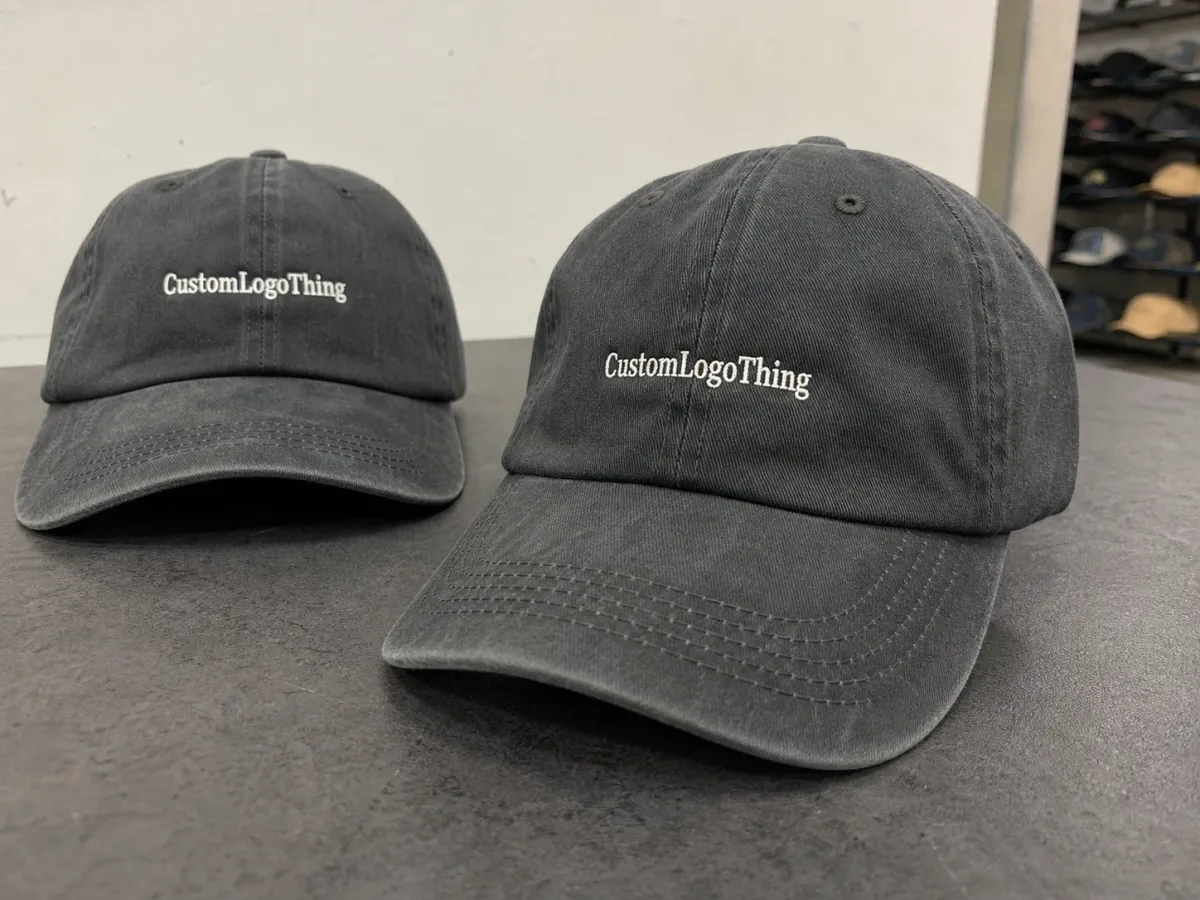
An unstructured cap does not hold the front panel the way a structured one does. There is less internal support, which creates the broken-in look buyers expect from a dad hat. It also means the front can wrinkle, tilt, or soften under embroidery and patch weight. A logo that looks centered on a flat proof can sit a few degrees off once the hat is worn. That is normal. It still needs to be managed.
For toy graphics, that behavior can work in your favor. Playful artwork often looks better on a softer crown because the hat feels less corporate and less rigid. A small mascot face, a simplified toy icon, or a short wordmark can read as friendly instead of promotional. The key is scale. On a dad hat, the front panel area is limited, and the readable space shrinks once the crown starts curving.
Designers who come from T-shirt or hoodie programs often overestimate the room on the hat. A bold chest print can carry a lot of detail. A front-panel hat graphic cannot. Fine lines, tiny facial features, and stacked text usually need simplification. If the graphic only works at full file size, it will not survive production in thread or patch form.
- Best use case: casual merch, toy-themed branding, limited drops, and lifestyle programs that should feel approachable.
- Main risk: logo drift, seam conflict, and detail loss on a soft front panel.
- Main advantage: the relaxed crown matches playful artwork better than a stiff promotional cap.
A practical first step is to decide whether the design should look embroidered, patched, or printed before you finalize the art file. That choice affects line weight, file cleanup, and where the logo can sit on the crown. If you wait until after the mockup to think about it, you end up revising the artwork around the hat instead of building the hat around the artwork.
For repeat programs, keep the base spec consistent: same panel count, same fabric family, same closure, same brim curve, same decoration placement. A change that seems small on paper can make the next batch feel like a different product. Buyers usually notice that before anyone in production does.
Crown, brim, and closure details that keep the art readable
Crown profile changes the whole feel of the cap. A low-profile dad hat sits closer to the head and gives the most traditional worn-in look. A mid-profile version gives the art a little more vertical space and can help if the graphic needs breathing room. Neither is universally better. The right choice depends on whether the artwork should feel subtle or slightly more present.
The brim matters more than many buyers expect. A gently pre-curved visor usually delivers the classic dad-hat shape right away. A sharper curve can push the cap toward sportwear territory, which is not ideal for toy graphics that are meant to feel relaxed. On a soft-crown cap, the brim and front panel should feel like they belong to the same visual language. If the brim is too aggressive, the hat starts working against the artwork.
Closure type is one of the easiest ways to change how the final product is perceived. It is also one of the most visible quality signals after the front graphic.
- Metal buckle strap: clean, durable, and usually the best retail-facing option.
- Fabric strap with tuck loop: softer and more vintage-looking, but stitching quality matters a lot.
- Velcro: fast and easy, though it usually reads more utilitarian.
- Snapback-style closure: practical for size range, but it shifts the hat away from the classic dad-hat look.
Fabric choice also affects how the hat ages and how stable the color looks across a bulk run. Cotton twill is the common baseline because it balances cost, structure, and print or stitch performance. Washed cotton gives the cap a more broken-in surface, which many toy and lifestyle buyers prefer. Pigment-dyed fabric can look premium and casual at the same time, but it also demands closer color checks because lot variation is more likely than with standard solid dyeing.
Weight is worth asking about. A lighter cotton twill can feel softer, but it may show wrinkling more easily once decorated. A heavier twill can hold shape better, though it may not drape as loosely. The sweet spot for many dad hats sits in the middle: enough body to support a logo, not so much stiffness that the cap stops feeling relaxed.
There are also small construction details that show up only when the hats arrive in bulk. Sweatband finish, seam trimming, closure hardware color, and brim stitch density all influence how polished the cap looks at arm’s length and up close. A buyer who approves a front mockup but ignores those details is often surprised by the finished carton.
Decoration specs for toy graphics and logos
Decoration choice is the point where toy Unstructured Dad Hats bulk order planning either stays efficient or turns into a round of corrections. For simple marks, flat embroidery remains the safest option. It is durable, familiar to buyers, and typically economical at scale. Once the art gets more detailed, though, embroidery starts to show its limits.
That is especially true for toy graphics. Faces, eyes, thin outlines, and tiny labels can blur together in thread. If the illustration depends on very small interior details, the result may come back heavier than expected. The usual fix is not to force the art through embroidery anyway. It is to pick a different decoration method or simplify the design before production starts.
Woven patches are strong for finer line work because the weave carries more definition than standard stitching. PVC patches give a crisp, molded look that works well for bold toy-inspired graphics with strong edges. Leather patches move the cap toward a more premium casual style, although they usually strip away too much detail for mascot-heavy art. Print can work when the graphic is flat and colorful, but on a soft crown it can look less dimensional than buyers expect.
| Decoration method | Best for | Typical setup cost | Typical add-on per hat |
|---|---|---|---|
| Flat embroidery | Simple logos, short text, clean icon marks | $35-$85 digitizing | $1.10-$2.50 |
| Woven patch | Fine line art, mascot faces, tighter detail | $55-$120 patch setup | $1.60-$3.20 |
| PVC patch | Bold graphics, strong edges, toy-style art | $60-$150 mold setup | $1.80-$3.80 |
| Color artwork without raised texture | $25-$75 art setup | $0.90-$2.20 |
Those ranges are directional. Thread count, artwork complexity, patch size, and finishing requirements can move any quote up or down. Still, the main pattern is stable: the more detail you ask the factory to capture, the more the setup and unit cost tend to rise. That is not a penalty. It is simply the cost of translating art into a wearable object.
Line weight deserves more attention than most buyers give it. Thin strokes can vanish inside embroidery. Tiny text can close up when the stitch density is adjusted. Very detailed mascot faces may need to be redrawn at hat scale instead of forced to fit the original file. If the smallest element cannot be read from a normal viewing distance, it needs revision before the sample stage.
Placement deserves the same scrutiny. Center front is still the standard, but it is not foolproof on an unstructured crown. The logo footprint should be approved at actual size, with the seam and brim position clearly marked. A flat digital mockup is useful, but it is not enough. On a soft hat, the artwork can sit lower, wider, or more curved than the file suggests.
A hat proof should show how the logo behaves on the real panel shape, not just how it looks in a rectangle on a screen.
For repeat orders, ask whether the supplier stores the digitizing file, stitch count, patch measurements, and placement points. That information matters more than buyers think. Without it, the second order can drift slightly higher or wider, even when everyone believes they are repeating the same product.
Cost, MOQ, and pricing tradeoffs
Price is driven by more than the blank hat. Fabric type, crown construction, closure hardware, decoration method, thread count, patch size, sampling, freight, and packaging all shape the final number. A plain unstructured dad hat can look inexpensive until the buyer adds custom color, a premium closure, and a more detailed front graphic. Then the budget changes quickly.
For planning purposes, MOQ is the first number to examine. A common range for decorated hats sits around 100 to 300 pieces per style, although that can move higher when the fabric is special or the decoration requires extra setup. Lower MOQs can be useful for testing a design or gauging sell-through. They also tend to carry a higher unit cost. That is usually the price of reducing inventory risk.
| Order tier | Common MOQ | Typical unit price range | Why buyers choose it |
|---|---|---|---|
| Test run | 100-299 pcs | $6.50-$10.50 | Lower risk, easier to validate art and sizing |
| Standard bulk | 300-999 pcs | $4.75-$7.25 | Better balance between cost and inventory exposure |
| Repeat program | 1,000+ pcs | $3.90-$5.90 | Best pricing when the design is stable and reorderable |
These are working ranges, not promises. A complex woven patch, more thread colors, premium washed cotton, or a special hardware finish can push the price higher. What matters is the shape of the cost curve. Bigger quantities generally improve the unit price, but only if the design is stable enough to reuse without new sampling rounds.
There are also hidden costs that show up late if the quote is vague. Sampling, digitizing, revision charges, freight, split shipments, packaging inserts, and retail boxing can all move the total. An itemized quote is much easier to compare than a single total line. Buyers who ask for one number and nothing else often miss the parts that affect margin most.
Packaging can be overlooked because it sounds secondary. It is not. Caps packed too loosely can crush in transit. Caps packed too tightly can crease the crown or mark the closure hardware. If the cartons are moving by parcel or mixed freight, the supplier should be able to explain how they pack for transit protection. Not every run needs formal lab testing, but the cartons should survive normal handling without the hats arriving flattened.
Process and turnaround from quote to shipment
The smoothest quote requests are the ones that arrive with the full picture. Send the artwork file, quantity, hat color, decoration method, logo size preference, deadline, and ship-to location in the first message. If you want multiple colorways or multiple logo versions, say so immediately. A factory cannot price a moving target with any accuracy.
A normal approval flow usually runs through mockup, revision if needed, sample or strike-off, final signoff, production, quality check, packing, and shipment. The timeline depends on the decoration method and the volume. A clean sample process can take only a few days if the art is ready and the revision cycle stays short. Production commonly falls in the two- to four-week range after final approval, with shipping time added on top.
Rush work usually breaks because one of a few things is missing: art files are not final, Pantone references are vague, the logo size keeps changing, or the buyer keeps revising the proof after approving the direction. Those problems are not mysterious. They just add delay until the order stops fitting the original deadline.
It helps to ask for one proof that includes the exact logo width and height, the placement distance from the center seam and brim edge, the thread colors or patch finish, the hat color or fabric description, and the carton count. That level of detail is not overkill. It is the difference between a repeatable bulk run and a batch that depends on memory.
- Logo size: confirm the width and height in inches or millimeters.
- Placement: measure from center seam, brim edge, and crown top if needed.
- Decoration: specify stitch colors, patch material, or print finish.
- Packaging: confirm carton count, inserts, and any retail packing requirement.
Good production teams do not guess. They measure, mark, and sign off before the run starts. That may sound obvious, but it is exactly where many hat programs go off course. Once the first approval is vague, every later correction costs time.
For buyers planning a launch date, build in a buffer. A sample that arrives a few days late can still be useful. A shipment that arrives a few days late can miss the window entirely. Those are not the same problem, and they do not have the same price.
What to verify before choosing a supplier for repeat cap programs
Supplier differences show up faster on repeat programs than on one-off orders. Some teams control production directly. Others broker the order and hand it off elsewhere. That affects pricing clarity, response speed, sample quality, and defect handling. If a supplier cannot explain where the hats are made and how the checks happen, the buyer is taking on avoidable risk.
For a repeat program, consistency matters more than the first quote. Ask for a sample from a prior order if one exists. Ask how they compare the second run to the first. Ask what happens when a color comes back slightly off or a closure starts to vary. Acceptable variation is normal in cap production. Uncontrolled variation is not.
Quality control should include more than the front graphic. A proper check usually covers panel alignment, seam finish, stitch density, closure attachment, brim shape, and packing accuracy. Some suppliers also track stitch counts, placement measurements, or inspection notes from one order to the next. That is useful because a second batch can drift in ways that are hard to spot until the hats are worn.
Material consistency matters too. Cotton twill should feel similar from run to run. Pigment-dyed colors should be compared against a sample, not only against a screen image. If the hats are washed or garment-dyed, the buyer should expect some natural variation and plan for it. That variation can be fine as long as it is understood in advance.
Communication is a quality indicator in its own right. The most useful supplier contact is the one who can answer technical questions clearly, return revised proofs quickly, and provide a quote with separate line items for the blank, decoration, sampling, and freight. If the quote is vague before payment, it rarely becomes clearer afterward.
For repeat cap programs, the best fit is usually the supplier that can explain the blank, the decoration, and the packing method in plain language. That is where toy unstructured dad hats Bulk Order Planning stays under control.
Next steps before production
Start by locking the product spec, then refine the artwork around that spec. Too many buyers reverse the order and spend the rest of the project correcting avoidable issues. Price first, design later sounds efficient. In practice, it creates more revisions and more cost drift.
A useful approval checklist includes the logo file, hat style, fabric description, closure type, decoration method, decoration size, placement measurement, color reference, packaging style, and reserve stock plan for reorders. If there is a launch date, give the supplier a real one. If private labeling is needed, mention it early. If multiple colorways are involved, show the split clearly.
Ask for an itemized quote so you can compare the blank cost, decoration cost, sampling cost, freight, and packaging upgrades separately. That makes it easier to see where margins are going and where the budget is being stretched. A single total may look neat, but it hides the levers that matter most.
For reorders, save the final approved proof and treat it like the master reference. Same crown profile. Same logo size. Same closure. Same carton count. That is how a second run stays close to the first instead of becoming "close enough" in a way that only appears after delivery.
toy unstructured dad hats bulk order planning works best when the buyer is specific, the sample is judged against production reality, and the supplier can repeat the same result without guessing. A clean proof, a clear MOQ, and a controlled decoration spec save more money than a last-minute fix ever will.
FAQ
What decoration method works best for toy unstructured dad hats in bulk?
Flat embroidery is the easiest option for simple logos and short text because it is durable and usually cost-effective. Woven or PVC patches work better when the toy artwork needs sharper edges, more detail, or a more dimensional look. Fine line art and tiny text usually need to be simplified before production.
What MOQ should I expect for toy unstructured dad hat bulk orders?
Many decorated hat programs start around 100 to 300 pieces per style, but the exact number depends on the factory, decoration method, and fabric choice. Smaller orders usually carry a higher unit cost because setup expenses are spread across fewer hats. Ask whether multiple colorways can share one MOQ or require separate counts.
How long does production usually take after approval?
If the artwork is ready and the revision cycle is short, mockup and sample approval can happen in a few days. Production commonly takes two to four weeks after final approval, depending on quantity and decoration complexity. Shipping time is separate, so it needs to be built into the launch schedule.
Can I mix colors or logo versions in one toy dad hat bulk order?
Yes, but each variant may add proofing, setup, or packing steps. Mixing colors can help with assortment planning, yet it often increases coordination and can change the price. Request a per-variant quote so the extra cost is visible instead of buried.
What should I send when requesting a quote for toy unstructured dad hats?
Send the logo file, target quantity, hat color, decoration method, placement preference, and delivery deadline. Add any color references, size limits, packaging needs, and private-label instructions. The clearer the request, the faster the quote and the fewer corrections later.

