Buyers often approve a sample because the dimensions look right on paper, then discover the problem only after the packing line starts moving. A bag that looks fine on a desk can wrinkle at the seal, slow down hand-packing, haze under store lights, or crush after a short run through distribution. For that reason, the apparel poly bags Sample Approval Checklist for bakery buyers should focus on real handling, real fill behavior, and repeatability, not just a measurement against the spec sheet.
Bakery packaging has very little time to prove itself. A bag must open cleanly, accept the product without fighting the operator, protect shelf appeal, and hold up through transport or display. That job changes depending on whether the pack contains cookies, loaves, pastries, gift sets, or wrapped bakery items going into secondary cartons. The same film that looks crisp in a sample photo can behave differently once humidity rises, gloves add friction, or workers start filling at speed.
Approval also needs a tighter definition than many teams use. A sample is not a finished order. It is proof that the supplier can repeat the same film, seal, print, and carton count across a production run. That matters because the most expensive failures are usually not dramatic. They are small drifts: a slightly tighter seal, a bag that sticks too much on the line, artwork that shifts a few millimeters, or a film that arrives with a different slip level than the approval sample.
Practical rule: approve a sample only after it performs the same way on the third test pack as it does on the first.
That standard keeps bakery buyers from signing off on a sample that looks good in isolation but causes rework later. It also narrows the conversation to the few variables that actually affect production. If your team is comparing packaging across categories, it can help to review broader Custom Packaging Products and, where shipping-related formats are involved, Custom Poly Mailers to see how material choice and print method change cost and lead time.
Apparel Poly Bags Sample Approval Checklist for Bakery Buyers
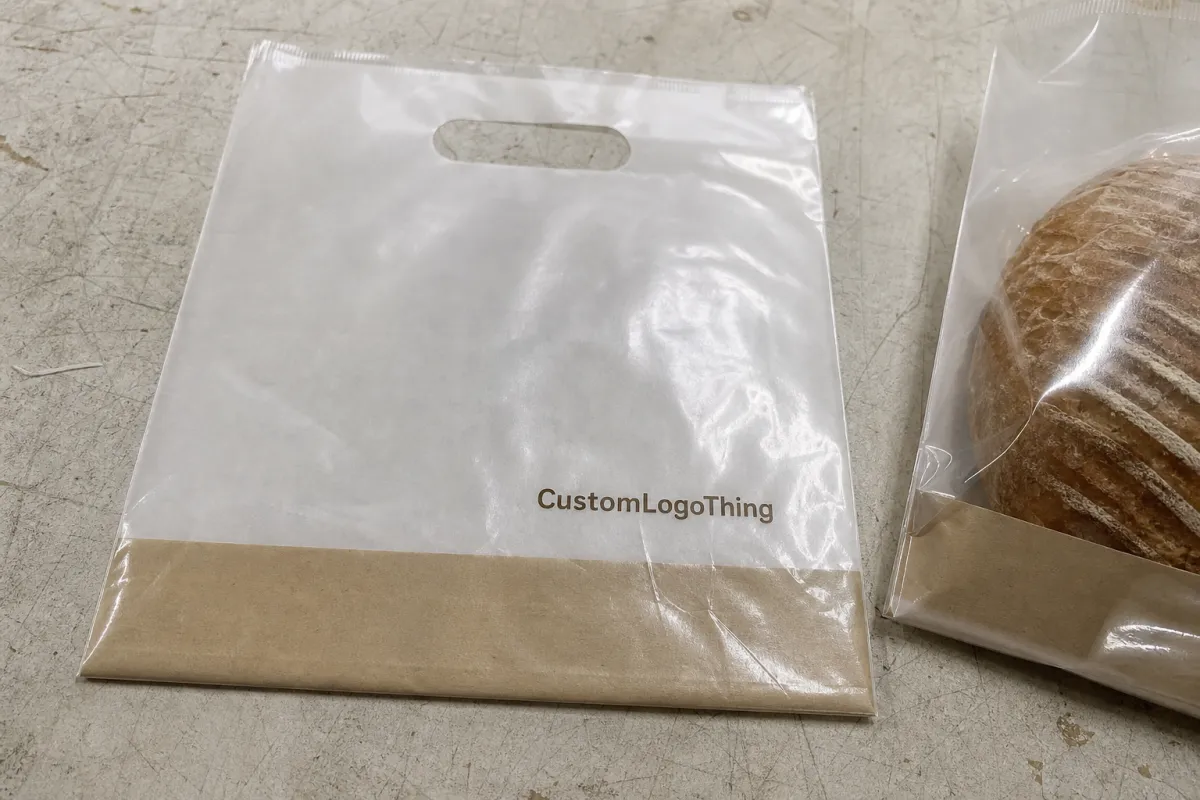
The most reliable approval process starts with the use case, not with a generic checklist copied from another category. A bakery bag has to support fast packing, protect presentation, and avoid stoppages. If a sample does all three in actual working conditions, it is much closer to approval than a polished spec sheet that has never been tested on the floor.
Start with the item itself. A sleeve for a single cookie, a wrap for a sliced loaf, and a bag for a retail bakery set do not need the same structure. Check the bag against the product height, width, and insertion style. There should be enough room to load the product without forcing the opening, but not so much extra space that the filled pack looks loose or unfinished on shelf.
Then test what happens after the pack is closed. Does the seal stay flat? Does the film wrinkle at the edges? Does the print remain sharp after a few touches from gloved hands or trays? Those are the issues that usually trigger rejection in bakery programs. Buyers often ask for a thicker film when the real problem is poor seal behavior or a structure that is too stiff for the packing method.
For that reason, the format matters as much as the gauge. Flat bags, gusseted bags, wicketed stacks, and custom-printed retail packs each suit a different operating rhythm. A flat bag can work well for simple presentation packs. A gusseted bag gives more volume for loaves or taller bakery items. Wicketed stacks matter when operators need a steady pull-and-fill motion on a higher-speed line. The wrong format can cost more in labor than it saves in unit price.
| Checkpoint | What to Verify | Red Flag |
|---|---|---|
| Fit | Product slides in without forcing the opening or overstretching the seam | Bag buckles, wrinkles, or leaves too much unused space |
| Seal behavior | Closure stays flat and consistent across repeated packs | Seals pop open, pucker, or distort the film |
| Handling | Operators can open, fill, and close it at line speed | Static, sticking, or awkward opening slows the pack team |
| Presentation | Clear film, readable print, and clean edges after a short hold period | Clouding, scuffing, or shifting artwork |
| Repeatability | Ten or more packed units behave the same way | One good sample hides inconsistent production behavior |
A small batch test is more honest than a single hand-held sample. Use 10 to 20 filled pieces from the same lot whenever possible. Check how each one opens, whether the seal remains even, and whether the pack still looks presentable after a short rest. This is where many weak samples expose themselves. One clean pack tells you very little; a consistent group tells you a lot.
If the bakery line works in a humid prep area, near cooling tables, or beside warm product, include those conditions during sample testing. Poly film can fog, soften, or become slippery under those changes. A sample that looks crisp in a dry office may behave differently after 20 minutes on a busy table. That is not a minor issue. It is the difference between a smooth packing shift and a line that keeps stopping for adjustments.
For direct food-contact use, ask for the documentation that matches your market. In some cases that means an FDA food-contact declaration; in others it may mean EU compliance paperwork, migration data, or other region-specific proof. If the bag touches unpackaged baked goods, that paperwork should be in hand before approval. A pretty sample without the right compliance file can still create a purchasing problem.
Specification Details That Protect Shelf Appeal and Handling
Every sample should be checked against measurable details: film gauge, width, length, seal strength, clarity, slip, carton count, and print placement. If a supplier cannot confirm those items clearly, the sample is not ready for approval. In bakery work, vague answers become expensive because a small spec drift can create an entire day of packing delays.
Film gauge needs context. Thicker is not automatically better. A heavier film may feel stronger in the hand, but it can also wrinkle more, trap air, or dull the look of a transparent pack. A slightly lighter structure can outperform a thicker one if it seals more cleanly and presents better under display lighting. That tradeoff shows up often in retail bakery packaging, where shelf appearance matters as much as protection.
Seal strength deserves equal attention. A weak seal can open in transit, but an over-aggressive seal can distort the film or cause inconsistent closure on the line. Ask the supplier how the seal is made and whether the sample has been tested through repeated packing cycles. If a test number is provided, ask which method was used. Results without a method are hard to compare and easier to misread.
Slip is another detail buyers miss until production starts. Too much slip and the bag may slide around in bundles or cartons. Too little slip and operators struggle to open it quickly, especially with gloves. The right balance depends on the packing method and the product surface. A glossy cookie bag and a matte bread bag may require different handling behavior even if the size is nearly identical.
Bakery conditions also change by shift. Temperature swings, moisture from cooling goods, flour dust, and repeated handling all affect how the bag performs. The sample should remain clear, hold its shape, and stay easy to work with across several test packs. If the film becomes cloudy after sitting for a short period or turns too slick once handled, that is a real warning sign, not a cosmetic flaw.
The printing method matters as much as the film. Flexographic print, digital print, and simple one-color branding behave differently in cost, lead time, and finish. Heavy coverage can reduce transparency and increase price. Fine type can blur if registration is loose or if the supplier is trying to print too much information on a small surface. When the artwork is busy, it is better to test readability on a filled sample than on a flat proof alone.
Some buyers also ask for coefficient of friction data, haze levels, or seal window guidance, especially on programs that need tighter quality control. Those numbers are not always necessary, but they are useful if the order is large or the product range is sensitive. The main goal is simple: make sure the bag behaves the same way from sample to production, not just from one inspection to the next.
Pricing, MOQ, and Cost Drivers to Compare Before Ordering
Once the sample performs correctly, price can be evaluated in context. Do not compare quotes unless the specs match exactly. The main cost drivers are bag size, film gauge, print colors, bag style, material grade, and whether the order needs custom conversion. If one supplier quotes a 2-mil flat bag and another quotes a 2.5-mil gusseted bag with one-color print, the numbers do not mean the same thing.
MOQ is where many bakery buyers make quiet mistakes. A smaller minimum order looks safer because it reduces inventory, but it usually carries a higher unit price. A larger MOQ can lower the factory price and still cost more overall if the product has a short shelf life, seasonal artwork, or limited storage space. The real comparison is landed cost, not the factory quote alone.
For a simple clear bag program, a realistic range might sit around $0.04-$0.09 per unit at 5,000 to 10,000 pieces. Add custom print, a heavier gauge, a gusset, wicketing, or a more specialized finish, and the range can move closer to $0.09-$0.18 per unit. Those are broad ranges, not fixed pricing. They are still useful because they show where the budget pressure usually comes from: print complexity, structure, and conversion time.
Separate the fees before approval. Sample fees may be waived, partially credited, or billed upfront. Tooling fees and setup charges are different. One may cover print plates or cutting adjustments; the other may cover machine changeover, artwork preparation, or line setup. If those items are hidden inside a unit price, comparing suppliers becomes difficult and misleading.
A clean quote should show sample cost, setup cost, freight estimate, MOQ, production unit price, and any credit terms in writing. That level of detail makes it easier to see whether a low quote is genuinely competitive or simply missing important pieces. It also helps the buyer understand the tradeoff between price and lead time. A supplier with a very low price may need a longer schedule, more advance payment, or a larger order to hit that number.
Line-item pricing matters because packaging budgets are rarely blown by one large mistake. They are usually pushed over by many small ones: a slightly larger bag, an extra print color, more freight, a higher minimum, and a second sample round that should have been avoided. Once those factors are visible, the quote becomes far easier to judge.
Process, Timeline, and Lead Time From Request to Approval
A good approval flow starts before the sample is made. First comes the spec request. Then the supplier confirms feasibility. Then the sample is produced. Then the buyer tests and signs off. That sequence sounds ordinary, but many delays happen because teams request samples before agreeing on dimensions, closure style, or print area. The result is usually a second round that could have been avoided.
Send the important details up front: bag dimensions, artwork files, material preference, seal requirements, target MOQ, and forecast volume. If the bakery line uses a specific pack speed or filling method, include that too. A supplier can usually recommend a more suitable structure once the operating environment is clear. The better the brief, the less likely the sample will miss the mark.
Timeline depends on the sample type. A stock sample may ship in a few days. A custom printed sample often takes 5-10 business days, and longer if plates, artwork edits, or a new conversion setup are required. Production after final approval often runs 12-15 business days for straightforward orders, but seasonal demand, tooling changes, or supply bottlenecks can add time. Holiday packaging programs almost always need a wider margin.
One complete revision cycle is faster than three partial ones. Approve the base specification first, then move to the final configuration once. If artwork changes and size changes land at different times, the team ends up paying for repeated handling and losing calendar days. Late orders are often blamed on manufacturing when the root problem is incomplete instructions.
From the buyer side, lead time should be measured in two ways: calendar days and decision days. A supplier can move quickly only if the sample is reviewed quickly. A bag that sits in a shared inbox for a week is no longer a manufacturing problem. It is a coordination problem. The most efficient programs keep one owner, one sign-off sheet, and one deadline for feedback.
If the order includes multiple SKUs, request a controlled sample set rather than a scattered set of revisions. That makes comparison easier and reduces confusion between formats. It also helps determine whether one bag style fits the morning production run better than another, or whether a seasonal gift pack needs a different closure from the standard retail line.
Why Documented Approvals Reduce Reorders, Waste, and Miscommunication
Written approval is not paperwork for its own sake. It is the record that locks in size, finish, print placement, pack count, and packing method. Without that record, a later production run can drift in small ways that are hard to catch during receiving but obvious once the line starts moving. A half-inch change in width, a slightly different seal, or a shifted print panel can turn into an avoidable production headache.
Bakery buyers generally care more about repeatability than about shaving a fraction of a cent from the unit price. That preference is sensible. A bag that runs the same way every time reduces labor waste, keeps products looking consistent, and lowers the chance of transit damage caused by fit issues. The lowest quote is rarely the best long-term value if it leads to rework or complaints later.
Documented approvals also reduce disputes. If the approved sample shows a centered logo, a specific film finish, and a known carton count, there is less room for disagreement when the next order arrives. The supplier has a reference. The buyer has a reference. That makes reorders easier to place, easier to audit, and easier to compare against the original file.
Buyer takeaway: treat approval as a controlled handoff, not a casual yes. The more specific the sign-off, the less likely the next run will require returns, extra freight, or a long explanation about what changed.
There is one more advantage that is easy to miss. Written approvals help suppliers manage seasonal demand swings. Bakery packaging often tracks holidays, promotions, and limited-time product launches. If the approved spec is recorded cleanly, a follow-up run can move faster because the supplier is not reconstructing details from memory or old emails. That matters when the shelf window is short and the launch date is fixed.
That is why the best apparel poly bags Sample Approval Checklist for bakery buyers is simple, written, and repeatable. It protects the buyer, supports the supplier, and keeps the final pack looking like the product the customer expected.
What to Send Next So the Supplier Can Finalize the Order
If you are ready for a quote, send a complete brief instead of a partial request. Include exact dimensions, artwork files, target quantity, fill weight, and the packing environment. If the bag will be used in a humid prep area or on a high-speed line, say so. Those details can change the recommendation more than many buyers expect.
For teams with multiple formats, send a controlled sample set so everyone is comparing the same variables. One bag for cookies, one for loaves, and one for gift packs can save a lot of confusion if the approval sheet records the differences clearly. It is also the easiest way to decide which format belongs in the standard order book and which one should stay seasonal.
Before production begins, approve the exact size, film, seal, print, MOQ, and timeline in writing. That is the version the supplier should build to. If any of those details are still open, fix them now rather than after the sample has already been signed off. The handoff should be boring. That usually means it is clear enough to work.
If the packaging program is still being shaped, review Custom Packaging Products for other formats that may fit the same line, and compare them with Custom Poly Mailers if outer shipping needs are part of the order. The closer the spec is to the real packing environment, the fewer surprises appear later.
For bakery buyers who want fewer rejects, fewer reorders, and cleaner production handoffs, the apparel poly bags sample approval Checklist for Bakery Buyers is the safest path from sample to signed order.
What should bakery buyers inspect first on a sample bag?
Start with seal integrity, fit on the actual packed item, and how the bag opens in hand. Then check clarity, scuff resistance, and whether the printed surface still looks clean after a short hold period. Price should come after the sample passes those basics.
How many sample rounds are usually needed before approval?
Most programs should aim for one well-specified sample round instead of several vague revisions. A second round is usually justified only when artwork, size, or seal details change. Extra rounds often point to an incomplete brief, not a manufacturing issue.
Which quote details affect unit cost the most?
Bag size, film gauge, print colors, and bag style usually have the largest effect on price. MOQ and freight can change landed cost more than the factory price alone. Ask for a line-item quote so each variable can be compared clearly.
Can sample fees be credited to the production order?
Often yes, but only if the supplier states the credit terms in writing first. Ask whether the fee applies to tooling, setup, or the first bulk invoice. Do not assume a credit exists unless it is documented.
What information speeds up turnaround for bakery buyers?
Provide exact dimensions, artwork files, target quantity, seal type, and the packing environment in the first request. Include forecast volume and any compliance requirements so the supplier can recommend the right spec. A complete brief is usually the fastest way to avoid delays and repeat quoting.
Use this apparel poly bags Sample Approval Checklist for bakery buyers as the final gate before production, and you will spend less time fixing packaging problems that should have been caught at sample stage.


