Private Label Beanies Sample Approval Checklist for Bakery Buyers
The private label Beanies Sample Approval Checklist for bakery buyers exists for a practical reason: a beanie can look clean in a mockup and still fail the moment it is worn through a real shift. In a bakery, staff move between cold storage, prep tables, ovens, front counters, and deliveries. A piece that twists at the cuff, loses shape after an hour, or makes the logo hard to read is not just a styling issue. It is a product problem.
That is why sample approval has to go beyond color and basic fit. The sample needs to prove that the knit feels right, the branding reads clearly, and the production spec can be repeated without surprises. Buyers who treat the sample as a formality usually pay for that decision later, either through rework, delayed shipping, or inventory that does not match the original intent.
For bakery-branded headwear, the approval process should answer a simple question: does this look like a piece a staff member would actually wear, and does it still make sense as a retail item if the program expands later? If the answer is only “close enough,” the sample is not ready.
Private label beanies sample approval checklist for bakery buyers
A useful review starts with the use case, not the decoration. A beanie for staff warmth has different priorities than one sold beside boxed cookies, seasonal mugs, or gift sets. Staff wear usually puts comfort, stretch recovery, and easy care at the top of the list. Retail programs care more about presentation, brand clarity, and how the item feels when someone picks it up for the first time.
The first pass should be done on the head, not flat on a table. A knit item that looks balanced when laid out can shift the second it is stretched. Check whether the crown sits too shallow, whether the cuff rolls, and whether the edge leaves a mark after several on-and-off cycles. If the sample only looks good in one position, it will be fragile in production.
The next step is to compare the physical sample against the written spec. Buyers should confirm the color name, body length, cuff depth, yarn content, decoration method, and label placement. The goal is not perfection in the abstract. The goal is repeatability. If production teams have to guess at any part of the spec, they will make the kind of small decisions that become large problems once the order ships.
One of the most common buyer mistakes is approving a sample because the color feels “close.” Close is not the same as consistent. A beanie can be close enough for a one-off promotional use and still be wrong for a branded bakery program that needs to match uniforms, packaging, or a seasonal display. The sample should confirm what the actual customer or employee will see, not what looked acceptable in the screen proof.
Practical rule: review the beanie under normal indoor light, on a real head, and at a short walking distance. Flat-table approval misses too much of how knitwear behaves in use.
For private label knit programs, this checklist should also include a quick durability check. Stretch the fabric, release it, and see how fast it recovers. Rub the surface lightly to spot loose fibers. Turn the piece inside out to inspect the seam finish. Those are small actions, but they reveal whether the item is built for regular wear or only for a presentation photo.
Buyers often overlook how much the intended season changes the spec. A bakery winter launch may need a denser knit, heavier yarn, and a deeper cuff. A lighter indoor staff piece may benefit from a softer hand feel and less bulk. There is no universal “best” beanie, only a beanie that fits the actual working environment.
Fit, fabric weight, and stitch quality that affect daily wear
Fit is usually the first quality that people notice and the last one they write down. In practice, it matters more than many buyers expect. A beanie that is too tight gets worn reluctantly. One that is too loose slides upward, exposing the scalp line and pulling the decoration out of position. Good fit is not about fashion alone; it is about whether the product survives a normal shift without becoming annoying.
Start with crown depth, cuff tension, and stretch recovery. A cuff that grips too hard leaves a mark and may be skipped by staff after the first week. A cuff that is too relaxed often rolls outward, which is a small defect until it starts changing the logo placement. The sample should hold its structure after repeated handling, because bakery staff are not likely to treat the item gently. They pull it on quickly, adjust it while moving, and toss it into lockers or bags.
Fabric weight changes the feel immediately. Lighter acrylic knits can work for indoor wear or mild weather, especially if the goal is a lower unit cost and a softer hand feel. Heavier knit constructions add warmth, a fuller shape, and a more premium impression. Acrylic remains common because it is predictable and cost-effective. Acrylic-wool blends cost more but often feel richer and more substantial. That difference shows up both in the hand and in the final price.
For many bakery programs, a standard acrylic beanie in the 90 to 130 gram range is a practical starting point. Heavier cuffed versions can run above that depending on yarn and stitch density. Those numbers are not a rule, but they help buyers compare samples without relying on vague descriptions like “lightweight” or “premium,” which rarely mean the same thing from one supplier to another.
Stitch quality is where the sample tells the truth. Inspect the rib consistency, the seam finishing, the cuff edge, and any areas where the knit looks uneven. Loose construction may still pass in a photo, especially if the image is retouched. Under fluorescent lighting, it becomes obvious. If the sample has irregular tension or weak rebound, assume the production run will reflect that unless the spec is corrected before approval.
There is also the matter of comfort after a full shift. A piece that feels acceptable for five minutes can become annoying by hour three, especially in warm prep spaces or when worn over long hair. Buyers who are approving on behalf of staff should test it like staff would: wear it, remove it, put it back on, and see how the fabric responds. That simple loop often reveals more than a polished sample photo ever will.
Logo placement, color matching, and artwork approval rules
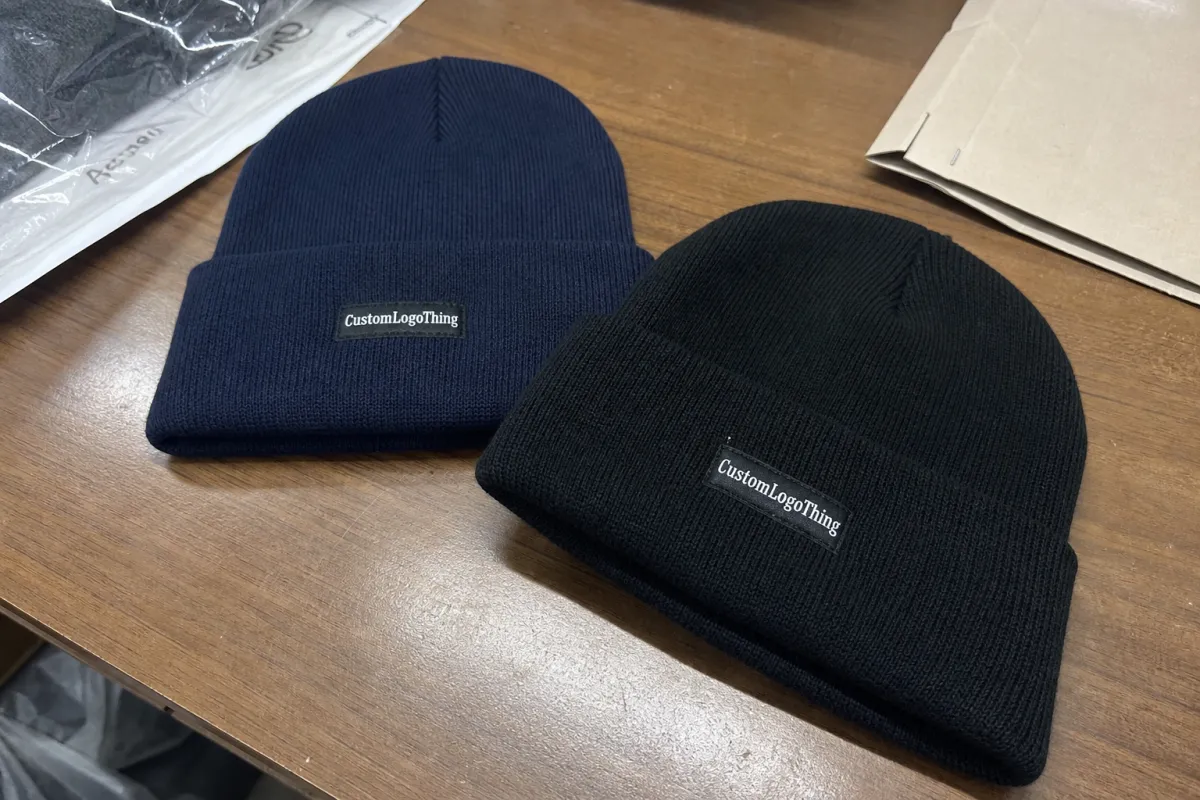
Decoration behaves differently on knitwear than it does on a smooth garment. Texture changes how edges read, and small text can disappear into the rib pattern faster than buyers expect. That is why the sample should confirm logo size, placement, spacing, and visibility at normal viewing distance. If the branding looks fine only when someone is holding it close, it is too small.
Embroidery remains a common choice because it is durable and clean when the design is sized correctly. Woven patches can handle finer detail and often give the piece a more retail-ready feel. Labels can work well for a restrained, modern presentation, especially if the bakery wants the merchandise to feel lifestyle-oriented rather than promotional. The right choice depends on the logo itself, not just the budget.
Color matching needs realistic expectations. Yarn shades, thread availability, and patch materials all introduce small differences between a digital proof and the final sample. A screen mockup can promise a color that the knit base cannot reproduce exactly. That is why the physical sample matters more than the rendered proof. It shows how the body color and the decoration color interact under actual lighting.
Buyers should also check how much the decoration changes when the beanie stretches. A logo centered neatly on a flat sample can shift slightly once the knit is worn. That is normal. What is not normal is a design that becomes distorted, too close to the cuff, or hard to identify after mild stretching. If the artwork is dense or relies on very fine detail, ask for a revised sample rather than hoping the issue will disappear in production.
Another useful check is the distance test. Stand back a few feet and see whether the mark is still readable. Bakery environments are not slow visual environments; staff and customers glance more than they stare. If the logo blends into the knit from that distance, the branding is underperforming.
For private label programs that include sewn branding or coordinated accessory lines, pairing the beanie with Custom Labels & Tags can help keep care copy, resale messaging, and the visual identity aligned. If you are comparing brand consistency across more than one accessory category, Custom Logo Things is a useful reference point for maintaining the same level of finish from item to item.
Packaging, labeling, and shelf-ready presentation for bakery programs
Packaging changes how the item is perceived. A beanie in a plain polybag reads as a utility piece. The same beanie folded neatly with a branded insert card, care information, and a clean hangtag feels like a retail product. That distinction matters in bakeries, where impulse buys are driven as much by presentation as by price.
Labeling should be checked with the same care as the knit itself. Confirm fiber content, care instructions, size or fit notes, origin marking, and any private label details that your sales channel requires. If the sample is only a fit and decoration prototype, make sure that is written down. A lot of orders run into trouble because the buyer assumes the sample already includes the final pack-out, then discovers too late that the production version will ship differently.
Bakery merchandising adds another layer. The beanie needs to sit comfortably beside seasonal boxes, gift sets, and counter displays without looking accidental. Clean folding and consistent label placement help the product feel planned. The difference is subtle, but customers notice it. Shelf-ready presentation is not only about appearance; it also affects how often the item gets picked up.
Packaging materials deserve a separate conversation. If the program has sustainability targets, ask whether the supplier can source paper-based inserts or FSC-certified components. The FSC standard is a practical reference point for responsibly sourced paper items: fsc.org. For transit concerns, especially if the order will ship to several bakery locations, guidance from ISTA can help inform carton strength and handling expectations: ista.org.
One detail buyers often skip is how the packaging behaves after unpacking. Some folded items spring open awkwardly or wrinkle the label insert. Others arrive in a presentation format that looks good in a box but weak on a shelf. If the beanie is intended for resale, ask for the final pack-out to be tested in a retail-like setting, not only approved as a shipping unit.
Pricing, MOQ, and unit cost drivers bakery buyers should compare
Pricing is shaped by a few visible inputs and several hidden ones. Material weight, decoration method, yarn color count, label style, packaging level, and order quantity all move the unit cost. The twist is that two samples can look almost identical and still land in very different price brackets once production starts. A standard embroidered acrylic beanie is not the same buy as a heavier knit with a woven patch and retail packaging.
MOQ matters because setup expenses are spread across the run. That means a slightly larger order can sometimes lower the price per unit enough to improve margin, especially when the product is being sold retail rather than issued as staff gear only. It helps to ask for pricing at two or three quantity levels so the difference is visible. Sample cost should be handled separately from production cost. Some suppliers credit it back on the first order. Others do not. That needs to be confirmed before approval, not after.
For easy comparison, here is a typical range of options bakery buyers may see:
| Option | Typical feel | Decoration fit | Common unit range at scale | Buyer note |
|---|---|---|---|---|
| Standard acrylic knit | Light to medium warmth, steady hand feel | Embroidery, small patch, basic woven label | $1.65-$3.20 | Often the best starting point for staff programs and test retail runs |
| Acrylic-wool blend | Warmer, fuller, more premium touch | Embroidery, woven patch, label package | $2.80-$4.70 | Useful when the brand needs a more elevated look and feel |
| Heavier cuffed knit | Dense, substantial, colder-weather feel | Patch or embroidery with stronger visual presence | $3.20-$5.40 | Can support a higher retail price, but landed cost rises too |
Hidden costs can change the math quickly. Freight, setup fees, revision charges, and the jump from simple polybagging to retail-ready packaging all affect landed cost. That is why the quote should be read as a full order picture, not just a headline number. The best Private Label Beanies sample approval checklist for bakery buyers includes the sample policy, the unit price at each quantity break, and the expected freight method.
It also helps to compare like with like. If one supplier quotes a basic knit and another includes a woven patch, branded insert, and outer carton labeling, the lower number may not be the better buy. The cheapest sample is not automatically the cheapest finished order.
Process, timeline, and lead time from sample to release
A clean approval flow usually moves through six steps: brief, artwork check, sample build, physical review, revision if needed, and written sign-off. The order matters. Most delays happen when buyers skip one of those steps or leave a detail open until the end. The biggest troublemakers are late artwork changes, undecided packaging, and color approval that happens before the actual sample is in hand.
Sample lead time and production turnaround are separate timelines. That distinction matters more than it sounds. A buyer might get a sample quickly and still miss the launch if the final order starts too late. For bakery programs tied to cooler weather, holiday gifting, or a staff uniform refresh, both clocks need to be mapped before the order is released.
Ask for dates in business days, not vague promises. A realistic plan may allow a few business days for artwork confirmation, a further window for physical sample production, and extra time if a revision is requested. Once the sample is approved, the production timeline starts again from that point. Buyers sometimes assume approval means the order is almost finished. In reality, approval is usually the point where the real schedule begins.
Seasonal work deserves a buffer. If the beanie is meant for winter wear, a holiday retail display, or a cold-weather staff rollout, starting early is not overcautious. It is the difference between having options and being forced into substitutions. Packaging changes, decoration adjustments, and freight delays all become more expensive once the calendar turns against you.
Keeping the approval in writing also helps. A short note that identifies the exact sample, the approved artwork file, and the final packaging expectation reduces ambiguity later. That document may feel small, but it prevents the most avoidable kind of production error: the one everyone thought someone else had already confirmed.
Common sample mistakes that delay bakery orders
The same mistakes tend to repeat. Buyers approve the wrong shade because it looks close under indoor light. They focus on a quick try-on and ignore how the cuff behaves after repeated wear. They accept a logo that is too small, then discover it vanishes when the knit stretches. None of those mistakes is dramatic on its own, but together they create delay, confusion, and rework.
Another common problem is testing the sample in the wrong setting. A bakery is not a showroom. Staff move from cold rooms to warm prep areas, work near ovens, step outside for deliveries, and wear the product for hours at a time. A beanie should be tested in motion, not just admired in the box. If it shifts, scratches, or becomes too warm after a short period, that is useful information before production begins.
Buyers also skip written confirmation on decoration method or packaging. A verbal okay is too thin when one version uses embroidery and another uses a patch. The same issue appears with retail presentation: a sample in a presentation bag can be mistaken for final pack-out when it is really only a prototype. The quote, the sample, and the spec sheet should all say the same thing.
Another slow-moving error is forgetting that small design details behave differently on knitwear. Fine lines, tiny text, and crowded marks may survive on a mockup and fail on the actual surface. If the logo is too detailed for the fabric structure, it should be simplified before production. That is not a design compromise; it is a technical correction.
One more issue shows up often in multi-location bakery orders: different people review different parts of the sample, then assume someone else checked the rest. The result is a split decision with no final owner. A disciplined private label beanies Sample Approval Checklist for bakery buyers avoids that problem by forcing one written approval, one version of the truth, and one final reference point.
What to confirm before you release the final order
Before the order is released, confirm five things in writing: the approved sample, the final artwork file, the exact color name, the decoration method, and the pack-out details. If any of those are fuzzy, production has room to interpret. Interpretation is where avoidable errors begin. It is also wise to lock the ship window and the Unit Cost Before the run starts, because those numbers shape the buying decision as much as the product itself.
Keep one approved physical reference sample on file. That matters for reorders, seasonal refreshes, and regional rollouts. A retained sample gives the team something real to compare against when the next run comes up. Screenshots and memory are not enough, especially when the next order happens months later and someone remembers the color differently.
For buyers balancing brand presentation and budget, the final question should be direct: does the beanie still feel right when the logo is on it, the packaging is included, and the piece is placed in an actual bakery setting? If the answer is yes, the order is ready. If the answer is no, one more revision is usually cheaper than forcing a nearly-right product into the run. That is the practical value of the private label beanies sample approval checklist for bakery buyers: it protects the look of the brand, the unit margin, and the timeline in the same decision.
Releasing the order should never be based on hope. It should be based on the sample matching the spec, the spec matching the business need, and the whole package making sense in the place where the beanie will actually be used.
What should bakery buyers check on a private label beanie sample before approval?
Check fit, cuff depth, stretch recovery, stitch quality, logo size, color accuracy, and how the beanie looks when worn rather than only when laid flat. Also confirm that the sample matches the intended use, whether it is for staff wear, retail resale, or seasonal promotional gifting.
How many revisions are normal during beanie sample approval?
One revision is common when the first sample is close but needs placement, sizing, or color correction. More than two revisions usually means the spec sheet, artwork file, or approval instructions need to be clarified before production continues.
What affects private label beanie pricing the most?
Material weight, decoration method, order quantity, packaging level, and the number of colors or components in the design all influence unit cost. MOQ matters because smaller orders carry more setup cost per piece, while larger orders usually reduce the price per unit.
How long does sample approval and production usually take?
Sample lead time is separate from production turnaround, so both timelines should be confirmed before the order is released. Artwork changes, packaging decisions, and revision rounds are the most common reasons the schedule extends.
What should I confirm before placing a reorder of bakery-branded beanies?
Keep one approved reference sample and the final spec sheet so the next run matches the original program. Reconfirm color, logo placement, label type, quantity, and pack-out details before any reorder is released.