For bakery embroidered beanies Bulk Order Planning, the hard part is rarely the logo itself. The real challenge is lining up headcount, shift coverage, color consistency, and a decoration method that still looks clean after early-morning prep, cold-room work, and constant wear behind the counter.
A knit beanie can seem like a simple uniform item until you have to order enough for the full team, keep the look consistent across departments, and leave room for new hires or seasonal staff. In practice, the smartest orders are the ones that start with a clear spec, a realistic quantity, and a decoration choice that suits the bakery floor rather than the mockup alone.
Bakery embroidered beanies bulk order planning: what to lock first
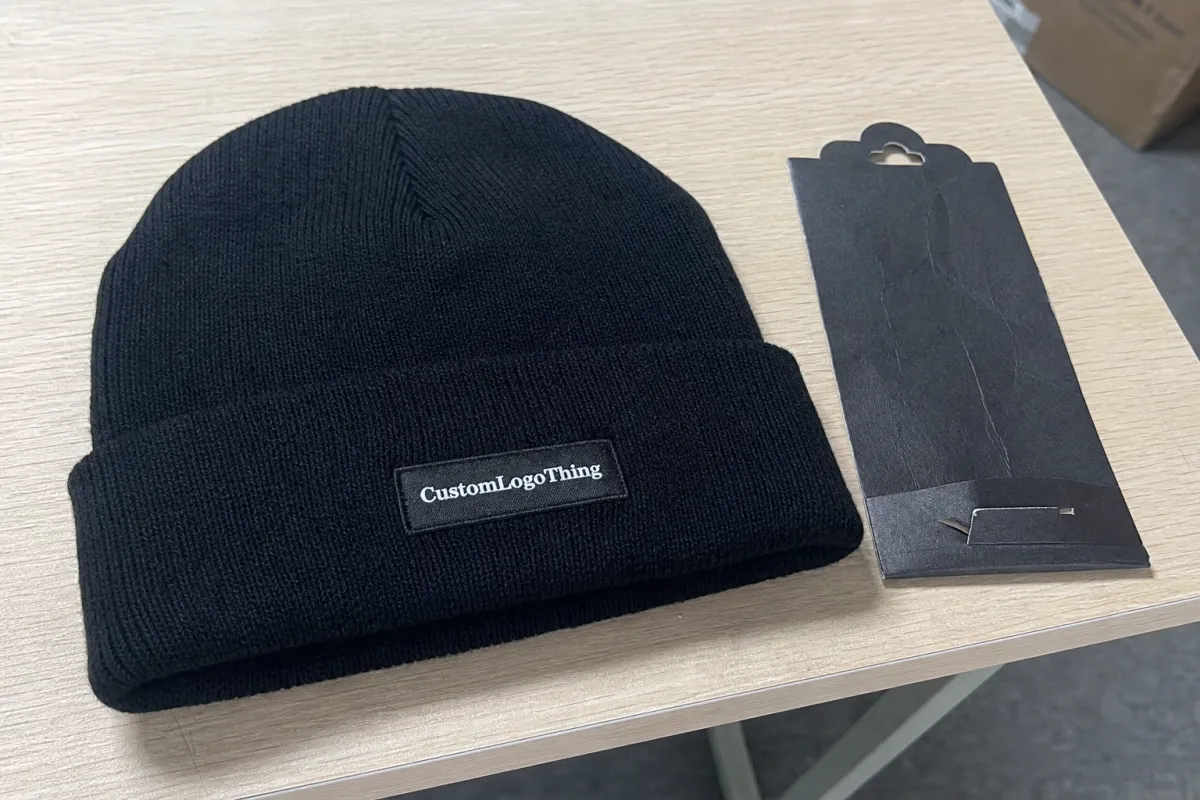
The first decision is quantity, and I mean the real quantity, not just the people on payroll this week. A bakery crew usually includes early prep, oven shifts, cold storage, pack-out, delivery, and front-of-house staff, and those groups do not all need the same coverage at the same time. If your team runs six-day weeks or covers split shifts, the beanie count should reflect peak staffing, not average staffing.
That is where bakery embroidered Beanies Bulk Order planning saves money. If you define the run properly at the start, the quote is cleaner, the production file is simpler, and reorder matching becomes much easier later. Rework on apparel orders usually comes from vague assumptions: someone guessed the color, someone else guessed the logo size, and nobody wrote down whether the cuff should sit at 2.25 inches or 3 inches.
Next, choose the colorway. Black, charcoal, navy, and heather gray are the most forgiving in bakeries because they hide incidental flour dust better than bright shades, and they pair easily with aprons and jackets. If the brand palette is more specific, keep the embroidery thread contrast strong enough that the logo still reads from a few feet away at the counter. A beautiful logo that disappears into the knit is a waste of a production slot.
Placement matters just as much. Center-front embroidery is the safest option for a team uniform because it keeps everyone aligned visually. Offset decoration can work, especially for a retail-style look or a more casual crew beanie, but it needs careful positioning so the mark does not land too close to the seam or fold line. On a cuffed beanie, the front panel usually gives the cleanest space for a compact logo, while a larger design may need a taller cuff or a more open knit.
The cleanest bulk order is the one that answers four questions before a quote is requested: how many pieces, which color, where the logo sits, and what level of detail the decoration can actually hold on knit fabric.
For bakeries that reorder often, the best habit is to treat the first order as the master spec. Keep the same beanie style, the same thread colors, and the same placement notes so future runs match. That is especially useful if you are ordering through a Wholesale Programs page or building a uniform set that may expand into aprons, caps, or other soft goods later.
Beanie styles, fits, and decoration choices that hold up in kitchens
Not every beanie works the same way in a bakery. A cuffed beanie gives the most dependable decoration zone and usually sits more securely on the head, which matters during fast movement, steam exposure, and repeated temperature changes between proofing areas and cold storage. A slouch beanie can feel softer and more casual, but the extra fabric sometimes reduces logo visibility and can make the silhouette less uniform across a crew.
Cuffed, slouch, and fine-gauge fits
Cuffed styles are usually the safest answer for staff uniforms because they balance warmth, structure, and logo space. Fine-gauge knits tend to show embroidery more crisply because the surface is smoother, while coarse knits can make small letters sink into the texture. Slouch styles can work for retail-facing teams or brand-forward counters, but they usually look best with a simple mark and fewer tiny details.
Fit also matters for comfort and hygiene. A beanie that stretches well but snaps back cleanly will stay put through a full prep shift without feeling loose by lunch. Look for enough crown depth to cover hair comfortably, especially if the crew is moving between mixer stations, sheet pans, and delivery prep. If the team needs hair containment under local policy, a deeper cuff and a stable knit are better than a loose, decorative shape.
Embroidery, patch, or applique
For most bakeries, direct embroidery is the cleanest choice. It holds up well against daily wear, it reads clearly on knit fabric, and it does not rely on an adhesive bond that may age poorly in heat or repeated laundering. A woven patch can be a smart option if the logo has tiny text, thin outlines, or a more retail-like presentation, because the patch surface can preserve sharper edge definition than stitches alone. Applique can also work for larger shapes, but it is usually better suited to bolder graphics than to fine lettering.
My practical rule is simple: if the logo still needs to make sense from three or four feet away, embroidery is usually the best fit. If the artwork depends on very small line work, ask the supplier to simplify it before production or consider a patch. A logo that looks elegant on screen can become muddy once it is translated into thread, especially on stretch fabric that moves during sewing.
Decoration should stay readable and restrained. Too many thread colors can make the mark heavier, and very detailed art can distort at bulk scale. A compact logo, usually 2 to 3 inches wide on the cuff, gives most teams a better result than trying to fill the entire front panel with information. That is one of those choices that saves frustration later because it lowers the risk of rejected samples and uneven-looking reorders.
Material and specification checks before you request samples
Before you ask for samples, get the spec list tight enough that you can compare one beanie against another without guessing. The critical items are fiber blend, gauge, cuff depth, stretch recovery, and the usable embroidery area on the front panel. If those are not clear, sample approval becomes subjective, and subjectivity is expensive in bulk production.
Acrylic is common because it is warm, lightweight, and budget-friendly. Polyester can give better color consistency and better wash performance, which appeals to teams that want a slightly more technical feel. Wool blends add warmth and a softer hand, but they are not always the easiest choice for frequent laundering or very high-turnover staff wear. Recycled blends are worth considering if sustainability is part of the brand story, especially if the packaging and inserts also follow an FSC-certified paper path or other responsible sourcing standard. For production and shipping practices that align with recognized transit testing, see the guidance used across ISTA methods.
If the bakery uses branded outer packaging, ask whether the beanies will ship in individual polybags, pairs, or carton-packed sets. That small detail affects distribution time on arrival. A store manager receiving 200 units for multiple locations will appreciate carton labels, size counts, and a clean packing slip far more than a loose bulk box. For paper-based packaging inserts, recycled content and FSC-certified stock can be a sensible choice without adding much cost.
Logo measurements should be reviewed against the actual blank size, not only the vector file. A 3-inch-wide mark may look perfect in a mockup, but on a shorter cuff it can crowd the seam or curl over the fold. Ask the supplier to confirm stitch count, thread density, and placement in actual inches. That conversation is where a good quote becomes a production-ready order.
Color consistency across lots also deserves attention. If you are matching black beanies to black aprons, the difference between a true black and a washed charcoal becomes visible under bakery lighting. If the team is spread across multiple stores, request the same dye lot where possible and keep a printed record of the color code. That way, a reorder six months later does not drift away from the original look.
Pricing, MOQ, and quote drivers for bulk bakery orders
Pricing is shaped by a few direct levers: quantity, blank style, decoration method, stitch count, thread color count, and packaging requirements. If you want the lowest unit cost, the usual path is a stock beanie, a simple front embroidery, and a larger run size. Once you add a patch, more thread colors, special labeling, or rush timing, the landed price moves up fast.
Most buyers are surprised by how much quantity changes the quote. A 50-piece order often carries a much higher per-unit cost than a 250-piece order because setup fees, digitizing, and handling are spread across fewer units. Some suppliers have minimum order quantity thresholds as low as 24 to 50 pieces for stock styles, while custom colors or specialty finishes may start closer to 100. If you are planning a bakery embroidered beanies Bulk Order Planning cycle for several locations, it is often smarter to price a few quantity breakpoints before you commit.
| Order size | Typical spec | Estimated unit price | What drives the cost |
|---|---|---|---|
| 50-99 | Stock acrylic cuffed beanie, 1-color embroidery | $8.50-$13.00 | Setup fees, digitizing, and lower spread of fixed costs |
| 100-249 | Stock knit beanie, simple logo, standard thread match | $6.75-$10.25 | Better scale, still affected by decoration complexity |
| 250-499 | Consistent blank, direct embroidery, standard pack-out | $5.90-$8.75 | Higher volume lowers unit labor and setup impact |
| 500+ | Run matched to one spec with limited variations | $4.95-$7.25 | Best breakpoints for repeat use and location-wide rollout |
Those numbers are not fixed offers, of course. They move with yarn blend, brand requirements, embroidery coverage, and whether the order needs special bagging or retail-ready packaging. Still, they are useful because they show where the breakpoints usually sit. If you are comparing quotes, ask the supplier to show the setup fee separately, because a low unit price can hide a higher overall project cost.
Also count freight, sample charges, and any surcharge for rush handling. A quote that looks great at the item level can lose its advantage once shipping is added, especially if the delivery date is tight. If your receiving team needs a staggered pallet drop or store-by-store carton labels, bring that up early so the quote reflects the real delivery plan rather than a generic box shipment.
Here is the practical buyer move: ask for pricing at two or three quantities, such as 100, 250, and 500. That makes the breakpoints obvious and helps you decide whether a slightly larger run lowers the long-term cost enough to justify a few extra units in reserve. For bakery teams that hire seasonally, that buffer usually pays for itself.
Process, lead time, and approval steps from art to delivery
The order process should be simple on paper: collect artwork, confirm placement and size, review a proof, approve a sample if needed, then move into production and final inspection. In reality, delays usually appear in the handoff points. Missing vector art, unclear Pantone targets, too many decision-makers, and late changes to packing instructions are the usual troublemakers.
Lead time should be measured from art approval, not from the first inquiry. That distinction matters because a supplier cannot start digitizing cleanly until the logo file is usable, and no one wants production time slipping because the team sent a low-resolution image instead of a vector file. A straightforward order with a clean file can often move through proofing in 1 to 3 business days, with production running roughly 10 to 20 business days depending on volume and decoration complexity. Add transit time after that, especially if the order is going to multiple locations.
If the beanies are tied to a grand opening, a seasonal menu launch, or a uniform rollout, give the supplier the date they must arrive by, not the date you hope to place the order. That simple shift makes the schedule more honest. It also leaves room for a correction if the first proof shows that the logo needs to be resized or the thread contrast needs to change.
One helpful habit is to write down the receiving window. If a bakery can accept freight only on weekdays, or only between certain hours, that needs to be on the file before production wraps. The same goes for pallet delivery versus parcel delivery. For orders moving through standard shipping lanes, packaging discipline matters just as much as decoration quality, which is why transit-oriented checks like those used in ISTA-style testing are worth asking about for larger shipments.
If the supplier cannot repeat your order from a written spec sheet, the order is not ready yet.
That is also why a well-built quote should reference proof approval, size, placement, thread count, and packing format. The more clearly the process is defined, the less likely the order is to drift midstream. For basic ordering questions and file expectations, our FAQ page is a useful companion before you lock the buy.
What a reliable supplier checks before stitching your order
A careful supplier does more than send a mockup and wait for payment. They check blank consistency, thread matching, logo readability, placement symmetry, and stitch stability before the order goes to production. On knit headwear, those checks matter because the fabric stretches, and a logo that looks straight on a flat screen can tilt slightly once the beanie is actually worn.
The best production partners will look at the actual knit texture and ask whether the artwork needs simplification. They will also check whether the embroidery density is too high for the fabric weight. Too much stitch load on a soft beanie can cause puckering or make the panel pull out of shape, which is not what you want on a team uniform. A modest, balanced stitch count usually produces a better day-to-day result than overbuilding the design.
Consistency is especially important if the bakery expects reorders for new hires, seasonal peaks, or additional stores. A repeatable spec sheet protects you from subtle changes in cuff height, yarn shade, or logo placement. If the first run was approved at 2.5 inches wide and centered 0.75 inches above the cuff edge, the next run should match that exactly unless the brand changes it on purpose.
Good suppliers also inspect the small things that create avoidable defects: uneven cuff folding, skipped stitches, loose threads at the logo edge, and inconsistent trimming or bagging. Those details do not sound dramatic, but they are the difference between a box that looks ready for distribution and a box that creates extra work for the bakery manager on arrival.
Honestly, the easiest way to judge a supplier is to see how they handle the boring parts. If they can keep the specs tidy, the thread choices aligned, and the production notes clean, the finished beanies usually follow suit.
Final spec list to send for a fast, accurate quote
If you want a quote that comes back cleanly, send one message with the full order picture. Include the exact quantity, the beanie style, the logo file, the embroidery placement, the preferred color, and the date you need the shipment in hand. That reduces back-and-forth and keeps the job from getting tangled in revisions.
It also helps to state the purpose of the order. Staff use, retail resale, and promotional giveaway runs may all call for different packaging or decoration choices, even if the logo is the same. A staff issue order might need simple bulk packing, while retail units may need individual bagging, hang tags, or carton labeling that keeps store teams organized on arrival. If the order will feed multiple bakeries, ask for packing by location so distribution does not turn into a sorting project.
For bakery embroidered beanies Bulk Order Planning, the fastest path is usually the most disciplined one: lock the quantity, choose a knit that fits the work environment, keep the logo readable, and define the delivery window before approving the quote. Do that, and you reduce waste, avoid surprise costs, and get a beanie run that actually works for the team instead of just looking good in the proof.
That is the standard I would use for any uniform purchase: clear spec, realistic timeline, and a decoration choice that stands up to daily use. If those three pieces are in place, the order is usually easy to quote, easy to produce, and easy to repeat.
How many bakery embroidered beanies should I order for staff coverage?
Count the current team, then add extra units for new hires, replacements, and the handful that always get misplaced. A 10% to 15% buffer is usually safer than ordering exactly to headcount, and if staffing rises during holidays or peak bake seasons, base the run on your busiest expected shift instead of the average day.
What logo size works best on embroidered bakery beanies?
Most cuff placements work best with a compact logo around 2 to 3 inches wide so the art stays readable on knit fabric. Very fine text or tiny details can fill in during stitching, so it is usually better to simplify the mark before production than to hope the fabric will carry extra detail.
Can I mix colors in one bulk beanie order?
Usually yes, as long as the same blank style is used and the supplier can meet the minimum order quantity for each color. Mixed colors can raise the unit cost or extend scheduling if the blanks are stocked separately, so keep the embroidery and placement identical if you want the order to feel unified across the team.
What affects bakery beanie pricing the most?
Quantity and stitch count usually have the biggest effect on unit price. Blank material, decoration method, thread color count, and packing requirements also matter, and rush timing, sample requests, and shipping method can change the final landed cost more than buyers expect.
How early should I place a bakery embroidered beanies bulk order before launch?
Allow time for artwork review, proof approval, production, and transit before the date you need the beanies in hand. Add more cushion if you expect revisions, sample approval, or multiple color options, and place the order before uniforms are needed on-site rather than at the last minute.

