Book Woven Label Beanies Bulk Order Planning: Pricing & MOQ
Book woven label Beanies Bulk Order Planning gets cleaner fast when you lock the label size, fold direction, and stitch placement before anyone starts quoting. The cheapest sample is often the one that turns expensive later, because a small label mistake gets copied across 200, 500, or 1,000 units without much mercy.
That is the part a lot of buyers miss. They ask for a price first, but the price only means something if the spec is fixed. If the beanie body, woven label, packaging, and delivery method are still moving, you are not comparing suppliers. You are comparing guesses.
“If the label spec is still moving, the quote is not real yet.” That is usually the point where a project either gets organized or gets reworked twice.
Book Woven Label Beanies Bulk Order Planning: Hidden Cost Drivers
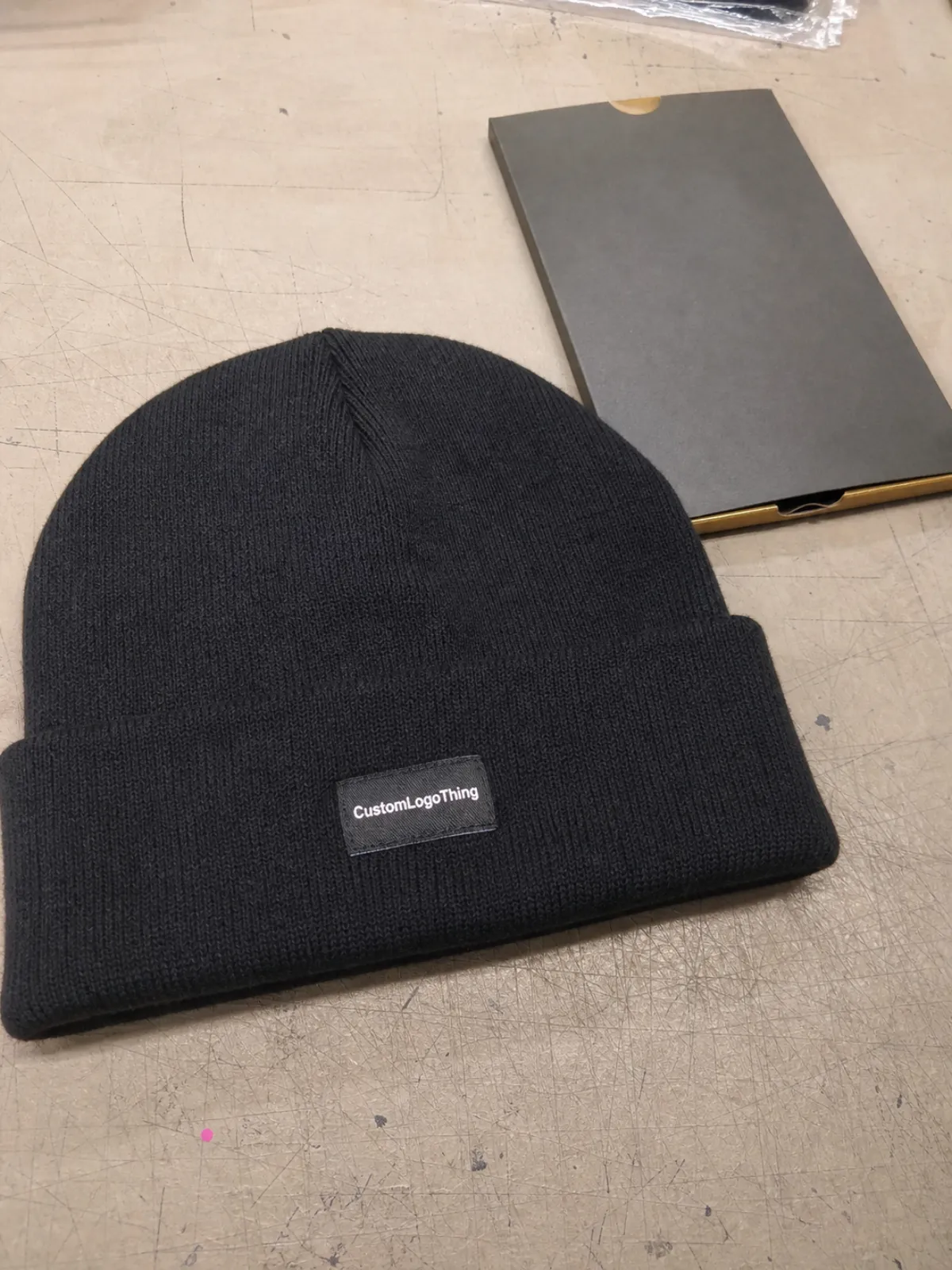
The uncomfortable truth is simple: the cheapest beanie sample can become the most expensive bulk order once label size, fold direction, or seam placement is ignored. A woven label that looks fine on a flat swatch can sit crooked on a cuff, disappear into knit stretch, or land right on a seam where it should not be. Then the buyer has to approve a second sample, fix the artwork, and eat the delay. That is not a design problem. That is a planning problem.
In practice, book woven label beanies Bulk Order Planning saves money because the mistake cost grows with volume. One wrong call at sample stage is annoying. The same mistake on 500 units becomes a production headache, and on 1,000 units it becomes a shipment delay, a repack job, or both. That is why I always push buyers to lock the spec first, then ask for price. If you ask for a quote on a moving target, the supplier will either pad the number or miss something important.
A retail launch makes this painfully clear. Say a brand needs 300 cuff beanies for a winter pop-up, and the woven label is supposed to sit on the front cuff with a clean, centered look. If the label arrives too wide, the fold looks bulky. If it is too small, the logo disappears in the knit texture. If the seam allowance is not checked, the label sits off-center on every unit. That is how a simple order turns into a calendar problem.
Beanie Styles and Label Placements That Scale
Not every beanie style behaves the same way. A cuff beanie gives you the best branding surface because the fold creates a stable zone for a woven label. A slouch beanie has more fabric drop, which means the label can shift visually even if the sewing is correct. A pom beanie can look great in photos, but the pom and top shaping often pull attention away from the label unless the placement is deliberate.
For most bulk orders, the most reliable label zones are the front cuff, side seam, back center, and inside seam area if the outside needs a cleaner look. Front cuff placement is the easiest to read and the safest for repeat production. Side seam placement can feel more premium if the logo is small and the knit is dense. Back center works well for minimalist branding. Inside seam placement is best when the buyer wants branding without visual noise, though it is less visible on display.
Different colorways matter too. A light heather gray knit will frame a label differently than a black or navy body. The same woven label can look crisp on one color and visually flat on another. That is why I recommend separate approval on each major colorway if the order uses more than one body color. It adds one round of review, yes. It also prevents the classic buyer complaint: “Why does this one look different from the sample?”
- Cuff beanies: best for clear front-label branding and easiest reorder matching.
- Slouch beanies: good for softer styling, but label visibility needs tighter placement control.
- Pom beanies: strong retail appeal, though the label often needs to be smaller or placed lower.
If the brand wants a cleaner look, a smaller woven label can be the right call. If the logo has fine detail, though, too small is a bad idea. You want enough surface area for the type to stay readable after weaving and sewing. For most standard logos, I like label sizes in the 20 x 50 mm to 30 x 70 mm range, depending on fold style and logo complexity.
Spec Details Buyers Should Lock Before Sampling
Before you approve a sample, lock the core spec. That means yarn composition, knit gauge, cuff depth, label dimensions, stitch count, and whether a care tag is included. If the beanie is acrylic, wool blend, or recycled yarn, say so in writing. If the cuff needs to be a fixed depth, state the measurement. If the woven label must sit a certain distance from the edge, write that down. A tech pack does not need to be fancy. It does need to be complete.
Logo detail is another trap. Fine lines that look sharp on screen can blur once they are woven into a tiny label with limited thread count. If your logo has tiny text, hairline outlines, or thin internal spacing, check whether the weave count can actually hold it. Buyers often blame the factory for a “bad label” when the real issue is an impossible file. The supplier should warn you, but the buyer still owns the approval.
Color control needs the same discipline. Use PMS references where possible, and define what shade tolerance is acceptable. For woven labels, one-color or two-color designs are usually easier to keep consistent than multi-color art with tiny details. If the order includes a care tag, hang tag, or retail insert, make sure those pieces match the label story. It is a cleaner brand system, and it avoids the odd look of a premium beanie paired with random packaging.
For buyers sorting out trims, packaging, or sew-in branding, our Custom Labels & Tags page is a useful starting point. It helps keep the conversation focused on actual production specs instead of loose ideas.
If you want paper packaging or insert cards, check whether the stock is FSC-certified through FSC. It matters more than people think, especially for retail buyers trying to keep the whole presentation consistent.
One more thing: if the order will ship in cartons for retail distribution, ask about packing standards and compression risk. A carton test method from ISTA is a smart reference point when you care about how the product lands after transit, not just how it looks in production photos.
Pricing, MOQ, and Unit Cost Ranges
Pricing breaks into parts whether the supplier spells it out or not. You are paying for body knitting, woven label setup, sewing labor, packaging, and freight. If the beanie is fully custom knit, the knit program matters. If it is a standard body with a sewn woven label, the label setup and sewing time matter more. Either way, a quote that bundles everything into one number can hide the real cost drivers. That is fine if the specs are locked. It is a problem if they are not.
MOQ shifts with complexity. A simple cuff beanie with one woven label and one body color can often start around 100 to 300 units. Add multiple colorways, a second label position, special yarn, or custom packaging, and the minimum usually climbs. That is not supplier greed. It is setup math. More variations mean more sampling, more sorting, and more room for mistakes.
| Volume tier | Typical MOQ stance | Unit cost range | What usually changes the price |
|---|---|---|---|
| 100-199 units | Low MOQ, basic spec only | $5.80-$8.50 each | Setup spread is small, freight hurts more per unit |
| 300-499 units | Most common bulk launch range | $4.20-$6.40 each | Better spread on label setup and labor |
| 1,000+ units | Best pricing leverage | $3.10-$4.90 each | Lower setup impact, but QC and packing still matter |
Those numbers are practical ranges for a standard acrylic cuff beanie with one woven label, basic packing, and ordinary production conditions. Premium yarn, brushed interiors, jacquard knit detail, pom tops, or custom retail packaging can move the cost up by $0.60 to $1.80 per unit, sometimes more. If the supplier is unusually cheap, check what is missing. Sampling, label setup, sewing, carton packing, and freight often show up later if they were not counted at the start.
That is why I prefer buyers compare landed cost, not just unit cost. A quote that looks $0.35 lower can become more expensive after freight, bagging, carton labeling, or a second sample. A good supplier should spell out whether the price includes packing, domestic transfer, and export paperwork. If the answer is vague, the quote is vague.
If your team is working through larger launches or repeat programs, our Wholesale Programs page is the right place to compare volume-friendly options without guessing how the order will scale.
Production Process and Lead Time for Bulk Beanies
A clean production flow should look predictable. Inquiry first. Spec review next. Digital proof. Sample making. Sample approval. Bulk production. Quality check. Packing. Shipment. Nothing exotic there. The problem is not the sequence. The problem is the delays people create by changing artwork late, waiting too long to answer the sample, or sending incomplete color references. The knitting line is rarely the real bottleneck. Approval is.
For timing, a realistic plan is 24 to 48 hours for a proof, 5 to 10 days for a sample, and 15 to 25 days for bulk production after approval. Simple orders can move faster. Complex ones can run slower. If the buyer has a launch date, shipping time needs its own buffer. A decent production schedule still falls apart if the carton leaves late or customs sits on it for a week. Ask for a date range, not a wish.
Rush orders only help when the spec is final. If the buyer is still debating label size, changing the body color, or asking for a different fold after the sample is already made, the rush fee does not fix the underlying mess. It only makes the mess more expensive. That is a favorite move of people who want speed without discipline. It does not work.
Where packaging is part of the order, ask how the goods are packed for transit and whether the outer carton spec supports the route. Retail packaging, flat-packed inserts, and label cards all add handling steps. Those details matter if the beanies need to arrive presentation-ready, not just production-ready.
What Separates a Reliable Bulk Beanie Supplier
Repeatability matters more than a flashy quote. If the knit tension changes from one batch to the next, the beanie fit changes. If label placement drifts, the branding looks sloppy. If sizing varies by carton, the reorders become a headache. A reliable supplier protects the boring details: consistent tension, straight label sewing, clean folding, and carton-level consistency. That is the real quality control work.
I also care about communication speed. Production photos before shipment, a clear approval trail, and honest answers during sampling save more time than any sales pitch. If the order is tied to a retail drop or company giveaway, that response speed is not a nice-to-have. It is part of the job. A supplier who answers late on the sample phase will not suddenly become organized when the bulk run starts.
Reorder matching is another big one. Buyers often need the second run to match the first exactly, not “close enough.” That means the same yarn shade, the same label finish, the same placement, and the same packing format. If the supplier cannot hold that consistency, the second order becomes a color and fit negotiation. Nobody wants that.
A fair supplier should be able to show you a pre-shipment check, confirm carton counts, and explain how they handle defect sorting. If they can also show a simple wholesale structure for repeat buys, even better. That is where our FAQ can help clear up common sourcing questions before the order gets too far down the road.
From a buyer’s point of view, the safer choice is usually the supplier with steady QC and clear timelines, not the one with the lowest number on the page. A cheap quote is nice. A shipment that shows up correct is nicer.
Next Steps for a Clean Quote and Reorder
If you want the quote process to move quickly, send the supplier a clean input list. Final quantity. Beanie style. Body color. Woven label size. Label placement. Color codes. Packaging needs. Destination. Target delivery date. That is the basic stack. If one of those items is missing, the quote will be soft and the approval cycle will drag.
- Confirm quantity: lock the run size before asking for final pricing.
- Lock the spec: style, label size, placement, yarn, and packaging.
- Request both prices: unit cost and landed cost.
- Approve one sample: do this before bulk if your launch date allows it.
- Keep reorder notes: save label art, PMS references, and packing format for the next run.
The cleanest purchase orders also separate production pricing from freight. That makes supplier comparison much easier and stops the usual “but this one looked cheaper” argument after shipping lands. If a supplier cannot explain what is included, that is not a bargain. That is missing information.
For a buyer trying to keep things orderly, book woven label beanies bulk order planning works best as a pre-quote checklist, not a last-minute fire drill. Lock the spec, confirm the MOQ, ask for the landed cost, and approve the sample before the run if the schedule gives you room. Do that, and the order behaves like a planned purchase instead of a guess dressed up as one.
FAQ
What MOQ should I expect for custom woven label beanies in bulk?
Most bulk runs start around 100 to 300 units, but the real MOQ depends on the beanie style, label setup, and number of colorways. A simple one-label cuff beanie is usually easier to approve at a lower quantity than a multi-color order with several placement options.
How do I compare quotes for bulk woven label beanies?
Compare total landed cost, not just unit price. Freight, packaging, setup, and sample charges can change the final number fast. Also make sure every supplier is quoting the same spec: label size, placement, knit type, packaging method, and any care tags or inserts.
What lead time should I plan for a woven label beanie order?
Plan on 24 to 48 hours for proofing, about 5 to 10 days for sampling, and roughly 15 to 25 days for bulk production after approval. Simple orders can move faster, but artwork changes and color revisions usually slow things down more than the actual knitting does.
Can I mix colors or styles in one bulk beanie order?
Yes, but mixing colors or styles can raise the MOQ or change the unit cost because each variation adds setup and sorting work. Ask whether color mixes can share the same label spec or whether each shade needs separate approval before you commit.
What should I check on the sample before approving the bulk run?
Check label placement, label size, logo clarity, knit stretch, cuff shape, and overall fit on a real head, not just on a table. Confirm color accuracy under normal lighting and review stitch quality around the label edges and seams before you sign off.


