Chocolate unstructured dad hats bulk order planning looks simple until the first sample lands on a desk. Then the practical questions start: does the crown sit softly enough, is the brown rich or muddy, will the logo read from arm’s length, and does the finish feel premium rather than generic? That is the real test. A successful run is not the one with the flashiest mockup; it is the one that clears approval quickly, ships on time, and arrives looking the same in box 1 as it does in box 400.
Chocolate works because it sits in a useful middle ground. It is darker than tan, warmer than black, and less formal than deep navy. An unstructured silhouette lowers the risk of fit complaints because it flexes with more head shapes and does not force a rigid profile onto a casual wearer. For buyers planning uniforms, giveaways, retail assortments, or event merch, that combination tends to reduce friction at every stage: sample review, production approval, and repeat ordering.
The smartest way to handle the first order is to treat it as a specification exercise. A cap program becomes easier to scale once the crown depth, closure, decoration method, and color target are fixed in writing. That is the difference between a one-time purchase and a repeatable bulk item.
Practical rule: the first sample should answer more questions than it creates. If it does not, the spec is still too loose.
Why Unstructured Chocolate Caps Move Faster in Bulk Programs
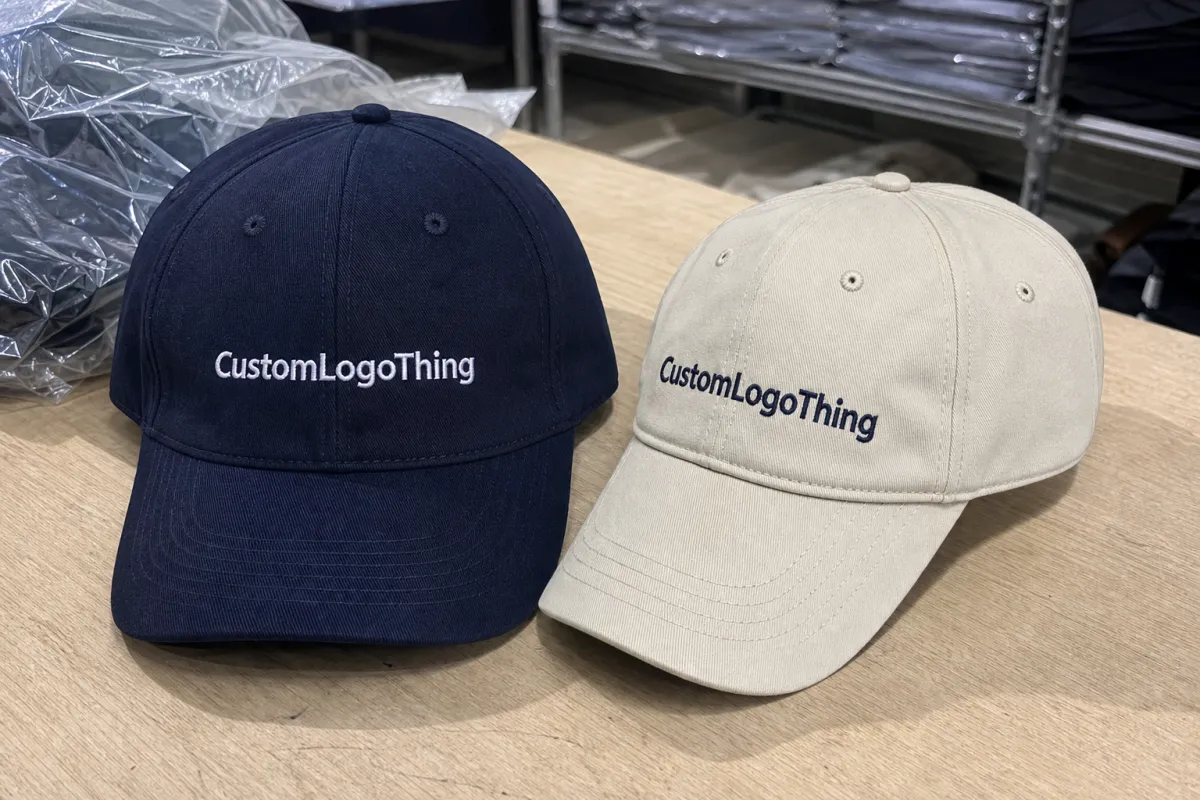
Unstructured caps usually move faster because they are easier to approve. The soft front panel does not create the same visual pressure as a structured crown, so small differences in head shape, panel tension, or curvature are less noticeable. Buyers spend less time arguing about whether the hat looks “too tall” or “too stiff,” and that saves real calendar time.
The six-panel dad hat format also broadens the audience. It is casual enough for staff wear, restrained enough for retail, and neutral enough for many brand programs that do not want a trend-heavy silhouette. A rigid snapback can split opinion. A relaxed cap rarely does.
Chocolate adds a second advantage: it hides everyday wear better than lighter neutrals without reading harshly. Dust, light scuffing, and minor handling marks are less visible on a brown cap than on cream or pale khaki. At the same time, the color still photographs well. Cream embroidery on chocolate feels clean. Tan thread feels understated. Dark green or tonal brown embroidery can look expensive without adding visual noise.
That combination matters in bulk ordering because the goal is not just to make a cap. It is to keep returns low, reduce internal debate, and make reorders simple. If the first batch sells through, the second should not require another round of interpretation. A stable chocolate cap program can do that, provided the original spec is tight.
The same logic explains why these hats tend to work across several channels. Retail teams like the easy styling. Operations teams like the lower defect risk. Procurement teams like the simpler pricing structure. None of those groups wants surprises, and an unstructured chocolate cap usually gives them fewer.
Product Details Buyers Should Confirm Before Ordering
“Dad hat” is not a full spec. Different suppliers use the phrase to describe different crown heights, panel shapes, and visor curves. Before pricing goes out, ask for the actual measurements and construction details. A low-profile 6-panel cap with an unstructured front and a pre-curved visor is the most common starting point, but even there the fit can vary enough to change how the logo sits.
Ask about crown depth, panel count, visor shape, and front panel reinforcement. A relaxed cap often sits in the 11.5-12.5 cm crown depth range, but the block matters as much as the number. Two caps with the same measurement can wear differently if one has a flatter front and the other has more give. Buyers who skip this check usually discover the difference only after the sample stage, which is the expensive time to find it.
Closure choice is another point that changes the user experience more than people expect. Self-fabric straps with a brass buckle feel classic and a little more finished. Tri-glides are lighter and quick to adjust. Hook-and-loop closures are fast, but they often feel less premium. Snapbacks create a more casual streetwear read, which can work, but they shift the product away from the classic dad hat category. A mixed audience usually does better with an adjustable strap that looks quiet and wears easily.
Decoration should be locked before sampling starts. Embroidery remains the standard, but woven patches, printed patches, and mixed decoration methods are common for logos that need fine detail or stronger contrast. Small type, thin lines, and complex gradients rarely survive cap-scale decoration without simplification. A good supplier will tell you that early instead of forcing the logo through a process that flattens it.
The pre-production sample should confirm more than appearance. It needs to show color accuracy, stitch behavior, front panel firmness, logo placement, and the way the hat sits after handling. If the chocolate tone changes under different light, that should be visible before production. If the thread pulls the panel tighter than expected, the sample should reveal that too. A sample is a control point, not a courtesy.
Fit, Fabric, and Decoration Specs That Affect Results
Fabric affects everything from drape to stitch performance. Brushed cotton has a softer hand and a more broken-in feel, which fits lifestyle merch and casual retail. Cotton twill is cleaner and usually behaves better under embroidery because the surface stays more predictable. Garment-washed fabric gives an immediate worn-in look, but it can introduce batch variation, especially in darker colors where washing changes the depth of tone.
Chocolate colorways are sensitive to finish. A pigment-dyed cap can read earthy and vintage. A tightly woven twill can look deeper, cleaner, and more uniform. That difference sounds minor until the order is repeated six months later and the second run needs to match the first. If consistency matters, ask how the supplier controls dye lots, wash processes, and thread matching across reorders. A swatch helps. A signed physical sample helps more.
Decoration quality depends on the relationship between the art and the cap structure. Dense fills on a very soft front panel can pucker if the backing is too light or the stitch density is too high. Tiny lettering needs breathing room or it will blur once it bends with the crown. Off-center logos, side marks, and back hits all require seam maps before approval, because the seams determine what can be placed cleanly and what cannot.
Practical buyers also check the underside details. Sweatband material, inner taping, and visor support affect the way a cap feels after a full day of wear. These details rarely make the sales photo, but they show up in customer feedback. A cap that looks good and feels cheap will not hold up as a repeat item.
Packaging deserves the same level of attention. Confirm carton counts, polybag usage, inner pack style, and whether the caps are shipping for direct-to-consumer fulfillment or for retail display. If the product has to survive parcel handling, ask for the packing standard and whether the cartons are tested for compression or drop resistance. For suppliers that reference ISTA handling methods, the framework is outlined at ISTA. If sustainable packaging matters to the buyer, request FSC-certified cartons or inserts and verify chain-of-custody through FSC.
- Fit range: confirm the wearable circumference, usually around 56-61 cm for one-size programs.
- Front panel behavior: ask whether the panel is lightly reinforced or fully soft.
- Logo size: specify width and height in millimeters, not just “center front.”
- Pack-out: decide whether the order is bulk carton, polybagged, or retail ready before production begins.
Chocolate Unstructured Dad Hats Bulk Order Pricing and MOQ
Pricing depends on more than quantity. Volume matters, but decoration complexity often moves the number more. A single clean embroidery hit is usually cheaper than a front patch plus side mark plus back detail. Packaging changes the landed cost too. Add polybags, hang tags, individual labels, or special folding instructions, and the per-unit price can climb quickly.
MOQ is not fixed across the market. It shifts with the product spec, the decoration method, the color control required, and how much setup work sits behind the run. A simple embroidered chocolate cap may be available at a lower minimum than a custom patch build with a special closure or unusual fabric finish. Lower MOQ is useful for testing demand, but the unit price usually reflects the higher setup ratio. That is normal, not punitive.
For planning purposes, ask for pricing at three or four quantities. The break point is often easiest to see around 300, 500, and 1,000 units, but there is no universal rule. Sometimes a modest jump in quantity lowers the unit cost enough to justify extra inventory. Sometimes it does not, especially if the artwork is complicated or the pack-out is labor-heavy. The only reliable answer is a landed-cost comparison.
Indicative ranges help set expectations, though they are never the whole story. Basic embroidered programs often sit around $4.90-$6.80 per piece before freight and special packaging. Woven or printed patch styles may fall closer to $5.40-$7.40 depending on coverage and setup. Multi-location decoration can move into the $6.60-$9.20 range, especially once sample work and finishing are added. These are planning numbers, not promises.
| Decoration Option | MOQ Pressure | Indicative Unit Price Range | Best Use Case |
|---|---|---|---|
| Flat embroidery | Lower | $4.90-$6.80 | Clean logos, repeat programs, faster approvals |
| Woven patch | Medium | $5.40-$7.40 | Small text, sharper detail, more finished retail look |
| Printed patch | Medium | $5.10-$7.10 | Full-color graphics and softer visual branding |
| Multi-location decoration | Higher | $6.60-$9.20 | Programs that need front, side, and back treatments |
Hidden costs matter. Digitizing can run $25-$60 per logo depending on stitch complexity. Pantone matching may add cost if the supplier needs to source special thread colors. Sample freight, rush fees, carton labeling, or individual polybagging can all add up. On a large run, a small line item becomes a meaningful total. That is why chocolate unstructured dad hats Bulk Order Planning should start with the landed price, not the headline unit price.
One more caution: if the supplier quotes a very low base price but does not include artwork setup, finishing, or shipping assumptions, the final number may climb later. Transparent quotes break those items out early. Murky quotes do not.
Production Process and Lead Time From Proof to Delivery
The production path is usually straightforward: artwork intake, mockup, sample, approval, bulk production, inspection, packing, and freight booking. The weak point is rarely the sewing itself. It is usually the approvals. Missing vector files, late logo changes, or slow feedback from internal stakeholders stretch the calendar far more than the factory operation does.
Good scheduling means deciding what is final before the sample is signed. If placement, stitch color, closure type, or carton labeling changes after approval, the schedule can shift quickly. Even small edits create rework. That is why a buyer should treat the sample review as a decision point, not a design workshop.
Lead time needs a buffer. A realistic calendar usually includes several business days for mockup and proofing, additional time for sample production, then bulk manufacturing, final inspection, and shipping. If the hats have to arrive before a launch, trade show, or seasonal deadline, build in extra time for freight congestion and customs delays. The quote may look clean. The shipping lane may not be.
Most dependable suppliers can tell you where the delay is likely to appear before the delay appears. Complex artwork should trigger an early warning. Custom dye matching should trigger another. Bulk packaging can add a day or two. The schedule slips are often small, but they compound fast if nobody is tracking them.
For that reason, chocolate unstructured dad hats Bulk Order Planning should be built around an approval calendar. Keep room for one revision cycle, sample transit, and final carton confirmation. That gives the buyer a real chance to catch problems before a large run locks them in.
Typical production windows vary, but a standard program often needs several weeks from approved artwork to delivery, and longer if the order includes custom hardware or special packaging. Rush jobs are possible, but they usually cost more and leave less room for quality control. The cheapest hat is not useful if it misses the event.
What a Reliable Hat Supplier Should Show You Up Front
A dependable supplier does not hide the product behind a polished render. They show the actual cap style, panel layout, decoration method, and packing details before the order is finalized. The mockup should make it possible to judge logo scale, placement, stitch direction, and the final silhouette of the crown. If the visual is attractive but the spec sheet is thin, that is a warning sign.
Chocolate color consistency deserves more attention than buyers sometimes give it. A warm cocoa tone and a cooler dark brown can look related on screen and still land as different products in hand. Fabric lot variation can shift the shade, and thread color can push it further. Ask for physical references if they are available. A supplier that treats color casually usually handles other details the same way.
Reorder documentation matters more than most teams expect. If the supplier can store the final decoration notes, color target, closure style, and pack-out instructions, the second run becomes far easier to execute. That matters for recurring programs, seasonal replenishment, or any product that needs to stay stable across multiple buys.
Packaging discipline also reveals how the supplier works. Clean carton labeling, final inspection photos, and clear pack counts reduce the chance of surprise on arrival. If the supplier can document the packed goods before shipping, they are generally more organized than a vendor who only talks about price. Good process leaves a paper trail and a visual one.
Buyer test: if a cap spec cannot be repeated six months later without reinterpretation, the order was not documented well enough.
For common order questions, the FAQ section below covers file types, placement choices, and reorder timing. Those questions are not minor. They are the points that decide whether the next order moves quickly or needs to be rebuilt from zero.
Finalize Artwork, Quantities, and Reorder Windows
The final stage is about removing guesswork. Confirm the logo files, approve the color target, lock the quantity tier, and decide whether the caps ship in bulk cartons or in retail-ready packs. Keep embroidery maps, patch references, and packing notes in one place. The first order should create a record the next order can follow.
It also helps to set the reorder window before the first shipment leaves. That sounds procedural, but it keeps purchasing teams ahead of stockouts. If sell-through is faster than expected, a reorder can move more quickly when the spec sheet is already approved and the sample is already signed. That is the practical payoff of disciplined chocolate Unstructured Dad Hats Bulk Order planning: the program becomes repeatable instead of improvised.
Buyers should decide in advance how much variation is acceptable on a repeat run. Should the next batch use the same fabric lot if available? Should the closure remain unchanged even if a newer hardware option appears? Should the thread match the original sample or the current brand palette? Those choices sound small, but each one affects consistency and cost. Document them once, and the next purchase is cleaner.
In the end, the strongest bulk cap programs rely on three things: a stable spec, realistic pricing tiers, and a supplier that can repeat the order without rebuilding the whole file. Chocolate Unstructured Dad Hats work well in that system because they are easy to wear, easy to review, and easier than most styles to replenish. That is a useful combination for buyers who care about speed, consistency, and low drama.
What is the usual MOQ for chocolate unstructured dad hats in bulk?
MOQ depends on decoration, packaging, and whether the color needs tight matching. Simple embroidery programs often start lower than custom patch or special-pack orders because the setup is simpler. Ask for pricing at several quantities so you can see where the break point actually lands.
How long does bulk production usually take after artwork approval?
Lead time starts after final mockup approval, not after the first quote. A typical schedule includes sample production, bulk manufacturing, inspection, and freight booking. Add buffer if the hats have to arrive for a launch, trade show, or holiday window.
Can I mix logo placements in one chocolate unstructured cap order?
Yes, but mixed placements usually add setup time and raise unit cost. Keep the decoration method consistent if you want a cleaner approval process and easier reorder history. If you need more than one placement, confirm whether each version counts toward the MOQ.
What artwork files work best for chocolate dad hat bulk orders?
Vector files are usually the safest option because they scale cleanly for embroidery and patch production. Thin lines and tiny text should be simplified so they stay readable on a curved front panel. A placement mockup is still useful because it shows size and visibility before production begins.
How do I keep the same color and fit on a reorder?
Save the approved spec sheet, color target, and sample reference from the first run. Confirm fabric lot, thread match, closure style, and pack-out before releasing the reorder. That is the most reliable way to keep chocolate unstructured dad hats bulk order planning consistent across future runs.

