Bakery Logo Patch Beanies Unit Cost Review for Buyers
A bakery Logo Patch Beanies unit cost review starts with a simple question: will the logo still read clearly after a cold pre-dawn shift, a run to the curbside window, and a few washes? On ribbed knit, embroidery can sink into the texture. A patch sits flatter, keeps edges cleaner, and usually gives a better brand read without making the beanie feel overly promotional.
That matters in bakeries because beanies are not just a winter add-on. They help staff look consistent at early production hours, carry the brand into farmers markets and holiday pop-ups, and give front-of-house teams a uniform piece that looks intentional instead of improvised. The best option is rarely the one with the lowest headline price. It is the one that balances visibility, comfort, wash durability, and the order size you actually need.
Why patch beanies often read better than embroidery
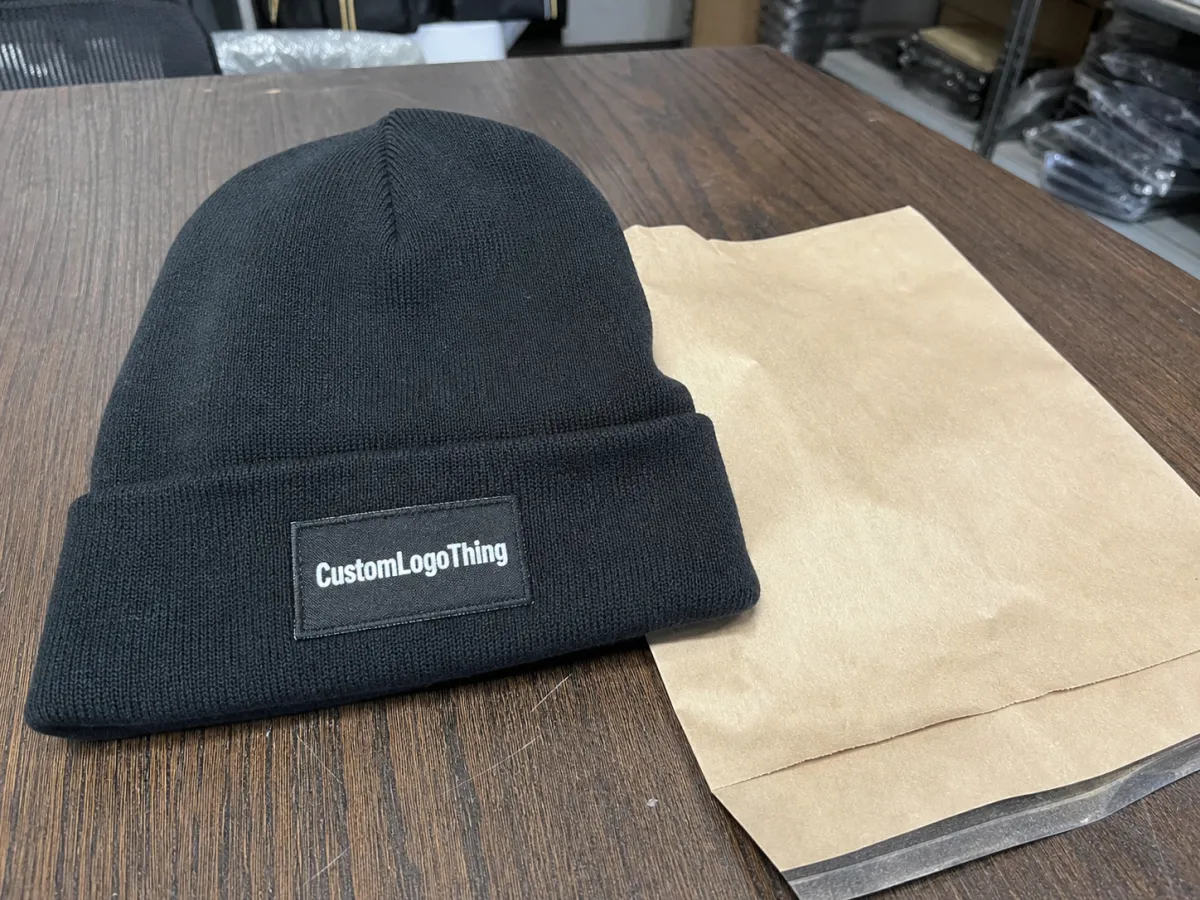
On rib-knit beanies, embroidery has a habit of disappearing into the fabric pattern. That is especially true when the logo uses thin strokes, small text, or a detailed badge shape. A patch gives the mark its own surface, which helps it stay legible from a few feet away instead of blending into the knit.
That difference is not cosmetic trivia. A bakery counter is a visual sprint, not a close-up inspection. Customers see staff from across a case, through a service window, or in a crowded market stall. If the logo only works at arm's length, it is doing half the job.
Patches also feel more deliberate on a basic knit cap. A woven patch, faux leather patch, or rubber patch can make a standard acrylic beanie look more finished without turning it into a loud promo item. Thin type and small icons usually survive the move better on a patch than in thread. The fabric can stay simple. The branding gets the attention.
There is a practical side too. Bakery teams move between cold rooms and hot ovens, and they wear headwear for long shifts. The beanie has to stay comfortable, keep its stretch, and survive regular laundering. The decoration method should support that use, not fight it. If the logo treatment slows wash performance or makes the cap stiff, the beanie ends up in a drawer.
If the logo is hard to read from six feet away on ribbed knit, the patch is probably the better call.
For buyers, that is the real test: choose the option that gives the clearest brand read at the counter, not the one that only looks clean in a close-up proof.
Patch types, placement, and beanie builds that change the quote
Patch type changes both the look and the price. Woven patches give the sharpest read for small text and fine linework because they hold detail better than most stitched decoration. Faux leather reads warmer and more premium, which fits bakery brands that want an artisanal feel without too much shine. Rubber patches add dimension and stand out well on darker knits. Embroidered patches keep a softer, more traditional look.
Placement matters just as much. Front-center on the cuff is the standard because it is the first thing customers see. Offset cuff placement can feel more style-driven. A side patch is subtler and often works better for retail pieces. Cuff height also matters. A deeper cuff gives more room for a larger patch and keeps the logo from crowding the crown seam.
Beanie construction changes the rest of the equation. Basic acrylic is still the most common base because it is dependable, easy to source, and usually the lowest-cost option. Acrylic-wool blends feel warmer and often drape better. Recycled yarn blends are worth a look if the bakery wants a cleaner sustainability story or a more retail-ready product. The tradeoff is price. Specialty yarns usually cost more, and the difference shows up fast on small runs.
| Patch style | Visual read | Typical use | Approx. add-on cost impact |
|---|---|---|---|
| Woven patch | Sharp for text and thin lines | Small logos, badge marks, staff uniforms | Low to moderate setup charges |
| Faux leather patch | Warm, premium, slightly subdued | Artisanal branding, coffee-and-bakery looks | Moderate; may need deboss tooling |
| Rubber patch | Bold, dimensional, highly visible | Outdoor markets, darker beanies, sporty branding | Moderate to higher; mold tooling fees may apply |
| Embroidered patch | Classic, soft-edged, traditional | Simple logos, heritage bakery styles | Usually moderate; depends on stitch count |
Border thickness is one of those boring details that decides whether the patch looks finished or slightly off. A weak border can fuzz out once the piece is sewn or heat-applied. A clean border helps the whole shape hold. Contrast matters too. A dark patch on a dark knit can disappear unless the logo uses bright thread or a light-filled design. If the artwork is busy, simplify it before quoting. That usually improves the final look and often trims setup work as well.
Attachment method is another quiet cost driver. Sewn-on patches usually hold up well through repeated wear and washing. Heat-applied options can work on some knits, but the fabric has to be compatible and the application has to be controlled. If the beanie fabric is loose or highly textured, sewn application is usually the safer route.
Specs that control fit, warmth, and decoration area
Before anyone prices the job, confirm the beanie specs that affect fit and decoration area. Knit gauge is a major one. A tighter gauge gives a cleaner surface and usually supports patch placement better. A looser knit stretches more, but it can show texture around the patch edge. That is not always bad. It just changes the finished look.
Cuff depth matters because it determines how much flat space is available for the logo. Crown depth affects how the beanie sits on the head and whether the decoration feels centered or too high. If the cuff is too shallow, the logo can get squeezed. If the crown is too tall, the beanie can look slouchy when the team wanted a more fitted shape.
Stretch recovery is worth asking about. A bakery beanie should fit a range of head sizes without bagging out after a few wears. If staff are constantly tugging it into place or folding the cuff differently to make it work, they will wear it less often. Better fit means fewer complaints and better daily compliance. That is plain, unglamorous, and true.
Fabric weight changes warmth and drape. A lighter acrylic beanie can be fine for mild kitchens or front-of-house use. Colder prep rooms and winter markets may justify a heavier knit or a blend with more body. Heavier knits often feel more substantial and can carry a patch without looking flimsy. The downside is bulk. Too much bulk is a problem if the team works under hot lamps or in steamy prep areas.
Color selection also deserves a realistic conversation. Yarn colors are not exact the way print inks can be, so Pantone matching is limited. Buyers who want a specific brand color should ask how close the yarn can get before approval. Dark beanies usually give strong contrast for light patches. Light beanies make dark logos pop if the border is strong enough. In a bakery Logo Patch Beanies unit cost review, those choices affect both appearance and the final price.
For spec-minded buyers, the checklist is short and useful:
- Knit gauge for surface smoothness and patch stability.
- Cuff depth for logo visibility and placement space.
- Crown depth for fit and wear comfort.
- Stretch recovery for repeated use and washing.
- Finished size for staff fit across head shapes.
If the order includes retail packaging or shelf display cards, the same discipline applies. FSC-certified paper is a straightforward option for swing tags and belly bands, and the certification details are easy to verify through fsc.org. For carton handling and transit expectations, suppliers that understand basic package testing standards such as those published by ista.org are usually easier to work with.
Bakery logo patch beanies unit cost review by order size
This is where the quote becomes real. The biggest cost drivers are the beanie base quality, patch style, patch size, logo color count, attachment method, packing style, and total quantity. A simple woven patch on a standard acrylic beanie is one thing. A debossed faux leather patch on a recycled-blend cap with custom folded packaging is another. Add variables, and the unit cost climbs. Fast.
Volume matters because setup charges and production time spread across more pieces. A 50-piece order can look expensive per unit even when the base material is ordinary, simply because sampling, proofing, and decoration labor are being absorbed by a small run. At 250 or 500 pieces, the cost per piece usually settles down. That is why buyers should ask for the MOQ and the next break price before they commit. A lower MOQ can be useful, but it often carries a higher unit cost for exactly that reason.
| Order size | Typical landed unit cost | What usually happens |
|---|---|---|
| 50-99 pcs | $8.50-$12.50 | Higher setup charges and freight pressure the price |
| 100-249 pcs | $6.25-$9.00 | Better spread of decoration cost, still some sample overhead |
| 250-499 pcs | $4.75-$6.50 | Often the sweet spot for staff orders and small retail runs |
| 500-999 pcs | $3.90-$5.75 | Bulk pricing improves, especially on standard materials |
| 1,000+ pcs | $3.25-$4.95 | Best pricing, but only if color and patch style are standard |
Those ranges are for planning, not blind budgeting. A rubber patch may add a tooling fee. A custom faux leather deboss may need setup charges for the die or mold. Woven patch digitizing can be modest, while a highly detailed logo may need extra art cleanup before production starts. Freight also changes the landed number quickly, especially if the order ships in a rush or to multiple locations.
When a quote lands in your inbox, ask for four line items: landed unit cost, sample cost, decoration charge, and whether packaging is included. That makes comparison honest. If two suppliers both quote a low base price but one adds packing charges and the other does not, the true total is not the same. That is why the best bakery logo patch Beanies Unit Cost Review compares total spend, not just the sticker price on the cap.
Shipping deserves its own line in the budget. A small order can look affordable until freight and import handling get attached to it. For domestic jobs, carton size and weight can affect the cost more than people expect. For cross-border orders, timing can also change the bill if the shipment is rushed or split across multiple receiving points.
Production flow and lead time from proof to shipment
The production path is usually predictable if the artwork is ready. First comes artwork review, where the supplier checks line weight, text size, patch shape, and whether the logo can be built cleanly at the requested size. Next comes the patch proof, which should show border, color placement, and attachment method. If the order needs a sample or preproduction approval, that step follows before bulk production starts. Then the factory moves into decoration, finishing, packing, and shipment.
Lead time stretches when the artwork is incomplete or when buyers revise the proof too many times. Slow approvals are one of the biggest hidden delays in custom apparel and accessory orders. Color changes after sampling can also push the schedule back, and special packing requests can add time if they were not planned early. If you need a specific delivery window, finalize the shipping address, carton instructions, and size split before the order is locked.
For many bakery orders, a standard run often lands in about 12-15 business days after proof approval, though that depends on quantity and the exact patch method. Simple, proven builds move faster. Complex logo shapes, custom yarn colors, or unusual retail packaging move slower. Rush timing is easier when the logo is clean, the patch style is familiar, and the quantity fits normal factory capacity.
Packing matters more than people think. Beanies compressed into cartons can pick up crease marks, especially if the patch has a firm edge or a faux leather face. Cartons should protect shape without overstuffing. If the shipment is retail-ready, ask how inner bags, size labels, and carton marks will be handled. That small part of the order affects how the product arrives and how quickly your team can receive it.
A practical production flow looks like this:
- Send artwork, quantity, beanie color, and patch style.
- Approve the proof with the correct placement and size.
- Confirm sample or preproduction approval if needed.
- Lock shipping details and carton instructions.
- Release bulk production and track the finish date.
Quality checks that matter for repeat orders
If the order may repeat, consistency matters more than a flashy one-off sample. The same patch placement, the same knit quality, and stable color from run to run matter because staff notice when one batch looks slightly off from the last. That kind of mismatch is common when buyers chase the lowest price without asking how the supplier controls the build. A repeatable bakery logo patch beanies Unit Cost Review should always include reorders, not just the first shipment.
Proofing discipline is a strong signal. Suppliers who explain decoration limits clearly tend to produce fewer surprises. If a logo has tiny type, thin border lines, or complicated shading, the buyer should hear that up front rather than after payment. The same applies to patch adhesion and stitch security. If the logo is likely to lift, curl, or crack after repeated wear, the cheapest quote is not cheap.
Inspection should focus on a few practical points: patch alignment, border quality, stitch density, knit consistency, and whether the beanie holds shape after stretch. A close visual check is useful, but so is a simple wear check. Put the cap on, adjust the cuff, and look at it from counter distance. If the logo disappears when the wearer moves, the decoration choice needs another pass.
Packaging quality matters too. Even in a basic bakery order, cartons should protect the beanies in transit, and the packing style should be consistent enough to make receiving easy. For teams managing multiple store locations, that consistency saves time at intake. It also reduces damage claims, which are a hidden cost few people include in the first quote comparison.
One useful test is how the supplier handles tradeoffs. A good partner does not pretend every logo can be made every way. They tell you what will read best, what will hold up, and what will drive price. That kind of direct answer is what buyers need when they are balancing staff uniform needs, merch goals, and budget.
How to request a quote without missing the real costs
To get a clean quote, send the supplier a vector logo file, your preferred beanie color, your patch style, a rough size estimate, quantity range, deadline, and shipping destination. If you already know whether the order is for staff uniforms, retail resale, or promo giveaways, say so. That changes the material target and the price ceiling. A staff uniform order can usually focus on durability and comfort, while retail resale may justify a more premium finish.
Ask for the price at one quantity and the next break price. That tells you where bulk pricing improves and where the MOQ sits. It also exposes whether the supplier is charging extra for small-run setup work. If the quote is vague, ask for the sample cost, any tooling fees, and whether packaging is part of the quote or billed separately. That keeps the budget honest.
It helps to compare two or three options instead of one. A woven patch on acrylic beanies may land best for the money. A faux leather patch on a recycled-blend cap may better match the bakery's look and retail positioning. Approve the proof that reads most clearly, not the one that merely looks nicest in isolation. Then lock the order once timing, quantity, and landed cost line up.
For buyers who need a simple rule: choose the beanie that gives the clearest logo at the right unit cost, then confirm the MOQ, the decoration method, and the shipping terms before payment. That is the safest way to avoid a surprise invoice later, and it keeps the bakery logo patch beanies unit cost review grounded in real production numbers instead of guesses.
Frequently Asked Questions
What affects bakery logo patch beanies unit cost the most?
Quantity is usually the biggest driver because setup costs and decoration labor spread across more units. Patch type, logo complexity, and beanie material also move the price quickly, and packing style or shipping terms can raise the landed cost even when the base unit price looks low.
What MOQ should I expect for bakery patch beanies?
MOQ depends on the beanie base, patch method, and whether the design uses standard materials. Small custom orders are possible, but the unit cost is usually higher at lower volumes, so ask for the minimum order at your target color and patch style before you compare quotes.
Are sewn-on patches better than heat-applied patches on knit beanies?
Sewn-on patches usually feel more secure for daily wear and repeated washing. Heat-applied options can work on some knits, but they depend more on fabric compatibility, so the safer choice is the one that holds cleanly on the exact beanie fabric you plan to use.
What artwork do you need for a bakery beanie quote?
A vector file is best because it preserves clean edges for the patch proof and keeps text readable. You should also share preferred colors, logo placement, and the quantity you want priced. If the logo is detailed, ask the supplier to flag any lines or text that may not reproduce cleanly.
How long does production usually take after approval?
Timing depends on proof approval, material availability, and order size. Simple standard orders move faster than custom colors, special packing, or complex patch construction, so ask for the current lead time before approving. That keeps your delivery date tied to production reality, not guesswork.


