Chocolate print gives a poly mailer a finished, premium look fast. It also creates a small trap for buyers: a package can look heavier and more expensive than it actually is. That is why a chocolate Printed Poly Mailers material thickness guide should begin with protection, not aesthetics. A mailer that photographs well can still split at the seam, stretch at the corners, or scuff badly after a trip through sortation if the film and seals are underspecified.
Thickness is only one part of the decision. Film structure, puncture resistance, stretch, opacity, and the way ink sits on the surface all affect how the mailer behaves in packing and transit. If you are buying branded shipping packaging, the useful question is not simply, "How thick is it?" The better question is, "How does the full build perform under the actual product load and shipping route?"
That is where most packaging decisions get expensive or efficient. A 3 mil bag and a 4 mil bag may differ by only one number on a spec sheet, yet the 4 mil version uses about one-third more film. That extra material can be justified for sharp-edged products or rough handling, but it is wasteful if the contents are soft and the route is controlled. The right choice sits at the intersection of product shape, seal design, and shipping risk.
Practical baseline: light apparel often starts around 2.5-3 mil, general e-commerce soft goods tend to land around 3-4 mil, and bulky or puncture-prone contents may need 4.5 mil or more. Those are starting points, not rules. Fill shape, closure style, and handling conditions can push the spec up or down.
What chocolate printed poly mailers material thickness guide really means
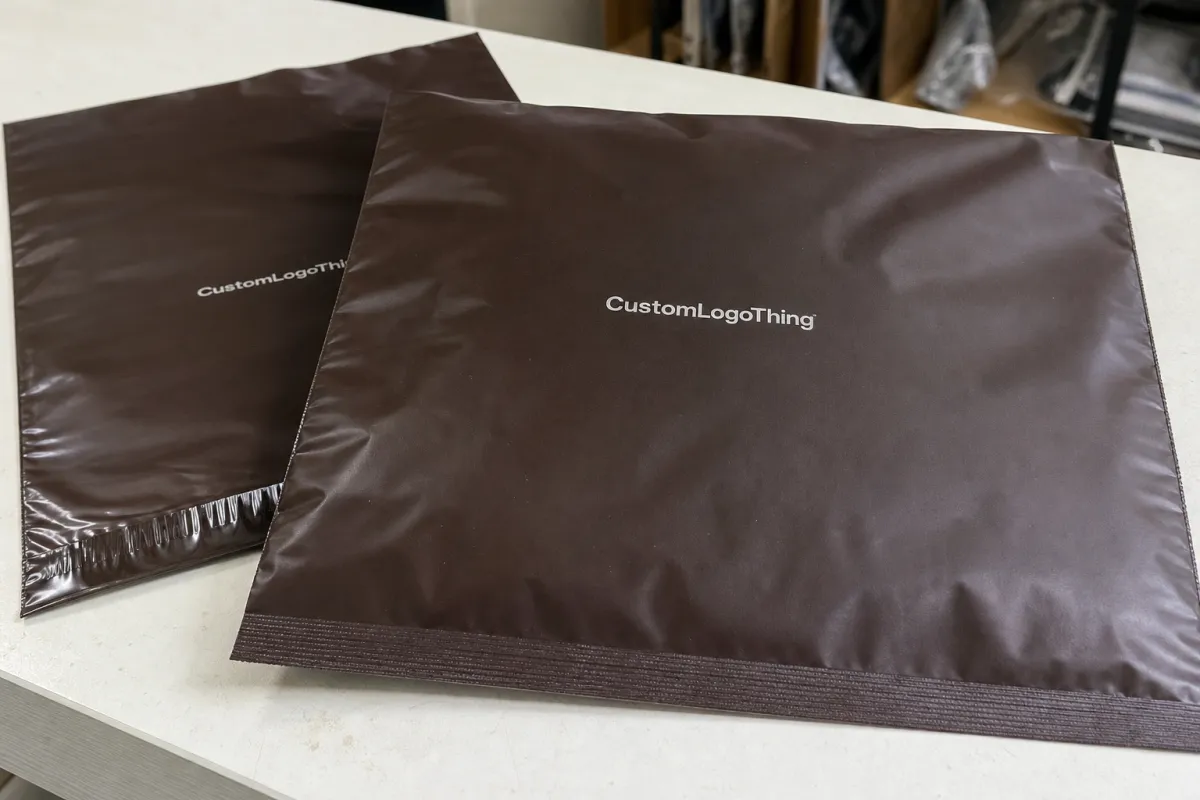
Poly mailer thickness is usually measured in mils, where 1 mil equals one-thousandth of an inch. Buyers sometimes use gauge as shorthand, but mil is the cleaner way to specify a film because it is direct and easier to compare across suppliers. A 2.5 mil mailer and a 3.5 mil mailer may feel similar in hand, yet behave very differently once the parcel is loaded, compressed, or dropped onto an edge.
The chocolate finish changes how the bag is perceived, but it does not change the physics. Dark coverage can hide minor handling marks better than a light print, which is useful, but it can also make streaks, pinholes, or opacity problems easier to notice under bright warehouse lighting. A bag can appear premium because of the color and gloss, while still being too soft for the product inside.
Route matters just as much as the product. A mailer traveling through a low-touch, direct-to-customer lane is not stressed the same way as one moving through high-volume automation, belt friction, repeated drops, and stack pressure. That is why a chocolate Printed Poly Mailers material thickness guide is really a product-and-route guide. The print color shapes the brand impression; the film and seal determine whether the parcel arrives intact.
Buyers also tend to underestimate the effect of internal shape. Flat textiles spread load evenly. Boxed items concentrate force at corners. Multi-piece bundles can create pressure points that slowly work against the side wall or seam. In practice, a slightly thicker film often buys more than just puncture resistance. It also improves stretch tolerance and reduces the chance that the mailer will deform so much that the contents look crushed on arrival.
How the film, print, and seal layers work together
A printed poly mailer is not one flat sheet doing one job. The outer layer carries the chocolate print, the middle layers provide body and toughness, and the seal zone absorbs a surprising amount of stress during packing and transit. If one of those areas is weak, the mailer can fail even when the nominal thickness looks acceptable on paper.
The outer surface affects print quality and abrasion resistance. The film core contributes stretch and puncture protection. The seal area is where heat, pressure, and dwell time have to be controlled carefully so side seals, bottom seals, and closure zones can hold under load. More thickness helps, but seal design matters just as much. A narrow seam or poor temperature control can undo the benefit of a heavier film.
That is why thickness and sealing should be specified together. A buyer may approve a mailer because the chocolate color looks rich and the film feels sturdy, then discover that the adhesive strip lifts during transit or the side seal tears when the parcel is overpacked. The problem is rarely one factor. It is usually a mismatch between film stiffness, seal width, and the real product load.
The lowest-cost mailer is not the one with the smallest unit price; it is the one that gets packed once, sealed once, and arrives without a claim.
If your packaging program also uses paper-based formats, it can help to compare structures honestly. Kraft paper mailers and Custom Packaging Products made from recycled materials may fit certain sourcing goals better, while poly mailers usually win on moisture resistance, low weight, and compact storage. No single format wins every time. The right one depends on how fragile the contents are, how much abuse the route adds, and whether the brand needs barrier performance or curb appeal first.
One more production detail matters more than many buyers expect: print coverage changes how the bag behaves in inspection. Dense chocolate coverage looks clean and hides minor scuffs, but it also makes registration errors, uneven ink density, and pinholes easier to catch during quality control. If appearance matters, thickness alone is not enough. Confirm opacity, print consistency, and seal integrity together.
Key factors that set the right gauge for your mailer
The first question is simple: what goes inside the bag? Flat apparel, folded textiles, cosmetics, small boxed goods, and multi-item bundles all stress film differently. A folded T-shirt set can live comfortably in a lighter build. A boxed accessory with corners can punch through a side wall if the film is too soft. The same thickness can behave very differently once the internal shape changes.
Shipping conditions matter just as much. A parcel that moves through short, gentle handling has a very different risk profile from one that sits in stacks, crosses long distribution chains, or gets compressed repeatedly. More handling usually calls for more film. Humidity, belt friction, and temperature swings also play a role, especially if the mailer needs to keep its appearance clean as well as its structure intact.
Branding is part of the calculation, but it should stay subordinate to performance. Dense chocolate coverage, good opacity, and a clean finish can make a package feel more premium. They can also make defects more visible in the wrong light. If the mailer has to look neat on the doorstep and in the customer unboxing photo, the spec should be tested under both warehouse and retail-like lighting.
Sustainability targets deserve a real conversation instead of a slogan. Some buyers want recycled content or a lower-resin build; others are comparing poly against paper-based alternatives. Those are valid options, but they should be judged by actual performance: puncture resistance, moisture resistance, closure strength, and shipping cost. A green claim does not replace functional testing.
- Product shape: flat goods can usually run lighter than sharp-edged items.
- Route severity: more touches, more compression, and more transit time usually justify a heavier film.
- Visual target: dark print can look premium, but it also shows scuffs and opacity problems differently.
- Procurement goals: recycled content, lower freight weight, or a tighter budget may shift the spec in opposite directions.
If you are comparing packaging across a broader program, do not isolate the mailer from the rest of the shipment. A better carton, a different closure, or a smarter pack-out method can sometimes let you keep film thickness moderate without increasing damage. Packaging is a system; thickness is only one variable in it.
Production steps and turnaround: from spec sheet to shipped cartons
Once the spec is clear, the production flow is usually straightforward, but small changes can add days fast. A proper order begins with finished dimensions, target thickness, print coverage, closure type, and a clear note on the product weight and fill shape. After that comes artwork review, proof approval, printing, sealing, slitting, packing, and final inspection. The cleaner the brief, the less back-and-forth the job needs.
Turnaround usually slips in the same places every time: revised dimensions, new artwork complexity, tighter tolerances, or a thickness change after proofing has already started. A stock film build is easier to keep on schedule than a custom blend or a special seal construction. For repeat orders with no changes, a standard run may move in roughly 10-15 business days after approval. Custom work often needs more time for setup, verification, and scrap control.
Minimum order quantity affects both timing and pricing. A larger MOQ can improve line efficiency and bring the unit cost down, but it also raises inventory exposure if the spec is wrong. Smaller runs are easier to approve for testing or seasonal launches, yet they usually carry a higher cost per piece because setup is spread across fewer units. The practical move is to lock the spec before ordering, not after the quote comes back.
For validation, buyers should ask for real test methods rather than vague assurances. Tensile strength, dart impact, seal strength, and drop testing are common ways to check whether the film and seam match the load. Transport simulation aligned with ISTA practices can also reveal weak points that a visual inspection will miss. If paper components are involved anywhere in the package, FSC can be useful for verifying certified fiber claims. None of those references replace in-house testing; they just make the discussion more precise.
For a reorder, the safest assumption is simple: if the size, gauge, print count, and seal style stay unchanged, production is easier to predict. Once any of those variables moves, treat it as a fresh run and give the factory time to recheck the setup. That prevents the most common cause of avoidable delays, which is not the machine line itself but a late change that forces another proof cycle.
Cost, pricing, and MOQ: how thickness changes the quote
Thickness affects price directly because thicker film uses more resin, adds weight, and can increase freight cost when cartons become heavier. Still, thickness is only one line in the quote. Custom sizing, print coverage, seal style, color count, resin type, and carton configuration can move the price just as much. A proper comparison needs the full spec, not only the mil number.
Here is a practical way to read the market. These are broad planning ranges, not fixed prices, but they help frame discussions with suppliers:
| Typical build | Best fit | Typical quote effect | Buyer note |
|---|---|---|---|
| 2.5-3 mil | Light apparel, flatter goods, lower-abuse routes | Usually the lowest material cost | Good starting point if the load is soft and the shipping lane is controlled |
| 3.5-4 mil | Heavier apparel, bundled items, moderate sortation | Often a modest step up in unit cost | Balanced choice for many branded e-commerce shipments |
| 4.5 mil and up | Sharper edges, bulky loads, tougher transit conditions | Higher resin and freight impact | Worth the premium if replacement or damage costs are higher than the bag |
MOQ changes the economics more than many teams expect. Lower minimums are useful for testing, launches, and smaller brands, but they usually raise the unit price because setup gets spread across fewer pieces. Larger orders may improve cost efficiency, yet they also increase the risk of sitting on the wrong spec. A clean apples-to-apples comparison should keep size, film thickness, seal style, print coverage, and delivery terms identical.
Print coverage can change the quote as much as thickness does. Heavy chocolate coverage, tight registration, and extra brand marks require more attention in press setup and inspection. A simple one-color layout and a fully printed branded mailer are not the same production job, even if the bag size is identical. Buyers who focus only on material gauge can miss the bigger cost driver.
A fair procurement decision usually comes down to the total landed cost of failure. If a slightly thicker film cuts damage, returns, and repacks, it may be cheaper in the end than a thinner bag with a lower purchase price. That math is rarely visible from the quote alone, which is why sample testing matters before volume buying.
Common thickness mistakes that cause damage or waste
The most common mistake is choosing by hand feel. A mailer can feel tough and still be wrong for the load, especially once contents shift or a corner presses into the seam. Touch tells you something about stiffness. It does not tell you enough about puncture resistance, seal strength, or how the mailer behaves after stacking and compression.
The opposite mistake is over-specifying the film. Thicker is not automatically better. Extra thickness adds cost, makes the bag stiffer, increases carton weight, and can slow packing if the mailer no longer folds neatly around the product. If the contents are light and soft, a heavy build may create waste without adding real protection.
Bag size matters as much as film thickness. A spec that works for a flat item can fail when the same product is packed with a bulky insert or a second piece that increases internal pressure. Fill volume changes where the stress lands and whether the seam carries too much load. The sample should always reflect the final packed state, not just the empty bag.
Another common miss is ignoring the closure system. Some mailers fail at the adhesive strip long before the film itself reaches its limit. Others tear because the seal area is too narrow or the heat seal was rushed. When a buyer says the mailer "felt fine," that usually means the film passed a casual grip test, not a transit test.
Here is a basic test routine worth running before full production:
- Pack the actual product, not a substitute.
- Shake the parcel and watch for seam stress or corner movement.
- Drop it from realistic handling heights onto flat edges and corners.
- Inspect the seal, closure strip, and side walls afterward.
- Open it the way a customer would and check for tearing or awkward peel force.
That simple process catches the problems a spec sheet will miss. It also makes a chocolate Printed Poly Mailers Material thickness guide useful in practice, because it turns a vague buying choice into a measurable decision about protection, appearance, and cost.
Expert checks and next steps before you request samples
Before requesting samples, write the brief in one place. Finished dimensions, target thickness, product weight, closure type, print coverage, shipping profile, and any appearance requirements should all be listed. If opacity matters, say so. If the chocolate tone has to match existing packaging, include a reference. The cleaner the brief, the more meaningful the sample review will be.
It helps to ask for two or three comparable builds. That makes the tradeoffs visible: seal integrity, scuff resistance, stretch, and pack-out efficiency. A 3 mil and a 4 mil version may both look acceptable in a photo, but they will feel different once loaded and closed. If recycled content is part of the buy, make sure the sample reflects the same blend or film construction planned for volume.
Document the trial, even if the result feels obvious. Write down whether the seam held, whether the opening felt too stiff or too loose, whether the print stayed clean after rubbing, and whether the opening experience felt premium or frustrating. Those notes make approval faster and reduce the chance that a quote is built from a vague description rather than the actual spec.
If you are comparing broader packaging options, review Custom Poly Mailers alongside other formats to see where a mailer makes sense and where another structure might be smarter. The point is not to force every shipment into one material. It is to match the package to the product, the route, and the cost ceiling without guessing.
A final check is worth doing on every custom run: confirm the finish under the same lighting your team uses to inspect incoming goods. Dark print can mask minor wear in one environment and make it obvious in another. If the packaging is meant to represent the brand well on arrival, it should pass under both warehouse light and normal customer viewing conditions.
Use the chocolate Printed Poly Mailers Material thickness guide as a working tool rather than a one-time reference. Choose a thickness, test the actual packed product, and ask for a quote that matches the same gauge, seal style, and carton plan you intend to buy. That is the route to a mailer that looks right, costs what it should, and survives shipment without unnecessary loss.
What thickness works best for chocolate printed poly mailers?
Match the gauge to the contents and the route. Light apparel often works around 2.5-3 mil, while heavier or sharper items usually need more film for puncture resistance. Samples matter because the right spec depends on fill weight, seam loading, and shipping distance, not color alone.
Does a darker print change the thickness I should choose?
The chocolate color does not add structural strength, but it can hide scuffs and make surface flaws read differently during inspection. If appearance matters, confirm opacity and print quality separately from film gauge so the bag looks clean without being oversized.
How does thickness affect unit cost and MOQ?
Thicker film usually costs more because it uses more resin and can increase shipping weight. MOQ may not change with thickness, but pricing often improves at higher quantities, so compare both the per-unit price and the total inventory commitment.
What is the difference between mil and gauge for poly mailers?
Mil is the actual thickness measurement used in most packaging specs, while gauge is often used loosely and can vary by supplier. When comparing quotes, ask for the exact mil thickness, not just a general description like lightweight or heavy-duty.
How long do custom thickness orders usually take?
Standard sizes and familiar film specs usually move faster than custom builds with new artwork, unusual dimensions, or special seal features. Approve the sample early and lock the spec sheet quickly so production can start without avoidable delays.


