Bakery ribbed winter Beanies Bulk Order Planning starts with a practical problem, not a style brief. The cold shows up where the crew actually works: loading docks, freezer doors, pre-dawn deliveries, and the walk from the parking lot to the prep area. Ovens heat the room later. The beanie has to perform before that happens.
Ribbed knit is useful because it stretches across different head shapes, hair nets, and buns while keeping a cleaner silhouette than a flat, loose knit. It also gives embroidery or patch decoration a more predictable surface. That matters more than it sounds. A knit cap that looks fine in a mockup can curl, sag, or distort once it is worn for a full shift, and that kind of mismatch tends to show up fastest in uniform programs.
The buying decision gets sharper if the use case is defined first. A daily uniform piece needs stronger construction and a decoration method that survives repeated wear. A seasonal giveaway can be lighter and cheaper. Employee gift orders may prioritize softness and presentation. Customer-facing merch needs stronger brand visibility and better color contrast. Those are different jobs, even if they all start with the same silhouette.
Practical rule: treat fit, decoration, and wash behavior as one purchase. A good-looking sample is not enough if the beanie twists after three wears or the logo disappears in low light.
Bakery ribbed winter beanies bulk order planning for crew comfort
Most bakery teams feel winter first in the non-production zones. Dock work, freezer runs, curbside handoffs, and early morning arrival all happen before the room warms up. That is why bakery ribbed winter Beanies Bulk Order Planning should solve a comfort issue, not just fill a seasonal merchandise slot. If the beanie rides up, looks sloppy, or feels too promotional to wear every day, the program starts failing before the season is over.
Rib structure affects both fit and appearance. A tighter 1x1 rib usually feels more structured and holds its shape better. A 2x2 rib tends to look fuller and a little softer. For a bakery crew, that difference matters because the hats are worn by people with different head sizes, hairstyles, and compliance habits. One-size can work surprisingly well if the cuff depth and stretch recovery are tuned correctly, but “one size fits all” is still an oversimplification. The better question is whether the beanie fits comfortably across the entire crew after a long shift, not just during a fitting.
Logo visibility is another place where buyers get surprised. A design that looks crisp on a flat file can vanish once the knit stretches. Fine lettering, thin lines, and low-contrast thread colors are the usual offenders. If the beanie will be seen from six feet away in a dim prep area, the artwork needs to be simplified before production starts. That is a production reality, not a design preference.
Use case should decide the spec. Daily uniform pieces need stronger construction and a decoration method that tolerates repeated laundering. Seasonal extras can use a lighter knit if budget matters more than long-term wear. Employee gifts can lean softer and more polished. Retail or customer merch needs a cleaner read from a distance, which often means a bolder logo and more disciplined placement.
Three variables usually determine whether the order succeeds:
- Fit: head coverage, cuff depth, stretch recovery, and whether the beanie sits comfortably over hair nets or buns.
- Decoration: embroidery, woven patch, rubber patch, or label, each with different limits on detail and durability.
- Delivery timing: proof approval, production slot, packing, and transit all affect whether the order lands before cold weather does.
For bakery buyers, the most useful orders are the ones that reduce friction for the crew. A beanie that stays put, washes well, and carries the logo without looking overdesigned has a better chance of becoming part of the uniform instead of sitting in a drawer.
Choose the ribbed knit profile, cuff depth, and logo method
Start with the rib profile. A tighter rib usually gives a more tailored look and better shape retention. A looser rib can feel softer, but it often reads less controlled after several wears. That difference is not cosmetic only. In a bakery, a hat that loses structure quickly tends to look tired long before the rest of the uniform does.
Cuff depth changes both warmth and branding space. A shallow cuff gives a lighter look but less room for a logo and less coverage around the ears. A deeper cuff creates a larger decoration area and usually feels more substantial in cold storage or on delivery routes. If the team moves between warm prep areas and cold rooms, cuff depth is one of the simplest levers to pull without redesigning the whole item.
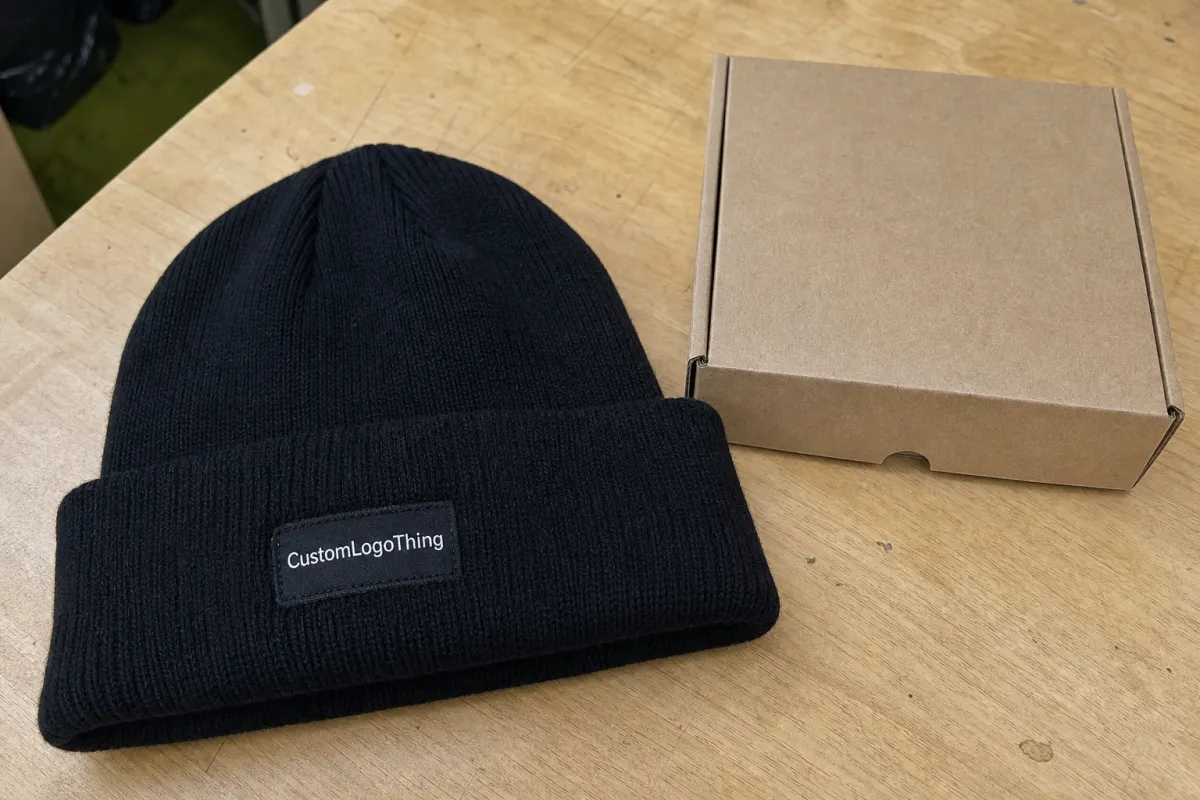
Decoration choice should follow the logo, not the other way around. Embroidery is usually the first option because it is durable and holds up well to stretching. Woven patches preserve small details and clean edges better when the art has fine type or a complex icon. Rubber patches create a crisp, modern feel, but they are not always the best fit for a softer, traditional uniform. Labels work well for small marks and low-key branding, though they have a smaller visual footprint from a distance.
Color choices deserve more scrutiny than they usually get. Bakery uniforms often combine aprons, coats, gloves, and caps in a narrow palette of whites, browns, grays, and brand accents. The beanie should fit into that system, not fight it. High-contrast combinations usually read best in flour-dusted, low-light environments. A dark cuff with mid-tone thread may look refined on screen and disappear in a real work setting.
A few comfort and wear checks are worth asking for early:
- Stretch recovery: the cuff should bounce back after repeated wear instead of relaxing into a baggy shape.
- Snag resistance: rough storage hooks, carts, and shelving can catch weak knit fast.
- Wash behavior: ask how the yarn and decoration handle repeated laundering, pilling, and drying.
If the order includes packaging or retail-ready labeling, think like a supply-chain buyer as much as an apparel buyer. Cartons, inserts, and hangtags should survive transit and still arrive presentable. Resources such as the ISTA testing framework are useful when shipping lanes are rough, and FSC-certified paper can support sourcing claims when printed inserts or cartons are part of the order. Those details may not affect the beanie itself, but they become visible the moment the cartons are opened across multiple locations.
Material and construction specs that hold up through cold shifts
Yarn blend drives feel, price, and care requirements. Acrylic is common because it is affordable, widely available, and usually color-stable. Wool blends bring more warmth and a more premium hand feel, though they can raise cost and may bother wearers who prefer a less scratchy finish. Polyester blends dry faster and can be easier to care for in a work environment where laundry cycles are frequent. The right answer depends on how long the beanie stays on the head, how hard it is used, and how much maintenance the staff will tolerate.
Weight is just as important as fiber content. A heavier knit traps more heat, which helps in freezer work and outdoor loading. A lighter knit breathes better for teams that move between ambient and warm areas. That tradeoff is easy to miss until the first week of wear. A decorator standing near hot ovens all shift has a different temperature problem than a night driver unloading pallets at dawn.
Some programs benefit from fleece lining or thermal inserts. They add cost and a little bulk, but they can change whether the hat gets worn consistently. If staff members leave the beanie in a locker because it is not warm enough, the program misses the point. A warmer beanie that is worn every day is worth more than a cheaper one that is ignored.
Before approving a run, ask for the spec sheet details that affect consistency:
- Dimensions: crown height, full length, and cuff depth in inches or centimeters.
- Gauge or stitch density: enough information to compare samples fairly.
- Decoration area: the exact usable width and height for the logo.
- Tolerance range: acceptable variation for size and placement.
- Care instructions: wash temperature, drying guidance, and decoration limits.
Seam finishing matters more than most buyers expect. A soft yarn can still feel irritating if the seam is bulky or the label is stiff. Bakery staff may wear these pieces for long shifts, sometimes under hoods or beside hair restraints, so interior comfort needs to be checked in hand, not only on paper. Scratchy seams and awkward labels create complaints that are hard to fix after production.
Colorfastness and pilling deserve a mention as well. Dark beanies that bleed dye or light beanies that pill after a few washes undermine the uniform quickly. That risk rises when the order mixes production lots or when the fabric is sourced from different dye runs. A buyer who asks about wash tests and shade consistency is not being difficult; that buyer is preventing reorder problems later.
Cost, pricing, MOQ, and sample math for bakery orders
Price starts with the knit, but it does not end there. Yarn blend, stitch complexity, decoration method, number of logo colors, packaging, and labeling all move the quote. A simple blank ribbed beanie sits in one price band. Add embroidery with a dense stitch count and the price climbs. Add custom packaging or a branded hangtag and the total shifts again. The useful quote is the one that lists every variable, not just the headline unit cost.
MOQ is the other major lever. Smaller quantities usually cost more per piece because setup gets spread across fewer units. Larger runs improve unit economics, especially if the color palette and decoration stay stable. For bakery ribbed winter Beanies Bulk Order planning, the real question is not only the cheapest unit price. It is whether ordering more now saves enough to justify the extra inventory and storage. That distinction often matters more than a few cents per item.
| Option | Typical MOQ | Estimated Unit Range | Best For | Watchouts |
|---|---|---|---|---|
| Blank ribbed stock beanie | 50-100 pcs | $2.80-$4.20 | Fast issue to crews, simple budget control | Less branding, fewer color options |
| Embroidered custom beanie | 100-250 pcs | $4.50-$7.50 | Daily uniforms, repeat wear, stronger branding | Fine details may need simplification |
| Patch-decorated beanie | 100-300 pcs | $5.20-$8.50 | Sharper logo edges, premium presentation | Extra setup and placement decisions |
Samples should have their own budget line. A blank fit sample is enough when the main concern is stretch, cuff depth, and hand feel. A decorated pre-production sample is better when logo placement, thread color, or patch size matters. That extra spend is usually justified because it catches mistakes before the full run starts. Fixing a logo issue on one sample is a lot cheaper than correcting 500 finished pieces.
Common add-ons are easy to underestimate:
- Art cleanup: tracing, line cleanup, or file conversion.
- Rush production: compressed scheduling usually adds cost.
- Split shipping: multiple bakery locations mean more cartons and more labels.
- Special folding or tagging: retail-ready presentation changes labor time.
For small independent bakeries, the simplest way to control cost is usually to limit color changes, keep the logo in one location, and avoid nonessential packaging. For multi-location chains, the math shifts. Consistency and replenishment matter more than saving a few cents per piece, especially if the same style will be reordered later in the season. Buying a slightly better spec once can be cheaper than fielding complaints and reordering under time pressure.
Process and timeline checkpoints from artwork to delivery
A clean order flow keeps the job on track: inquiry, quote, artwork proof, sample approval, production, quality review, packing, and shipment. Delays usually do not happen on the knit machine. They happen in the handoff between quote and proof, or proof and approval. If the logo file needs cleanup, the color reference is vague, or the decision-maker is unavailable, the schedule slips before production even starts.
Lead times vary with season and decoration complexity. A straightforward custom beanie order may move in roughly 12-15 business days after proof approval. More detailed artwork, fleece lining, or peak-season volume can push that longer. Buyers who plan well usually ask for milestones instead of promises. That keeps the schedule visible and makes it easier to spot where a delay is forming.
- Day 1-2: confirm quantity, decoration, color, and delivery address.
- Day 3-5: review artwork proof and request changes quickly.
- Day 6-8: approve sample or blank fit confirmation.
- Day 9-15+: production, inspection, packing, and shipment tracking.
Packaging needs the same level of planning. If the order ships to one store, carton labels can stay simple. If it goes to several bakery locations, each carton should be marked by site, color, and quantity. That saves receiving time and prevents distribution errors on the back end. For larger runs, ask for carton counts and pallet details before shipment so the receiving team knows what is arriving.
Transit deserves attention before the ship date, not after the damage report. A beanie order can look perfect at the packing stage and still arrive with crushed cartons, mixed sizes, or missing extras if the handling plan is weak. A shipping process that resembles ISTA-style lane thinking is useful here, even if the cartons are small. The goal is simple: get the product to the bakery in the same shape it left production.
What separates a dependable bakery beanie supplier on repeat runs
Repeatability is where a supplier proves itself. The second order should match the first in yarn shade, knit tension, logo placement, and overall fit. That is easy to say and harder to maintain. A first run can hide variation until the reorder lands and someone notices the cuff is deeper, the thread sheen changed, or the embroidery shifted slightly off center. In a uniform program, small drift becomes a real problem quickly.
Saved specs reduce rework. A supplier that keeps artwork files, color references, stitch counts, label instructions, and packing notes can turn a seasonal replenishment into a faster, cleaner job. That is especially useful for bakeries with staggered hiring. New staff arrive every few weeks, and the uniform order needs to fill gaps without a fresh round of guesswork every time.
Quality checks should focus on what actually gets worn. Seam strength, stretch recovery, clean stitching, colorfast yarn, and decoration durability matter more than a glossy sample presentation. The beanie will live under hoods, near flour, and in carts. If the construction cannot survive that reality, the supplier has not solved the buyer’s problem.
It also helps when the supplier asks about use case before quoting. A good question about shift length, laundering, and work environment often reveals more than a logo file does. Better still is the vendor who points out a conflict before the order is placed: too much detail for embroidery, not enough cuff space for the logo, or a warm lining that may be too bulky for the crew. That kind of feedback saves time on both sides.
Communication is the hidden quality metric. Bakery rollouts often involve managers, HR, purchasing, and store leads. One missing approval can affect launch day or a uniform changeover. A dependable supplier gives clear minimums, realistic timelines, and exact file requirements rather than vague reassurance. That is how bakery Ribbed Winter Beanies Bulk Order planning stays on schedule across one location or twenty.
Reorders should be boring in the best way. Same spec, same placement, same shade, same packaging. If the process is documented well, the second purchase becomes a replenishment problem rather than a creative one.
Next steps to lock your size mix, artwork, and ship date
Start with headcount by location. Then decide whether every employee gets the same beanie or whether drivers, managers, and counter staff need different quantities. That sounds small, but it changes the order math quickly. If you need spares for turnover or replacement, add them now instead of chasing a second order during the coldest part of the season.
Gather the logo file, brand colors, placement notes, and any uniform rules before requesting pricing. A quote based on guesswork is rarely useful. A quote based on a clean spec sheet usually is. If the team is split on warmth or fit, ask for a decorated mockup and a blank fit sample before approval. Then compare the beanie against aprons, coats, and other uniform pieces so the final look stays consistent.
Confirm the delivery window against opening dates, holiday staffing, freezer work, or outdoor route schedules. For some bakeries, timing matters more than the absolute unit price. Missing the cold-weather rollout by a week costs more than saving a small amount on the beanie itself. That is one of the reasons production calendars should be treated like part of the purchase decision.
Use this checklist to finish the job:
- Headcount: total staff, backup pieces, and location split.
- Spec: rib type, cuff depth, material, and decoration method.
- Artwork: clean logo file, placement, and approved colors.
- Timing: proof approval date, production window, and receiving plan.
If the order needs to be repeatable, keep the record of what was approved, not just what was quoted. That includes the thread color, patch size, and any packaging instructions. Uniform programs become easier to manage when the details are stored once and reused cleanly. That discipline matters more than flashy product language and usually saves more time than a lower sticker price does.
How many ribbed winter beanies should a bakery order for staff?
Start with one beanie per employee, then add extras for new hires, replacements, and managers who may need a backup size or color. A practical buffer is often 10% to 15% above headcount when the order needs to cover wash loss, spares, or seasonal turnover.
What is the usual MOQ for bakery ribbed beanies in bulk?
MOQ depends on the decoration method and production setup, but customized orders usually require a higher minimum than blank stock items. Ask for pricing at multiple quantity tiers so you can see where the unit cost drops enough to justify a larger run.
Which logo method lasts best on ribbed knit beanies?
Embroidery is usually the most durable choice for daily wear because it holds up well to repeated stretching and washing. If the artwork has fine details or gradients, a woven patch or label can preserve the logo shape more cleanly than direct stitching.
How long does production usually take for custom bakery beanies?
Standard timelines depend on artwork approval, sample sign-off, and factory workload, so buyers should expect the schedule to move in stages. Fast approvals shorten the job more than almost anything else, because delayed proofs are the most common cause of late delivery.
What details should I include in a quote request for winter beanies?
Include quantity, color, logo file, decoration method, size preferences, delivery ZIP code, and any packaging or labeling needs. The more exact the spec sheet, the more accurate the quote will be, especially when comparing cost, MOQ, and delivery timing.