Book Cuffed Knit Beanies Bulk Order Planning: Buyer's Brief
Book Cuffed Knit Beanies bulk order planning starts with the part buyers usually feel first: small spec changes can move the price, the fit, and the timeline at the same time. Change cuff height, switch yarn, or tighten the stitch gauge and you are often looking at a different production path, not a minor revision.
The useful question is not "What does one beanie cost?" It is "What does this spec cost when it is made at scale, packed the way we need it, and shipped on time?" That is the frame that helps a buyer compare quotes without missing the real drivers.
A clean quote is not the lowest number. It is the one that shows what changes the price, the lead time, and the finished look.
Why Small Spec Changes Move Big Budget Numbers
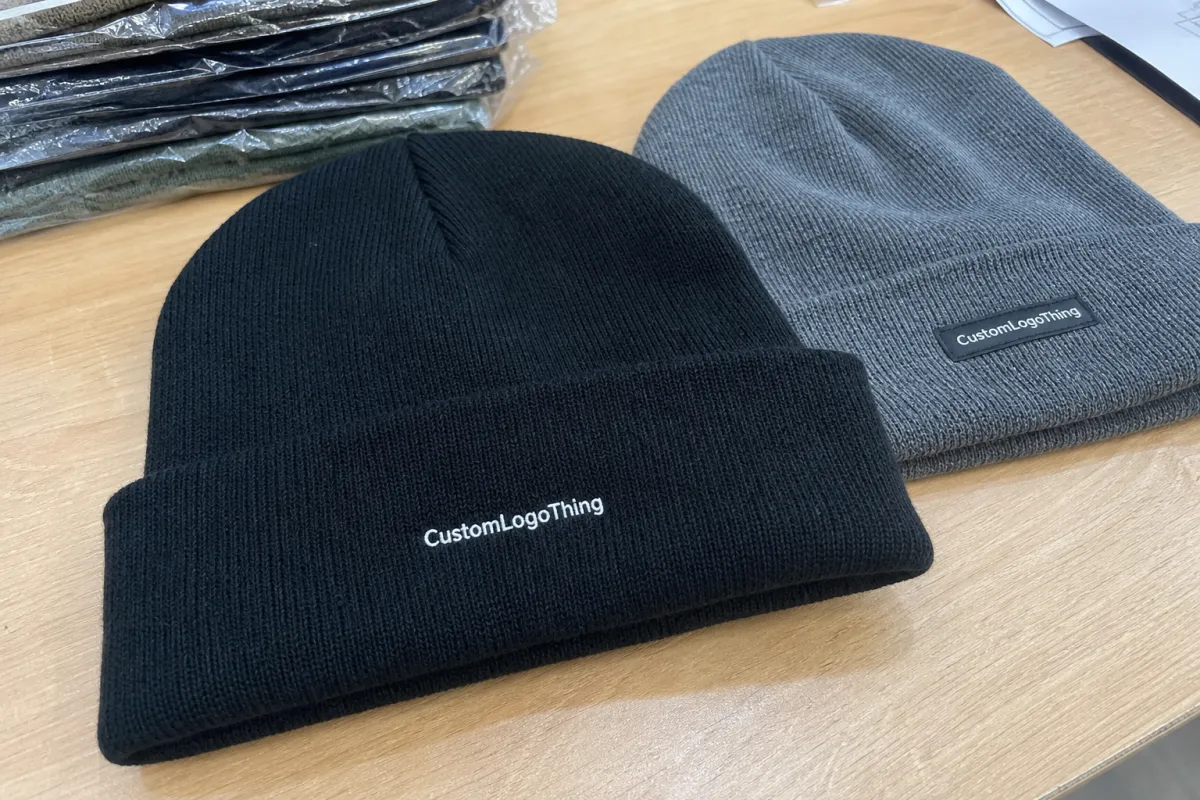
The cuff is not just a styling detail. It is the main branding surface, and its height affects how much room the logo has before it starts to crowd the knit. A taller cuff usually gives more flexibility for embroidery or a patch. A shorter cuff can force the artwork to shrink or move, which changes both the look and the setup.
Knit structure has the same kind of leverage. A tighter knit can look cleaner and hold a logo well, but it may stretch less. A looser knit can feel softer, yet it can distort under embroidery or relax after folding. The decoration method and the knit need to be chosen together if the logo has to stay crisp.
Material choice moves the budget faster than many buyers expect. Acrylic is common because it is consistent and cost-effective. Wool blends usually add warmth and texture, but they also raise the unit price and can increase care or documentation requirements. Recycled fibers may help a sourcing policy, but they can also bring shade variation or higher minimums.
There is also a difference between retail and promo use. Retail buyers usually want a controlled fold, strong label placement, and a shelf-ready finish. Promo buyers often care more about speed, lower landed cost, and simple packing. The same beanie can work for both, but the spec should match the use case.
Do not approve a flat mockup and assume the packed version will look the same. The cuff can cover more of the logo than expected, and the beanie may sit differently once bagged. Ask for measured proof photos with cuff width, logo width, and placement distance from the edge. Those numbers prevent the most common rework.
Build Details That Affect Fit, Finish, and Shelf Appeal
Cuffed styles usually win branded orders because they give the logo a cleaner field and the beanie a more structured shape. The cuff also creates a second visual zone for a woven label, patch, or contrast stitch. Uncuffed styles can look minimal, but they often leave less room for branding and less margin for error.
Fit is more than "one size fits most." Head shape, cuff tension, stretch recovery, yarn thickness, relaxed width, stretched width, body height, and cuff depth all matter. For bulk planning, those measurements tell you more than a generic size claim ever will.
Color decisions change both the appearance and the operational burden. Black, navy, and charcoal stay popular because they make logos stand out and keep inventory simple. Heathered yarn can look richer, but lot-to-lot variation is easier to see. A contrast cuff can add value, but it introduces another color that must be sourced and inspected.
Packaging belongs in the spec, not the margin notes. A beanie folded to a fixed size, bagged individually, labeled, and packed into cartons presents very differently from a loose bulk pack. Retail programs usually benefit from a controlled fold and label. Giveaway or event orders may be better served by bulk packing because it reduces labor and material cost.
Weight also matters because it affects freight. Most acrylic or acrylic-blend cuffed beanies sit roughly in the 70 to 100 gram range before packaging, with heavier winter versions above that. The difference sounds small, but it adds up across thousands of units and can change air freight enough to affect margin.
Specification Checklist for Logos, Sizes, and Packaging
Book Cuffed Knit Beanies bulk order planning becomes much easier once the spec sheet is complete. Start with the decoration method. Embroidery is still the most common choice because it is durable and usually affordable to set up. A woven patch can handle fine detail better. A leather badge creates a more premium read. A woven label is useful when the artwork should be quieter.
Placement should be measured, not described vaguely. "Front cuff" is too broad. A supplier needs to know whether the logo should sit 15 mm or 25 mm above the edge, how wide it can be, and whether it should be centered on the folded panel or offset for the knit shape. Measurements reduce proof changes because they remove interpretation.
A useful brief usually includes the following:
- Vector artwork in AI, EPS, or PDF format
- Pantone targets for logo and yarn colors
- Logo placement with measurements in millimeters
- Quantity by colorway and by decoration version
- Pack-out method: bulk packed, individually polybagged, folded with insert, or retail-hung
- Named proof approver and deadline for feedback
That last line matters more than buyers expect. If three departments are weighing in on the proof, the order can stall over small wording or placement changes that should have been settled upfront. One approver is cleaner than a committee.
Packaging choices also need to be specific. Bulk packing keeps labor down, but it creates more work after receipt. Individual polybags add material cost and handling time. Inserts can support retail presentation, but they also add print cost and another approval step. If the buyer needs documentation, ask whether the supplier can source FSC-certified stock or equivalent traceability.
Ask for sample photos in a set sequence: front view, cuff close-up, inside seam, back view, and packed unit. One front shot can hide stitch alignment or logo placement problems. A photo grid catches those issues before production starts.
For multi-location deliveries, confirm carton markings, barcode labels, and pack counts by case before sewing begins. Distribution problems are much easier to solve on the quote than after production.
Pricing, MOQ, and Unit Cost Breakpoints
Pricing works best when it is split into four lines: garment, decoration, packaging, and freight. One lump sum may look tidy, but it hides the variables that matter most. A low unit price is not useful if the supplier left out packing labor, carton labels, or a shipping method that misses the schedule.
The market does show scale savings. A single-color embroidered cuffed beanie might land around $3.20 to $4.80 per unit at 500 pieces. At 5,000 pieces, the same spec can drop into the $2.10 to $3.40 range if nothing else changes. Add a woven patch, and the garment price may stay similar while decoration cost shifts. Add retail packaging, and the landed number climbs again.
MOQ is rarely tied to the hat alone. It changes by color count, decoration method, and pack-out. A factory may accept 100 to 250 pieces for a simple single-color embroidered order, then ask for 300 to 500 pieces per color if you want mixed colors, special folding, or retail finishing. Ask for tiered pricing at 250, 500, and 1,000 units so the breakpoint is obvious.
| Option | Typical MOQ | Typical Added Cost | Best Fit |
|---|---|---|---|
| Single-color embroidery | 100-250 pcs | $0.60-$1.25/unit | Team merch and basic promo orders |
| Woven patch | 200-500 pcs | $0.80-$1.60/unit | Sharper detail and stronger retail appeal |
| Leather badge | 200-500 pcs | $0.90-$1.80/unit | Premium look with simple artwork |
| Retail pack-out with hangtag | 300+ pcs | $0.18-$0.45/unit | Shelf-ready merchandise |
Watch the hidden escalators. Multiple thread colors add setup time. A rush request can add 10% to 20% depending on capacity. Split shipments to different addresses raise freight even when the piece price stays flat. And if the order is split across colors, some suppliers will apply the minimum to each colorway rather than to the total run.
Once a setup cost is spread across a larger run, it becomes less painful. That is why a quote that looks expensive at low volume may actually be efficient once the order scales. Buyers who compare only the base garment price miss the true breakpoints.
Production Steps and Lead Time From Proof to Delivery
The production path is usually predictable, but only if approvals are disciplined: quote, artwork check, digital proof or sample, production, inspection, packing, and shipment. Miss one gate and the schedule slips. The calendar is often the first place an order goes wrong.
For standard orders, production often takes 12 to 15 business days after proof approval. That is not the full timeline. If you need a sample first, add several days. If the artwork has multiple thread colors, a stitched patch, or a special label, expect a longer setup window. Custom hangtags and retail inserts can add more days because they need separate approval.
Freight sits on top of that. Domestic delivery may take 2 to 7 days. Ocean or cross-border shipping can stretch to several weeks depending on the lane and the season. Buyers planning a fixed launch date should count backward from the in-hand date, not from the order date.
Capacity tightens fast when weather shifts. Knitwear is seasonal, and once cold-weather buying starts, factories fill with reorders and first runs at the same time. Waiting too long usually means rush fees or fewer color options.
Quality control is not just a visual check. It should cover cuff depth, logo alignment, thread tension, seam placement, stretch recovery, and consistency of folded dimensions across the run. If the shipment will travel far or be cross-docked, ask whether carton testing follows an ISTA-style method or equivalent transit testing.
What a Reliable Supplier Should Prove Before You Commit
Book cuffed knit Beanies Bulk Order Planning is really a test of repeatability. Can the supplier make the same spec twice without drifting? Can they keep the yarn shade close on a reorder? Can they explain what changes if the knit weight, patch type, or packaging method changes? If the answer is vague, the quote is probably vague too.
Good suppliers show decoration limits, sample images, and QC checkpoints before they ask for approval. Better ones explain how they handle reorders, yarn lot matching, and carton traceability. That matters because a second run made months later can drift slightly in shade even when the color code is the same.
Communication speed is its own quality signal. Slow replies do not automatically mean the order will fail, but they often indicate weak internal coordination. Fast replies are not a guarantee of workmanship either. Still, a supplier that answers measurements, minimums, and packaging questions quickly usually has better control of the order flow.
A useful checklist before approval looks like this:
- Itemized quote with garment, decoration, packaging, and freight separated
- Sample images or a digital proof with measurements
- MOQ by colorway and decoration method in writing
- Inspection point or QC checkpoint before shipment
- Reorder terms and color consistency guidance
If the supplier cannot answer those five points clearly, the buyer is carrying too much risk. That risk is highest on branded merchandise, where a slightly off shade or a crooked patch can turn paid inventory into dead stock.
It also helps to ask about tolerance, not just appearance. How much size variation is acceptable across the run? What happens if the logo shifts a few millimeters? Is there a redo policy for major defects? Those questions are practical, not picky. They separate a controlled order from a cleanup project.
Next Steps to Finalize the Order Without Rework
The cleanest finish is to lock the order in one pass. Gather quantity by color, logo version, and packaging style. Send vector artwork, Pantone targets, and exact placement measurements together. State the ship-to address, carton count, and in-hand date. Then compare the proof against the brief before approving anything.
The mistake most buyers make is approving a proof that looks right visually but no longer matches the measurement notes. Once production starts, the cost of "small" corrections becomes large. Good planning is less about speed than about removing ambiguity before the first unit is made.
For repeat orders, keep a record of the decisions that worked: yarn blend, cuff height, decoration method, fold style, carton count, and freight lane. That archive shortens the next purchase cycle because you are not rebuilding the brief from memory. It also gives finance a better cost history and gives marketing a clearer view of what the customer actually responded to.
The blunt conclusion is simple. Do not chase the cheapest quote until you know what is driving the number. The biggest savings usually come from locking the spec early, not from trying to shave pennies after approval. That is why book Cuffed Knit Beanies Bulk Order planning pays off: it reduces rework, clarifies pricing, and makes the reorder faster the second time around.
How early should I start book cuffed knit beanies bulk order planning?
Start as soon as you know the delivery date, quantity, and decoration method. Count backward for proof approval, production, and freight. If the order is tied to a seasonal launch or event, add extra time because knitwear capacity fills quickly.
What changes the price of cuffed knit beanie bulk orders the most?
Yarn blend, stitch structure, decoration method, packaging, and freight usually move the number more than a simple color change. Rush timing can also add cost. An itemized quote makes those variables visible before you commit.
What MOQ is typical for cuffed knit beanies with a logo?
MOQ often ranges from 100 to 500 pieces depending on the decoration method, color count, and pack-out. Embroidery usually supports smaller runs than more complex retail finishing. Ask for the MOQ in writing for each colorway if the order is split.
Can I order multiple colors in one cuffed knit beanie run?
Usually yes, but the factory may set a minimum per color or per decoration version. Some suppliers count total volume across colors, while others do not. Confirm sorting, labeling, and carton packing before you approve the quote.
What files do I need before requesting a quote?
Send vector logo artwork, Pantone targets, quantity by color, decoration placement, packaging instructions, and the delivery address or region. Name the person who can approve the proof. That keeps revisions from slowing the schedule.