Beanies With Woven tag private label order requests sound straightforward until the first sample shows up and the logo is too small, the tag sits crooked, or the hat feels lighter than the spec suggested. That is usually where the real work begins. A woven tag is not a decorative extra; it is the detail that turns a plain knit beanie into something that looks intentional on a shelf, in a bundle, or in a stacked retail display.
For Custom Logo Things, the practical question is not whether a beanie can be branded. It is whether that branding will hold up across a first run, a reorder, and whatever handling the product gets between packing and the customer’s hands. The strongest private label programs keep the knit body simple, the tag readable, and the packaging clean enough that nothing looks improvised. That is how beanies with woven tag Private Label Order projects stay workable instead of turning into a chain of small corrections.
Buyers also tend to overfocus on the hat body and treat the woven tag as a side note. That is a mistake. In a folded stack, the tag is often the first brand cue a shopper sees. If the tag is crisp and the placement is right, the product feels finished before anyone even pulls it open.
Beanies with Woven Tag Private Label Order: Why the Detail Matters
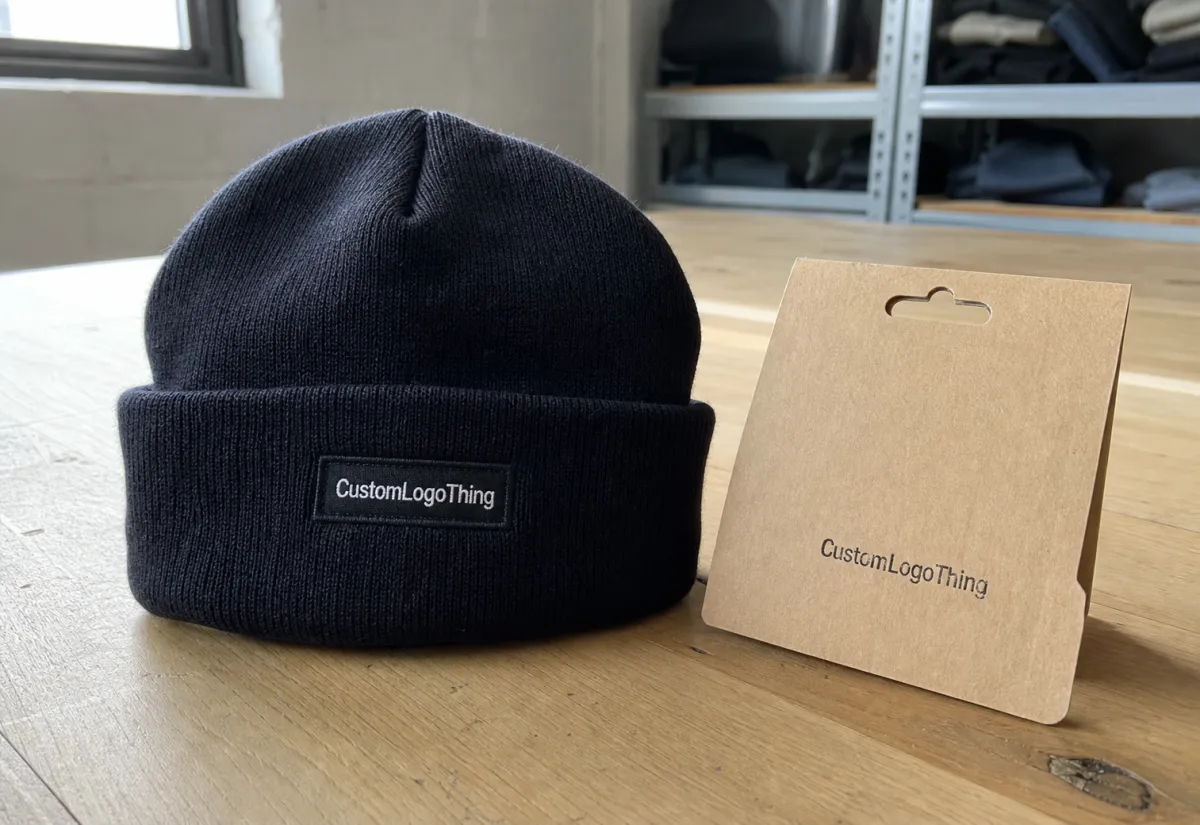
A plain knit beanie can be perfectly usable and still disappear visually the moment it leaves the warehouse. Add a woven tag on the cuff, side seam, or hem and the product shifts from generic to retail-ready. The tag gives the eye something to catch on. It also gives the brand a controlled place to show up without forcing embroidery, jacquard patterning, or oversized print into a small surface area.
That matters because knitwear is not a flat canvas. Stretch, rib texture, and seam bulk all affect how a logo lands. A woven tag solves part of that problem by moving the brand mark onto a separate trim component. The body of the beanie can stay simple, which is often the better choice for margin, consistency, and reorder speed.
In practice, woven tags work especially well for:
- Streetwear releases where presentation drives perceived value.
- Campus stores and team programs that need consistent branding across colors.
- Gift sets where the item has to feel finished the moment the box opens.
- Retail assortments that need a clean front-facing display.
- Seasonal merch programs that want a lower-risk branded accessory with decent margin.
The strongest setups keep the beanie construction and the tag construction separate in the buyer’s mind. The knit should serve fit and warmth. The woven label should carry the brand signal. Once those jobs get mixed together, specs get harder to control and the order gets harder to repeat.
"A good woven tag does not shout. It makes the whole product look like it was planned before the first sample was cut."
If you are still narrowing trim options, the Custom Labels & Tags page is a useful place to compare label styles before you lock artwork.
Private Label Beanie Orders with Woven Tags
Most buyers start with one of a few core silhouettes: cuffed, slouchy, ribbed, low-profile, or double-layer. Each one changes how visible the woven tag is and how much surface area you actually have for clean branding. A cuffed beanie gives you the easiest placement. A slouchy style can look more fashion-forward, but it also makes tag placement trickier because the fabric shifts and folds more. Ribbed knits usually look sharp, yet they can reveal sloppy attachment faster than a smoother knit.
Material choice matters just as much. Acrylic is still the most common budget option because it is consistent, warm enough for everyday retail use, and easier to quote. Acrylic-wool blends add a softer hand and a more premium impression, though the price rises with the fiber mix. Recycled yarns are increasingly common for brands that want a sustainability story, but they do not always win on cost or timing. Heavier knits tend to feel substantial, yet they can increase material cost and freight weight at the same time. That tradeoff shows up fast when the order gets large.
Woven tag placement has more impact than many first-time buyers expect. Common placements include:
- Side seam for a clean, understated retail finish.
- Cuff edge for visible branding on folded displays.
- Lower hem if the tag should stay subtle.
- Inside label zone when the outer face needs to stay minimal.
- Outside plus inside label for brands that need both display branding and care information.
Tag construction matters too. A woven label with a simple fold and a clean merrowed or stitched edge usually reads better than a crowded design with tiny type. Very fine lines can blur, especially once the tag is folded and sewn into knit fabric. If the logo depends on hairline detail, the artwork may need simplifying before production. That is not a creative compromise; it is how the finished piece avoids looking cheap.
Packaging changes the final perception more than buyers sometimes want to admit. Polybags are standard for bulk shipping and warehouse handling. A hang tag moves the product closer to retail presentation. A barcode or size sticker helps when the order will pass through a fulfillment center. Retail folding matters because a beanie that arrives neatly stacked looks more expensive than one that comes out of the bag looking crushed.
For larger programs, Wholesale Programs are usually the better way to compare pricing, packaging, and repeat-order structure without rebuilding the same spec every time.
Specs That Control Fit, Branding, and Repeatability
The reason one beanie program runs smoothly and another turns into a correction cycle is usually the spec sheet. Not inspiration. Not the logo file alone. Specs. If the buyer has not pinned down crown height, cuff depth, stretch range, seam type, and target fit, the sample stage will end up doing too much work. A beanie that feels too loose on one head and too tight on another is not versatile. It is inconsistent.
Woven tag artwork needs more discipline than most logos get. The finished label has a fixed size and a limited thread count, so crowded artwork will not improve just because it looked fine on screen. Too many colors, too many tiny shapes, and too much text all increase the risk of a fuzzy result. A simpler woven tag often looks more premium because the edges stay cleaner and the brand mark reads faster.
Before approving the order, confirm these items in writing:
- Logo file format — vector artwork is safest for weaving and sizing.
- Tag dimensions — width, height, fold style, and whether the label is single- or double-sided.
- Attachment method — sewn into the seam, topstitched, or folded into the cuff.
- Placement mockup — exact location on the finished beanie, not a rough guess.
- Color references — Pantone or another controlled reference if brand color has to stay consistent.
Small changes can shift the whole quote. A wider label adds trim cost. A denser stitch spec can slow sampling. A last-minute color tweak can affect yarn sourcing on the next reorder. If the tech pack is vague, the supplier will fill in the blanks, and that is often how a buyer approves something that is technically usable but not really the product they had in mind.
For shipments that will move through retail or distribution channels, ask about carton handling and compression expectations. If the packing needs to survive repeated transit, it is reasonable to ask whether the supplier follows practices aligned with ISTA methods. For paper inserts, hang tags, or shelf cards, FSC certification is worth asking about if the brand wants cleaner paper sourcing.
Pricing, MOQ, and Quote Ranges That Matter
Pricing on Beanies With Woven tag Private Label Order projects depends on more than most quote requests acknowledge. Yarn choice is the first variable. Then knit density. Then tag size. Then the number of thread colors. Then packaging. Then quantity. Then timing. A rush order that interrupts the factory’s normal flow is almost always more expensive than the same order given enough lead time.
Smaller runs cost more per unit because setup work gets spread across fewer pieces. Mixed colors can raise complexity, especially when the factory has to keep multiple tag variants organized and matched to the right body color. Custom trims usually prefer cleaner volume because 100 pieces and 1,000 pieces are not the same production problem, even if they look similar on paper.
Here is a practical pricing frame buyers can use as a starting point. These numbers are broad, and they usually exclude freight, duties, and unusual custom packaging.
| Order Type | Typical Unit Range | Common MOQ | Best For |
|---|---|---|---|
| Basic acrylic cuffed beanie with one woven tag | $2.40-$3.80 | 100-300 pcs per color | Promotional retail, campus shops, entry-level merch |
| Acrylic-wool blend with woven tag and inside label | $3.90-$6.50 | 200-500 pcs per style | Mid-tier brand programs, winter collections, boutique resale |
| Recycled yarn beanie with woven tag and retail packaging | $4.20-$7.20 | 300-500 pcs per style | Sustainability-led brands, gift sets, premium presentations |
| Heavier knit with custom packaging and dual labels | $5.50-$9.00 | 500+ pcs per style | Higher-margin retail, branded winter drops, wholesale channels |
Those ranges still leave out real extras. Sample fees may be waived, credited, or billed at a modest amount depending on complexity. Rush timelines can add a surcharge. Special folding, barcoding, or retail-ready packing often adds labor. Freight is its own line item, and ignoring it is how a decent margin disappears before the goods even arrive.
The cleanest way to compare quotes is to make sure every supplier is pricing the same spec. Same beanie style. Same yarn. Same tag dimensions. Same packing. Same quantity. If one quote looks cheaper because the supplier quietly reduced the tag size or skipped the inside label, that is not a better deal. It is a different product.
For buyers sorting through options, the FAQ page helps clear up the basic order questions before formal quoting starts.
Production Steps and Lead Time From Sample to Ship
The production process should feel boring by the time bulk starts. Boring is what you want because it means the details were nailed down before the factory committed time and materials. A normal sequence looks like this: inquiry, spec confirmation, artwork review, sample making, sample approval, bulk knitting, woven tag attachment, quality control, packing, and shipment. Skip a step and the schedule usually pays for it later.
Simple runs often move faster than highly customized ones. A straightforward private label beanie with one woven tag and standard packing may take roughly 2 to 4 weeks after sample approval, depending on quantity and factory load. Add custom yarn, multiple colors, retail boxing, or extra label placements, and the lead time can stretch into 4 to 6 weeks or more. Freight planning matters here. A perfect production schedule still misses the target if shipping is arranged too late.
The most common delay points are usually predictable:
- Artwork sent as a low-resolution image instead of a clean vector file.
- Color revisions after the sample is already moving through production.
- Late label changes that force the supplier to redo trim work.
- Holiday congestion at the factory or freight desk.
- Packaging decisions made after bulk production has already started.
If the delivery window matters, lock it early. That lets the supplier reserve production time, order packing materials in the right sequence, and choose the shipping method that fits the schedule rather than the one that simply looks cheapest on paper. Cheap shipping that arrives late is not cheap. It is a delay with a lower invoice.
A serious supplier should also be able to explain basic QC checkpoints. Look for finished-piece photos, tag close-ups, count verification, and carton checks before shipment. If those controls are hard to describe, the buyer is being asked to trust process that has not been made visible. That is a weak sign.
How Reliable Suppliers Keep Reorders Consistent
Repeat buyers care about the same things every time: color consistency, tag placement, stitch density, fold quality, and packaging that matches the first order. A reorder should not feel like a new design review. If the first batch had a neat side tag and the second batch arrives with the tag drifting lower or sewn tighter into the seam, the spec was not controlled well enough.
The better suppliers usually do a few practical things consistently. They proof the artwork before anything gets made. They share a pre-production sample when the order is important enough to justify it. They confirm corrections before bulk. They keep the spec sheet readable enough that the next order can follow the same path without anyone guessing at old email threads. None of that is flashy. It just reduces avoidable mistakes.
Price can be misleading if it hides weak execution. A cheap quote is only useful if the supplier can actually deliver the same product again. Delays and mismatches create downstream costs: extra freight, missed launches, retail complaints, and inventory sitting where it should not. Buyers remember those issues longer than they remember a small unit savings.
Trust signals are pretty easy to spot once you know what matters:
- Clear QC photos of the tag, fold, and finished beanie.
- Sign-off checkpoints before bulk production begins.
- Documented measurements for fit and tag placement.
- Consistent packaging notes for retail or wholesale handling.
- Specific answers instead of vague promises about timing or cost.
If the plan is to build a long-running private label program, consistency matters more than shaving a few cents from one run. The first order gets attention. The reorder reveals whether the factory actually has control.
What to Send Before You Approve the Order
The best quote request removes guesswork. Send the logo file, expected quantity, beanie style, woven tag placement, packaging needs, deadline, and ship-to location. If you already have a target price, include that too. It helps the supplier quote something real instead of pretending every program shares the same cost structure. It does not.
A useful buyer checklist looks like this:
- Logo file in vector format, or the cleanest file available.
- Target beanie style: cuffed, slouchy, ribbed, low-profile, or another fit.
- Woven tag size, placement, and whether you want one label or two.
- Color references for the beanie body and tag thread.
- Packaging choice: polybag, hang tag, sticker, carton labeling, or retail folding.
- Order quantity by color and by style.
- Delivery deadline and destination.
Once the spec is confirmed, move in order: review the sample, approve the price, release production, and book freight before the ship date slips. That sequence sounds obvious because it is. Yet buyers still skip one step and then wonder why the timeline moved with it.
For many programs, the smartest first move is to keep the initial order modest in scope. Prove the fit. Prove the tag placement. Prove the packing. Then add extra colors, a new label layout, or a seasonal variation. That path is usually cleaner than loading every feature into the first run and hoping the factory makes all the right judgment calls.
For beanies with woven tag private label order projects, the best results usually come from tight specs, clean artwork, and a quote process that compares like-for-like products. Get the details right once, then make the supplier prove the sample matches them before bulk production starts.
FAQ
What is the usual MOQ for beanies with woven tag private label order?
Most factories quote by style and color, with common MOQs starting around 100 to 300 pieces per design. Mixed colors, premium yarns, or extra label placements can raise the MOQ or push the unit price higher.
Can I add a woven tag and still keep a clean private label beanie finish?
Yes. Many buyers use an outside woven tag plus an inside care label so the branding feels complete without looking crowded. The cleanest result usually comes from confirming tag size, fold style, and stitch placement before sampling.
How long does a private label beanie order usually take after approval?
Simple runs often need roughly 2 to 4 weeks for production after sample approval, depending on quantity and factory load. Custom yarns, busy seasons, or packaging changes can extend that timeline, so freight should be planned early.
What makes the unit cost go up on woven tag beanies?
The main cost drivers are small order size, complex artwork, premium yarn, multiple tag locations, and custom packaging. Rush timelines and repeated artwork changes also add cost because they interrupt the normal production flow.
What should I send to get the fastest quote for woven tag beanies?
Send the logo file, expected quantity, beanie style, tag placement, color references, packaging needs, and deadline. If you already know your target price, include it. That helps the supplier quote something realistic instead of guessing.


