Winter headwear lives or dies by first glance. A Pom Pom Beanies private label order gives a brand more than warmth; it creates a product with shape, movement, and enough visual contrast to stand out in a stack, on a hook, or in a thumbnail. The pom adds height. The cuff gives you a branding zone. The knit does the practical work. That combination is why this category keeps earning space in retail assortments that need seasonal volume without looking bland.
Retail buyers usually decide fast. A hat that photographs well, folds cleanly, and reads as intentional from six feet away has an edge over a plain knit cap. Private label control sharpens that edge. Colors can match a brand palette, labels can carry a store name instead of a factory tag, and packaging can be tuned for gift shops, outdoor stores, promotional campaigns, or ecommerce sets. The Pom Pom Beanies private label order works because it turns a familiar winter item into something that belongs to a specific shelf and a specific customer.
I have seen this play out more than once in sample reviews. A buyer will hold up two hats that seem close on paper, then pick the one with a better cuff line and a cleaner pom silhouette. That choice is not emotional fluff. In apparel, a small change in proportion can shift the whole read of a product, and winter accessories are particularly unforgiving because there is so little surface area to hide weak design.
The strongest beanie program is rarely the most complicated one. It is the one with a stable shape, a clear logo placement, and a finish that still looks right after folding, shipping, and handling.
Why a Pom Pom Beanies Private Label Order Sells Off the Shelf
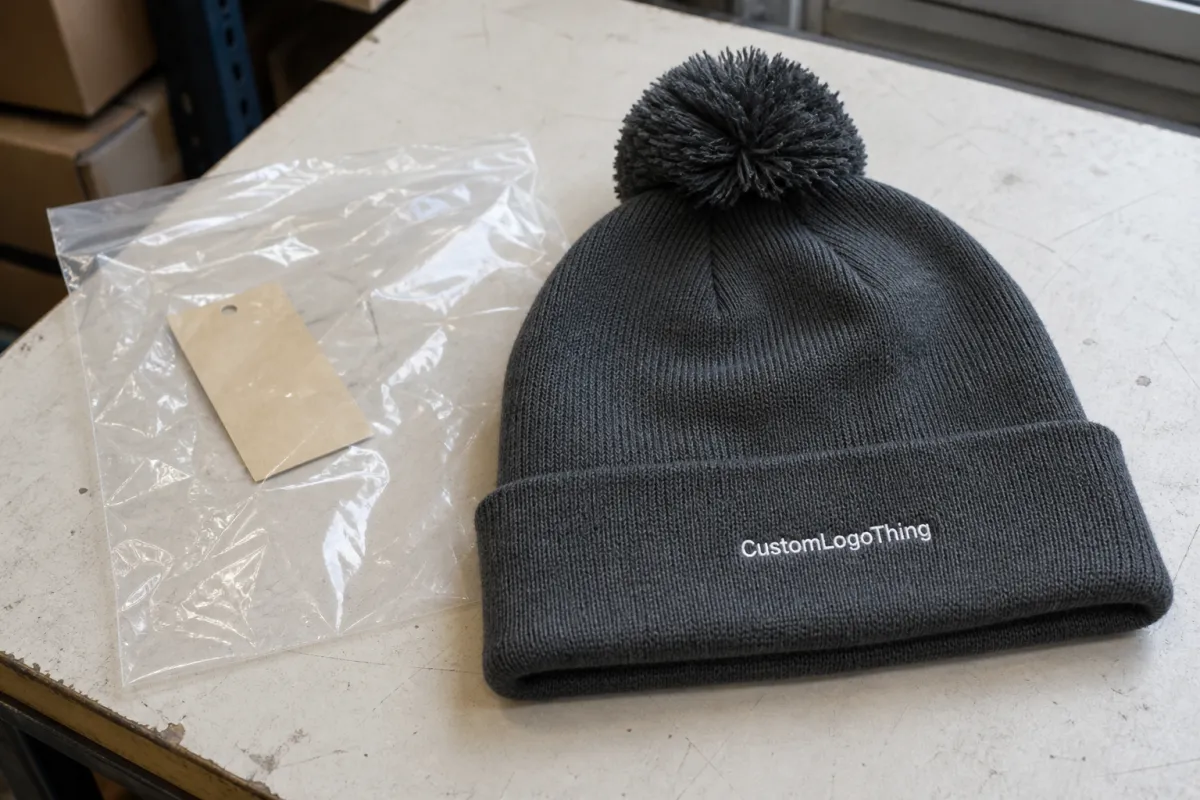
A pom changes perception before anyone touches the hat. That small puff of yarn or faux fur makes the beanie look fuller and less utility-driven. In a crowded winter display, that matters. Apparel retail studies have long shown that shoppers make faster decisions in dense categories than in sparse ones, and headwear is one of the fastest categories of all. The product that catches the eye first gets tried on first. The one that gets tried on first has a better chance of selling.
Brand control matters just as much as visual lift. A private label beanie can carry the store's color story, woven label, embroidered patch, care tag, and packaging style. That changes the product from commodity to owned assortment. A buyer who wants to build repeat traffic does not just need a warm hat; they need a hat that looks like it came from their brand world. The Pom Pom Beanies private label order gives that level of control without forcing the customer into a heavy technical story.
Reorder stability matters in a category with short selling windows. Winter accessories can move quickly, then stall just as quickly once the weather shifts. A consistent base spec helps protect margin because the crown shape, cuff depth, pom attachment, and logo placement stay the same across runs. Reorders become simpler. Approval cycles shrink. Colorways can expand without forcing a new fit approval every time.
There is also a pricing angle that often gets overlooked. A pom gives the hat a more premium read, even before the fabric quality is judged. That is useful for a category where many buyers rely on gift purchases, impulse add-ons, and bundled tickets. A plain knit cap often has to fight for a lower price point. A pom beanie can support a wider range of retail positions, which gives merchants more room to work with margin and display strategy.
One more comparison helps. A basic beanie competes on function. A pom beanie competes on function plus shelf appeal. That second layer is what often moves the product from "good enough" to "worth stocking." Private label makes that move cleaner because the design can be built around the buyer's own brand language instead of a supplier's generic formula.
There is a practical merchandising reason, too. Stores That Sell winter accessories next to outerwear, blankets, or gift items do better when the product has texture and a little height. A pom does that without adding much complexity to the factory side. It is a tiny detail with an outsized effect. Kind of unfair, really, but retail is full of those little imbalances.
Pom Pom Beanies Private Label Order Product Details and Build Options
Material choice sets the tone early. Most Pom Pom Beanies private label order programs begin with acrylic or an acrylic blend because the yarn is predictable, color matching is easier, and cost stays in a range that works for promotional and retail channels. A standard 100% acrylic knit gives solid stretch and a soft hand. An acrylic-wool blend brings more warmth and a more natural texture, though it usually pushes the unit cost upward and can change how the fabric behaves after wear and wash.
Knit gauge changes the look more than many buyers expect. A tighter gauge creates a cleaner surface and a more polished finish. A looser gauge gives the hat a softer, more relaxed character. That difference can decide whether the beanie feels like outdoor gear or fashion merchandise. Dense knits also tend to hold shape better when the cuff is folded repeatedly, which can matter for shops that merchandise products on open racks instead of boxed displays.
The pom deserves its own decision. Yarn poms are the economical route and can be color matched or built in contrast shades. Faux-fur poms read more premium and often photograph well, especially in ecommerce where texture does half the selling. Detachable poms add flexibility, though they create more parts and more points of failure. Sewn-on poms stay simpler for most private label production runs because the construction is straightforward and the product ships with fewer moving elements.
Branding should fit the sales channel, not just the mockup. A woven label is clean and efficient. Embroidery adds dimension. A patch can give the cuff more weight and can look especially strong on rib knit. Hangtags carry the story, price point, or sustainability note. Care labels cover the compliance side. If the labeling decision is still open, our Custom Labels & Tags page outlines the formats most private label buyers use when they need a practical starting point.
Packaging changes perception quickly. A folded beanie in a polybag with a sticker is fine for volume and speed. A branded insert card, belly band, or hangtag can make the same item feel more gift-ready without changing the garment itself. That difference can be decisive in seasonal retail, where presentation often acts as a proxy for value. Buyers shopping for tourist stores or holiday bundles usually want more shelf theater than a simple polybag gives them.
In one sample run I reviewed, the factory offered the same hat body in three finishes. The least expensive version looked fine in a spreadsheet, but the branded patch version sold the idea of the product better the moment it was unboxed. That is the part buyers sometimes miss: the sample is not just about fit. It is also a signal about how the hat will perform in a store, on a product page, or in a gift bundle.
| Build Option | Typical Use | Estimated Unit Range | Notes |
|---|---|---|---|
| Stock acrylic, woven label, polybag | Promotional, volume retail, entry price points | $2.20-$3.20 | Lowest complexity; useful for repeat ordering |
| Acrylic blend, embroidered logo, sewn pom | Core private label retail | $3.10-$4.80 | Balanced look, strong shelf appeal |
| Premium blend, faux-fur pom, patch, branded packaging | Gift, boutique, fashion-led assortment | $4.90-$7.50 | Higher material and finishing cost, higher perceived value |
Pricing note: these are broad working ranges, not quotes. The same style can move up or down based on yarn source, labor location, freight, and packaging detail.
Line breadth can grow without turning chaotic. A single base body can carry several colorways if the knit, trim, and branding remain consistent. That approach keeps the assortment readable for buyers and easier to manage for planners. The same logic applies across seasonal programs: stable construction first, color variation second. If your team is planning a larger range or multiple styles, our Wholesale Programs page is a useful place to compare how broader assortments are usually structured.
Pom Pom Beanies Private Label Order Specifications to Lock In
Measurement discipline saves more time than most people expect. For a Pom Pom Beanies private label order, the key numbers are crown height, cuff depth, brim width, stretch range, and pom diameter. Those figures shape fit, shelf appearance, and repeatability. If the crown is too short, the hat looks skimpy. If the cuff is too shallow, branding loses space. If the pom size drifts, the whole silhouette changes. A few millimeters can alter the look enough to matter in retail photography.
Color control needs a clear path from the beginning. Stock yarn can be dependable, but the approved shade reference still has to be documented. Brand-specific colors should be matched against the closest available yarn and confirmed against a physical swatch whenever possible. Pantone can guide the conversation, but yarn, knit tension, and fiber type all affect the final result. A green that looks deep on screen may pull lighter in a knit structure. That gap is where rework begins.
Construction details shape how the hat wears and how it survives handling. Stitch density affects the cuff finish. Seam finish affects folding. Pom attachment affects durability. Sewn poms should hold up to retail touching, packing, and customer try-ons. Detachable poms need more testing because the connector has to survive repeated use without feeling flimsy. For shipment verification, many brands use packaging checks aligned to ISTA standards, especially when ecommerce or long-distance transit is part of the order.
Decoration placement deserves early approval because it is one of the easiest places to create avoidable delays. Logo size, patch dimensions, embroidery height, and center-front position should all be marked on the proof. A label that sits perfectly flat when unfolded can look crooked once the cuff is turned. A patch that feels balanced on paper can drift once the beanie is stretched. Those small shifts are where experienced buyers usually slow down and ask for a revised sample.
Retail compliance is not glamorous, but it keeps the product saleable. Fiber content, care instructions, and country-of-origin marking need to be right before bulk production starts. Paper packaging can support a better sourcing story if the buyer wants one. If that matters for your channel, FSC-certified paper is a common option; the Forest Stewardship Council explains the certification framework clearly. Customers do not always read the label. Merchants do, and they notice missing details faster than they notice decorative flourishes.
Fit testing should not be treated as a formality. A beanie that feels fine on a mannequin can behave differently on real heads, especially once the cuff is doubled or the pom adds weight at the crown. I have seen a hat get approved on appearance alone, then come back from store teams with complaints that the opening felt too tight. That kind of issue is small in production terms and huge in sell-through terms.
- Measurements: crown height, cuff depth, brim width, and pom size.
- Materials: yarn type, knit gauge, and lining if used.
- Branding: label method, patch size, embroidery placement, and hangtag format.
- Compliance: fiber content, care label, and origin marking.
- Packaging: polybag, insert card, size sticker, or gift-ready presentation.
Pom Pom Beanies Private Label Order Cost, MOQ, and Quote Inputs
Price follows the spec. That sounds simple, yet the spread can be wide. The biggest drivers in a Pom Pom Beanies private label order are yarn selection, number of colors, pom style, decoration method, and packaging format. Stock acrylic with a woven label lands in a very different zone from a faux-fur pom with embroidery, a patch, and a printed insert. Every added decision creates more labor, more material cost, or both.
MOQ usually tracks the most customized component. Stock yarn and basic label work tend to keep the entry point lower. Custom-dyed yarn, specialty poms, or multi-step decoration usually push the minimum up. That pattern shows up in many textile programs: once a process moves away from stocked materials and repeatable trim, the factory needs more volume to make the run sensible. Asking for MOQ by colorway is smarter than asking for a single number that hides the real commitment.
A useful quote starts with a clean brief. Target quantity matters. Color breakdown matters. Logo file quality matters. Packaging choice matters. Delivery window matters. Channel matters too. A beanie for a mountain shop may need a sturdier hand and a more technical look than one sold in a tourist store. The more context a buyer gives, the less guesswork lands in the quote. That cuts down on revision rounds later.
Comparison only works if the spec stays still. Two quotes can appear close and still represent very different builds. One may include premium yarn, another may use a lighter grade. One may include freight assumptions, another may not. A fair comparison holds the product constant and looks only at the change in cost. Buyers who skip that step often choose the cheaper number on paper and pay for the difference later in fit, finish, or late freight charges.
Run size usually affects unit cost in a predictable way. Setup work gets spread across more hats. Equipment resets become less painful. Packaging runs become more efficient. The savings are real, though they are not infinite. A larger order still needs the same approvals, and any custom yarn or specialty trim still carries its own minimum. The real value usually comes from a stable spec that can be reordered without rethinking every detail from scratch.
One useful way to simplify the quote is to split the order into three parts: body, branding, and packaging. That keeps the conversation readable. It also helps the buyer decide where to spend money and where to keep things plain. A premium hat body can be paired with simpler packaging. A more basic knit can be elevated with a better patch or hangtag. Once the pieces are separated, the budget choices become easier to see.
There is also a freight trap that catches new buyers. A unit price can look strong until cartons are palletized, boxed, and shipped. Then the landed cost shifts. That does not mean the factory quote was misleading; it usually means the buying team compared an ex-factory number to a landed number. The fix is simple: ask for the same basis every time, and do not mix terms unless you mean to.
Production Steps, Timeline, and Lead Time for Approval
A clean pom pom beanies private label order usually starts with a short brief, a materials check, and then sample or proof approval before bulk production begins. That sequence matters. Approving artwork before the materials are confirmed tends to create unnecessary revisions. Approving a yarn shade before the logo placement is settled can do the same thing. Each stage should lock the next one in place. That keeps the project moving and cuts down on surprises.
Typical production follows a familiar path: knit the body, build or source the pom, add branding, complete finishing, inspect the pieces, and pack them for shipment. Some programs are knit-to-order. Others use pre-approved body patterns and add private label finishing later. Either way, the final stage is the one that turns a generic winter accessory into a branded retail item.
Lead time is not just a factory question. Yarn availability matters. Seasonal demand matters. Custom color work matters. Approval speed matters most of all. A simple stock-yarn order can move faster than a fully custom build, but even a simple order can stall if a buyer takes too long to confirm artwork or packing details. In production schedules, approval lag is one of the most common reasons a ship date slips.
Arrival date and completion date are not the same thing. Freight planning needs its own timeline, especially when the product must hit a seasonal window. Air freight can rescue an urgent order, though it raises landed cost quickly. Ocean freight is better suited to larger programs, but it asks for more lead time and tighter planning around cartons, pallets, and customs paperwork. The safest approach is to ask for both the factory completion date and the dispatch date before assuming the order is on track.
A realistic schedule for many programs looks like this: sample development often takes 7-14 business days, bulk production frequently runs 25-40 business days after approval, and freight depends on the route and the shipping method. Custom yarn, specialty poms, or holiday demand can stretch that timeline. Build a cushion into the plan. Seasonal accessories punish optimism more than most categories do.
The cleanest projects I have seen usually share one trait: the buyer approves the sample as if the final shipment will be judged by the same standard. That sounds obvious, but plenty of teams treat the sample as a rough sketch. Then they are surprised when the bulk lot looks exactly like the approved sample. The sample is the contract, even if nobody says it that bluntly.
Why Choose Us for a Pom Pom Beanies Private Label Order
Practical support is where a project gets easier. A pom pom beanies private label order should not feel like trial and error. It should move from idea to quote to sample with as little friction as possible. We help buyers sort the build into materials, branding, packaging, and cost structure so the order can be approved without a long chain of assumptions.
Clear quoting is as valuable as product quality. Buyers need to know what is included, what changes the unit price, and what lead time is realistic before they commit to a seasonal run. That matters because winter inventory has a short window. A missed delivery date can turn a strong product into leftover stock. The safest programs are the ones where the spec is easy to read and the production path is easy to follow.
We also watch the failure points that tend to show up in headwear. Loose poms. Labels that sit off-center. Cuffs that photograph badly. Beanies that feel too stiff for the channel. Those are not dramatic mistakes, but they affect sell-through. A careful spec avoids them before bulk production starts. If you already know the label direction you want, our Custom Labels & Tags page is a good place to compare the finish options before you Request a Quote.
Repeat programs depend on consistency. Once the approved build is documented, the same base spec can be used again without starting over. That protects fit, look, and economics. A retailer with a stable winter line can reorder faster, merchandise more confidently, and compare performance from season to season without a moving target. If your assortment goes beyond one style, our FAQ covers several common setup questions, and our Wholesale Programs page is useful if you are planning a broader seasonal range.
What matters most is not the flashiest trim or the highest price point. It is having a spec that can survive sampling, transit, and store handling without drifting. In this category, consistency beats cleverness more often than people expect.
If you are building a pom pom beanies private label order, lock the body spec, confirm the branding method, choose the packaging level that matches the channel, and ask for the quote on the same terms every time. That four-part checklist is the fastest way to get a clean approval and avoid the kind of last-minute surprises that eat into a winter margin.
What is the MOQ for a pom pom beanies private label order?
MOQ depends on how customized the beanie is, especially the yarn type, pom style, and label method. Stock materials and standard branding usually allow a lower entry point than custom-dyed yarn or specialty trims. Ask for MOQ by colorway so you can see the real commitment for each version, not just the total order size.
Can I add my own logo to a pom pom beanies private label order?
Yes. Common options include woven labels, patches, embroidery, care labels, and hangtags. The best method depends on the look you want, where the logo should sit, and how much wear the hat will see. Share vector art or a clean logo file early so the branding method can be matched to the production setup.
How long does a pom pom beanies private label order take to produce?
Timing depends on sample approval, yarn availability, decoration method, and seasonal production load. Orders move faster when colors, placements, and packaging are approved without revisions. Plan for sample review first, then bulk production, then freight, since those stages do not always move at the same pace.
What affects pom pom beanies private label order pricing the most?
The biggest price drivers are custom materials, number of color changes, pom type, decoration method, and packaging. Larger orders usually lower the unit cost because setup and finishing work are spread across more pieces. Compare the same spec across quotes so you are measuring true cost, not different builds.
What should I send before requesting a quote for a pom pom beanies private label order?
Send your logo, target quantity, preferred colors, branding method, packaging choice, and delivery target. If you already know the intended retail channel, share that too, because it affects material and finish recommendations. A clear spec sheet gives you a faster, more accurate quote and reduces revisions before sampling starts.

