subscription embroidered baseball Caps Unit Cost Review is where weak pricing gets exposed fast. A blank cap is only one line in the equation, and usually not the most dangerous one. Embroidery setup, digitizing, packing labor, inserts, carton charges, and freight can move the real landed number more than the garment itself. Recurring programs make that visible because every shipment has to match the last one on cost and appearance. Same cap, same stitch count, same packaging, same result. Anything else starts to drift.
That is why a subscription order should never be quoted like a one-off promo. Buyers often compare catalog blank prices, then wonder why the invoice grows after proofing, thread selection, or packout requirements appear. The cap is not the whole product. It is part of a repeatable production system, and the system has to be priced like one.
"A cheap cap that needs fixing every month is not cheap. It is just delayed pain with a logo on it."
Why repeat cap programs expose hidden costs
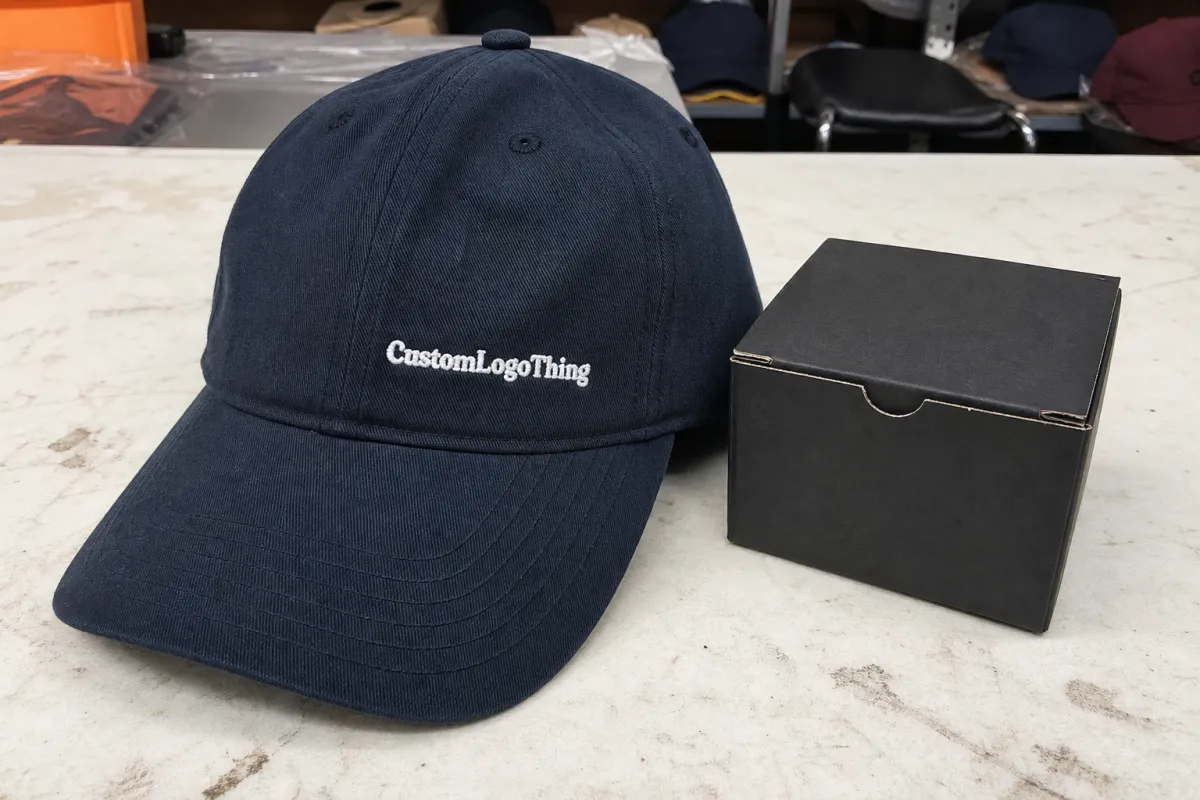
Repeat cap programs look straightforward on paper. Same style, same logo, same cadence, same ship-to list. In practice, the cost structure is wider than a blank cap line on a quote. You are paying for embroidery time, digitizing, packing labor, cartons, the freight mode that keeps the schedule intact, and occasionally rework if the first spec was incomplete.
The mistake is easy to spot. Buyers compare blank cap prices and ignore the rest. That is like judging a car by the windshield and skipping the engine, tires, and brakes. A basic cap blank might run roughly $2.40 to $4.80 depending on style and quantity, but the landed unit cost can move well beyond that once decoration and handling are added. A $0.60 savings on the blank means very little if one vendor charges more for setup and another charges more for packout.
Recurring orders are harder than standard bulk orders because the program has to stay stable over time. A one-time order can absorb a weird charge and move on. A monthly or quarterly drop cannot. If the first shipment lands at $6.10 per piece and the next jumps to $7.25 because the logo changed, the thread count went up, or the packaging was upgraded, the program starts losing the predictability that made it useful in the first place.
Small decoration changes can also have a bigger effect than buyers expect. One extra thread color, a denser fill, or a second location changes machine time and operator handling. That does not sound dramatic until you multiply it across 200 or 500 caps. A logo that goes from 7,000 stitches to 11,000 stitches is not just "a little more detail." It is more production time, more thread, more chance of pull, and usually more cost per piece.
There is another hidden cost that shows up in repeat programs: inconsistency. If the first run is approved with one thread code and the reorder uses a slightly different one, the difference may be subtle on screen and obvious on a cap. That is the kind of problem that does not show up in the quote line, but it shows up immediately in the customer experience.
What the cap spec needs to cover before quoting
If the spec is vague, the quote will be vague too. That is not a pricing problem so much as a specification problem. Before anyone can price a recurring cap program with confidence, the cap style has to be locked. Structured versus unstructured matters. So does 5-panel versus 6-panel, mid-profile versus low-profile, and curved brim versus flat brim. Each choice changes blank cost and the way the embroidery sits on the crown.
Closure and fit matter just as much. Snapback gives the widest fit range and is often the easiest option for recurring programs. Strapback can look cleaner and softer. Velcro is usually the cheapest closure, though not always the best-looking one. Fitted caps introduce sizing complexity, which is rarely ideal if the goal is a repeatable subscription program. Most recurring programs stay with adjustable styles unless the brand has a strong retail standard that justifies the extra inventory risk.
Logo placement should be decided before pricing starts. Front panel embroidery is the default. Side hits and back hits can work well, but each added location brings more labor, more registration work, and more QC points. Mixed decoration is where cost creeps in fastest. A front embroidery plus woven side label plus printed interior tape may sound modest, yet every extra operation adds a step that has to be checked and repeated.
The art file needs to be usable, not aspirational. A vector logo is the baseline. PMS colors, placement dimensions, and reference art should be included too. If the only input is a screenshot, the shop has to guess at line weight, spacing, and stitch behavior. Guessing is a poor production method and an even worse pricing method.
Good quote inputs:
- Cap style, profile, and panel count
- Closure type and fit range
- Logo file in vector format
- PMS color targets
- Exact logo placement and size
- Packaging requirements for each shipment
Stitch count, fabric, and finish choices that change value
Stitch count is one of the fastest ways to move subscription Embroidered Baseball Caps Unit Cost up or down. More stitches mean more machine time, and more machine time means more labor. A simple logo can sometimes fit in the 5,000 to 7,000 stitch range. A denser design with outlines, shading, or small text can climb past 10,000 stitches quickly. That difference shows up on the invoice long before it is visible in the mirror.
Digitizing quality matters as much as stitch count. Underlay has to support the design without overbuilding it. If the underlay is too light, the embroidery can sink into the fabric or lose edge definition. If it is too heavy, the logo can look stiff and waste thread. For recurring orders, the file should be optimized once and then frozen. Re-digitizing the same logo every month is a reliable way to pay twice for the same image.
Fabric choice affects both hand feel and pricing. Cotton twill is still the familiar default for many embroidered caps. Brushed cotton has a softer touch and can make the cap feel less rigid. Polyester blends often hold shape well and can be a better fit for performance programs or outdoor promotions. Performance fabrics usually cost more, but they make sense when the caps are part of an active kit or need better moisture behavior.
Construction details also affect repeatability. Panel count changes the way the crown breaks around the logo. Eyelets can alter breathability and visual balance. Sweatband quality matters for long wear. Visor shape affects how the cap presents in photos, on shelves, and when stacked in cartons. If the program is supposed to look identical each time, those details need to be fixed early and left alone.
Finish choices can inflate cost faster than buyers expect. Woven labels, contrast stitching, custom taping, special thread, branded inserts, and individual polybagging all add labor or materials. A hang tag might add only a few cents. A barcode label, insert card, and retail-ready packout can add much more than that, especially on smaller runs where every handling step is spread across fewer units. That is why a subscription embroidered baseball caps Unit Cost Review has to include finishing, not just embroidery.
Packaging should be treated as part of the product spec, not an afterthought. If the order needs bulk ship, retail-ready pack, or direct-to-consumer handling, those paths should be priced separately. For packaging terms and carton language, the Packaging School and industry resources at packaging.org are useful for keeping definitions straight when teams compare ship-ready formats.
Subscription embroidered baseball caps unit cost and MOQ
MOQ drives the economics more than most buyers want to admit. Low MOQ gives flexibility, but setup charges are spread across too few units. Higher MOQ can improve pricing, but only if the program can actually use or store the inventory. Bigger is not automatically smarter. Sometimes it is just more boxes.
Below is a practical way to look at recurring pricing. These are typical landed ranges for standard embroidered caps, not a promise carved into stone. Decoration complexity, packaging, and shipping method can push any of them higher.
| Run size | Typical unit cost | What usually drives it | Best use case |
|---|---|---|---|
| 25-50 pcs | $9.50-$15.00 | Setup charges, digitizing, low spread on labor | Test drops, pilot subscriptions, sample retail kits |
| 100-250 pcs | $6.25-$9.75 | Better labor spread, more stable blank pricing | Most recurring subscriptions and monthly shipments |
| 500+ pcs | $4.10-$6.20 | Lower blank cost, stronger bulk pricing, fewer handling hits | Large recurring programs, chain rollouts, long cadence orders |
Setup fees should be separated from true per-piece cost. Digitizing is often a one-time charge if the logo never changes. Tooling or special preparation fees can appear when the program needs custom labels, unusual packout steps, or a decoration method that is not standard. Sample fees may also show up if the buyer wants a physical preproduction cap before bulk release. None of those should be buried inside the unit number. If they are, the comparison is not real.
A clean quote compares the same cap style, same stitch count, same packing method, and same delivery terms. If one offer includes bulk cartons and another includes individual polybags, the numbers are not directly comparable. The same is true when one quote uses domestic freight and another uses air shipment to protect timing. That is how a quote that looks cheap becomes expensive after the first drop.
Rule of thumb: if the cap program will repeat more than twice, calculate the landed cost across the full cycle, not just the first shipment. That is the only way a subscription embroidered baseball caps Unit Cost Review stays honest.
Production steps and turnaround for recurring orders
A repeat cap order still runs through a production chain. It simply moves faster when that chain has already been approved. The usual path is art review, digitizing, proof approval, bulk embroidery, QC, and shipment. If one step stalls, the whole schedule slips. Recurring work is only fast when the spec stays frozen.
Most time gets lost in two places: slow logo approval and sample revisions. A buyer changes thread color after seeing the proof, then asks for a second mockup, then wants a different logo scale. That may be reasonable from a branding perspective, but it is no longer a reorder. It is a revised production decision, and the timeline should be treated that way.
For reorders, in-stock blanks matter a lot. If the cap color and style are already in inventory, the run can move quickly. If the buyer wants a special-order color, a new closure, or a different crown shape, lead time grows. In practice, a reorder with locked art and in-stock blanks often moves in 7-12 business days after approval. If the blanks need to be sourced, 12-20 business days is more realistic. Freight sits outside that timeline. It always does.
Artwork approval is not the only gate. Color confirmation matters too, especially if the brand expects the same navy, black, or stone tone across multiple drops. Thread charts help, but they are not perfect substitutes for an approved physical sample or master reference. Under retail lighting, thread can read darker, brighter, or flatter than it does on a monitor.
For packaging and shipping validation, ISTA testing standards are a useful reference when a program has to survive parcel handling instead of moving only by pallet. See ISTA if the caps are being shipped direct to consumers or bundled with other products that need stronger transit protection. It is a practical check, not a marketing flourish.
Turnaround also depends on how much of the job is already documented. A saved spec sheet, archived thread codes, and approved placement dimensions shorten internal review time. If the order is rebuilt from scratch each time, the program is not really recurring. It is just repetitive.
How we keep reorders consistent on color, fit, and embroidery
Consistency is where subscription programs prove their value. If the cap looks different every month, the brand starts to look unmanaged. The fix begins with archived artwork, locked thread codes, and saved placement specs. Those three items remove a lot of avoidable drift. They also reduce cost because fewer changes mean fewer remakes.
A master sample is worth keeping when the program runs for more than one cycle. Physical approval beats memory. Swatches beat a monitor. A team may think a thread color is "close enough" online, but on an actual cap under store lighting, close enough can look sloppy. That gap is small on a spreadsheet and obvious on a head.
QC should focus on the details that actually affect the next shipment. Check embroidery alignment. Check seam balance. Check closure function. Check trim quality around the sweatband and visor. If the cap uses a woven label or a side hit, inspect that placement too. These are the points where recurring shipments usually drift first.
Fit consistency matters as much as visual consistency. Adjustable closures should open and close cleanly without rough hardware or weak stitching around the buckle. The crown should keep its shape, not collapse after packing. The brim should hold its curve and sit evenly when stacked. A good cap spec protects those details because they are the difference between a program that looks intentional and one that feels assembled from leftovers.
Packaging choices can help control variation as well. Recyclable paper inserts, FSC-certified paperboard, and simple carton labeling are easier to repeat than a pile of custom packout exceptions. If that matters for your program, use the right material standard instead of assuming every insert is equivalent. For paper-based packaging inputs, FSC is a straightforward reference for certified fiber sourcing.
Consistency also changes the economics in ways that are easy to miss. Fewer remakes mean fewer chargebacks. Fewer corrections mean less internal labor. Fewer disputes about thread color mean the reorder ships on time. That is the real value in recurring cap work: not the cap alone, but the control over the repeat.
What to send for a fast quote and cleaner next order
If you want a fast quote, send a complete spec the first time. Not half of one. Not a logo screenshot and a guess. The best inputs are simple: quantity per drop, cap style, logo file, brand colors, and delivery schedule. Add whether the order repeats monthly, quarterly, or on some other cadence. That tells the supplier how to price the program, not just the first carton.
Packaging details matter because they change labor and freight. If you need hang tags, polybags, inserts, carton labels, or direct-to-consumer fulfillment, say so up front. A plain bulk ship and a retail-ready packout are not the same job. They should not be priced like they are. This is also where a subscription embroidered baseball caps Unit Cost Review becomes useful instead of theoretical, because the quote reflects the real path the product will follow.
Fast-quote checklist:
- Vector logo and PMS colors
- Cap style, profile, and closure
- Stitch count target or reference sample
- Logo placement and size
- Quantity by shipment
- Packaging and fulfillment requirements
- Target ship dates and delivery method
The cleanest next order usually follows a simple sequence: approve the spec, confirm the sample or proof, lock pricing, then schedule the first run. That order keeps the job from turning into an endless revision loop. It also gives the buyer a real landed number instead of a hopeful estimate dressed up as procurement.
Once the spec is frozen, the program gets more predictable. The cap style stays the same, the embroidery stays consistent, and the recurring shipments stop bouncing the budget around. That is the point of the exercise. A subscription embroidered baseball caps unit cost review should deliver a number that holds up across multiple drops, not just an initial quote that looks tidy for a week.
FAQs
What drives subscription embroidered baseball caps unit cost the most?
Stitch count, cap style, quantity, and packaging usually move the number fastest. Setup, digitizing, and freight can matter almost as much as the blank cap itself. More decoration zones mean more labor, more handling, and a higher landed cost.
What MOQ usually gives the best recurring cap pricing?
The best break is often around 100 to 250 pieces per drop, depending on decoration. Under 50 pieces usually pushes unit cost up because setup gets spread too thin. 500+ units usually improves pricing, but only if inventory and storage make sense for the program.
How long does a reorder take after the first approval?
If the art, thread codes, and blank cap are locked, reorders move faster than the first run. Lead time still depends on blank inventory, production queue, and shipping method. Any change to color, closure, or placement usually adds time back onto the schedule.
Can you keep the same look across multiple subscription shipments?
Yes, if you save a master sample and lock the spec sheet. Use the same PMS colors, thread codes, and placement dimensions every time. Ask for QC checks on embroidery alignment, closure function, crown shape, and trim before shipping.
What do I need for a quick quote on embroidered caps?
Send a vector logo, target quantity, cap style, colors, and delivery date. Include packaging details like hang tags, inserts, polybags, or carton labeling. Share whether each shipment is a one-time order or part of a recurring subscription program.


