Beauty ribbed winter beanies Bulk Order Planning starts with a practical observation: ribbed knit usually looks cleaner in volume than flatter stitches. The vertical texture gives the hat a little structure, hides minor fit differences, and creates a cuff that can carry a logo without making the piece feel overloaded. For beauty brands, salons, promo teams, and retail buyers, that combination matters because the same beanie may need to work as a seasonal kit insert, a staff uniform piece, a PR mailer item, or a sellable add-on.
The order gets complicated when people treat the beanie as a simple blank. It is not. Yarn choice, cuff height, decoration method, and packaging can change the quote as much as the logo itself. A one-line request such as “ribbed winter beanie with logo” leaves too much open to interpretation, and that is how buyers end up with mismatched samples, delayed approvals, or a style that looks better on paper than on a head.
Ribbed beanies also sit in an interesting middle ground. They are more polished than basic knit caps, but less precious than a fashion-led accessory. That makes them useful for beauty campaigns, where the item has to feel current without competing with the brand message. The best orders are usually the simplest ones on the production side: a clear color, a sensible logo size, and a build that the factory can repeat without guesswork.
Beauty ribbed winter beanies bulk order planning basics
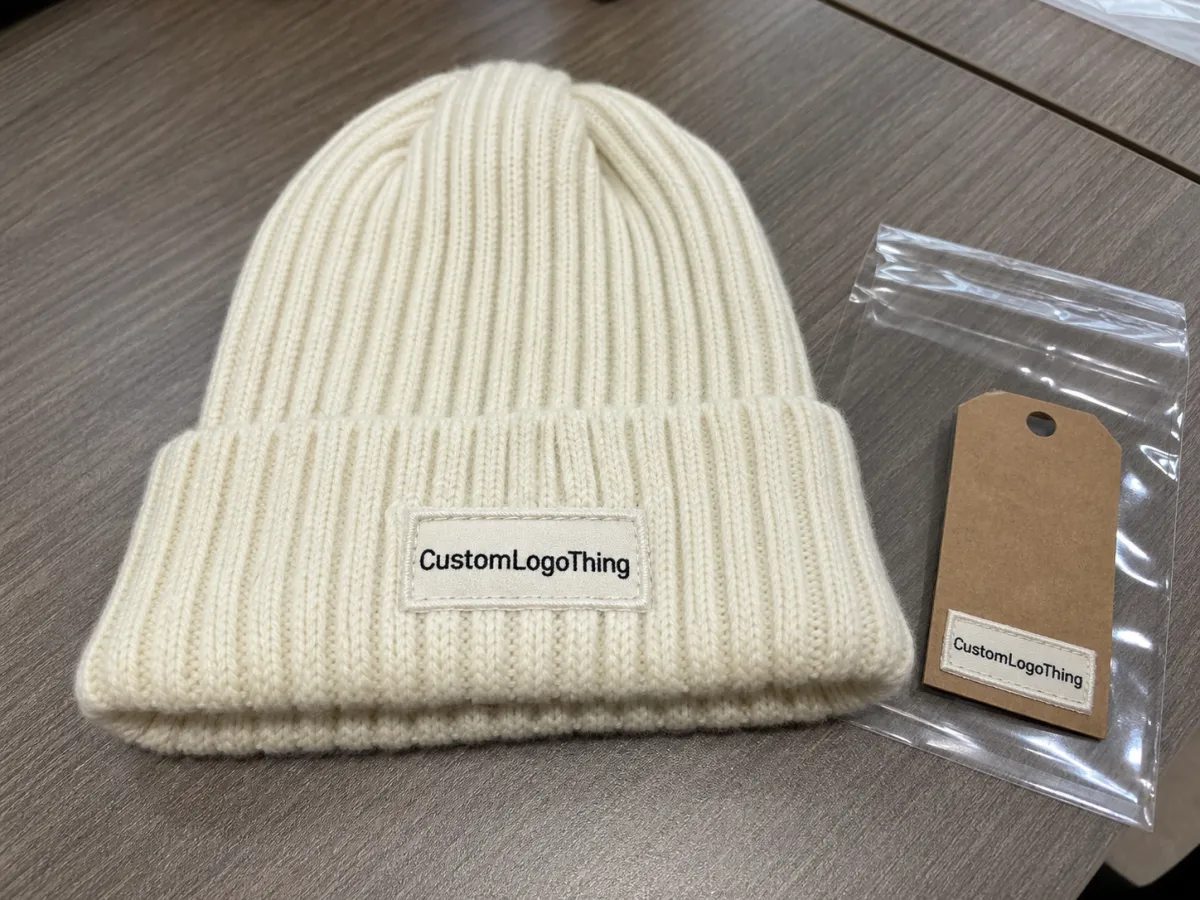
Ribbed beanies earn their place in bulk programs because the knit does a lot of visual work for you. The ribs create a narrow vertical rhythm, so even a one-color cap can feel more deliberate than a loose flat knit. That texture also softens small differences in head shape and fit. For a mixed audience, that is not a cosmetic detail; it is the difference between a piece people wear and one they leave in the box.
Beauty and personal care teams tend to prefer Ribbed Winter Beanies because the cuff naturally frames branding. A logo on the cuff is easier to see, easier to place, and easier to keep tidy. You do not need to cover the full hat to get a branded result. In fact, smaller marks often read more premium. A simple patch on the front can feel closer to retail merch than giveaway swag, even when the unit cost stays under control.
The order structure should follow the end use. A beanie for a holiday set is not the same as a beanie for retail resale. A staff gift may need softer yarn and conservative branding. A retail program may need a more substantial handfeel, stronger color consistency, and packaging that looks ready for a shelf. The same silhouette can serve all three, but not with the same build.
Choose the decoration method first, then size the beanie around it. On ribbed knit, that sequence prevents most of the problems that make a sample look off.
That advice matters because the knit surface is not a blank sheet of paper. Fine lettering, thin outlines, and large stitched areas can distort when they sit across ribs. A logo that looks sharp on a flat art board can break apart once it crosses a textured surface. Buyers who decide what needs to be noticed first - the texture, the logo, or the color story - usually arrive at cleaner specifications and fewer revisions.
A second, less glamorous point: the cuff is the easiest part of the hat to get wrong. If the cuff is too short, the branding zone gets cramped. If it is too tall, the hat can start to feel heavy or oddly proportioned. On bulk orders, those small shape choices affect not only appearance but also repeatability. The factory needs enough clarity to reproduce the same fold, the same crown depth, and the same logo position across the full run.
Material, fit, and decoration choices that change the look
The yarn choice sets the tone immediately. 100% acrylic is common because it is stable, color-consistent, and usually keeps bulk pricing in a workable range. It also stretches predictably, which is useful when a one-size program needs to fit a broad group. Acrylic-wool blends feel warmer and closer to a fashion accessory, but they typically raise the unit cost and may require more careful color control. If the order is going to thousands of recipients, a few dollars of difference per piece becomes real money very quickly.
Fit deserves more attention than it usually gets. A deeper crown can wear more comfortably on a wider range of heads, while a shallow cap may look sharper in product photography but feel less forgiving in person. Flat width, folded height, and cuff height should be written into the spec before sampling starts. If a supplier only quotes “one size,” that is not enough information for a serious bulk order.
Decoration method is where many quotes diverge. Ribbed knit works well with woven patches, embroidered patches, faux leather patches, and woven labels. Direct embroidery can work, but it is less forgiving when the logo has small type or thin strokes. On textured knit, the thread can sink into the ribs and lose edge definition. Patches solve part of that problem because the design is built on a flatter base before it is attached to the beanie.
| Option | Best use | Typical unit cost impact | Buyer note |
|---|---|---|---|
| 100% acrylic + woven patch | Promo kits and staff gifts | Lower to moderate | Usually the easiest balance of price, clarity, and repeatability |
| Acrylic-wool blend + embroidered patch | Retail-style seasonal merch | Moderate to higher | Warmer feel and stronger perceived value, but higher material cost |
| Heavy winter blend + direct embroidery | Simple logos with a premium knit | Moderate | Works best when the mark is bold and the lettering is not too fine |
| Fashion yarn + faux leather patch | Beauty and lifestyle collections | Higher | Good for a polished look, especially in limited color stories |
A small logo on the cuff often beats a larger mark on the body. That is partly aesthetic and partly technical. The cuff gives the artwork a flatter area to sit on, while a larger body decoration can start to wrinkle across the ribs. If the goal is a more upscale presentation, restraint usually wins. Buyers often discover that a tiny patch, placed with precision, looks more expensive than an oversized graphic trying to do too much.
Quality control should match the decoration method. For patches, ask about border consistency, placement tolerance, and whether the patch edges sit flat after sewing. For embroidery, ask about stitch density, thread tension, and whether the logo remains readable after the knit stretches. For faux leather, color and surface finish matter more than many buyers expect. A matte brown patch and a glossy brown patch are not interchangeable, even if the supplier describes both as “brown.”
If the beanies need to match other branded items in the same campaign, the decoration choice should be coordinated early. The finish on a beanie patch may need to echo a tote bag label, a scarf tab, or the outer packaging. That kind of consistency is subtle, but it changes how the whole set feels. A campaign starts to look like a program rather than a pile of unrelated items.
Core specifications to confirm before sampling
If the brief stops at “winter beanie with logo,” the sample process will drift. Start with the measurements the factory actually needs: flat width, unfolded height, cuff height, yarn weight, knit gauge, and whether the hat is single-layer or lined. Those numbers matter because a difference of a few centimeters can make a beanie feel snug, shallow, or oddly loose once it is worn.
Color control needs equal care. Stock shades are usually the safest choice for bulk orders because they are easier to source and easier to repeat. Custom yarn colors can be done, but the buyer should ask whether the supplier works to Pantone references or only to the closest available yarn tone. Heather and melange finishes can look excellent on ribbed knit, though they will never match a flat color chip perfectly because variation is part of the effect.
Logo placement should be locked before sampling, not after. Confirm the patch size or embroidery size, the exact distance from the cuff edge, and whether the mark should sit centered or slightly off-center. If the artwork includes small type, ask for the minimum legible text size. Some logos look fine on a mockup and become unreadable once they move into yarn and thread. That is a production problem, not a design problem, and it is easier to prevent than to fix.
Packaging decisions also belong in the first round of planning. Individual polybags are useful for retail, direct-to-consumer shipments, and multi-location distribution. Carton marks, barcode labels, and size stickers can save a lot of handwork later. If paper inserts or hangtags are part of the presentation, keep those approvals moving alongside the beanie spec so one package component does not hold up the entire order. For buyers who care about paper sourcing, FSC-certified stock is a credible reference point for inserts and tags; the FSC system is useful here.
Sampling should mirror the real production path. A photo approval can be enough for a plain reorder, but a decorated physical sample is better when the beanie is new, the logo is small, or the cuff proportion is sensitive. A good sample is not just a preview. It is the only chance to catch fit issues, placement drift, and texture problems before the full run begins. Once bulk knitting starts, fixing those details gets expensive fast.
Ask for proof checks in writing. A factory that measures the patch width, notes the fold height, and shows a flat-lay photo with a ruler is doing the buyer a favor. It may seem basic, but the difference between a rough proof and a measured proof is often the difference between a repeatable order and a one-off result that cannot be matched later.
Pricing, MOQ, and unit cost tradeoffs
The main cost drivers are predictable once you separate them: yarn type, knit weight, decoration method, color count, packaging, and whether the order needs multiple versions. The more custom the build, the more the quote shifts. A stock acrylic ribbed beanie with a woven patch will sit in a different range than a heavier blend with custom labels, more elaborate packaging, and stricter carton instructions. That is normal, not inflated.
MOQ changes the math because setup cost gets spread across the run. A small order pays more per piece because knitting setup, patch production, artwork prep, and handling are all divided by fewer units. Larger runs usually benefit from lower unit cost, especially if the style is simple and the supplier can keep the same yarn and decoration method across the batch. That is why buyers should ask for tiered pricing at clear quantities instead of a single flat number.
| Order profile | Typical MOQ range | Typical unit price range | What usually drives the price |
|---|---|---|---|
| Stock acrylic + simple patch | 100-300 pcs | $3.10-$4.80 | Standard yarn, limited artwork prep, basic packing |
| Custom color + patch or embroidery | 300-500 pcs | $4.50-$6.90 | Color matching, more decoration labor, tighter approval flow |
| Premium blend + retail packaging | 500-1,000 pcs | $5.50-$9.00 | Heavier yarn, extra labeling, folding, and presentation requirements |
Those ranges are useful, but they are not promises. Pricing changes with order size, decoration coverage, country of origin, and the amount of packing work required. A quote that looks cheaper can turn out more expensive if it excludes sampling, sewing, polybags, carton marks, or shipping to your warehouse. The buyer should always ask what is included and what is not.
There is another cost that often gets ignored: inventory risk. A price break at 500 pieces may look attractive, but not if the campaign only needs 320. Seasonal programs are especially unforgiving. The wrong quantity can leave you short during a launch week or stuck with boxes of off-season stock. That is why the best quote is the one that shows the tradeoff clearly, not the one that hides it behind a big number.
For repeat buyers, the most useful pricing question is not “What is the cheapest unit price?” It is “What does the landed cost look like once the whole order is finished and delivered?” If a supplier can provide breaks at 250, 500, and 1,000 pieces, plus separate lines for decoration and packing, the buyer can compare the options honestly instead of guessing.
Process and lead time from artwork approval to shipment
The cleanest orders follow a simple sequence: quote, artwork proof, sample or pre-production approval, bulk knitting, decoration, packing, final inspection, and shipment. The sequence matters because every step closes off uncertainty. Once artwork is approved, the supplier should not be guessing about placement, colors, or packout. Changes after that point usually mean extra days, and sometimes extra fees.
Most delays come from the same places. Vector artwork is missing. A color reference is vague. The sample returns with comments that should have been in the original brief. Or several stakeholders need to sign off, and nobody has final authority. Beauty ribbed winter beanies Bulk Order Planning works best when one person owns the specification and the approval route stays short.
Lead time should be broken into parts rather than treated as a single promise. A sample or proof may take 7-15 business days depending on complexity. Bulk production often needs another 15-30 business days once approvals are locked. Shipping comes on top of that, and the mode matters. Air is faster but expensive. Ocean is more economical but slower and less forgiving. Domestic freight can be efficient for regional distribution, though carton handling still matters.
Packaging deserves its own check. If the beanies are going into retail channels or long-haul freight, carton strength and packing density matter more than many buyers expect. A hat that looks perfect in the factory can still arrive wrinkled or compressed if the cartons are overloaded. The ISTA test standards are a useful reference when a buyer wants packaging that holds up in real transit rather than only on a sample table.
Seasonal timing is where many otherwise good orders go wrong. Once holiday calendars fill up, a one-week delay can become a missed launch. A realistic plan leaves room for one revision cycle, one correction, and a little freight uncertainty. That buffer is not padding; it is the difference between a launch that lands on time and one that arrives after the moment has passed.
If inserts, care cards, or hangtags are part of the order, approve those files alongside the beanie proof. Running textile and paper timelines separately is a common way to lose days for no real reason. The factory cannot finish a packout decision if the insert spec is still open. That sounds obvious, but it is exactly how small orders become chaotic ones.
How to evaluate a supplier for repeatable bulk reorders
For repeat programs, consistency matters more than a dramatic first sample. The supplier should be able to repeat knit density, color, logo placement, and sizing across multiple runs without the product drifting. That matters for beauty brands and seasonal merch programs because the second order often has to match the first almost exactly. If the beanie changes subtly from one production run to the next, the whole range starts to look uneven.
Good proofing habits tell you a lot. Look for written approvals, measured photos, and final carton checks before shipment. A supplier that can mark the sample with dimensions or show the patch against a ruler understands that branding needs to be measured, not estimated. That kind of rigor reduces surprises later.
Reorder handling is another filter. Ask whether the supplier stores reference specs, whether it can match a prior run, and whether the same yarn or patch material will still be available later in the season. The answer should be specific. “We will try” is not enough for a buyer who needs the second delivery to match the first.
Communication style matters too. Fast replies are useful, but clarity is better. A strong supplier will explain which details affect the quote, flag risks early, and tell you if the timeline is tight before the order is accepted. That kind of honesty is more valuable than a polished sales pitch. It keeps the buyer in control of timing, cost, and expectations.
For teams building a broader branded merchandise program, a supplier’s ability to handle related wholesale items can also matter. Shared packing logic, similar approval habits, and repeatable spec tracking make multi-item seasonal programs easier to manage. The beanie may be small, but it often reveals how a supplier behaves across the rest of the order.
Next steps to finalize your bulk beanie order
Before requesting pricing, gather the details that actually shape the quote: target quantity, preferred color, decoration method, logo file, packaging needs, and the date the beanies must arrive. If the audience is mixed, decide whether you want a standard one-size stretch fit or a deeper profile that wears more comfortably across head sizes. That decision changes both the silhouette and the final cost.
It also helps to decide whether a sample is necessary or whether a proof is enough. For a new style, a sample is usually worth the time because rib structure, cuff proportion, and logo placement all show up differently once the hat is made in yarn instead of rendered on a screen. For a known reorder, a precise spec sheet may be enough. The right answer depends on how much uncertainty is left in the build.
Send one complete request package. Include the logo file, Pantone references if you have them, placement notes, packaging instructions, and any carton labels or routing requirements. A supplier can only quote what it can see. Vague requests lead to vague answers, and vague answers are expensive once production has started.
For beauty ribbed winter Beanies Bulk Order Planning, the real work is discipline: define the style, choose the decoration with the knit in mind, approve the spec early, and leave enough time for production and shipping. That is the difference between a seasonal piece that feels polished and one that arrives as a compromise.
FAQ
What MOQ should I expect for a beauty ribbed winter beanies bulk order?
MOQ depends on yarn color, decoration method, and whether the beanie uses stock materials or custom details. Stock colors and simple decoration often allow smaller runs, while custom shades, labels, or patch work usually need a higher minimum. A practical starting range is often 100-300 pieces for a simple stock build and 300-500 pieces for more custom work, though each supplier sets its own threshold.
Which decoration works best on ribbed winter beanies for bulk orders?
Woven patches and embroidered patches are usually the most reliable because they stay readable on textured knit. Direct embroidery can work for simple logos, but very small text may lose clarity on a ribbed surface. If the mark has fine detail, a patch usually protects the artwork better than stitching directly into the knit.
How do I size a bulk beauty beanie order for mixed audiences?
Start with one-size stretch fit, then review whether the audience includes adults only or a wider range of wearers. Ask the supplier to confirm crown depth and stretch recovery, not just flat width. If you expect a broad audience, that extra detail matters as much as the logo placement.
What files do I need for a beauty ribbed winter beanies bulk quote?
Send a vector logo, preferred colors, decoration placement, quantity, and your in-hand date so the quote is accurate. If you have Pantone references, packout instructions, or label details, include those up front to reduce back-and-forth. The cleaner the request, the easier it is for the supplier to quote the right build the first time.
How long does production usually take for bulk winter beanies?
Timing usually includes proof approval, sample or pre-production review, bulk production, packing, and shipping. A reasonable planning window is often 7-15 business days for sampling, then 15-30 business days for bulk production, plus transit time. The fastest path is always the one with the fewest open questions before the order enters production.