For planners, brides, grooms, and gifting teams, wedding cuffed knit Beanies Bulk Order Planning usually starts with three questions: how many are needed, what should they look like, and when do they have to arrive? A cuffed knit beanie is a practical favor because it fits a wide range of heads, works in cold-weather settings, and leaves room for simple branding without forcing size runs.
That simplicity is the main reason it performs well in bulk. The product is easy to distribute, easy to store, and easier to approve than fitted apparel. But the order still needs clear decisions on material, decoration, packaging, and lead time. If those pieces are vague, the quote becomes less reliable and the timeline usually stretches.
The best wedding orders are the ones that stay focused on buyer decisions: fit, cost, minimums, production time, and inspection. Keep the design clean, keep the spec sheet tight, and the beanie becomes a low-risk favor that is still worth keeping after the event.
Wedding Cuffed Knit Beanies Bulk Order Planning Basics
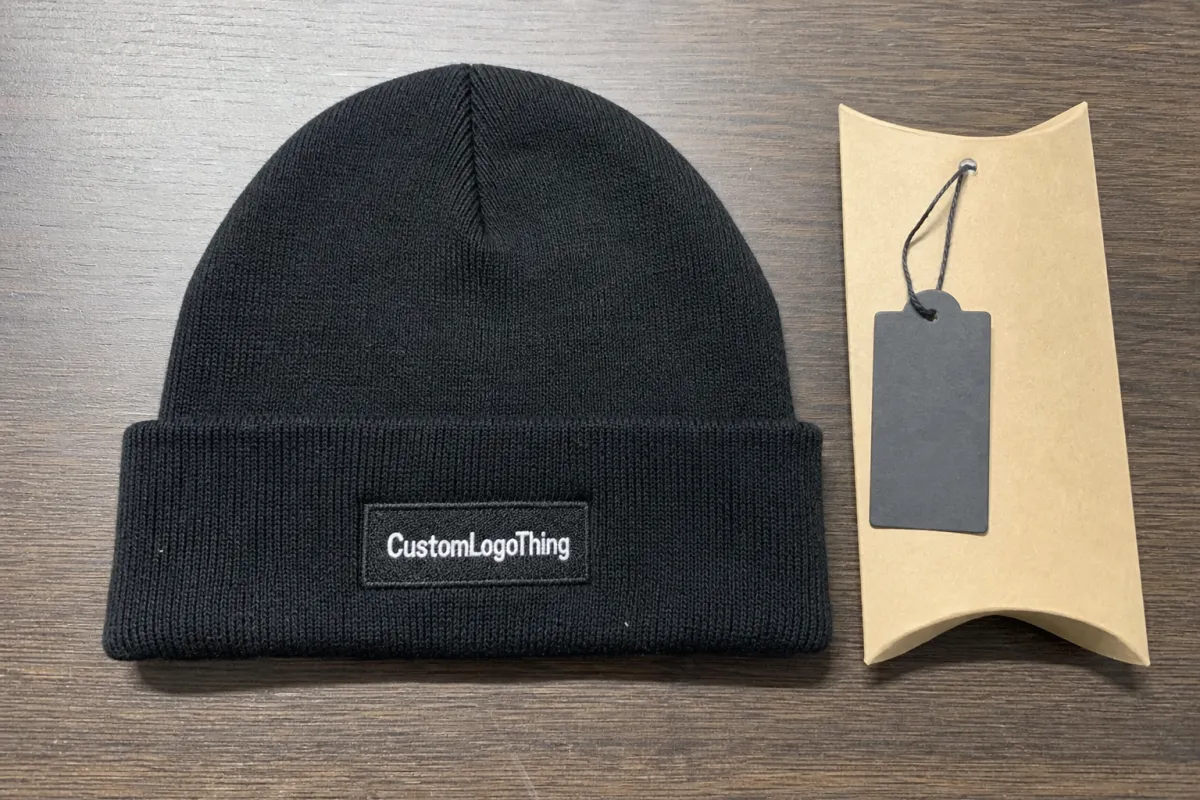
Cuffed Knit Beanies sit in a useful middle ground. They feel more substantial than paper favors, but they are less complicated than jackets or fitted hats. The cuff creates a natural decoration zone, so the logo can stay readable without taking over the whole garment.
That fit flexibility matters for weddings. One-size stretch construction removes the need for size sorting, which is helpful when the order is being packed into welcome bags, placed at a reception entrance, or handed out during a winter ceremony. It also reduces the chance of returns or leftover sizes.
Most buyers are not shopping like retail customers. They are trying to control budget and avoid surprises. That means the order should start with a compact brief: quantity, yarn, color, decoration method, packaging, and ship date. Everything else should support those decisions, not complicate them.
The cuff itself deserves attention because it affects both appearance and decoration room. A taller cuff gives more space for embroidery or a patch. A tighter rib knit usually holds shape better and keeps the front panel looking cleaner in photos. If the cuff is shallow or the knit is too loose, the mark can feel cramped or unstable.
For shipping and packing references, some buyers ask whether the program follows recognized handling standards. If cartons will move through parcel networks, a supplier familiar with ISTA parcel testing practices is easier to trust. For tags or insert cards, FSC-certified paper options can support a more responsible presentation without changing the beanie itself.
Choosing Materials, Knit Structure, and Decoration
Acrylic is the most common yarn for custom Cuffed Knit Beanies because it is affordable, consistent in bulk, and stretchy enough for broad fit coverage. It is usually the safest option when budget and delivery reliability matter more than premium hand feel.
If the wedding is outdoors, at altitude, or in colder weather, an acrylic-wool blend can add warmth and a slightly richer hand feel. The tradeoff is cost and a little more sensitivity during sampling. Wool blends can also vary more by supplier, so the approval process should be tighter if the order depends on a specific finish.
Knit structure has a direct effect on price and appearance. Single-layer beanies are lighter and usually less expensive. Double-layer beanies feel more substantial, hold warmth better, and often create a cleaner interior finish. Heavier knits photograph well, but they use more material and can raise the quote.
Decoration should follow the art, not the trend. Embroidery is still the most common option because it is durable and predictable. Woven patches are better when the design includes fine detail or thin lines. Faux leather patches fit rustic or lodge-style themes, while sewn labels work well for minimal branding. The right method depends on how much visual weight the mark should carry.
For weddings, smaller usually works better. A monogram, shared initials, or a simple icon often looks more deliberate than a crowded graphic. Heavy decoration can stiffen the cuff and make the beanie look busier than intended once it is worn.
Specs to Confirm Before Requesting a Quote
The fastest way to get an accurate quote is to define the product before asking for pricing. Start with fit, fiber content, knit weight, cuff depth, crown shape, and whether the beanie is single-layer or double-layer. Those details tell the supplier what is actually being built.
Decoration area should be defined just as clearly. Knit fabric stretches, so a logo that looks fine in a flat mockup may shift once the beanie is worn. Confirm the exact decoration width and height, and ask whether the measurement is taken on a relaxed or stretched beanie. That difference affects placement and readability.
Color should be treated like a production spec. If the event palette is fixed, share Pantone or PMS references. If the supplier is working from stock yarn, ask for the closest available shade and a backup option. Popular wedding colors include ivory, charcoal, forest green, camel, blush, and navy, but stock levels change and can affect lead time.
Packaging belongs in the spec sheet too. Individual polybags protect the beanies in transit and keep them clean if they are going into welcome kits. Insert cards, size stickers, and carton marking all change the landed cost and the way the order arrives on site. If the shipment is going to a planner, venue, hotel, or storage space, those details matter.
It also helps to decide whether the order needs extras for bridal party members, vendors, or damaged units. Those buffer pieces keep the event from turning into a scramble if counts change or a carton arrives with an issue.
| Option | Typical Use | Relative Cost | Notes |
|---|---|---|---|
| Embroidery | Clean monograms and simple logos | Moderate | Durable and familiar; best on a firm cuff area |
| Woven patch | Detailed art or fine text | Moderate to higher | Good for small marks that need sharper edges |
| Faux leather patch | Rustic or lodge-style wedding themes | Moderate | Strong contrast, but less suited to intricate art |
| Sewn label | Minimal branding or subtle personalization | Lower to moderate | Best for understated presentation |
Pricing, MOQ, and Quote Drivers for Wedding Orders
Price is shaped by more than the beanie itself. Quantity is usually the biggest factor, followed by yarn choice, decoration method, number of colors, and packaging requirements. A simple one-color embroidery order at 500 pieces is far easier to price than a mixed-color run with a patch, insert cards, and custom carton labeling.
MOQ, or minimum order quantity, works the same way here as in most custom apparel programs. Lower minimums usually carry a higher unit price because setup is spread across fewer units. Larger orders often unlock better tier pricing, which is why it helps to compare the next quantity break before settling on a final count.
For planning, these ranges are useful for standard Cuffed Knit Beanies with common decoration:
| Order Size | Typical Unit Range | What Usually Drives It |
|---|---|---|
| 100-199 pieces | $6.50-$9.00 | Higher setup burden, smaller production run |
| 300-499 pieces | $4.80-$7.20 | Better spread of setup and labor |
| 500-999 pieces | $3.90-$6.00 | More efficient production and sourcing |
| 1000+ pieces | $3.25-$5.25 | Stronger tier pricing, especially on standard specs |
These numbers are planning ranges, not guarantees. Specialty yarns, heavier construction, multiple decoration colors, custom packaging, and rush handling can move the quote up quickly. Sampling, digitizing, setup charges, and extra colors may also appear as separate line items.
A realistic budget should include a small overage. Weddings change. RSVP counts shift, a few guests bring plus-ones, and some units get damaged in transit or during setup. A 5-10% buffer is usually enough to keep the order usable without inflating the budget too much.
Process and Timeline: From Proof to Delivery
A clean order flow usually moves through inquiry, specification review, digital proof, sample approval if needed, bulk production, quality check, packing, and shipment. The sequence is straightforward, but artwork approval is often the slowest step. A change in logo size, patch shape, or thread color can restart the proof cycle.
For a wedding buyer, the main question is how much time remains before the event. A simple order may move from proof approval to production in roughly 12-18 business days, then add transit time depending on destination. Domestic shipping can be only a few days, while cross-border shipping can take longer because customs adds another timing variable.
Orders move faster when the artwork is simple, the yarn is stock, and the buyer can approve proofs quickly. One-color embroidery, standard polybagging, and common beanie colors are easier to manage than custom dye matching or multi-step packaging. Revision-heavy orders slow down because every change has to be checked against the previous approval.
Transit planning matters as much as production. If the goods are going to a planner, venue, hotel, or family home, confirm the receiving address before production starts. For larger volumes, palletizing can reduce the chance of damage. Carton labels by color, guest group, or distribution location can also save time during event setup.
The shipment should arrive before the rest of the event materials, not alongside them. If the beanies are part of welcome boxes, beverage stations, or an outdoor photo moment, a late carton can throw off the whole display. Physical samples are worth considering if the art is delicate or the order is large, because knit goods can change appearance once stretched.
Common Planning Mistakes That Raise Cost or Delay Delivery
The first mistake is finalizing the order before the guest count is stable. Wedding counts move. If the buy is locked to an exact number with no overage, even a small increase can force a second run, and that second run almost always costs more.
The second mistake is trying to customize every component at once. A custom beanie body, custom patch, custom insert card, and custom box can all be done, but each one adds sourcing pressure and approval time. A tighter program usually performs better: one strong customization point, one or two supporting details, and the rest kept simple.
The third mistake is skipping proof review or sample review. Knit fabric is not flat paper. Stitch size, patch placement, and color contrast behave differently once the piece has stretch and texture. A proof confirms scale. A sample confirms the look in the hand. If the logo matters, both are worth it.
The fourth mistake is ignoring logistics until the last phase. Shipping to the wrong place, forgetting weather conditions, or assuming distribution will be easy can create avoidable stress. Cuffed knit beanies do offer fit flexibility, but that does not remove the need for a plan.
The fifth mistake is overcomplicating the color story. Buyers often want the beanie color, patch color, packaging, and event palette to align perfectly. That can work, but every extra match increases the chance of a sourcing issue. A restrained palette usually produces a cleaner result and a more predictable quote.
Next Steps to Finalize Quantity, Artwork, and Ship Date
Before requesting pricing, build a simple order sheet with guest count, overage quantity, preferred color, decoration method, needed-by date, and shipping destination. Add packaging requirements too, because a loose-packed beanie is not the same order as one that needs polybags and insert cards.
Prepare the logo file in a production-friendly format. Vector artwork is usually the safest option for embroidery or patches because it keeps edges clean at smaller sizes. If the design is being simplified, decide early whether the beanie should feature a centered patch, a small embroidered mark, or a woven label. Minimal art often performs best on knit headwear.
It also helps to ask for one backup option. Compare embroidery against a woven patch, or compare ivory against heather gray if the first color is tight in stock. Buyers who use Wholesale Programs often save time by making those comparisons before the quote is finalized rather than after the proof comes back.
Once the quote is approved, move quickly on proof sign-off and set a reminder for tracking. That last step keeps the shipment from getting lost in the middle of a wedding week. If questions come up about packaging, sampling, or production flow, the FAQ page is a useful place to verify the basics before the back-and-forth starts.
Done well, wedding cuffed knit beanies Bulk Order Planning comes down to quantity control, artwork discipline, sensible decoration, and realistic timing. The orders that stay on track are the ones where the buyer leaves room for production reality and keeps the spec tight.
How many wedding cuffed knit beanies should I order for my guest count?
Start with the invitation count, then add a 5-10% overage for late RSVPs, plus-ones, and backup units. If your quantity lands near a pricing tier, check the next tier up before finalizing the number. Extra pieces can become bridal party gifts, vendor gifts, or replacements for damaged units.
What decoration method works best for wedding cuffed knit beanies in bulk?
Embroidery, woven patches, and faux leather patches are the most common options because they hold up well on knit fabric and look clean on the cuff. The best choice depends on how detailed the art is, how visible you want it to be, and whether the design should feel polished or rustic. A proof or sample helps confirm placement and scale before bulk production starts.
How does MOQ affect wedding cuffed knit beanies bulk order pricing?
Lower minimums usually carry a higher unit price because setup and labor are spread across fewer pieces. Larger orders often unlock better tier pricing, so moving up slightly in quantity can reduce the per-piece cost. Compare quotes using the same decoration, packaging, and shipping assumptions so you can judge true landed cost rather than base price alone.
What lead time should I plan for a bulk wedding beanie order?
Allow time for quote approval, artwork proofing, production, and shipping, not only factory time. A straightforward order may move in roughly 12-18 business days after proof approval, but transit can add more depending on the destination. If the wedding date is fixed, leave extra buffer for proof revisions or shipping delays.
Can I mix colors or sizes in one wedding knit beanie order?
Most cuffed knit beanies are ordered in one size because the stretch fit works across a broad range of head sizes. Color mixing is possible in some programs, but each color can carry its own minimum and may change the quote. Share the palette early so the supplier can confirm whether the mix is practical, available, and cost-effective.