Vitamin ribbed winter beanies Unit Cost Review sounds narrow, but the pricing story is broader than a single quote line. Ribbed winter beanies look straightforward on a screen, then the details start stacking up: yarn blend, knit gauge, cuff depth, decoration method, folding style, and pack-out. Each one can nudge the price, and some of them move it more than buyers expect.
The useful question is not whether a beanie is "cheap" or "premium" in the abstract. It is whether the spec supports the margin you need without turning into a quality problem later. A low starting number can be misleading if it leaves out embroidery setup, label application, carton marks, or the cost of a sample revision. That gap is where bad surprises live.
Ribbed beanies also have a funny habit of exposing weak decisions. The knit stretches, the cuff folds, the logo lands on a textured surface, and flaws show up fast. If the goal is a retail-ready winter accessory rather than a generic promo item, the pricing review has to include how the cap looks in hand, not just how it reads in a spreadsheet.
Why Ribbed Winter Beanies Cost More Than the Blank Cap Suggests
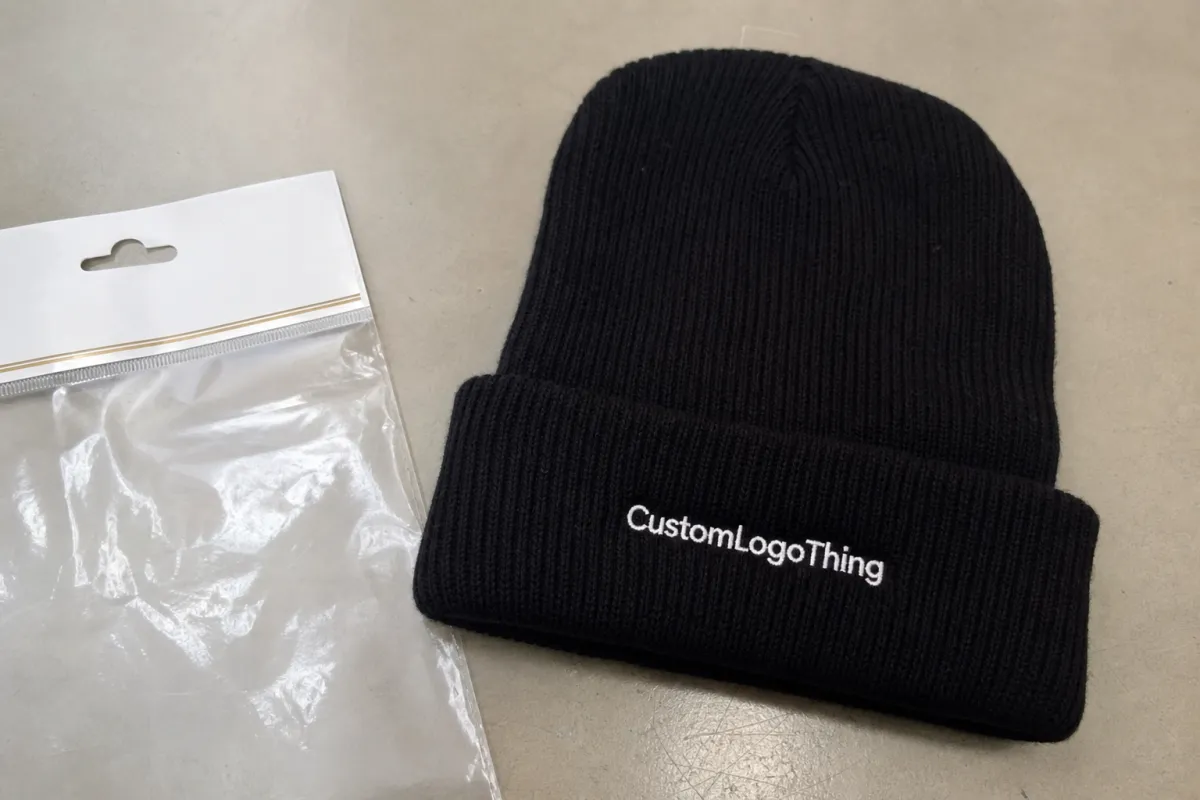
Ribbed construction is simple to describe and more complicated to produce well. A 1x1 or 2x2 rib changes the stretch recovery, the density of the knit, and the way the fabric sits after folding. Tighter ribs usually look cleaner and feel more controlled, but they can take longer to knit and may use more yarn than a loose, lightweight cap. That pushes the base unit cost upward before decoration even enters the picture.
Flat knit or plain acrylic watch caps often make buyers think all winter beanies should price within the same band. They do not. A ribbed cap with a deeper cuff, heavier gauge, and cleaner shaping requires more time on the machine and more attention in finishing. If the factory needs to rework the crown or trim stray fibers because the knit is dense, that labor shows up somewhere, even if it is not obvious in the first estimate.
Cuff height is another cost lever that gets underestimated. A shallow cuff uses less yarn and creates a minimal profile. A deeper cuff gives more room for a logo, patch, or label, and it tends to look more substantial on a retail wall. That said, a deeper cuff also adds knit time, seam work, and packing bulk. The difference may look small in isolation. Across a few thousand units, it is not small.
Decoration is where the quote often stops being intuitive. Ribbed fabric is textured enough that dense embroidery can sink into the knit if the stitch count is too high or the artwork is too large. A woven label can look crisp, but only if the placement is flat enough to stay readable when the beanie stretches. A patch can upgrade shelf appeal, yet it also adds a sewing operation and another failure point during quality control.
If the base knit feels thin or uneven, the decoration only magnifies the problem.
That is why a proper vitamin ribbed winter Beanies Unit Cost Review starts with the fabric, not the logo. The logo matters. The knit matters more.
Product Details That Change Fit, Handfeel, and Shelf Appeal
Three details usually decide whether a ribbed beanie looks intentional or generic: rib structure, crown shape, and cuff height. A tighter rib gives a firmer handfeel and a more polished surface. A slouchy crown creates a casual silhouette and often uses a little more yarn. A structured crown sits better under a patch or woven badge and tends to photograph cleanly for ecommerce. Each choice affects both perception and production cost.
Material choice sets the tone. Acrylic remains the budget-friendly baseline because it is easy to source, stable in production, and generally warm enough for seasonal retail and promo programs. Recycled acrylic usually adds a small premium, but it can improve the sustainability story and sometimes the softness, depending on fiber quality. Wool blends move the price up again; they can improve warmth and handfeel, though they also raise the bar for pilling control, shrinkage management, and skin comfort.
There is no universal winner. Acrylic is practical for volume. Recycled acrylic makes sense if the brand wants a cleaner materials story without jumping into a high-cost fiber. Wool blends fit a more premium shelf position, but only if the construction supports it. A rough wool blend with poor finishing will feel expensive for the wrong reason.
Decoration should be matched to the knit, not forced onto it. On a textured rib, oversized embroidery can distort when the cap stretches. Small logos, modest direct embroidery, or a woven label on the cuff often hold up better. If the artwork needs fine detail, ask for a stitch test and review it on the actual knit, not only on paper. Digitized embroidery that looks sharp on screen can still lose clarity once it hits a stretched fabric surface.
Packing is another place where buyers overestimate the difference between "basic" and "premium." A flat fold in a polybag is low-cost and common. Add a paper band, hang tag, barcode sticker, or insert card, and the unit cost rises with every extra handling step. Retail packaging can be worth it if the product needs shelf presence. If the cap is moving through distribution or fulfillment, the question shifts toward durability and label accuracy.
That is also where compliance and packaging standards start to matter. If the paper components need FSC-backed sourcing, the chain-of-custody rules on fsc.org explain what the claim can and cannot support. If cartons will travel through a rougher shipping lane, distribution testing guidance from ISTA is worth reviewing before you lock the pack format. A crushed carton of winter hats is an avoidable problem, but only if the packaging spec is treated as part of the product.
Before bulk approval, sample for stretch recovery, softness, pilling, and fold memory. Pull the cuff, let it return, and check whether the edge snaps back or stays lazy. That quick check catches more issues than a polished product photo ever will. A solid ribbed beanie should feel comfortable, hold shape, and avoid the limp look that tends to read cheaper on a shelf.
Specs to Lock Before You Ask for Quotes or Samples
Loose specs almost always create loose pricing. Then the sample changes, the schedule moves, and the buyer ends up comparing versions that were never the same product to begin with. Avoid that by locking the essential measurements before the first quote request goes out. For a ribbed beanie, that means overall height, cuff width, relaxed circumference, stretched range, yarn blend, and any tolerance limits the factory should work within.
Fit language should be plain. If the hat is for adults, say so and define the target range. If it is a youth fit, say that too. A factory can work from a clear size spec. It cannot infer whether "standard fit" means snug, relaxed, or oversized. That vagueness tends to show up later in the sample, usually after the buyer has already spent time and budget getting there.
Decoration details need the same discipline. Logo size should be listed in millimeters, not as "small" or "medium." Specify whether the mark is direct embroidery, a woven patch, a badge, or a label stitched into the cuff. If color matters, include a Pantone reference or a clear yarn shade target. Knitwear colors and embroidery threads do not always match perfectly, so early approval matters more than it would on a flat printed item.
Packing instructions belong in the quote request, not in a follow-up email after the sample is approved. Individual polybags, barcode stickers, retail bands, inserts, carton count, and master carton markings all affect labor and material costs. A beanie shipped as a folded unit in bulk is not the same product as one that is retail-ready. The first is cheaper. The second may sell better. The pricing should reflect that choice, not blur it.
- Fit data: finished height, cuff width, relaxed circumference, stretched range
- Decoration: embroidery size, patch type, label placement, thread color reference
- Material: acrylic, recycled acrylic, wool blend, or mixed fiber content
- Packing: polybag, insert card, paper band, hang tag, barcode sticker
- Compliance: fiber content label, origin marking, carton details, any testing needs
That level of detail keeps the quote honest. It also reduces the back-and-forth that usually appears when the buyer and factory were talking about different versions of the same cap.
Vitamin ribbed winter beanies unit cost review: Unit Cost, Pricing, and MOQ Tradeoffs Buyers Should Expect
A useful vitamin Ribbed Winter Beanies unit cost review should break the price into separate parts: yarn, knitting, decoration, finishing, packing, and freight. The knit itself is only one layer of the total. On many orders, the decoration method has a bigger effect on the final number than the material change. A plain acrylic cap with a woven label can land in a very different price band than a wool blend beanie with embroidery and retail banding, even though both are still "simple" products in the buyer's mind.
MOQ shifts the math hard. At lower quantities, setup costs and machine prep are spread across fewer units, so the unit price rises. As volume increases, the cost per piece usually drops, sometimes faster than expected. That is good for margin, but it also means the first run is often the most expensive run on a per-piece basis. Buyers choosing between a test order and a full seasonal buy should plan for that gap instead of treating it as an anomaly.
| Option | Typical MOQ | Typical Cost Per Piece | Best For |
|---|---|---|---|
| Blank acrylic ribbed beanie | 100-300 pcs | $1.50-$2.30 | Promo programs and simple internal use |
| Embroidery + woven label | 300-500 pcs | $2.40-$4.10 | Brand merch with moderate decoration |
| Jacquard knit logo + cuff label | 500-1,000 pcs | $3.20-$5.50 | Retail placement with integrated branding |
| Wool blend + patch + retail banding | 500-1,000 pcs | $4.80-$8.00 | Premium seasonal assortment or gift set |
Those ranges are practical planning numbers, not promises. Freight, duty handling, testing, and destination delivery can move the landed cost enough to wipe out a small factory-price advantage. A quote that looks unusually low should be checked for what it excludes. Packing, carton marks, label application, and final shipment coordination are common omissions. The savings disappear once the missing pieces are added back in.
The cleanest savings are usually the least dramatic. Reduce the number of colors. Keep the logo placement consistent. Skip custom packaging unless it adds visible value. If an insert card is needed, use a standard size and avoid expensive die-cut shapes unless the retail price can support them. Small simplifications are often more effective than trying to negotiate a dramatic reduction in the base knit price.
For buyers comparing a vitamin ribbed winter Beanies Unit Cost Review across suppliers, the quote alone is not enough. Compare the quote with packaging, freight, testing, and the probability of sample revisions. Two factories can land at the same starting number and still end up far apart once all the finishing work is counted. The first number is a starting point, not a verdict.
Process and Timeline: From Artwork Approval to Dock Delivery
The production path is fairly predictable if approvals stay tight. It begins with the brief, moves into spec confirmation, then artwork, sample, sample approval, bulk knitting, finishing, inspection, and shipment. Most delays happen between sample and approval because someone wants a slightly larger logo, a different thread color, or one more packaging tweak. That one change can shift the schedule more than the buyer expects.
For a simple ribbed beanie order, a reasonable lead time is often 12-18 business days from sample approval to bulk shipment. More complex orders take longer. Jacquard knit patterns, heavier embroidery, and retail packaging all add time. If the yarn is already in stock and the decoration is simple, a rush lane may be possible. Once special yarn or custom inserts enter the order, the rush option becomes expensive quickly.
Lead times also stretch when the buyer sends incomplete information. Missing shipping data, late color sign-off, poor artwork files, and unclear carton requirements are common culprits. A factory can only work as fast as the spec allows. A strong tech pack shortens the front end because it removes questions before they become email threads.
Where Timelines Slip
Late changes are the biggest culprit, followed by packaging revisions. A cuff width change alters material consumption. A logo size shift can require new digitizing or a stitch test. A different label location may force a new sewing sequence. These are not huge changes in the buyer's head, but they affect production flow in ways that are hard to ignore once machine time is booked.
Seasonal planning matters too. Winter items are unforgiving if the calendar slips. If the goal is to sell before cold weather peaks, start the MOQ conversation early and ask for a quote that separates knit lead time from decoration lead time. That lets you see whether the delay comes from the body of the cap or the branding work layered on top of it.
Approval after the sample should be written, not casual. Confirm dimensions, color references, packaging contents, carton counts, and acceptable tolerances. A clear approval reduces later disputes. It also gives the factory a clean release to move into bulk production without wondering whether another revision is coming.
Common Cost Mistakes That Inflate the Final Invoice
The most expensive mistake is changing the spec after sampling. Every revision can touch labor, materials, and schedule at the same time. A wider cuff uses more yarn. A different logo size may need a new stitch file. Switching from a woven label to a patch can change the sewing process. What sounds small in an email can become a real production cost.
Hidden charges deserve a hard look. Customs handling, inland delivery, storage, testing, and packaging upgrades all belong in the landed-cost review. If the beanies are shipping to a retailer or distribution center, ask how the cartons need to perform in transit and whether the pack format matches the route. Shipping damage is rarely caused by one dramatic mistake. It is usually the result of several small assumptions that were never checked.
Complex logos on ribbed knit deserve caution. A dense embroidery file may look refined on screen and still blur on the actual fabric. Sometimes the better answer is a smaller logo with cleaner edge control. Sometimes a woven badge or patch is the better fit. Either way, insist on a sample correction before bulk approval. It is easier to correct one piece than to explain a defect on a full production run.
Cheap yarn can also be a false economy. A low-cost fiber may feel scratchy, pill early, or lose its shape after a few wears. If the beanie is supposed to sit in a retail environment next to cleaner goods, that saving can become a problem at sell-through. Compare setup charges, decoration complexity, fabric blend, and packing on the same line sheet. If a quote looks low only because the extra charges are buried in the notes, it is not low. It is incomplete.
- Compare quotes on the same knit weight and material blend
- Check whether setup charges are included or billed separately
- Confirm packing counts, carton sizes, and label requirements
- Ask whether freight and delivery are included or excluded
- Approve sample corrections before production starts
That list keeps the final invoice honest and makes later discussions much easier. It also helps separate a genuinely efficient quote from one that just looks efficient on the surface.
Next Steps to Compare Samples, Confirm Specs, and Order
Start with two quotes if possible. One should be optimized for price. The other should be optimized for presentation. That comparison usually reveals where the premium sits, and it keeps the buying conversation grounded in measurable tradeoffs rather than vague claims about quality. If the price gap is small, the better-looking version may be the better buy. If the gap is wide, simplify the spec and protect the margin.
Review a physical sample before committing to full production. Photos are helpful, but they do not show how the cuff rebounds, whether the knit feels scratchy, or how the logo behaves on a stretched surface. Once the sample is approved, lock the final spec in writing: material blend, dimensions, decoration, packing, delivery terms, and tolerance limits. If sustainability language needs to appear on the packaging or inserts, confirm the exact wording before the print files are released.
Then sequence the decision in a practical order: choose material, confirm MOQ, lock timeline, and place the PO. That order reduces confusion and gives you a clearer read on where the money is going. It is the simplest way to get a clean result from a vitamin ribbed winter beanies Unit Cost Review without ending up with a pile of prices that do not compare cleanly.
FAQs
What affects vitamin ribbed winter beanies unit cost the most?
Decoration method, material blend, and order quantity usually have the biggest impact. The knit itself matters, but the logo application and packing format often move the landed cost more than buyers expect. Freight, testing, and sample revisions can widen the gap between the first quote and the final invoice.
What MOQ should I expect for custom ribbed winter beanies?
MOQ varies by construction and decoration, but low-volume orders usually carry a higher unit cost because setup is spread across fewer pieces. Simple blank caps can start lower; embellished or retail-ready versions usually need a larger run or a higher per-piece price. Tiered pricing helps show the break between test quantity and scale.
How long does production usually take after sample approval?
A simple run often ships within 12-18 business days after sample approval, though complex decoration and special packaging can add time. The clock starts moving faster when artwork, color references, and carton details are complete. Rush schedules are possible, but they narrow options and usually cost more.
Which material keeps the price low without making the beanie look cheap?
Acrylic is usually the best starting point for value and consistency. Recycled acrylic can work well if the fiber quality is solid and the buyer wants a sustainability angle. Wool blends raise the price and can improve handfeel, but they make more sense for premium retail than for high-volume giveaways.
Can I lower the quote without cutting quality?
Yes. Simplify the logo, reduce color changes, and avoid unnecessary packaging upgrades. Keep the spec tight so the factory does not need to pad for risk. The best savings usually come from removing complexity that does not improve sell-through.
If you are using this as a buying reference, keep the conversation tied to unit cost, MOQ, packaging, and decoration quality in the same review. That is how a vitamin ribbed winter beanies unit cost review turns into a useful sourcing decision instead of a stack of numbers that do not survive contact with production.


